
As a dad and lifelong competitor, I’ve always been wired for progress. I grew up in the pool as a collegiate swimmer, but it was never just about the races. It was the discipline. The structure. The grind. Those habits shaped how I train and how I show up as a father today.
After college, fitness became my anchor. More recently, I leaned into endurance training, the kind that forces you to measure everything. That focus is what pushed me toward WHOOP back in 2021. I wanted data. I wanted clarity. And the biggest variable holding me back was the one I didn’t expect. Alcohol wasn’t wrecking my life, but it was wrecking my recovery.
The tricky part was social life. Saying no when everyone else is saying yes wears you down. It felt like the only way to participate was to drink, even when I didn’t want to sacrifice a morning run or drag through breakfast with my kids.
By 2023, I wanted a reset. So I committed to a dry year. That decision led me to Athletic Brewing, and it immediately became the solution I didn’t know I needed. It let me keep the ritual without the slowdown. A cold beer after work. A beer with friends. A beer on the weekend. Same experience. Better outcomes.
Two years later, there is always a six pack of Run Wild, Free Wave, or Athletic Lite in my fridge. Before, I used to rush through drinks without really tasting them. Now I slow down and actually enjoy them. One or two at dinner is plenty, and the flavor stands on its own.
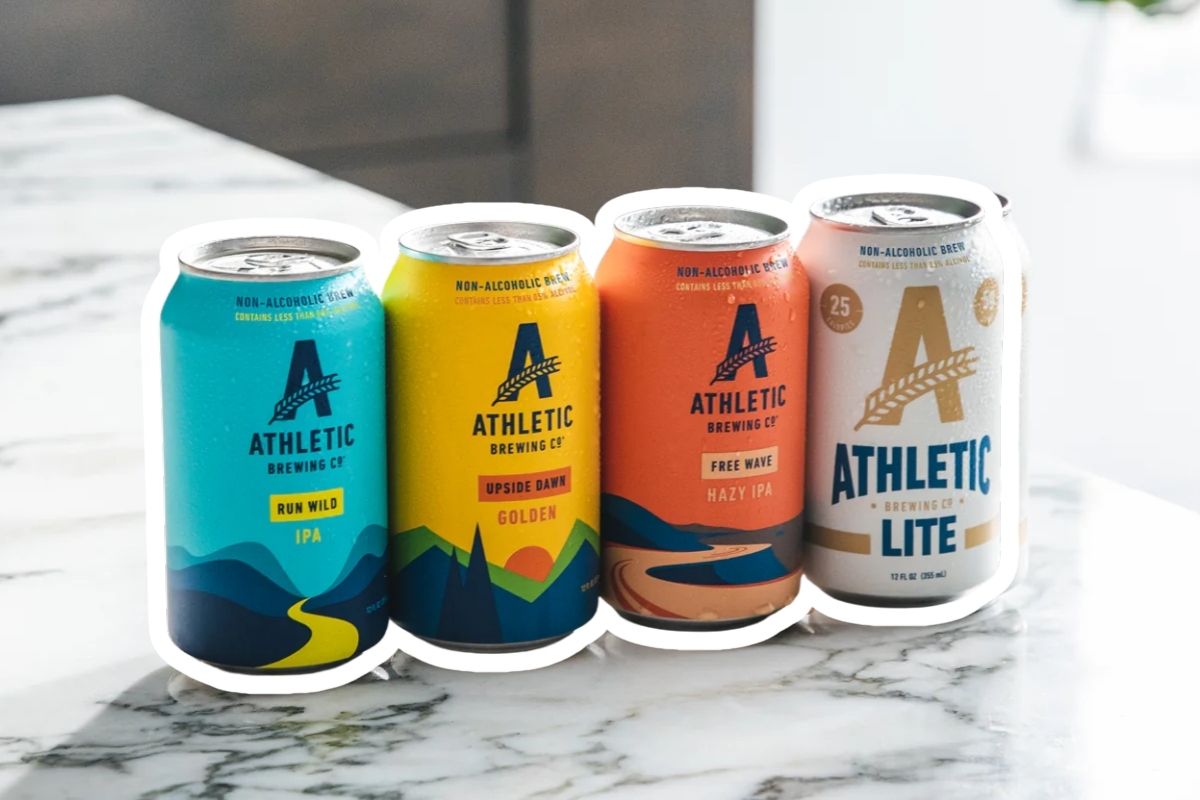
What surprised me most is how normal everything still feels. I can hang with friends, celebrate wins, and keep the social connection, all while staying aligned with my training. No foggy mornings. No sluggish workouts. No wasted Saturdays. It’s the same ritual, just with a better tradeoff. And the more I bring NA options around, the more people around me try them too.
There’s also the example my kids get to see. They watch their dad unwind with something that never changes who he is. They see consistency. The same person at night and in the morning. They see someone who can relax and celebrate while staying present. That matters to me. It shows them that balance is possible.
On weekends, I still get the urge to reward myself after a long run or a few hours of yard work. Athletic Brewing gives me that satisfying moment without the drag. I get the dopamine hit, the refresh, and I’m still fully engaged with my family afterward.
If you’re curious, just mix in an Athletic on your next night out. Keep your edge. Keep the fun. Keep the next morning. You might find the switch happens faster than you expect.
It seems like everyone and their grandmother talks about beer like they’re an expert — just because they drink it.
But most true beer experts are shocked by the stupidity of comments they overhear. Some chime in to correct you, and others just text their girlfriend about it.
Don’t let that be you. Here’s a guide to talk about beer.
Bookmark this and read this before bed until you’ve locked this down.
How Beer is Made
The hard and fast: Malt + yeast + hops = beer.
- Malt contains sugars.
- Yeast eat sugars and fart out alcohol.
- Hops add bitterness, and additional flavors (depending on hop variety), and keep the product from going bad.
You’ve probably heard the story of India Pale Ale. Beers hopped to the heavens (for the time) to last the journey from England to India.
It can get a lot more complicated, but start here.
There Are Only Two Types of Beer
From the high-level, there are only two primary beer “types” defined by the yeast in primary fermentation: Ale and Lager.
In the beginning, however, there was only one: Ale Yeast.
Beer’s history stretches thousands of years. Back then, they thought it was magic that a bucket of malt water turned into a fermented elixir. What was really happening was spontaneous yeast drifted through the air and grappled onto that bucket of water to consume the sugars.
Over time, they began to understand that like fresh produce, yes, beer could go bad. To combat this they began storing their beer in cold caverns, cellars, and caves.
Then Came Lager Yeast
Like any resilient micro-organism, the ale yeast in cold conditions adapted and formed a new, complete strain: Lager yeast.
Ale vs Yeast
Ale
- Is top fermenting (in the tank of beer)
- Can ferment at warmer temperatures
- Turns around faster
- Produces fruit-like flavors during fermentation, which is why they’re obviously perfect for Pale Ales
Lager
- Is bottom fermenting
- Has to ferment at lower temperatures
- Takes more time to work
- Produces cleaner flavor notes, which is why lagers are “clean”
Not All Beers are Clearly Identified
Based on historic origins, sometimes the labeled beer style can be a little misleading.
Here are some curve balls and ones to keep in mind:
- Baltic Porter: Lager
- Malt liquor: technically Lager
- Anything with the word “Bock:” Lager
- Kölsch: Ale
- Hefeweizen: Ale
- Saison: Ale
- Porter (not Baltic Porter): Ale
- Stout: Ale
- Gose: Ale
See a longer style reference guide at the bottom.
How to Talk About the Beer
Packaging
Believe it or not, the best package to get beer in is: cans.
Bottles can be fine under certain circumstances, but generally they let in more air (bad) and can get light struck.
Those famous light green bottles let in a lot of UV light which makes the beer “taste skunky.”
Dark bottles are better, but still can be susceptible to skunkyness from light pollution – especially if stored exposed on fluorescent light stores.
Storage
Unless you’re cellar aging a beer, beer should be kept cold in a dark place.
That means don’t keep it in the trunk of your classic Camaro for a few months in the Carolina sun.
Appearance
Don’t be the dweeb who calls everything “amber” colored.
In beer, color is defined by a term called Standard Reference Method (SRM).
What dictates color? In most cases, the actual color of the malt used in brewing.
When there are other additives — like fruit — it will change the color and augment it beyond the standards below.
-
SRM 2 — Pale Straw
-
SRM 3 — Straw
-
SRM 4 — Pale Gold
-
SRM 6 — Deep Gold
-
SRM 8 — Light Amber
-
SRM 10 — Amber
-
SRM 13 — Deep Amber
-
SRM 16 — Copper
-
SRM 20 — Light Brown
-
SRM 24 — Brown
-
SRM 30 — Dark Brown
-
SRM 35 — Very Dark Brown
-
SRM 40 — Black
Flavor
“Beer” flavored only works for describing light lagers.
The human palate is complex and different for everyone based on unique lived experiences. Sometimes you’re a natural, and sometimes it just takes drinking beer with vocabulary in mind to make the connections.
For me personally, it was a labor of fun love to pick beers. Drink them. And really ponder what I was getting.
- Don’t say “Tastes like beer” → Say “Clean malt backbone with light hop bitterness”
- Don’t say “Strong” → Say “High-ABV with warming alcohol character”
- Don’t say “Bitter” → Say “Assertive hop bitterness with notes of pine and resin”
- Don’t say “Sweet” → Say “Malty sweetness with hints of caramel and toffee”
- Don’t say “Fruity” → Say “Tropical esters of mango and passionfruit”
- Don’t say “Citrusy” → Say “Bright grapefruit zest and orange peel from late-hop additions”
- Don’t say “Spicy” → Say “Peppery phenolics from Belgian yeast”
- Don’t say “Smoky” → Say “Delicate beechwood smoke with bacon undertones”
- Don’t say “Flat” → Say “Low carbonation, soft mouthfeel”
- Don’t say “Watery” → Say “Light body with crisp, clean finish”
- Don’t say “Weird aftertaste” → Say “Lingering phenolic note reminiscent of clove or bubblegum”
- Don’t say “Chocolatey” → Say “Dark malt character with cocoa and roasted coffee notes”
- Don’t say “Bready” → Say “Freshly baked bread crust and biscuit malt aroma”
- Don’t say “Sour” → Say “Tart acidity with lemon and green apple brightness”
- Don’t say “Funky” → Say “Barnyard Brett character with earthy complexity”
- Don’t say “Burnt” → Say “Roasted barley bitterness with espresso intensity”
- Don’t say “Tastes like juice” → Say “Hazy New England IPA bursting with tropical fruit aromatics”
- Don’t say “Heavy” → Say “Full-bodied with chewy malt texture”
- Don’t say “Light” → Say “Sessionable with a crisp, dry finish”
- Don’t say “Good” → Say “Balanced profile with pleasant hop-to-malt ratio”
Off Flavors
This can get complicated, so let’s keep it simple.
Here are flavors that you don’t want:
- Buttered popcorn → bad. Means the yeast was stressed.
- Green apple (unless it’s literally in the beer) → bad. Means the yeast was stressed.
- Skunk → bad. As discussed caused by green bottles and light.
- Printer paper → bad. Means the beer is oxidized from poor temperature control, age, or both.
- Bandaid → very bad. Means the beer is infected, stop drinking and throw it away.
Longer Style Reference Guide
This by no means covers everything, but it’s a good start.
Lagers
- Pilsner
- Pils
- Baltic Porter
- Rauchbier
- Malt Liquor
- Helles
- Dunkel
- Bock
- Doppelbock
- Eisbock
- Schwarzbier
- Maibock
- Märzen
- Zwickelbier (Kellerbier)
Ales
- Altbier
- Any sour (unless specifically noted as lager fermentation)
- Lambic
- Berliner Weisse
- Barleywine
- California Common / Steam Beer
- Cream Ale
- ESB / English Bitter
- Grisette
- Gose
- Hefeweizen
- IPA / DIPA /TIPA
- Irish Red Ale
- Kölsch
- Mild Ale
- Old Ale
- Porter
- Roggenbier
- Saison / Farmhouse
- Scottish Ale / Wee Heavy
- Stout
- TIPA
- Belgian Strong: Tripel / Dubbel / Quad
- Witbier (Belgian Wheat)
That’s a lot to start with. Be sure to follow along for the next post in our series where we’ll go even deeper.
And as always, enjoy responsibly.
There’s a story behind every pint. But few beers have a legend like the India Pale Ale — the IPA. It’s the craft beer world’s crown jewel. The hoppy heavyweight. The one drink that can start a debate faster than a bad call in a Little League game. But before it became the mascot of modern microbreweries and ironic flannel, the IPA was born out of something very old-school: survival and long-distance grit.
The Original Long-Haul Beer
In the late 1700s, Britain had a problem. Its empire stretched all the way to India, and British soldiers and colonists wanted beer.
The problem? Regular beer spoiled on the long, hot voyage from England to the subcontinent. By the time the barrels hit Bombay, the ale had gone bad. So brewers got clever. They took a strong pale ale and amped up the alcohol and hops — both natural preservatives to help it survive the six-month sea trip. That beer arrived not just drinkable, but better than ever. Bright, bitter, and refreshing in the Indian heat. And so, the “India Pale Ale” was born.
From Empire to Every Barstool
By the mid-1800s, the IPA was the beer of choice across the British Empire. But by the early 1900s, it had mostly vanished. Tastes changed. Lagers took over. Fast forward to the 1970s, and American homebrewers rediscovered the old recipe. They didn’t just bring it back — they turned it up to eleven. American hops like Cascade and Citra added citrus, pine, and floral punch. The bitterness got bolder. The color got lighter. And the IPA became a statement: “I drink something with flavor.”
The Dad Day Take
For all its hipster baggage, the IPA is one of the manliest beers in history. It’s strong, rugged, and built for endurance. The kind of drink made for long journeys, hot days, and tired hands. Order one, and you’re raising a glass to sailors, explorers, and brewers who refused to settle for spoiled beer.
So next time someone rolls their eyes at your IPA, just smile and say,
“It was literally made to survive a trip halfway around the world.”
Then take a sip.