
Most parenting advice is optional.
This isn’t.
In this Instagram video, Dr. Michael Milobsky—pediatrician, dad of seven, and someone who’s actually had to use these skills—breaks down the three things every parent needs to know about choking.
He’s not speculating. He’s not repeating a checklist. He’s telling you what saved his own child’s life.
Watch the Video
View this post on Instagram
Video and profile screenshot courtesy of Michael Milobsky, MD (@pedsatthemeadows).
Why This Video Matters
Choking doesn’t give you time to Google. By the time you call 911, the damage may already be done. That’s why knowing what to do immediately matters more than knowing what to do perfectly.
Dr. Milobsky’s video cuts through panic and focuses on action—what actually works when a child is choking in front of you.
The Big Idea
Most choking incidents:
-
Happen at home
-
Involve toddlers
-
Occur when kids are eating and moving
The goal isn’t to be calm. The goal is to be decisive.
As Dr. Milobsky explains, hesitation—or doing the wrong thing with good intentions—can make a bad situation worse.
The 3 Rules Every Dad Should Know
1. Don’t Blindly Stick Your Finger in Their Mouth
This is the instinct. And it’s dangerous.
A child’s airway isn’t straight—it’s shaped like a funnel. If you can’t see the object, blindly sweeping with your finger can push it deeper and lodge it permanently.
Rule:
👉 Only try to remove it if you can clearly see and grab it.
2. If They’re Coughing or Making Noise—Let Them
Noise is good.
If your child is coughing, gagging, or making sounds, their body is still working to clear the airway.
Rule:
👉 Don’t interfere yet. Let them cough.
No sound = it’s time to act.
3. Back Blows First, Then Abdominal Thrusts
If your child can’t breathe or make noise:
Step one:
Deliver firm back blows between the shoulder blades. Harder than feels comfortable.
If that doesn’t work:
Step two:
Perform abdominal thrusts just below the breastbone—forcefully, in and up.
That exact sequence is what dislodged the food and saved Dr. Milobsky’s own child.
The Most Important Prevention Tip
Almost every choking incident Dr. Milobsky has seen—including in his own home—had the same setup: A child walking around while eating.
Kids should eat:
-
Sitting down
-
Staying still
-
Fully focused
No snacks on the move. No bites during play.
Simple rule. Massive payoff.
The Real Takeaway
This video isn’t meant to scare you. It’s meant to prepare you.
- Watch it.
- Rewatch it.
- Send it to your partner.
And then hope you never need it.
If you’ve ever tried to build a home gym, chances are Cooper Mitchell helped you do it, whether you realized it or not.
Coop is the founder of Garage Gym Reviews, one of the most trusted platforms in the fitness world for reviews, guides, and education around home gym equipment. What started as a niche interest grew into a massive resource for everyday lifters who want to train seriously without stepping foot in a commercial gym.
But behind the racks, barbells, and YouTube videos, Coop is also a dad of six.
Yes, six.
His kids range from eight years old to one-year-old twins, and life in the Mitchell household moves fast. When asked about the hardest part of parenting, Coop doesn’t sugarcoat it.
It’s navigating fatherhood alongside all the other responsibilities he has and still wants to keep having. Work matters. Health matters. Faith matters. But so does knowing when to put each in its proper place.
Building a Life Around Priorities
Coop’s days start early. Around 5 a.m., he’s up reading the Bible and praying before heading into his garage gym for a solid training session. From there, it’s coffee with the kids, work, homeschooling breaks, and afternoons filled with play, Legos, throwing balls, and being outside.
Evenings slow down intentionally. Dinner together. Sharing stories from the day. Family worship that includes reading scripture, catechism, singing hymns, and prayer. Then books, board games, and bedtime.
It’s structured, but not rigid. Purposeful, but lived-in.
When everything hits at once, Coop leans on a principle that guides his decisions. Knowing the difference between urgency and importance. Everything feels urgent, but only some things truly matter. His goal is to give his best energy to what’s important, even when the urgent is loud.
The Weight of Time
Before becoming a dad, Coop suspected time moved quickly. Fatherhood confirmed it. The days are long, but the years are short. That awareness shapes how he and his wife process life together. At the end of long days, they sit in bed and trade stories about the kids. Moments they don’t want to forget. A way of slowing time down by remembering it.
The advice that stuck with him most is one he thinks about often. Be the person you want your children to grow into. Not just someone who teaches values, but someone who lives them.
Staying Grounded
When life gets heavy, Coop resets through prayer, time in God’s Word, and lifting heavy. His non-negotiable for dad life is surprisingly simple. Smile. Exude joy. Be the blessing man.
And when he gets time alone, he keeps it classic. Fine cigars and good books.
Coop’s story is a reminder that strength isn’t just built under a barbell. It’s built in routines, priorities, and showing up consistently for the people who matter most.
You can follow Cooper at @homegymcoop, and find Garage Gym Reviews on YouTube.
Over the last year, Dad Day has evolved from a simple email newsletter into something bigger. A community. A place to highlight dads who are building, creating, and showing up a little differently.
That evolution led to Go West.
Go West is a short film series from Dad Day that spotlights modern dads carving their own path. Founders, makers, and builders who chose the long road instead of the safe one.
These aren’t ads or highlight reels. They’re real stories about why someone started something, how fatherhood fits into it, and what they’re trying to build long-term.
Episode One features Robert Huffman, founder of Camino Caffeino.
Meet Robert Huffman
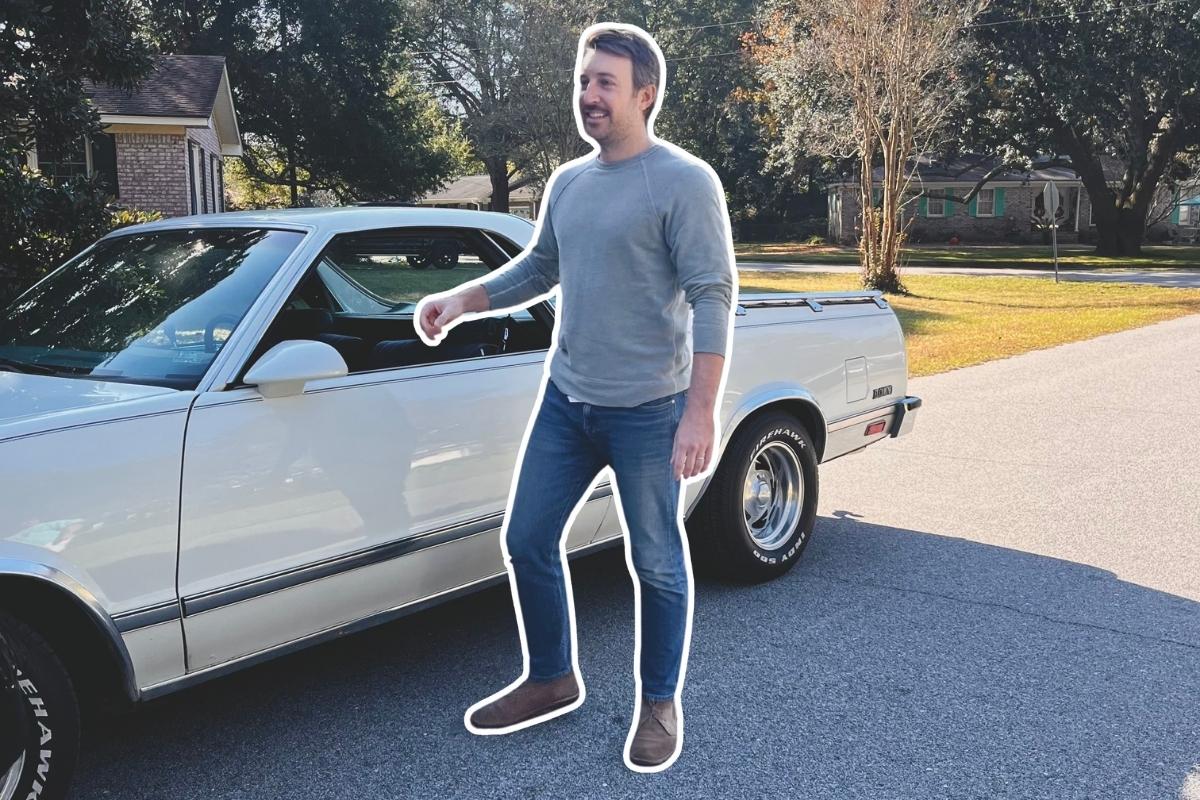
Robert Huffman sells coffee out of an old El Camino in Charleston, South Carolina. But Camino Caffeino isn’t really about coffee.
It’s about community.
In a world of polished brands and carefully engineered launches, Robert took a different route. He built something simple, human, and intentionally analog. A mobile coffee setup that invites conversation, connection, and presence.
Robert is also a dad, and that reality shapes how he thinks about work, time, and legacy. Camino Caffeino isn’t about scaling as fast as possible or chasing the next big thing. It’s about creating something meaningful, showing up consistently, and building relationships that last.
Why This Story Matters
Go West exists to tell stories like Robert’s.
Stories that don’t always fit neatly into a pitch deck. Stories about dads who are building businesses, communities, and lives that reflect their values. Stories rooted in purpose instead of polish.
Robert’s journey with Camino Caffeino captures the heart of what Go West is about. Choosing an unconventional path. Betting on connection. And building something with intention, even when there’s no clear roadmap.
Shot in Charleston, South Carolina
This episode was filmed in Charleston, a city that values craft, conversation, and community. The setting mirrors Robert’s approach and reinforces the tone of the series: grounded, human, and unforced.
Go West isn’t about geography. It’s about mindset. Charleston just happened to be the right place to tell this particular story.
Watch Episode One
Below is Episode One of Go West, featuring Robert Huffman of Camino Caffeino.
If this story resonates, we encourage you to watch it all the way through, share it with someone who’d appreciate it, and subscribe to our YouTube channel. This is just the beginning.
What’s Next for Go West
Episode One sets the tone.
We’re continuing to film and share stories of dads who are carving their own path. Some of these stories will be about business. Some about community. Some about family. All of them are about choosing a different way forward.
Because ordinary’s been done.
There’s a certain honesty you only get from musicians who’ve lived a few lives. Tony Kamel fits squarely in that camp.
Tony writes and performs songs for a living. Some people even listen. He’s toured, recorded, chased the dream, and done the unglamorous work that keeps the lights on. Now, he’s also a dad navigating a very different kind of stage.
Tony lives in the Austin, Texas area with his wife and their four-year-old daughter. Their second child is arriving this February. When asked what the hardest part of parenting has been, he doesn’t romanticize it.
Everything is hard. Once you accept that hard is the baseline, it oddly gets easier. That mindset shift matters, especially in the early years. Sleep deprivation, he admits, is a real personality test.
Finding Meaning in the Small Stuff
For Tony, the most rewarding part of fatherhood isn’t the big milestones. It’s the small moments that show up quietly and disappear just as fast.
Right now, he’s his daughter’s favorite person in the world. He knows that season has an expiration date, and instead of fighting it or brushing past it, he’s choosing to enjoy it fully.
That awareness runs through how he approaches both parenting and work.
How Fatherhood Changed His Career
Before becoming a dad, Tony didn’t realize how much parenting would reshape his relationship with touring. It didn’t end his career, but it did change how it feels.
He still tours, just less. Not because he can’t do it, but because he doesn’t love it the same way anymore. There’s more guilt now. More awareness of what he’s missing. In his words, it’s a total blessing, even if it comes with tradeoffs. He also notes, with dry humor, that the middle-class touring world has mostly disappeared anyway.
Fatherhood didn’t shrink his ambition. It refined it.

The Best Advice He Ever Got
The advice that stuck with Tony is short and absolute.
Never go against your wife’s motherly instincts. Ever. Not even a little.
It’s a reminder that partnership matters, and that parenting works best when trust runs both ways.
A Typical Dad Day
Tony describes his days as suburban bliss. Early mornings, coffee and breakfast, school drop-off, yoga if he’s lucky, then work. It’s not flashy. It’s steady.
When work, life, and family all collide, he admits he doesn’t juggle it gracefully. Balls get dropped. Chaos shows up. The key is getting better at picking things back up and riding the wave instead of fighting it. His wife, who he describes as wildly organized, is the anchor. Without her, the operation falls apart.
Yoga and meditation help too, but he’s clear about what really keeps things moving. Teamwork.
Dad Life Non-Negotiables
Tony’s non-negotiable is one every parent recognizes instantly. If his daughter wants a song repeated, he repeats it. Even when it’s annoying.
He remembers what it felt like to be obsessed with a song as a kid. That joy, that sense of wonder, matters more than convenience.
When he gets time alone, his guilty pleasure isn’t glamorous. He paints houses. It’s a survival job. Not very rock-and-roll. Extremely relaxing. Especially the part where he’s not broke.
Playing the Long Game
Tony’s story is a reminder that fatherhood doesn’t end creative ambition. It reframes it. The wins get quieter. The priorities shift. The meaning deepens.
He’s still writing songs. Still performing. Still building a life that works for this season.
You can follow Tony at @tonykamelmusic.
If you’ve ever caught yourself walking backwards down the sidewalk and wondered how you got there, there’s a good chance Ben Patrick is to blame.
Known to millions as the Knees Over Toes Guy, Ben Patrick didn’t rise to fame by chasing trends or flashy fitness hacks. He took off by doing the opposite. He shared his failures. Years of chronic knee pain. Surgeries that didn’t work. Training methods that left him worse off than before. Then he started rebuilding his body from the ground up and documenting what actually helped.
That honesty struck a nerve.
What started as unconventional rehab content quickly became a movement. Ben challenged long-held beliefs around knee health, mobility, and longevity, showing people that the joints most of us were told to protect were actually meant to get strong through full ranges of motion.
Suddenly, athletes, parents, and everyday guys were rethinking how they train, how they move, and how long they want their bodies to last.
And yes, a lot of us started walking backwards. Our neighbors are still confused.
From Rehab to Movement
Ben’s rise wasn’t overnight. It came from years of testing, teaching, and refining ideas that went against the grain. Instead of avoiding knee stress, he showed how to build resilience. Instead of accepting pain as inevitable, he made the case for rebuilding capacity.
His approach resonated because it wasn’t about aesthetics. It was about durability. Being able to run, jump, squat, and move well not just in your twenties, but decades later. For dads especially, that message hits different. Longevity matters when you want to keep up with your kids.
Today, Ben is one of the most recognizable voices in modern fitness, with a global audience and a training philosophy that’s influenced everyone from elite athletes to weekend warriors.
But at home, he’s just dad.
Dad of Two (Soon to Be Three)
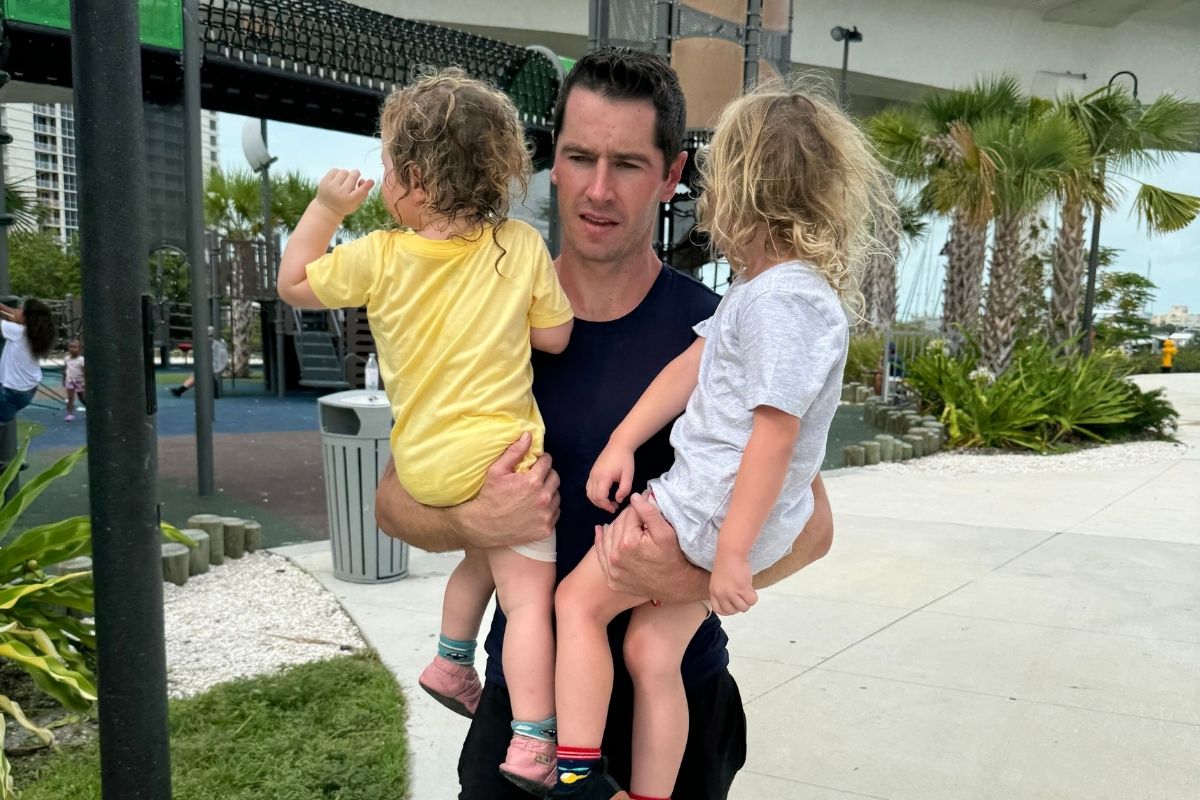
Ben and his wife have two young kids, ages three and five, with a third on the way. Fatherhood has reshaped how he sees the world, and not always comfortably.
The hardest part of parenting for him has been realizing how poorly modern systems are set up for kids. The schedules. The environments. The lack of space to move, explore, and grow. Rather than accepting that as normal, Ben’s response has been patience and intention. Slowly building better setups and systems for his family, even if it takes time.
The most rewarding part has nothing to do with fitness or career wins. It’s the smallest moments. The little things his kids do that bring more joy than any physical achievement or professional milestone.
Before becoming a dad, he wishes he understood the importance of land, space, and family over cities, stuff, and outsourcing influence. That realization has shaped his long-term vision. He’s actively working toward moving to land in the coming years to create a simpler, more grounded environment for raising his kids.
A Realistic Dad Day
Ben doesn’t pretend his days are perfectly balanced. He calls it juggling, and he’s honest about the messiness.
Mornings often start with a dog walk before the kids wake up. Breakfast follows, then a fluid mix of parenting, work, and time with his wife and friends. There’s no perfect symmetry. Just seasons.
This year, he also volunteered to coach a high school basketball team. His kids often tag along, and while it’s not always convenient, it’s meaningful. He loves coaching kids and already knows he can’t wait to coach his own.
When work, life, and family all collide, Ben focuses on patience and building better systems instead of sweating the small stuff. His reset is simple. Get at least a couple workouts in for himself. Move his body. Clear his head.
What’s Non-Negotiable
Ben’s non-negotiables for dad life are refreshingly straightforward.
- Get outside.
- Take action.
- Practice good manners.
- Work hard at something meaningful.
- Love deeply.
When he gets time alone, there’s no elaborate hobby list. He works out. He plays basketball occasionally. That’s it.
And through it all, his perspective is grounded by a reminder many dads need to hear. The days are long, but the years are short. Put the work in now and you’ll be proud of it later.
Whether he’s rebuilding knees or building a family, Ben Patrick is playing the long game.
You can follow him at @kneesovertoesguy and @atgonlinecoaching
Here’s a bold claim:
If you want to stay strong, capable, and independent as you age, grip strength matters more than your biceps.
And yet, most dads ignore it completely.
We train the “mirror muscles.” We chase steps, miles, and maxes. But grip strength? That’s the quiet foundation. The thing that determines whether strength actually transfers to real life.
Opening stubborn jars. Carrying all the groceries in one trip. Hanging on during a pull-up. Picking up your kid without tweaking something you didn’t know you had.
Grip is the handshake between your brain and your body. When it’s weak, everything else leaks.
Why Grip Strength Is So Important
Grip strength isn’t just a gym metric. It’s a real-world survival skill.
Studies consistently show grip strength correlates with:
-
Overall muscle mass
-
Bone density
-
Injury resistance
-
Longevity and healthy aging
Translation: stronger hands often mean a stronger, more resilient body.
From a dad perspective, grip strength is functional strength. It’s the difference between being fit and being useful.
You can’t deadlift heavy without it. You can’t climb, carry, hang, or wrestle without it. And once it goes, everything else follows faster than you think.
Why Most Guys Overlook It
Simple answer: it’s not flashy.
No one flexes their forearms in the mirror (unless you’re deep into a midlife kettlebell phase). Grip work doesn’t feel sexy. It doesn’t get its own machine at the gym.
Most people assume grip will “just improve on its own.”
It doesn’t.
Modern life kills grip strength:
-
Keyboards replace tools
-
Cars replace carrying
-
Grocery carts replace loaded hands
Your hands used to work all day. Now they mostly scroll.
The Hidden Benefits of Better Grip
Here’s what happens when you train grip intentionally:
-
Lifts get stronger without changing the program
-
Elbows and shoulders feel better
-
Posture improves
-
Confidence goes up (there’s something primal about strong hands)
Strong grip = strong connection. You feel more capable in your body.
That matters as a dad. Your kids notice it. You notice it.
Simple Ways to Improve Grip Strength (No Gym Required)
You don’t need fancy gear. You need consistency.
1. Carry Heavy Things (On Purpose)
Farmer carries are king. Grab dumbbells, kettlebells, or heavy bags. Walk until your grip gives out.
Do this 2–3 times a week. Short. Brutal. Effective.
2. Hang More
Dead hangs from a pull-up bar build grip, shoulders, and spine health.
Start with 20–30 seconds. Accumulate time. Your hands will adapt fast.
3. Use Fat Grips or Towels
Wrap a towel around dumbbells or a bar. Thicker handles force your grip to work harder with lighter weight.
Old-school trick. Still undefeated.
4. Train Your Hands Directly
Hand grippers, rice buckets, towel wringing—simple tools that work.
Do them while watching TV. Low friction beats motivation.
5. Stop Using Straps for Everything
Straps have their place. But if you rely on them for every pull, your grip never gets a vote.
Let your hands struggle a bit. That’s where the adaptation happens.
Grip Strength and Aging: The Dad Reality Check
Grip strength declines faster than almost any other physical quality if you don’t train it.
And once it’s gone, daily life gets harder:
-
Falls become more dangerous
-
Lifting becomes risky
-
Independence shrinks
Training grip is future-proofing your body. It’s not about looking strong. It’s about staying capable.
The Takeaway
Grip strength is the foundation nobody talks about.
Train it, and everything else improves. Ignore it, and strength becomes theoretical.
Strong hands. Strong body.
When I first read Shoe Dog, I wasn’t looking for parenting advice. I was looking for business inspiration—grit, risk, vision, all that good stuff.
But halfway through the book, somewhere between maxed-out credit cards and Nike barely surviving another year, it hit me: This isn’t just a startup memoir. It’s a fatherhood book—just written sideways. Not about kids. About the kind of man kids grow up watching.
The Real Theme of Shoe Dog: Living With Uncertainty
Strip away the swooshes and success and Shoe Dog is really about doubt. Long stretches where nothing feels impressive. Years where the outcome is unclear.
Phil Knight didn’t have a master plan. He didn’t know Nike would work. He just kept moving forward anyway.
That’s dad life.
Most days of fatherhood don’t feel heroic. They feel uncertain. You wonder if you’re doing enough, if you’re screwing it up, if everyone else somehow knows what they’re doing better than you.
Here’s the comfort Shoe Dog offers dads: you don’t need certainty. You need commitment.
Progress Beats Confidence (A Dad Skill No One Teaches)
Knight didn’t wait until he felt ready. He shipped, adjusted, survived another year, and did it again.
Parenting works the same way. You don’t become a great dad because you read the right books or feel confident all the time. You become a great dad because you keep showing up without guarantees.
You don’t know how your kid will turn out. You don’t know which moments will matter most. You don’t know if today’s choice was the “right” one.
Neither did Phil Knight. He just didn’t quit.
The Myth of “Having It Together”
From the outside, Nike looks inevitable. From the inside, according to Shoe Dog, it was chaos held together by belief and stubbornness. That’s true for dads, too.
Your kids don’t see your inner doubts. They see whether you try. Whether you recover. Whether you keep going when things are hard.
That’s the lesson. Not perfection. Not confidence. Momentum.
Playing the Long Game Without a Scoreboard
One of the most underrated ideas in Shoe Dog is patience. Nike didn’t win quickly. It survived, then survived again, then survived some more.
Fatherhood has the same timeline. There’s no scoreboard. No quarterly results. No applause. Just quiet consistency. Bedtime stories. Car rides. Regular Tuesdays that don’t feel special until years later.
You’re building something you won’t fully see for decades. That’s not inefficiency. That’s legacy.
Identity Matters More Than Outcomes
Phil Knight wasn’t obsessed with being rich. He was obsessed with running, with craft, with building something meaningful. Good dads aren’t obsessed with outcomes either. They care about being steady, being available, being someone their kids feel safe copying.
You don’t need to be extraordinary. You need to be clear on who you are.
If Shoe Dog Had Dad Advice
If that book could talk, it would probably say this:
- Don’t wait until you feel ready. Build anyway.
- Your kids don’t need a finished product. They need a builder—someone willing to try, fail, learn, and keep going.
That’s the real win.
My Takeaway
We don’t need more parenting hacks. We need more long-term thinkers. More builders. More dads willing to live unfinished lives out loud. Because one day, your kid will look back and realize you didn’t have it all figured out, but you never stopped showing up.
That’s a hell of a legacy.
A weird thing happens when you become a dad. Days feel long. Years feel short. You can spend an entire afternoon negotiating snacks, shoes, and car seats…Then blink and realize another year is gone.
We usually chalk it up to being busy. More responsibilities. More routines. More plates spinning. But here’s a different idea — one that stuck with me because it actually explains the feeling:
Time doesn’t feel fast because life is busy. It feels fast because life becomes predictable.
And predictability is a memory killer.
The Real Reason Time Speeds Up
Your brain isn’t a clock. It’s a highlight reel. When days are filled with newness, your brain records more moments. When days run on autopilot, it hits “save space” mode.
- Same routes.
- Same schedules.
- Same conversations.
- Same screens.
Nothing stands out, so nothing sticks. That’s why childhood felt endless. Every week had firsts. Every season felt different.
Adulthood? Not so much. And fatherhood, especially, is ripe for this trap.
Autopilot Is the Enemy of Memory
Think about a random Tuesday from six months ago.
Can’t picture it? That’s not age. That’s autopilot. When life runs on repeat, the brain compresses time. Days blur into weeks. Weeks disappear into years. This doesn’t mean you’re doing anything wrong as a dad.
It means you’re efficient. And efficiency is great for work. Terrible for memory.
The Dad Trap: Doing Everything “Right”
Here’s the quiet danger for modern dads:
We optimize everything.
- The fastest route.
- The safest park.
- The most efficient bedtime routine.
- The smoothest weekend schedule.
Before you know it, life becomes frictionless. And frictionless lives leave fewer memories.
Your kids won’t remember that you were consistent. They’ll remember when something felt different.
How to Slow Time Without Adding More to Your Calendar
This isn’t about doing more. It’s about doing slightly different. Small novelty stretches time. Big overhauls aren’t necessary.
Here are simple ways dads can break autopilot without blowing up their routines:
1. Change the Pattern, Not the Plan
Same walk after dinner? Take a different turn.
Same Saturday park? Try a new one once a month.
Same bedtime book? Let them pick something weird.
The brain notices deviation — even small ones.
2. Let It Take Longer
This one’s hard. Let them help… even when it’s slower. Let them struggle… even when you could do it faster. Speed kills memory. Participation creates it. They won’t remember efficiency. They’ll remember being included.
3. Do “Firsts” on Purpose
First hot chocolate walk. First flashlight hike. First backyard campout. First dad-and-kid breakfast run. Firsts anchor memories.
You don’t need Disneyland. You need novelty.
4. Break the Script Once a Week
Surprise ice cream on a school night. Take the long way home. Eat dinner outside for no reason. Unplanned moments hit harder because they’re unexpected. That’s memory fuel.
Why This Matters More Than We Think
Here’s the quiet truth dads don’t talk about enough:
These years don’t disappear because they’re short. They disappear because they blur. When everything looks the same, it feels like it happened faster.
Slowing time isn’t about stopping the clock. It’s about giving your brain more moments worth saving.
This Is About Presence, Not Perfection
You don’t need to become a Pinterest dad. You don’t need themed activities or curated moments. You just need to disrupt autopilot.
- A little novelty.
- A little friction.
- A little intention.
That’s it.
Rule of Thumb
If life feels like it’s speeding up, ask yourself one question:
“What’s new this week?”
If the answer is “nothing,” time will keep accelerating. If the answer is anything, even small — you’re stretching it.
Final Thought
We can’t slow time. But we can slow how fast it feels. And for dads in the thick of it, that might be the most important skill we ever learn.
Break autopilot once this week — for you, and for them.
Most dad content feels stale. Same cliche jokes. Same advice. Same version of what a “good dad” is supposed to look like.
Over the last year of building Dad Day, one thing became obvious: there are a lot of dads out there doing things differently. Building businesses from scratch. Creating community in unexpected ways. Taking the long road instead of the safe one. Not because it’s trendy, but because it feels right.
That’s where Go West came from.
Why Go West?
We’ve always been drawn to the people who went west before there was a clear path or a paved road. Not because it was easy, but because it was open. Uncertain. Full of possibility. Going west meant betting on yourself. Trusting your gut. Building something where there wasn’t much to build from yet.
That same mindset still exists today. It just shows up differently.
Go West isn’t about geography. It’s about choosing the harder, less obvious route. The one that doesn’t come with a script. The one where you figure things out as you go and build something meaningful along the way.
That’s the kind of dad we’re drawn to. And those are the stories we want to tell.
What Is Go West?
Go West is a short film series from Dad Day that spotlights modern dads carving their own path.
These aren’t highlight reels or polished success stories. They’re real looks at dads who build, dream, and act on ideas that don’t always fit the mold. Founders. Creators. Makers. Doers. Guys who decided not to follow the script and see where it led.
Some of these stories will be about business. Some about community. Some about family. All of them are about choosing a different way forward.
Because ordinary’s been done.
Why We’re Doing This
Dad Day has always been about more than tips, gear, or surface-level inspiration. It’s about showing what modern fatherhood actually looks like when you care deeply about how you spend your time, what you build, and the example you’re setting.
We wanted to create something that reflects that.
Go West is our way of telling deeper stories. Slower stories. Stories that don’t try to wrap everything up neatly in 60 seconds.
Episode One
The first episode features Robert Huffman, who sells coffee out of an old El Camino with one simple goal: foster connection and community.
It’s not about scale. It’s not about optimization. It’s about showing up, pouring into people, and building something meaningful in a way that feels human.
That episode drops soon.
What to Expect Going Forward
Each Go West film will focus on one dad and one story. No formulas. No templates. Just honest looks at people doing things their own way and sticking with it. This is just the beginning.
Watch the trailer below, and if it resonates, you’ll feel right at home with what’s coming next. Do us a solid and subscribe if it lands.
Parenting during the holidays can feel like controlled chaos. Less structure. More sugar. More screen time. More meltdowns.
In this Dad Lab session, we sat down with Kirk Martin, founder of the Calm Parenting Podcast and Celebrate Calm, to talk about how dads can navigate meltdowns without yelling, threatening, or escalating the situation.
This conversation is packed with real-world strategies you can use immediately.
Watch the Full Dad Lab Session
Calm Parenting Strategies Every Dad Should Know (Live Dad Lab Session)
What This Session Covers
Kirk breaks down why meltdowns happen and how dads can respond in a way that actually works.
Key themes include:
-
Why kids melt down more during the holidays
-
The difference between discipline and punishment
-
How dads unintentionally escalate situations
-
Why tone and body language matter more than words
-
How movement and space help kids regulate emotions
One Shift That Changes Everything
One of the most important ideas from the session is this: You cannot calm a child down if you are not calm yourself. Kids read tone, posture, and energy before they process words. When dads slow things down and stay grounded, kids follow.
That’s leadership, not permissiveness.
Practical Takeaways for Dads
Here are a few strategies Kirk recommends:
-
Use an even, matter-of-fact tone instead of yelling or whispering
-
De-escalate before trying to discipline
-
Introduce movement to reset emotions
-
Give kids space instead of hovering
-
Model the behavior you want to see
None of this is about being perfect. It’s about being intentional.
Want More Like This?
Dad Lab is a live series where we bring in experts to help dads get better at the stuff that matters. Parenting. Health. Money. Mindset.
If this session resonated, make sure you’re subscribed to Dad Day and keep an eye out for the next Dad Lab.