
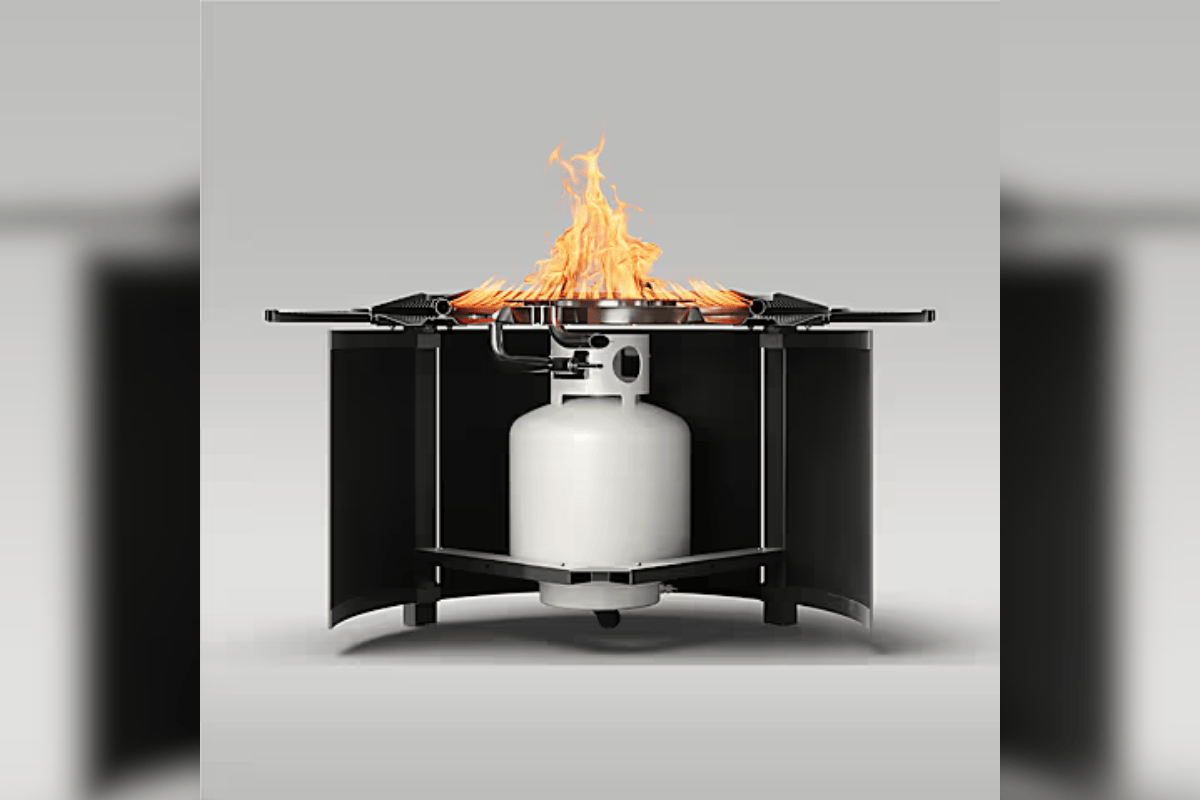
If you’ve been Googling best propane fire pit for dads, backyard fire pit upgrade, or smokeless fire pit with tabletop, congratulations, you’ve just found your winner. The Solo Stove Infinity Flame Propane Fire Pit is the latest drop from the company that turned smokeless fires into a suburban status symbol. And this one? It’s built for dads who want real fire vibes without the wood, the smoke, or the constant babysitting.
What Makes the Infinity Flame a Dad-Approved Upgrade
Solo Stove finally merged everything dads love: clean flames, low maintenance, and gear that doesn’t look like it came from the discount aisle. The Infinity Flame gives you:
-
Propane convenience (instant fire, zero hassle)
-
Wood-fire feel without smelling like last night’s brisket
-
Integrated tabletop for drinks, s’mores, and kid chaos management
-
A seating radius for 5–8 people — aka your family, two neighbors, and that one buddy who always “drops by”
It’s equal parts lifestyle flex and dad sanctuary.
Why This Fire Pit Matters for Dads
Backyards are the new living rooms. The new man caves. The new everything. And upgrading your outdoor setup isn’t just an aesthetic move, it’s how you create the nightly reset ritual every dad secretly needs.
A propane fire pit that still looks and feels like a real flame means more impromptu hangouts, more family time, and more nights where you actually unwind instead of doom-scrolling on your phone.
Plus, no smoke means the kids won’t complain, your clothes won’t smell, and your partner won’t ask why you “reek like a campsite.”
Who This Is For
-
Dads who love the fire but hate the fuss
-
Weekend hosts
-
Patio upgrade seekers
-
Gear guys who want the latest, cleanest setup
-
Anyone searching terms like best smokeless propane fire pit, modern fire pit for patios, or Solo Stove Infinity Flame review
The Dad Gear Takeaway
The Infinity Flame is more than a fire pit — it’s a backyard power move. A cleaner, easier, better-looking way to bring people together. If you’re building your dad arsenal…the tools, toys, and gear that turn a house into a kingdom, this one deserves a top spot. Get it here.
All flame. No hassle. Maximum dad energy.
Curated from: We Got an Exclusive Look Inside Red Wing’s American Boot Factory | Behind The Brand: Red Wing by Huckberry
For more than a century, Red Wing Shoes has built boots tough enough for the mines, mills, and main streets of America. In this Behind the Brand feature from Huckberry, we get an inside look at how they still do it: the old-school way, by hand, in Red Wing, Minnesota.
Watch the Video
Video courtesy of Huckberry and Red Wing Shoes.
The Breakdown
If America had an official boot, it’d be a Red Wing.
Since 1905, this Minnesota-based brand has been cranking out footwear built to take a beating and keep looking better with age. The story starts with Charles Beckman, a small-town shoe merchant who got tired of seeing workers ruin their feet on the job. His solution: build something that could handle a lifetime of hard use.
Over a century later, the company still makes its boots in the same town, under the same ethos: tough leather, honest work, and craftsmanship you can feel every time you lace up.
The Big Idea
Red Wing’s factory tour, shot by the team at Huckberry, isn’t about nostalgia. It’s about process — the kind of slow, deliberate craftsmanship that’s all but extinct in the age of fast fashion.
The company owns its own tannery, grades every hide by hand, and still uses Goodyear welt construction so their boots can be resoled and rebuilt for decades. Every step, from leather cutting to final polish, is done by people who actually care what their name stands for.
That’s what makes Red Wing special: it’s not a brand chasing trends. It’s a brand protecting a legacy.
The Process
1. Leather to Last a Lifetime
Red Wing controls its own leather from start to finish, ensuring consistency, character, and quality you can’t fake.
2. Built by Hand, Backed by Pride
Each pair is cut, stitched, and inspected by skilled craftspeople inside Red Wing’s Plant 2 — a living museum of American manufacturing.
3. Repair, Don’t Replace
Through its heritage repair service, Red Wing cobblers rebuild worn-out boots and send them back into the world for another decade of work.
The Takeaway
Red Wing doesn’t just make boots. It makes heirlooms. Every scuff tells a story. Every resole is a second life. And every stitch ties back to a century-old promise: build it right, build it to last.
If there’s a better metaphor for fatherhood and craftsmanship, we haven’t found it yet.
Originally featured in Huckberry’s “Behind the Brand: Red Wing”. All footage and photography courtesy of Huckberry and Red Wing Shoes.
Andersons Smoke Show walks you through a foolproof smoked-turkey process that turns average dads into backyard pit bosses. If you’ve ever wanted to pull off a Thanksgiving bird with crispy skin and juicy meat — this is the playbook.
Watch the Video
Video courtesy of Andersons Smoke Show
The Breakdown
This isn’t your grandma’s oven turkey. Andrew from Anderson Smoke Show treats the Thanksgiving bird like a science experiment — equal parts chemistry, craftsmanship, and pure smoky magic.
He shows you how to prep, brine, inject, and glaze your way to a turkey that’ll have your in-laws calling you “Chef” for the rest of the year.
The Big Idea
Forget wet brining. The secret is the dry brine. Salt draws out the moisture, then pulls it right back in, creating juicier meat and that golden, crispy skin every dad dreams of.
Then comes the flavor bomb: a butter-based injection spiked with herbs, spices, and brown sugar that supercharges the breast meat — the part that usually turns into sawdust at most family dinners.
Andrew smokes the turkey low and slow at 285°F on a Char-Griller Gravity 980, burning lump charcoal with hickory and applewood. Around the 4-hour mark, he hits it with a glaze made of honey, bourbon, and Cajun seasoning — sweet, spicy, and just a little boozy.
The result? A five-hour masterpiece with juicy meat, crispy skin, and bragging rights that last until Christmas.
The Process
1. Dry Brine Overnight
Coat the bird with a salt-based rub. Leave uncovered in the fridge overnight. This dries the skin and amps up flavor.
2. Inject Flavor
Mix melted butter, herbs, brown sugar, and Cajun spices. Inject it deep into the breast and thighs for next-level juiciness.
3. Tie & Prep
Truss the legs so the bird cooks evenly. Add a light dusting of rub before it hits the smoker.
4. Smoke at 285°F
Use lump charcoal with hickory and applewood chunks. Keep it steady. Patience pays.
5. Glaze at 155°F
Brush on the honey-bourbon-Cajun glaze once the breast temp hits 155°F. Cook until 165°F internal.
6. Rest, Carve, and Admire
Let the turkey rest before slicing. Soak in the applause.
The Sauce
Honey-Bourbon Glaze
-
½ cup honey
-
¼ cup bourbon
-
1 tbsp Cajun seasoning
Mix, brush gently on the bird near the end, and bask in that perfect amber color.
The Takeaway
A great smoked turkey isn’t just about feeding the family — it’s about mastering patience, precision, and the pursuit of flavor.
Andrew’s approach proves that technique beats tradition. Dry brine > wet brine. Injection > basting. Science > guesswork.
“If you can smoke a turkey, you can handle Thanksgiving — and probably life.”
Curated from: AWESOME Smoked Turkey Recipe For Beginners! by Andersons Smoke Show
Growing up, my dad had a handful of sayings he’d repeat to us before school, parties, or big events. Whether it was “read the damn problem” before a test, “proper planning prevents poor performance” before a speech or game, or “the hurrier I go, the behinder I get” when we rushed through something and made it worse — they were endless.
And, in my adolescence, admittedly annoying. But one that’s always stuck with me is: “Remember who you are, and where you came from.” That one usually came out before dates, going to a “friend’s house” (aka party) in high school, or leaving for college.
It was my dad’s simple reminder that our actions reflected not just on us, but on our family — and that first impressions are what reputations are built on.
As I’ve gotten older, I’ve started to see that phrase differently. Whether it’s in a job search, finding a spouse, or becoming a dad, the best thing you can do is know who you are, be proud of that, and stick to your values. When something doesn’t sit right, have the courage to speak up — but also the humility to listen and respect a different perspective.
Now, as a new father, that saying hits even deeper. It makes me think about how I want my kids to remember me — how I make them feel. I want to be the kind of supportive dad mine was: someone they can come to with anything.
And while discipline has its place, love and understanding should always lead the way. For others, “remember who you are and where you came from” might mean something entirely different — maybe it’s a promise to never return to a painful place or mindset. And that’s just as meaningful.
In the end, that phrase can mean many things to many people — and that’s the beauty of it. But I do believe it’s one of the most important lessons we can pass down to the next generation.
Childproofing hits different once you’ve stepped on a rogue Hot Wheels at 2 a.m. or watched your toddler sprint toward danger with Olympic confidence. This guide is the dad friendly, no fluff version of how to actually make your home safer without bubble wrapping your entire life.
Childproofing isn’t about paranoia. It’s about knowing where the real risks hide so your kid can explore without you having a mini stroke every five minutes.
Start With the Big Picture
Most parents start with the cute outlet covers and ignore the stuff that can really cause harm. You’re not most parents. You’re a dad who reads checklists. Respect.
Here’s how to get the house ready for a tiny human who believes gravity is a suggestion.
The Dad Day Childproofing Checklist
1. Anchor Everything
If it can tip, it will. Kids pull up on furniture, climb drawers, and test IKEA like it’s American Ninja Warrior.
Must haves:
-
Anti tip furniture anchors
Do this:
-
Anchor dressers, bookshelves, and TVs
-
Skip the cheap straps and buy metal brackets
-
Check for wobble monthly
2. Lock the Cabinets That Actually Matter
You don’t need to lock every cabinet. Just the dangerous ones.
Recommended:
-
Magnetic cabinet locks
-
Simple latch locks
High priority:
-
Cleaning supplies
-
Medications
-
Tools
-
Liquor cabinet
-
Under sink anything
Let them destroy the Tupperware drawer. It builds character.
3. Gate the Danger Zones
Kids only want to go where they shouldn’t. Gates help you fight physics.
Best picks:
-
Hardware-mounted baby gate for stairs
-
Wide baby gate for kitchens and playrooms
Gate these:
-
Stairs
-
Kitchens
-
Laundry rooms
-
Fireplace areas
4. Protect the Head Bonk Zones
Toddlers walk like drunk pirates. Corners and edges do not care (learned this the hard way).
Gear:
Focus on high traffic collision points. Skip foam padding your entire house.
5. Secure All Doors
They will figure out doorknobs. It is inevitable.
Helpful tools:
-
Top mounted safety locks
-
Simple pantry latches
Bonus: Put a bell on the front door. Cheap early warning system.
6. Handle Electrical Like a Pro
Outlet covers are the entry level move. Level up.
Recommended:
-
Sliding outlet covers
-
Cord management raceways
7. Hard Floors and Soft Falls
Kids fall constantly. Harden the house, soften the impact.
Useful items:
8. Kitchen: The Danger Buffet
The kitchen is a carnival of accidents waiting to happen.
Add:
-
Stove knob covers
Use back burners, turn handles inward, keep hot mugs off edges.
9. Bathroom Safety Is Non-Negotiable
Bathrooms are slip factories.
Set up:
Lower water heater to 120 degrees for safety.
10. Make a Safe Zone
Kids need one space where they can go feral.
Build it with:
-
High quality play mat
It’s not a prison. It’s controlled chaos.
Final Sweep: The Dad Day 60 Second Reset
Before bed or leaving the house, run this:
-
Close and latch cabinets
-
Pick up small objects
-
Check stove knobs
-
Unplug unnecessary appliances
-
Quick scan for cups, coins, or tools left out
The Takeaway
A childproofed home isn’t about removing every risk. It is about eliminating the predictable dangers so your kids can explore, topple, grow, and bounce back without a trip to urgent care.
Real dads don’t overprotect. They prepare the environment and let their kids learn inside it.
What Is the Cooper Test?
Forget fancy gym gear and $200 smartwatches. The Cooper Test is as old-school as it gets:
Run for 12 minutes. See how far you get.
Developed in 1968 by Air Force physician Dr. Kenneth H. Cooper, this test measures your aerobic capacity (VO2 max) — basically, how efficiently your body uses oxygen during exercise. It has been used by the military, police academies, and pro athletes for decades because it is brutally simple and brutally honest. No hiding behind “I lift heavy” or “I walk a lot.”
Twelve minutes on the clock tells you everything you need to know about your endurance and your honesty with yourself.
Why Dads Should Care
Because your fitness is your family’s foundation.
The Cooper Test is not about abs or aesthetics. It is about function and longevity — two things every dad should care about.
-
Chasing your kids without gassing out
-
Hiking without huffing
-
Handling stress better because your heart’s stronger
It is a reality check that does not lie, does not care about your excuses, and does not require anything more than a watch and a stretch of road.
In other words, it is dad fitness in its purest form.
How to Do the Cooper Test
1. Find Your Track (or Route)
A standard 400m track is perfect, but any flat surface works. Mark your start and note each lap or distance marker.
2. Warm Up
Spend 5 to 10 minutes jogging lightly and doing mobility drills. Keep it dynamic, not static. Loosen up your joints and wake up your lungs.
3. Run for 12 Minutes
That is it. Push yourself but pace smart. The goal is not to sprint and die, but to sustain effort for all 12 minutes.
4. Record Your Distance
Use a GPS watch, a running app, or count laps. Write it down.
5. Compare Your Score
| Age | Excellent | Good | Average | Below Avg | Poor |
|---|---|---|---|---|---|
| 30–39 | >2700m | 2400–2700m | 2000–2399m | 1600–1999m | <1600m |
| 40–49 | >2500m | 2100–2499m | 1700–2099m | 1500–1699m | <1500m |
| 50+ | >2300m | 1900–2299m | 1600–1899m | 1400–1599m | <1400m |
(Adapted from the original Cooper Institute standards.)
What It Tells You
The Cooper Test estimates your VO2 max, or your body’s oxygen efficiency.
Formula:
VO2 max ≈ (Distance in meters – 504.9) ÷ 44.73
A higher VO2 means a stronger heart, faster recovery, and more energy for life’s chaos.
Think of it as your fitness GPA — a single stat that reflects your engine’s horsepower.
How to Improve Your Score
-
Run More, Smarter
Do two to three runs a week. Mix long slow runs with interval training like 6x400m at 85% effort. -
Strength Plus Cardio
Combine resistance training (deadlifts, squats, pushups) with conditioning (sprints, rowing). Dads need both horsepower and stamina. -
Sleep and Nutrition
VO2 does not care about your macros if you are running on 4 hours of sleep. Hydrate, eat clean, and rest hard. -
Retest Every 8 Weeks
Improvement is addictive. Seeing measurable progress keeps you honest and motivated.
The Bigger Lesson
Here’s the truth: most dads do not need another 90-day shred challenge. They need a standard. The Cooper Test gives you one. It’s not about being elite, it’s about being honest.
The point is not running 3,000 meters. It is knowing you could if you had to.
Dad Day Takeaway
Take 12 minutes. Find a track. See what you’re made of. Then go home, sweaty and proud because your kids just saw what “showing up” looks like.
I never set out to become an expert in health insurance. I just wanted to take care of my family and not feel like I was lighting money on fire every month. If you’re self-employed, you know the drill. Every year it’s the same dance: compare plans, fill out forms, get hit with a number that makes you say, “There’s no way that’s right.”
For years, I paid over a grand a month for coverage that somehow didn’t cover anything. I’d get bills that made no sense, sit on hold for hours, and still end up paying for stuff I thought was included.
It’s the one part of being a dad and a business owner that always made me feel helpless. No matter how hard I worked, this one system had me beat.
One afternoon, I was sitting at the kitchen table doing that dreaded math again. Premiums, deductibles, out-of-pocket limits, and whatever else they can think up to confuse you. I just thought, this is insane.
I’d rather take that money and buy peace of mind somewhere else.
That’s when I found CrowdHealth.
At first, I figured “community health” was just another gimmick. It sounded like one of those vague startup ideas that disappears in six months. But I started reading, watched a few interviews, talked to a couple of members, and it just made sense. It was simple, transparent, and cheaper.
So I joined.
Within a month, my costs dropped by about 40 percent. My family of four went from paying $1,000 to under $600. And if something major happens, my max out-of-pocket is $500.
That’s it. No fine print. No “actually, that’s not covered.”
I still remember talking to my wife after that first month and saying, “I think this might actually work.”
The biggest game changer has been the virtual care.
With two little kids, someone is always coughing, sneezing, or breaking out in a rash. Now, instead of packing everyone in the car for urgent care, I just open the app, hop on a call, and talk to a real doctor. Usually within minutes.
They take their time, ask real questions, and if we need a prescription, it’s handled right there. It’s easily the most dad-friendly system I’ve ever used.
(And just to be clear, if it’s an emergency, you go to the ER. No question. This just covers everything else that makes parenthood a constant game of “Is this serious or just Tuesday?”)
But what really sold me wasn’t the cost or convenience. It was the community.
A few months back, I got an email from CrowdHealth about a woman who lost her husband unexpectedly. Members could chip in to support her as she faced life grieving an unimaginable loss while taking care of two little boys. My wife and I sent a little bit through Venmo.
It wasn’t much, but it felt right.
When was the last time your insurance company asked you to help someone instead of sending you another bill? That moment made it feel less like a system and more like a circle. Real people helping each other out.
I don’t usually write stuff like this, but switching to CrowdHealth has been one of the best calls I’ve made. Not just for our budget, but for my sanity. It’s simple. It’s human. And it doesn’t make me feel like I’m getting hustled every month.
I used to think traditional insurance was the responsible thing to do. Now I think being responsible means finding something that actually works.
So yeah, I’m not going back.
“Peace of mind shouldn’t cost more than your mortgage.”
Being a dad means protecting your family. Sometimes that means finding a smarter way to do it, even if it means walking away from the system everyone else says you need.
Editor’s Note:
Yep, we use CrowdHealth ourselves here at Dad Day. It’s been a game-changer for our own families, which is why we’re comfortable sharing this story.
If you want to give it a try, you can use our code DADDAY for a 3 month discount on your membership.
I’m assuming most of the dad’s out there had a pretty similar experience to learning as I did growing up. From elementary school to high school and any schooling thereafter, they all had a certain rhythm—the teacher or professor gives a lesson, you take notes (or, like me, you don’t), maybe you ask a question or two (or, like me, you don’t), then there’s a quiz to check progress, and finally The Big Test to see what you’ve learned.
It’s predictable—you study, you prepare, and you take the test. In theory, you know what’s coming (or, like me, you don’t do any of these and simply hope your guessing game is on point on test day).
But fatherhood? Oh man, fatherhood completely rewrites that playbook.
- In school, you learn the lesson, then take the test.
- In parenting, you get tested and then learn the lesson.
There’s no syllabus for this parenting thing. No heads-up before a pop quiz. No cramming for The Big Test.
In school, there’s consistency. Two plus two equals four, every time. The War of 1812 happened in 1812 every time (right?).
But parenting? Every child and situation is slightly unique and hardly anything is consistent. It’s almost impossible to prepare or know what’s coming and when.
Rarely, if ever, are two similar situations even remotely the same when you’re dealing with kids’ personalities, temperament, age, etc. When it’s time to take a bath, one kid may throw a temper tantrum while another may happily sprint to the bath to play in the water. That could all be completely different the next day.
There’s no consistency.
One day you’re coasting, thinking you’ve finally figured out this whole dad thing and the next, your toddler is having a meltdown in Target because you picked the wrong color of sippy cup.
Test administered. Lesson pending.
There’s No Study Guide for Fatherhood
Fatherhood is a lifelong series of pop quizzes and surprise tests. You don’t know when they’re coming or what subject they’ll be covering. Some are small—like realizing too late that nap time is sacred and should never, ever be disturbed. Others are bigger—like figuring out how to stay calm when your child says something hurtful or when your teenager makes a mistake that genuinely scares you.
These tests don’t come with a study guide. You can’t tell your toddler mid-tantrum to hold still for a second while you review the lesson plan for Tantrums In Target. And, unlike school, there’s no clear right or wrong answer. Sometimes you get it right by instinct, and sometimes you don’t.
So, as you’re standing in the middle of Target and after the tantrum finally gets to be too much, you lose your patience and say something you shouldn’t have, and you inevitably feel the sting of guilt afterwards.
Test failed.
Or, you get tested in a different way, one that on the surface seems like an easy A—your child is having a problem and you fix it. I mean, you’re Dad, right? You’re the parent who tries to fix every problem for your kids. That’s great until you realize later on that in order for them to succeed, they need to stumble a bit on their own. Although you had good intentions and a soft heart, you ended up taking the accomplishment away from them.
Another test failed.
(I’ll be the first to admit that this test is difficult for me to pass.)
In both cases, unlike school, the lesson is learned after the test.
You can’t mentally prepare for every situation because rarely will it happen how or when you thought it would. You just experience them as they happen, mess up, and grow from them.
Failing The Test Is Okay
Not all failure is equal.
In school, failure feels like a fixed trait. You bombed the test, your grade drops, your confidence takes a hit, and you live the rest of your days believing that History just isn’t your subject (or mine, in this case) and never will be. But in fatherhood, failure doesn’t feel so final. If used properly, it feels more like growth. It’s like you already know failure is part of the deal; it’s part of the curriculum. You’re expecting it but just hoping you don’t fall on your face too hard.
You fail, you reflect, you repair, and that is the learning.
You learn patience by losing it. You learn empathy by forgetting to show it. You learn the power of words by saying the wrong ones.
The test comes first. Then the lesson.
Who Needs a Study Guide Anyway?
As I’ve been on this dad journey for nearly two years now, I’m slowly realizing that this backward way of learning may actually be better. School prepared me to get the right answer. Fatherhood is teaching me to keep trying even when I don’t have it.
So, if you’re feeling like you’re constantly being tested and don’t have the right answers and are failing the tests—it’s okay. With each failure, you’re learning how to pass the next time.
And remember, we’re all learning as we go. Nobody has this dad thing figured out beforehand.
Oh, and don’t forget to suck up to the teacher (read: your spouse). If you do it right, it can help improve your grades (read: your life).
There was a time when vinyl lived in your dad’s basement next to a dusty receiver and a milk crate full of Zeppelin. Now it’s back in a real way. Kids are rediscovering it. Record stores are alive again. Turntables are selling out. And if you’re a dad, this is your moment to pass on the good stuff.
Vinyl isn’t nostalgia. It’s a ritual. A vibe. A way to show your kids music is something you feel, not something an algorithm serves to you.
Here’s the upgraded, deeper, crate-digging guide.
Why Vinyl Is So Back
Kids live in a world of infinite scroll. Vinyl hits them with a rhythm their phones can’t touch. You pick a record, drop the needle, and everybody listens. No skipping. No tapping. No distractions.
It’s analog attention. And kids crave it more than they realize.
What To Tell Your Kids
1. “This is how albums used to be experienced.”
Teach them that music wasn’t always microwave content. Vinyl forces you to sit with a full story.
2. “Vinyl isn’t perfect. That’s why it’s magic.”
The warmth, the crackle, the flaws. Imperfections make it feel alive.
3. “Record stores are treasure hunts.”
Let them dig. Let them discover. Let them buy something weird.
4. “Take care of your gear.”
Brush the needle. Sleeve the record. Put it back upright. Vinyl teaches responsibility without feeling like a chore.
5. “Good music outlives trends.”
You’re not just showing them albums. You’re showing them longevity.
What You Need To Get Started
Simple setup. No need to turn your house into a listening lounge.
Turntables
Speakers
-
Edifier R1280T
-
Klipsch R 41PM
-
Audioengine A2+
Cleaning kit
Carbon brush, microfiber cloth.
Storage
Upright. Tight. A cube shelf works great.
Vinyl Stuff You Should Know (The Dad Cheat Sheet)
Keep this list in your back pocket. It makes you sound smart without going full music nerd.
Mastering
How the final sound gets tuned for vinyl. Good mastering means warmth, punch, and emotion.
Pressings
Different batches of the same album. Some plants make better ones. Early pressings or high quality plants tend to sound best.
Weight
180 gram feels solid, but weight alone doesn’t make it sound better.
Source
“From the original tapes” or “all analog” usually means richer sound. Digital can sound great too if well done.
Plants to trust
QRP, RTI, Pallas, Optimal.
Names to trust
Kevin Gray, Bernie Grundman, Chris Bellman.
Red flags
Cheap novelty colors, budget represses, or anything designed for Instagram walls more than speakers.
Deep Cut Vinyl Starter Crate For Dads And Kids
A curated list of albums that sound incredible on vinyl and teach taste along the way.
Rock and Alternative
-
The War on Drugs — Lost in the Dream
-
Dire Straits — Making Movies
-
The Replacements — Let It Be
-
Television — Marquee Moon
-
Faces — A Nod Is As Good As a Wink
-
Blue Öyster Cult — Spectres
-
Tom Petty — Wildflowers
-
The Cars — Self Titled
Soul, Funk, and Groove
-
Bill Withers — Still Bill
-
Curtis Mayfield — Super Fly
-
Shuggie Otis — Inspiration Information
-
Gil Scott Heron — Pieces of a Man
-
The Meters — Rejuvenation
-
Bobby Womack — The Poet
Jazz
-
Herbie Hancock — Head Hunters
-
Grant Green — Idle Moments
-
Donald Byrd — Places and Spaces
-
Art Blakey — Moanin
-
Miles Davis — In a Silent Way
Indie Essentials
-
Bon Iver — For Emma, Forever Ago
-
The National — Boxer
-
Arcade Fire — Funeral
-
Tame Impala — Lonerism
-
Iron and Wine — The Creek Drank the Cradle
Soundtracks That Slap
-
Tron Legacy
-
O Brother, Where Art Thou
-
Blade Runner — Vangelis
-
The Big Chill
-
Guardians of the Galaxy Vol. 1
-
Heat
-
Lost in Translation
-
The Last of the Mohicans
-
Inception
-
Cowboy Bebop
-
The Crow
-
Drive
-
Amélie
-
The Social Network
-
Top Gun Maverick
-
Halo 2
-
Zelda Breath of the Wild
Where To Shop
Let them see the culture in real life.
Local record stores
Nothing beats a human recommending something to your kid.
Discogs
The vinyl internet. Great for rare finds.
Flea markets and thrift stores
Cheap, chaotic, magical.
Amazon
Solid for new pressings and quick buys.
Record Store Day
Twice a year. Feels like a festival.
How To Level Up Your Dad DJ Status
-
Create a family listening night
-
Teach them how to drop the needle
-
Build a shared crate
-
Let them DJ side B
-
Talk about the album art
-
Introduce them to hidden tracks and deep cuts
The Takeaway
Vinyl is back because families want real experiences again. As a dad, you get to be the guide. Drop the needle, turn it up, and show your kids how to listen with intention.
The music is great. The memories are better.
Professional CrossFit athlete Noah Ohlsen is used to heavy lifts, but fatherhood might be his biggest challenge yet. The Miami-based fitness icon opens up about his newborn son, the emotional rollercoaster of early parenting, and why staying grounded and smiling matters more than ever.
From CrossFit Podiums to Pampers
Most people know Noah Ohlsen as a CrossFit Games powerhouse, the Miami kid with the golden retriever, the megawatt smile, and the engine that never quits.
These days, his mornings start less with barbells and more with bottles. At just three months into fatherhood, Noah is learning the art of balance: supporting his wife after a tough delivery, finding rhythms as a new dad, and keeping the whole house smiling in the process.
“My heart swells with love thinking about all of the best parts of Oliver,” he says. “He’s an incredibly happy boy, smiling most of the time that he’s awake!”
The Hard Part
Like any new parent, Noah has faced his share of curveballs. Their delivery was not easy. A week-long NICU stay tested everyone’s nerves. Since then, he has been the calm anchor at home, helping his wife navigate the post-birth anxiety that many couples quietly battle.
“The hardest part,” he says, “has been seeing her struggle and trying to support her, reminding her that he’s perfectly healthy now, while still doing all the right things to keep it that way.”
That mix of empathy, patience, and quiet strength is the kind of fitness that does not show up on leaderboards.
The Good Stuff
For every tough moment, there are a thousand small joys. Noah lights up talking about his son, Oliver. The smiles, the chatter, the laughter that fills their mornings. “Seeing him and my wife laugh with each other melts my heart,” he says.
And while new parent life can be a blur of bottles, burps, and naps, the Ohlsens are already finding their rhythm: early mornings, family walks with their dog Max, and lots of tummy time before Noah sneaks in a quick gym session.
Lessons From the Trenches
What he wishes he knew before becoming a dad:
“Two bads and a good: how much your upper back burns when you’re rocking a baby to sleep for 10+ minutes, how little free time you have for simple things like reading a book, and how big you can love something so little right away.”
The best advice he’s gotten:
“Spend as much time with your baby and their mama early on as you can.”
Every story Noah tells circles back to being present, a quality that is as rare in high-performance sports as it is in modern fatherhood.
Balancing the Chaos
When life piles on, training, travel, business, and baby duty, Noah’s strategy is simple: breathe, stay calm, and lead with steadiness.
“Everything always works out,” he says. “I try to be the steady and confident leader in the house that everyone can count on.”
He is also mastering the underrated art of scheduling, making sure work, workouts, and family time do not compete but coexist. “And I always try to connect lovingly with my wife,” he adds. “Bonus if Oliver and Max are part of the embrace.”
Staying Grounded
For Noah, training is not just a career. It is therapy.
“Getting in a workout keeps me mentally and physically healthy,” he says. “But disconnecting from my phone and spending real, quality time with mama and baby, that’s the reset I need most.”
That balance between effort and ease, hustle and heart, defines this next chapter.
View this post on Instagram
Non-Negotiables
Being a fun and happy dad. That is his line in the sand.
“I want to make sure I’m smiling as often as I can,” he says. “If that’s in his nature too, I’ll know I did something right.”
Off-Duty Dad Mode
When he is not training or changing diapers, Noah’s simple pleasures still look like movement and movies. “Workout again, lol,” he jokes. “And going to the cinema. I miss that a good bit.”
Follow his journey on Instagram and YouTube @nohlsen.
The Takeaway
Fatherhood hits every muscle, the heart most of all.
Noah Ohlsen proves that being a strong dad is not just about lifting weight. It is about carrying the people you love with patience, joy, and a grin that says, we got this.