
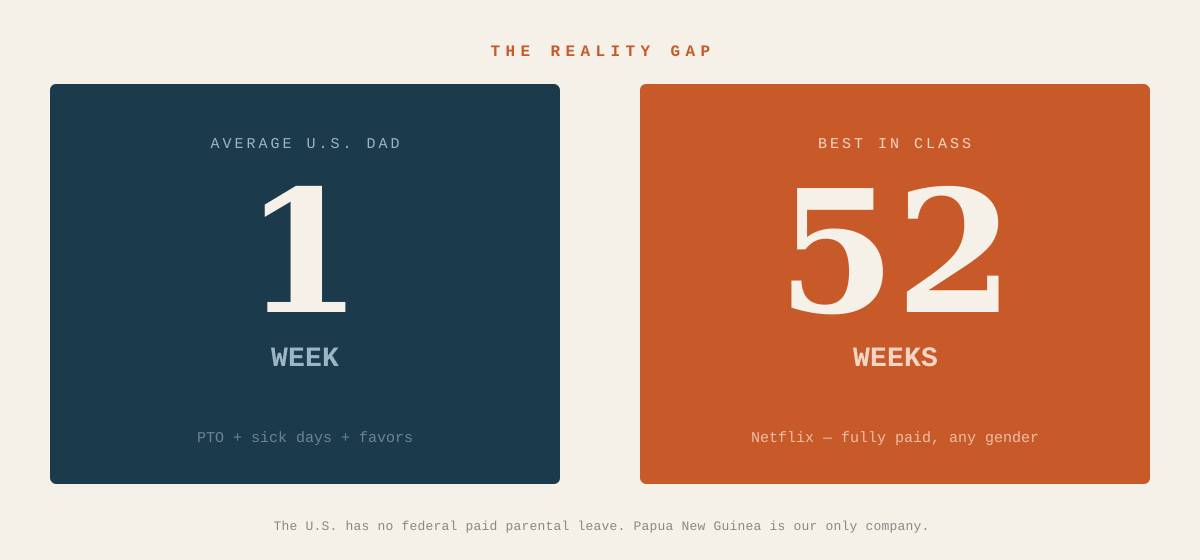
The United States is one of the only developed countries on earth with no federal paid parental leave.
Let that sink in for a second. Papua New Guinea is on that list with us.
Meanwhile, Sweden gives parents 16 months. The UK is at 39 weeks. Estonia tops out at 82. And in a growing number of those countries, a chunk of that leave is non-transferable for dads – use it or lose it – specifically designed to get fathers in the room from day one.
We’re not even close.
And yet something has shifted.
Dads want to be present more than any previous generation. Research consistently shows that modern fathers prioritize hands-on parenting – not just as a value, but as an identity.
The new dad isn’t looking to be the breadwinner who shows up on weekends. He wants to be there. He wants to be useful. He wants to know his kid. The problem isn’t desire. It’s policy. And the gap between what dads want and what most employers actually offer is still enormous.
Here’s the honest picture – and the companies that are starting to change it.
The Reality Check: Where Paternity Leave Actually Stands
Let’s start with the numbers, because they’re sobering.
There is no federal paid leave in the United States. The Family and Medical Leave Act (FMLA), passed in 1993, gives eligible employees up to 12 weeks of unpaid, job-protected leave – but only if you work at a company with 50 or more employees and have been there at least a year. For hourly workers, newer employees, or anyone at a smaller company? You’re largely on your own.
Only 13 states and Washington D.C. have paid leave programs on the books. The rest of the country relies entirely on employer discretion.
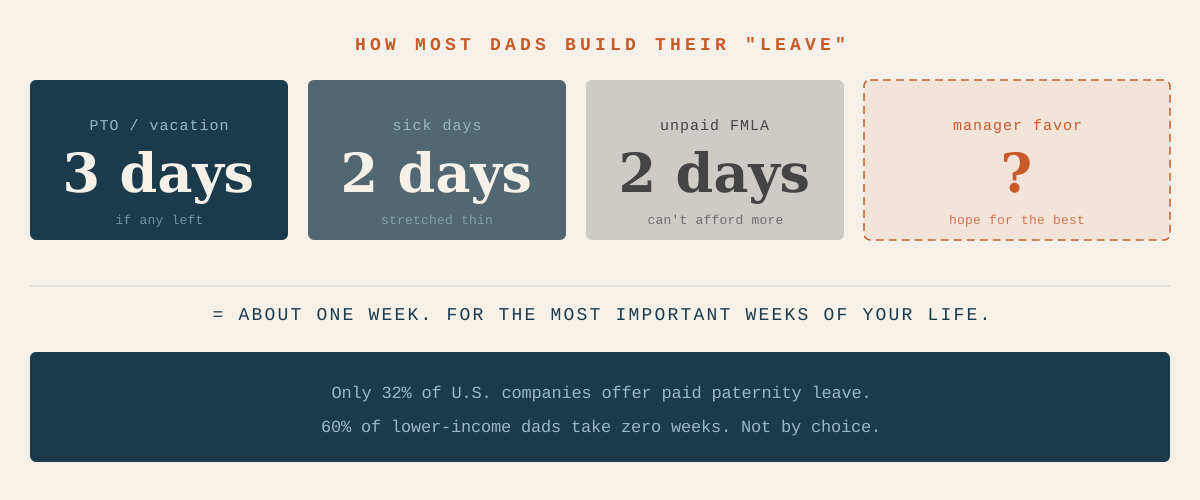
And just 32% of U.S. companies offer any paid paternity leave at all.
For low-income dads, it gets bleaker. One study found that nearly 60% of fathers in lower-income households took zero weeks of paid leave after a birth or adoption. Not a personal choice. A financial impossibility.
The average American dad who does get leave? Takes about a week.
One week. To figure out fatherhood. To learn how to hold his kid, read their cries, spell his partner through the 2am feeds, and show up as something more than a visitor in his own home.
The Census Bureau reported that about 50% of first-time fathers now take some form of paid leave – up dramatically from 23% in the late 1980s. Progress, sure. But we’re still talking about half of new dads piecing together PTO, unpaid days, and manager favors to be home for the most important weeks of their family’s life.
Why It Actually Matters (This Isn’t Just an HR Conversation)
The research on paternity leave has gotten more interesting, and more specific, than the old “bonding is good” talking points.
A 2026 study published in Translational Psychiatry tracked 25 first-time fathers through 24 weeks postpartum using brain imaging and found that the most significant neurological changes happen in the first six weeks after birth. The paternal brain isn’t just bonding emotionally – it’s physically reorganizing.
That early investment pays out for years. A study in the Journal of Marriage and Family found that fathers who took paternity leave had kids with better cognitive scores and fewer behavioral problems from preschool through early primary school – even after controlling for income, education, and other factors.
A Norwegian study found meaningful improvements in school performance at age 16 for children whose fathers took paternity leave. The bond formed in those first weeks sets a pattern – and the dads who establish themselves as equal caregivers early tend to keep that up.
And here’s the angle most HR departments should probably hear: companies that invest in parental leave and childcare see measurable gains in retention, engagement, and talent attraction.
Patagonia, which has run an on-site childcare program since 1983, estimates it recoups 91% of its childcare program costs through a combination of tax benefits, reduced turnover, and increased productivity – and turnover for parents in their childcare program runs 25% lower than the general employee population.
The Gap: What Most Dads Are Actually Doing
Here’s what the patch job looks like for most dads right now.
- FMLA covers unpaid leave – so if you can afford to go without income, you have protection. But most families can’t swing that, especially with a newborn adding new expenses.
- If you’re lucky enough to be in one of the 13 states with paid leave programs (California, New York, New Jersey, Washington, Colorado, Oregon, Connecticut, Massachusetts, Maryland, Delaware, Rhode Island, Minnesota, and Maine), you can access partial wage replacement regardless of your employer’s policy. But coverage levels and caps vary widely, and navigating the paperwork alone can be a job in itself.
- For everyone else, it’s a negotiation. PTO burned down to zero. Sick days stretched. Side arrangements with a sympathetic manager. The best case scenario for a lot of dads is two weeks stitched together from multiple buckets – and then back to work while their partner is still recovering and the baby is still waking up every two hours.
This isn’t a rant. It’s the math. And the math is why who you work for matters more than most dads realize.
The Companies Setting a New Standard
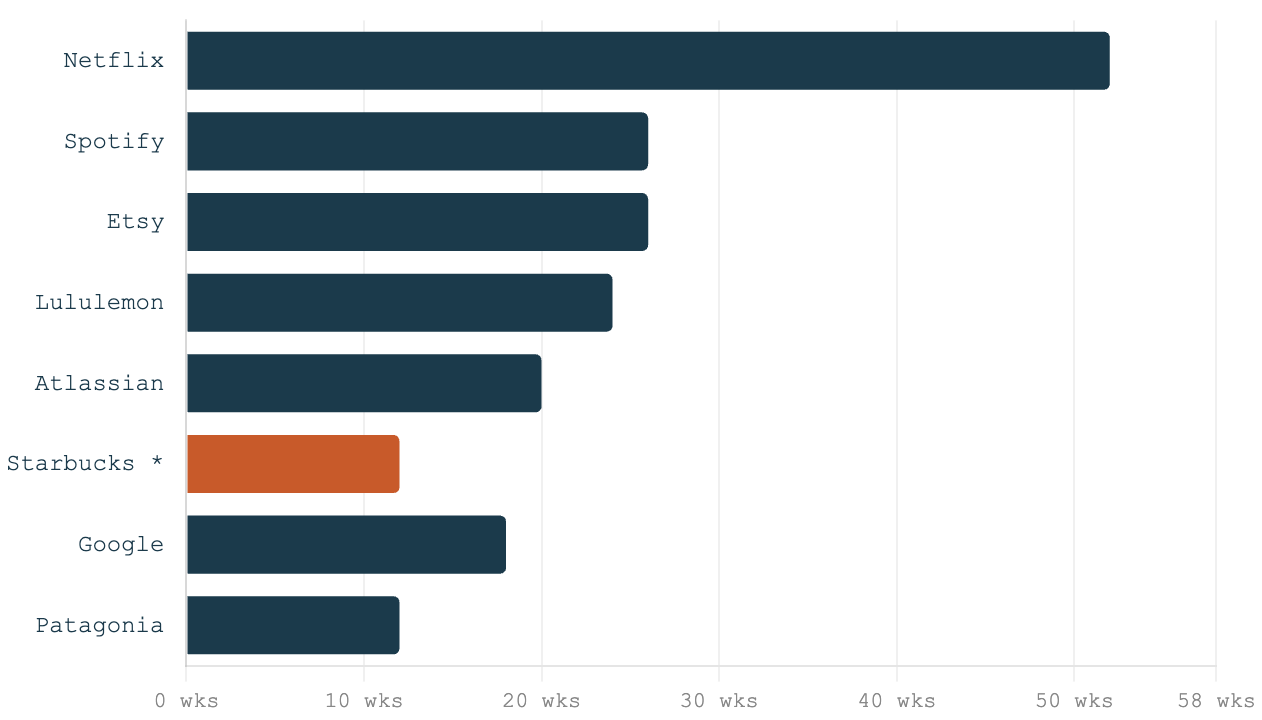
* Starbucks covers hourly partners working 20+ hrs/week. Most others are salaried employees only.
A small but growing group of employers have decided to actually do something about this. They’re worth knowing – both for the dads reading this and for any employer who wants to compete for the talent that cares about this stuff (which, increasingly, is everyone).
Netflix – Up to 52 Weeks
Netflix has long held the title of most generous in the U.S. Their policy: up to a full year of paid leave for new parents of any gender. Their official stance is essentially “take care of your baby and yourself” – most employees end up taking four to eight months. The policy applies to salaried employees and has been widely reported to be one of the main reasons top talent chooses them.
Worth noting: there was some noise in late 2024 about whether the policy was being quietly walked back, but Netflix’s Chief Talent Officer went on record saying the policy has not changed. They’ve been consistent: this is real, it’s paid, and it’s for dads too.
Spotify – 6 Months + 1 Transition Month
Spotify’s policy is built on Swedish DNA, and it shows. Every full-time Spotify employee worldwide is eligible for six months of fully paid parental leave, plus a seventh month for transitioning back. No gender qualifications. No tricks.
Their words: “Regardless of how your family is configured or your gender, if you have a baby, you can use this time in 2-month increments up until the child is 3 years old.” The U.S.-based employees have taken this benefit at strong rates – notable given that American workplace culture still tends to make men feel sheepish about actually using what they’re offered.
Etsy – 26 Weeks for All Parents
Etsy’s 26-week fully paid leave policy is gender-blind by design. When then-CEO Chad Dickerson adopted his son, he took his full leave and talked about it publicly – specifically to signal to working dads that taking leave is not something to apologize for.
The data from Etsy is remarkable: when they tracked who was using the policy, moms and dads were taking leave at nearly equal rates. Of the employees who took leave, 35% were promoted during or after. The policy is open to birth parents, adoptive parents, and parents who used surrogates.
Atlassian – 20 Weeks for Non-Birthing Parents
The Australian-American software company gives birthing parents 26 weeks and non-birthing parents 20 weeks – a meaningful number for dads. They also layer in parenting resources, behavioral and mental health support, and childcare services. Atlassian is known for being transparent about its benefits, and this policy is listed clearly on their public careers page.
Patagonia – 12 Weeks + On-Site Childcare
Patagonia has been doing this longer than almost anyone – their on-site childcare program dates back to 1983. Dads get 12 weeks of paid paternity leave, and Patagonia pays for a caregiver to accompany traveling new parents on work trips. The on-site childcare at their Ventura, CA headquarters and Reno, NV distribution center is subsidized and has been running continuously for over 40 years.
The result: 95–100% of Patagonia parents return to work after leave, compared to a national average of around 79% for mothers. The company’s argument is simple: this isn’t charity, it’s strategy. Turnover for parents with kids in the on-site program runs 25% lower than the general employee population.
Google – 18 Weeks for All Parents
Google bumped paid parental leave to 18 weeks for all parents in 2022, and up to 24 weeks for birthing parents. They also offer up to 8 weeks of paid caregiver leave annually. For a company of Google’s size and headcount, this is significant scale. They’ve also built out a gradual return-to-work program and additional transition support for new parents.
Lululemon – Up to 6 Months
Lululemon offers up to six months of paid parental leave for all types of parents – birth, adoptive, and foster. The amount of time you get scales with tenure, so long-term employees get the full benefit. Given that lululemon is a retail and athletic brand – not a tech firm – this stands out as an example of a consumer company taking the benefit seriously across its workforce.
Starbucks – 12 Weeks for Non-Birth Parents, Hourly Workers Included
This is the one that deserves special attention – not because 12 weeks is the longest number on this list, but because of who it covers. Most of the companies above are tech or professional services firms. Their “generous” policies often reach a workforce of salaried employees who already have financial cushion. Starbucks is different.
Here’s how this policy actually came to be: CEO Brian Niccol started visiting stores after taking the top job. Partners – hourly employees – told him directly that the existing leave wasn’t enough time for their families. He made the call to expand it within a week of hearing that feedback.
Starting March 2025, Starbucks more than doubled paid parental leave for U.S. store partners working an average of 20 or more hours per week. Non-birth parents – dads included – now get 12 weeks of fully paid leave. Birth parents get up to 18 weeks. This covers retail hourly workers. Baristas. Shift managers. The people who most need the income and least often have this kind of policy behind them.
Niccol put it plainly: “No other retailer offers a better parental leave benefit for new parents.”
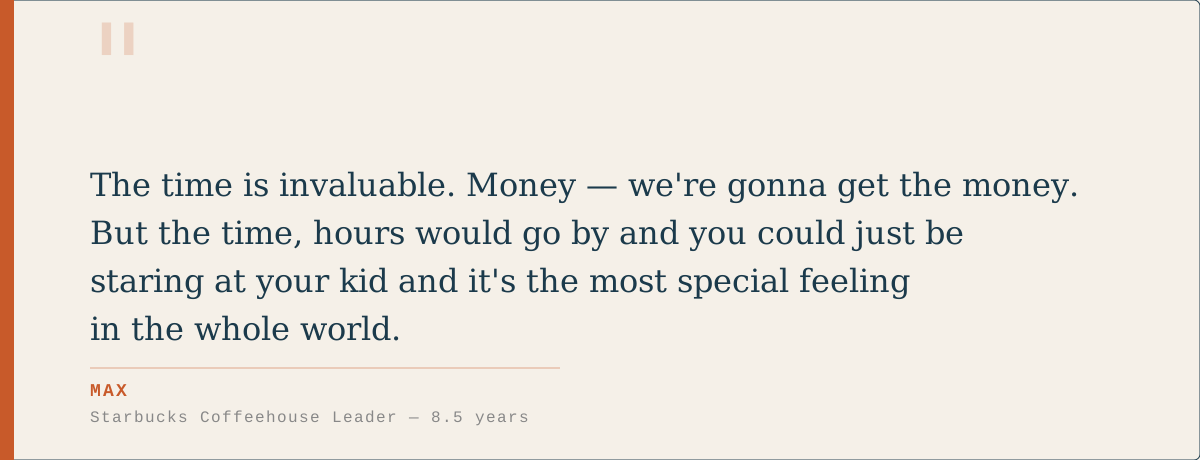
We talked to Max, a Coffeehouse Leader who’s been with Starbucks for eight and a half years – starting as a barista, working his way up, and earning his bachelor’s degree through the Starbucks College Achievement Plan along the way. He used the parental leave benefit when his son Callan was born, and he didn’t hold back on what it actually meant.
On the first weeks home: “Weeks one through four, you’re kind of just in the trenches – blacked out, every three hours you’re changing diapers, feeding, burping, making sure he’s going back to sleep. But that next six, eight, ten weeks was really where me and Callan’s bond truly developed. We got a lot of alone time together. And it truly changes the way me and Callan are now – we’re best buddies now.”
On the financial reality: “When we were on leave, my wife and I were able to save. In April, we bought a house. It was something we didn’t even have to stress about.”
Max also mentioned something worth noting: since going through the process himself, other Starbucks partners have been reaching out to him for guidance – questions about paperwork, California disability, the logistics.
He’s become an informal resource. “Starbucks makes the process so extremely easy,” he said. “It never feels like there’s a bad time to call someone. There’s always someone there to take away the stress.”
It’s one thing for a tech company to offer six months with full pay. It’s another thing entirely when a barista working 20 hours a week can afford to be home with his newborn – and come back talking about buying a house.
Beyond Leave: What a Truly Dad-Friendly Employer Looks Like
Paternity leave duration is the headline metric, but it’s not the whole picture. And not every company has the resources to offer six months of fully paid leave – that’s reality. But weeks isn’t the only lever. The best employers stack their benefits thoughtfully.
Here’s what to look for beyond the weeks:
- Flexible and remote work. The ability to work from home, compress your schedule, or shift your hours doesn’t disappear when the baby is six months old. Ongoing flexibility matters more than most people realize going into parenthood.
- Phased return programs. Some companies – Hewlett Packard Enterprise is a notable example – let new parents work part-time for up to three years as they transition back. That ramp matters, especially in the first year.
- Childcare support. On-site centers (Patagonia, a handful of tech giants), backup care programs, or direct subsidies. The U.S. childcare system is broken. Employers who acknowledge this and help bridge the gap are operating at a different level.
- Mental health resources. New fatherhood is a significant identity shift. Companies offering EAPs, mental health platforms, or parenting support programs are acknowledging the full picture of what new parents are navigating.
- Leadership modeling. This one’s cultural, not policy. A company can have a 20-week paternity leave policy and still have a culture where no man actually takes it because no one senior has ever done so. Look for organizations where leaders – especially male leaders – visibly use parental leave. Etsy’s CEO setting the example by talking openly about his adoption leave was more powerful than the policy itself.
If You’re a Dad Navigating This Right Now
Most companies are still not on this list. Here’s how to work the system you have.
Know your FMLA rights first. If you’ve been at your job for a year and your employer has 50+ employees, you’re entitled to 12 weeks of unpaid, job-protected leave. It won’t pay the bills, but it protects your position. That’s the floor.
Check your state. If you’re in one of the 13 states with paid leave programs, you may be entitled to partial wage replacement regardless of what your employer offers. Look this up before you assume you get nothing – a lot of dads leave this money on the table.
Ask HR specific questions. Don’t just ask “what’s the paternity leave policy?” Ask: Is this available to non-birth parents? Does it apply to hourly and salaried employees equally? Can I stack PTO with leave? Is there a phased return option? The details matter, and most HR departments will answer if you ask directly.
Start the conversation early. Don’t wait until your partner is eight months pregnant to figure out your plan. The earlier you raise it, the more time you have to negotiate, plan finances, and set expectations for coverage.
Make the business case when negotiating. If you’re asking for more than what’s on paper, frame it professionally. Research what comparable companies in your industry offer. Point out retention data. Make it about value to the organization, not personal preference – even if it is both.
Plan the finances. If unpaid leave is your only option, treat it as a fixed expense and start saving six months out. Even banking three to four weeks of cushion changes the math on how much time you can actually take.
Use what you’re given. This sounds obvious, but data shows that even when paid leave exists, many dads don’t take the full amount. Workplace culture, guilt, and pressure from managers all play a role. Take the leave. It exists for a reason. The research is clear: those weeks are foundational to the kind of father you’re going to be.
The Bottom Line
We’re in an era where modern dads genuinely want to be present – from the first hours, not just the first few weekends. The culture has shifted faster than the policy. And right now, there’s a real gap between the dads we want to be and the systems we’re working inside.
Some companies are closing that gap. The ones listed here are worth knowing – whether you’re considering a job, negotiating a benefit, or making a case internally for why your workplace should do better.
Because those first weeks aren’t a perk. They’re when fatherhood actually starts.
Join the Family


Most dads are operating at capacity. Full calendar, full inbox, full mental load. And somewhere in the middle of all of it, there’s supposed to be time to be a good dad, a solid partner, and a functioning human being.
AI doesn’t fix all of that. But it handles enough of the noise that the signal gets clearer.
We’re not talking about replacing your thinking. We’re talking about outsourcing the stuff that eats your time without earning it. The emails. The research. The first drafts. The scheduling. The planning. All of it.
Here’s how dads are actually using AI right now to save time and think bigger.
1. Writing Emails That Should Take 30 Seconds but Don’t
You know the email. The one where you need to say something diplomatically, or follow up on something awkward, or push back on someone without burning a bridge. You’ve been sitting on it for two days.
Paste the context into ChatGPT or Claude. Tell it the tone you want. Get a draft in 10 seconds. Edit it down to you. Done.
Use this for: Work emails, HOA complaints, contractor follow-ups, school administrator conversations.
2. Building a Weekly Family Schedule That Actually Works
Tell the AI your kids’ ages, activities, your work hours, and any constraints. Ask it to build a weekly schedule that accounts for homework time, wind-down routines, and a realistic bedtime. It won’t just spit out a template. It’ll think through the sequence.
Most dads spend more time arguing about the schedule than the schedule deserves. Let AI draft it. You decide what stays.
3. Meal Planning for the Week in Under Five Minutes
Tell it how many people are eating, any dietary restrictions, how much time you have on weeknights, and what your kids actually eat. Ask for a full week of dinners with a consolidated grocery list.
ChatGPT can generate a week of kid-friendly dinner ideas that take less than 30 minutes to prepare. That used to take a Sunday afternoon. Now it takes a prompt.
4. Summarizing Long Articles and Reports You’ll Never Actually Read
That 40-page school district report. The long thread about something at work. The article someone sent you that matters but that you haven’t touched in three weeks.
Paste it into Claude or ChatGPT. Ask for a summary in plain language with the three most important points. Read that instead. Make the call.
5. Researching a Big Purchase Without Going Down a Rabbit Hole
Car seat. Lawn mower. Home security system. New mattress. You know the drill. Three hours of tabs, conflicting Reddit threads, and you’re more confused than when you started.
Ask Perplexity. It searches the web and gives you a sourced summary of what actually matters. Ask it to compare the top three options with pros and cons. You get an answer, not a spiral.
6. Preparing for a Hard Conversation
With your kid. With your boss. With your partner. With a contractor who did the job wrong.
Ask the AI to help you think through the conversation. What’s the goal? What’s the other person likely to say? What’s the most important thing to land? This is not about scripting. It’s about clarity before you walk in.
7. Drafting a Budget and Actually Understanding It
Paste in your income and major expenses. Ask for a simple breakdown, a savings recommendation, and where the obvious leaks are. Ask follow-up questions in plain English.
You don’t need a financial advisor to run basic numbers. You need a patient, non-judgmental tool that does the math and explains the thinking.
8. Turning Your Random Notes Into Something Usable
The voice memo from the parking lot. The note you typed at 11pm. The three bullet points that were supposed to become a plan.
Dump them into Claude. Ask it to turn them into a structured document, a to-do list, or a short outline. The thinking is already there. AI just organizes it.
9. Helping Your Kids With Homework Without Doing It for Them
The right prompt isn’t “do my kid’s homework.” The right prompt is “explain this concept like my 10-year-old doesn’t understand it yet” or “give me three ways to help a kid understand fractions.”
You become the tutor. AI gives you the material. That’s a different thing entirely.

10. Writing Performance Reviews, Self-Evaluations, and Work Documents
Most dads are not bad at their jobs. They’re bad at writing about being good at their jobs. It’s a different skill.
Give Claude or ChatGPT your bullet points of what you actually did. Ask it to turn them into professional language for a performance review or self-evaluation. Edit for accuracy. Submit.
11. Planning a Trip Without Using a Travel Agent
Tell it where you want to go, how many days, who’s coming, what ages, what your budget is, and what you do not want to do. Ask for a day-by-day itinerary with restaurant suggestions and logistics built in.
It won’t book the flights for you. But it will save you 6 hours of browser tabs.
12. Getting Smarter on a Topic Fast
Your kid just got diagnosed with something. Your company is pivoting to a new market. You’re about to negotiate a salary. You have 20 minutes to get smart.
Ask Perplexity or Claude to give you a grounded, sourced overview of the topic. Ask what the most important things to know are. Ask what questions you should be asking.
AI is an amplifier. If you have deep knowledge of how something should be done and you can articulate it well, AI is your superpowered sidekick.
13. Writing Speeches, Toasts, and Cards That Don’t Sound Generic
Father of the groom toast. Your kid’s graduation card. A eulogy for someone who mattered.
Tell the AI who the person is, what they mean to you, and two or three specific memories or qualities. Ask for a draft. It gives you a structure and language you can make your own. Nobody has to know it started somewhere else.
14. Processing a Decision You’ve Been Stuck On
Should we move? Should I take the new job? Should we pull our kid from the school?
Write out the situation to Claude or ChatGPT like you’re explaining it to a smart friend. Ask it to help you think through the tradeoffs. Ask what questions you haven’t considered. Ask it to steelman the option you’re leaning against.
It won’t make the decision. But it’ll get you unstuck.
The tools are free. The time you get back is not
15. Automating the Stuff That Repeats
The weekly check-in email. The monthly expense summary. The quarterly update for your side project. These things happen over and over and you write them from scratch every time.
Build a template prompt once. Paste in the new data. Get a draft. Takes two minutes instead of twenty.
16. Getting a Second Opinion on Something You Wrote
Ask Claude to review your email, your proposal, your cover letter, your complaint. Ask it to tell you what’s unclear, what’s missing, and what’s working. It won’t flatter you. It’ll just tell you what it sees.
17. Explaining Something Complicated to Your Kids
Death. Divorce. Money problems. Why the country feels tense right now.
Ask the AI to help you explain it in age-appropriate language. Give it the age of your kid and the topic. It’ll give you a starting point and language that doesn’t either oversimplify or overwhelm.
18. Finding the Right Doctor, Contractor, or Professional
Ask Perplexity what to look for when hiring a pediatric specialist, a general contractor, a financial planner. Ask what questions to ask in the first conversation. Walk in knowing what you’re evaluating.
19. Building a Fitness Plan You’ll Actually Follow
Tell it your schedule, your equipment, your goals, and your honest fitness level. Ask for a realistic program that fits in 30 minutes three times a week. Ask it to build in progression so it stays relevant as you improve.
No gym required. No app subscription. Just a plan that fits your life.
20. Cutting Your Meeting Prep Time in Half
Before a big meeting, give Claude the context: who’s in the room, what the goal is, what the likely objections are, what you need to leave with. Ask it to help you prepare talking points and anticipate what comes up.
You walk in sharp instead of winging it.
21. Writing a Job Description for a Role You’re Hiring
Most job descriptions are either too vague or copied from someone else’s. Tell the AI the actual work the person will do, the skills that matter, and the culture of your team. Ask for a draft that sounds human and attracts the right people.
22. Organizing Your Finances Before Tax Season
Ask it to build you a simple spreadsheet template for tracking deductions, categorizing expenses, or summarizing a year of spending by category. Ask it to explain what’s deductible in plain English. Ask follow-up questions.
You still need an accountant for the filing. But you show up way more prepared.
23. Learning a New Skill Without Paying for a Course
Pick a skill. Ask Claude or ChatGPT to teach it to you in a structured way over four weeks. Ask for the most important concepts first, then the practice exercises, then the common mistakes. Ask questions as you go.
This is how self-education works now.
24. Drafting a Will or Estate Plan Outline
AI can’t replace an estate attorney. But it can help you understand what questions to ask, what a basic will needs to cover, and what you haven’t thought about yet. Go into that attorney meeting informed.
25. Getting Your Side Project Off the Ground
The idea that’s been living in your notes for two years. Ask AI to help you validate it, outline the first steps, identify the three things you have to figure out first, and draft a simple one-page plan.
It won’t do the work. But it’ll get you started, which is the hardest part.
Which AI Tool for Which Job: The Dad Day Breakdown
Not all AI tools are built the same. Here’s the honest breakdown of the main players and where each one earns its place.
ChatGPT (OpenAI)
Free tier available. Plus plan $20 per month.
The most widely used AI in the world. It’s fast, capable, and good at a wide range of tasks. Best when you need something done quickly across a variety of use cases. The free tier handles most everyday needs. The paid tier adds more power for complex tasks and longer documents.
Best for: General productivity, brainstorming, quick drafts, coding help, math explanations.
Not ideal for: Deep research where you need citations. Writing that needs to sound exactly like you.
Claude (Anthropic)
Free tier available. Pro plan $20 per month.
The best writer in the room. Claude produces cleaner, more natural prose than any other major AI. It’s also better at reading long documents, understanding nuance, and helping you think through complex problems without giving you a surface-level answer.
Best for: Writing, editing, long documents, thinking through decisions, preparing for hard conversations.
Not ideal for: Real-time research. If you need current information, it won’t browse the web on the free tier.
Perplexity
Free tier available. Pro plan $20 per month.
Think of it as a search engine that actually reads the results. Every answer comes with cited sources. It’s built for research, not conversation. If you need to get smart on a topic quickly and you want to know where the information came from, this is the tool.
Best for: Research, fact-checking, finding sourced answers fast, comparing options before a purchase.
Not ideal for: Writing help, creative tasks, or anything where you need a back-and-forth conversation.
Gemini (Google)
Free tier available. AI Pro plan $20 per month.
Google’s AI. Lives inside Google Docs, Gmail, and Drive. If your work life runs on Google’s ecosystem, Gemini is the most frictionless option because it works right where you already are. It also has one of the largest context windows of any AI, meaning it can read and summarize very long documents.
Best for: Anything you’re already doing in Google Docs or Gmail. Summarizing long research. Current events and news.
Not ideal for: Writing that needs personality. It tends to sound corporate.
The Honest Answer on Cost
Every tool has a free tier. For most of what’s on this list, free is enough to get started. If you end up using one tool heavily, one $20 per month subscription covers most needs. You do not need all four.
Start with one. Figure out what you actually use it for. Then decide.
You do not need to become a tech person. You need to know what you want and be able to say it clearly. That is the entire skill set.
The 3-Minute Takeaway
You do not need to become a tech person. You need to know what you want and be able to say it clearly. That is the entire skill set.
Pick one thing on this list. Try it today. If it saves you 20 minutes, that is 20 minutes you did not have yesterday.
The tools are free. The time you get back is not.
What to Use and When
Writing and thinking: Claude
Research and fact-checking: Perplexity
General tasks and quick answers: ChatGPT
Anything in Google Docs or Gmail: Gemini
Start with one. Add a second when the first becomes habit.
Try It This Week
Pick the task on this list that costs you the most time or mental energy. Run it through whichever tool fits. See what comes back. The first time feels weird. The second time feels obvious. By the third time you will wonder what you were doing before.
We cover this kind of stuff every week. Practical ideas, gear worth buying, and the kind of advice that actually holds up in the real world. Our Monday, Wednesday, and Friday newsletter goes out to 50,000 dads who want more of the good stuff and less of the noise.