
Father’s Day is a good time to stop and ask the question we don’t ask enough.
Not “what are you getting for Father’s Day?” Not “what’s your parenting philosophy?” Just: what does fatherhood actually look like for you right now? The good stuff. The hard stuff. What your kids have taught you. What you’d tell a new dad if you had one minute with them.
We asked our community. Dads from across the country answered.
Here’s what they said.
The Favorite Parts
We could have predicted some of these. We couldn’t have predicted all of them.
Nick Cook from Durham, NC, a graphic designer and dad to a 2.5-year-old son, put his right at the top: “Getting to embrace my inner child and be silly with my son. His laugh is contagious.”
Devon Garcia from Portland, OR, a Solutions Engineer at Slack whose daughter is eight months old, described it as “a free jolt of pure joy and dopamine from a simple laugh.”
Same feeling. Different words. Dad after dad came back to this one. The laugh. The specific, irreplaceable laugh of your specific kid.
Casey Stevens from Columbus, OH, who has a six-year-old and two-year-old boy/girl twins, described coming home from work to “the pitter patter of tiny feet racing to the door” and hearing “Daddy’s home.” He’s not alone. That sound came up in multiple forms across the responses.
Andrew Vossler from Charleston, SC, an executive coach with four kids ranging from five months to six years, described experiencing ordinary things as brand new again: “They didn’t know churros existed. The other day we went out on a mission to find and enjoy churros. Their minds were blown.”
Austin Bergstrom from Charlotte, NC, a mortgage loan originator with a 16-month-old daughter, said it simply: “How curious she is, and how much she loves us right now. All she wants to do is be outside, play, and be around us.”
And then there’s Jon Harris from Knoxville, TN, who has a unique vantage point on the whole thing. His son is 25. His daughter is 23. His youngest daughter is 19 months old. He became a dad again at 46, and he’s not taking any of it for granted.
“Every day she learns a new word, discovers something new, or finds a reason to laugh. I don’t take any of the so-called little things for granted.”
A second chance to do it with full awareness of how fast it goes. If that’s not a Father’s Day story, we don’t know what is.
The Hard Parts
Nobody pretended it was all churros and contagious laughs.
Nick Cook went straight for it: “Potty training, hands down. It is not for the faint of heart.”
Chris Reed from Phoenix, AZ, a customer success manager with a two-year-old and another baby due in November, named what a lot of dads feel but don’t always say: “Balance and patience. I want to do the best I can in so many things, but that can cause stress that eats away at other parts of my life.”
Austin Bergstrom said it differently but landed in the same place: “Always being on the go and rarely having my own time. Every day is a constant battle of getting all my work done to be able to spend time with my wife and daughter.”
Taylor Marton from Woburn, MA, a stay-at-home dad with a three-year-old and a newborn, described “managing the intense three-year-old mood swings and not letting his emotions dictate my emotions.” Anybody who has spent time with a three-year-old knows exactly what he means.
Luke Lasiloo from Flagstaff, AZ, a warehouse manager at a food bank with a two-year-old, got honest about something a lot of dads feel but rarely say out loud: “He is really attached to mom right now and only wants mom. It hurts my soul every time. But once I rip him away and it’s just the two of us, things are fantastic. It’s a real battle to not want to check out and melt into the background.”
That last sentence. That’s the one.
Christian Thorndike from Greenville, SC, an attorney with two boys ages two and three, is currently solo parenting for five weeks due to a family medical situation: “When stress, sickness, trying to be a good parent, work, and setting boundaries all combine, it becomes a bit overwhelming. But I’d rather have the bad days with them than days without them.”
And Rob Hogan from North Georgia, a forensic accountant whose daughter is 11, described the first moment in his parenting journey where he genuinely felt out of his depth: navigating puberty with his daughter. “It doesn’t matter how many books I read or women I talk to. I will never understand the emotional and physical changes she’s going through. It’s the first time I’ve felt genuinely ill-equipped to help her.”
There’s no hack for that one. Just showing up.
Join the Family


What Their Kids Have Taught Them
This was the section we weren’t fully prepared for.
The answers came in different words. And almost all of them said the same thing. Slow down.
Taylor Marton: “They’ve taught me to slow down and not rush so much. Our society is always in such a hurry to do everything, and my toddler has really challenged me to slow down and not make everything a rush.”
Jon Harris: “My older kids taught me that the years fly by. My youngest reminds me not to rush through them. She wants to stop and look at bugs, throw rocks in the creek, and dance to the same song over and over. Most days, she’s right.”
David Case from Edmond, OK, a forklift driver with a one-year-old: “She’s taught me to slow down and enjoy the moments. To really pay attention to life’s moments.”
Christian Thorndike: “Being present and enjoying even the smallest things in life.”
Stan Navrude from Overland Park, KS, a retired pharmaceutical professional whose sons are now 34 and 30, offered the long-view version: “Patience. I find myself emulating them at times.”
Brandon Jackson from Northeast Pennsylvania, an ESG reporting controller with a two and five-year-old: “Kids are a mirror, and I need to lead by example.”
Luke Lasiloo: “Gratitude. Hearing his little voice say ‘thank you’ every time you hand him something makes you really step back and look at what’s really important.”
And Rob Hogan’s 11-year-old daughter keeps him honest in the most direct way possible: “She will call me out if I try to preach something I don’t practice or if I’m not living up to my commitments. It’s a good reminder that we are what we do, not what we say.”
Chris Reed from Phoenix distilled it to one line: “Even the simplest things can be fun and bring a smile.”
What They’d Tell a Brand New Dad
This is the part we’ll be coming back to.
Nick Cook: “Be kind to your partner, be kind to yourself. The early days are a blur, but patience, teamwork, and a sense of humor will get you through.”
Devon Garcia: “No one has it completely figured out. There’s a lot of knowledge out there, but we’re all in it together of not knowing what we’re doing. Advice is take or leave. You have to tinker and try things, and that’s the fun part.”
Chris Reed: “Find community. It’s okay to be bad at this, it’s your first time. Communicate with your partner.”
Mike Tarnovsky from Marblehead, MA, a software sales professional with a 2.5-year-old son and a 2.5-month-old daughter: “This too shall pass. No matter the hardest days you have, your kids will do the smallest thing that makes you laugh and everything is forgotten. Also, don’t forget about your wife. Get her flowers or coffee on a random day of the week. She’ll appreciate it more than you’ll ever know.”
Taylor Marton: “Give yourself, your kids, and your partner lots of grace. We are all trying to be the best parents and kids we can be. No one is perfect.”
Brandon Jackson: “The clichés are true. Enjoy the little things, they grow up fast. Give your kids, your partner, and yourself some grace.”
Casey Stevens: “The days are long but the weeks are short. Time flies. Stop to take a moment and enjoy these days.”
Christian Thorndike: “Days are long, years are short. You don’t realize when you’ve done something for the last time until it’s really gone, like rocking the kid to sleep. Don’t rush it, no matter how difficult the days are.”
Dakota Carter from Birmingham, AL, a maintenance mechanic who is raising a 14-year-old nephew and has a 13-month-old daughter: “Don’t rush anything. Don’t rush to have kids. Don’t rush through the newborn stage. Don’t rush the moments that feel insignificant. In my experience, that’s where I’ve had the best conversations.”
Andrew Vossler from Charleston said something we think every dad needs to hear: “Do it in a way that is authentic to you and your partner. And do it with a larger community. Family, friends, church, neighborhood. I believe strongly we are not designed to parent in silos.”
Jon Harris, with 25 years of fatherhood behind him and a 19-month-old in front of him: “You don’t have to be perfect. You just have to keep showing up. The ordinary moments are the ones you’ll miss the most. Be there for them.”
Rob Hogan: “Get a day planner and use it as a journal. Take a few minutes every day to jot down a couple of notes. I’ve been doing this for a while and it’s amazing to look back and see moments that made an impression at the time. I know it’s cliché to say they grow up fast, but this has been one of the best pieces of advice I’ve ever received.”
And our favorite of the whole thread, from Chris Rodinsky, a therapist in California with two kids ages one and two: “Be the pier, not the PA system. Kids and wives need somewhere safe for their emotional waves to land. Your relationship is the pier. Your voice is just the PA system. Never confuse the two.”
What We Took From All of This
Different dads. Different cities. Different jobs, different ages, different stages of the fatherhood journey from eight months in to 35 years deep.
And the through line across every single response was the same.
The little moments are the big moments. You don’t know which ones will matter until they’re gone. Slow down. Be present. Give grace to everyone in the house, including yourself.
That’s not a parenting philosophy. That’s hard-won wisdom from men who are in it every day, figuring it out in real time, doing their best with what they have.
Happy Father’s Day to every dad in this community. You’re doing better than you think!
There’s a version of your kid you’ve never met.
Not the one at the dinner table negotiating screen time. Not the one in the backseat of the minivan refereeing a sibling argument. Not the one performing for the whole family at a holiday gathering.
The one who only shows up when it’s just the two of you. Somewhere new. No agenda. No audience.
That version of your kid is worth knowing. And a solo trip is one of the fastest ways to find them.
This isn’t a new idea. But the research behind it is getting hard to ignore. And the dads who’ve done it, whether it’s a weekend camping trip with a six-year-old or a flight to somewhere meaningful with a teenager, consistently describe it as one of the best things they’ve ever done as a father.
Here’s everything you need to know.
What the Research Actually Says
One-on-one parent-child travel is officially a trend. The 2025 Hilton Trends Report found that 70% of parents of Gen Alpha kids are actively planning one-on-one travel with their children, involving them directly in destination and itinerary decisions.
But beyond the trend, the science behind why it works is solid.
Dr. Julie Cederbaum, an associate professor at USC whose work focuses on child and adolescent wellbeing, puts it plainly: “One-on-one travel, in particular, really allows for focused time with and attention to that child, increasing attachment and creating shared positive memories.”
University of Oxford research found that daughters with strong bonds to their fathers are significantly more likely to have healthier relationships with partners later in life.
University of Minnesota research confirmed that shared experiences like travel create lasting memories and strengthen emotional bonds in ways that routine daily interaction simply cannot replicate.
And on the father side?
Studies consistently show that dads benefit too. Lower stress. Higher sense of purpose. A clearer picture of who their kid actually is outside of the family system.
The mechanism isn’t complicated. When it’s just the two of you, the dynamic changes completely. There’s no partner to defer to, no siblings competing for attention, no household logistics pulling focus.
It’s just you and your kid, figuring it out together. That specific combination of shared challenge, undivided attention, and new environment accelerates bonding faster than almost anything else you can do.

Why These Trips Hit Different Than Family Vacations
Family vacations are great. We’re not arguing against them.
But here’s what happens on a family trip. You manage logistics. You negotiate between competing preferences. Someone is always tired or hungry at the wrong time. The adults end up coordinating more than connecting. The kids orbit around the family unit instead of stepping into their own.
A one-on-one trip removes all of that.
Your kid gets your full attention for the entire trip. Not shared attention. Not divided attention. Yours.
And something happens when a child realizes they have a parent entirely to themselves in a new place. They open up. They get curious. They say things they wouldn’t say at home.
One father who took his daughter to Bergen, Norway described it this way: his daughter’s confidence acted as an icebreaker, and they interacted with far more people than he would have if traveling alone. The trip changed how he saw her. And it changed how she saw herself with him.
That’s the thing nobody tells you before the first one. You don’t just learn more about your kid. You become someone different to them.
The Age-by-Age Guide
Toddlers and Early Kids (Ages 3 to 5): Keep It Close, Make It Magic
The first solo trip doesn’t need to be ambitious. At this age the magic is entirely in the fact that it’s just you two.
A one-night stay at a hotel with a pool. A train ride to a nearby city. A camping trip an hour from home. The destination is almost irrelevant. What matters is that you planned something just for them, you’re giving them your complete attention, and they get to stay up a little later than normal because the rules are different when it’s just Dad.
At this age kids are deeply present. They don’t need itineraries. They need you on the floor with them, letting them take the lead on what they want to explore next.
Keep it short. One or two nights maximum. Don’t overschedule. Build in downtime. And bring snacks. Always bring more snacks than you think you need.
What this trip does: Establishes the pattern early. Creates a reference point your kid will remember and ask to repeat. Builds trust and security in a novel environment with you as the anchor.
Elementary Age (Ages 6 to 9): The Sweet Spot
This is the golden era for dad-kid trips.
Kids this age are old enough to engage with new experiences, form real memories, and participate in the planning. They’re young enough to still be fully amazed by things. They haven’t hit the self-conscious years yet. They want to be with you.
This is the age to go somewhere that genuinely means something. A national park. A city with history they’re learning about. A sporting event for a team they love. A fishing trip. A road trip to somewhere neither of you has been.
Involve them in the planning. Ask where they want to go. Give them two or three realistic options and let them choose. Research shows these trips are enhanced specifically by the fact that kids have been involved in the planning. Ownership of the decision increases investment in the experience.
Give them a job on the trip. Navigator. Photographer. Chief snack manager. Kids this age thrive when they have a role.
Keep the schedule loose enough that you can follow their energy. If they want to spend three hours at one thing, let them. You’re not running a tour. You’re building a memory.
What this trip does: Creates some of the most vivid shared memories of their childhood. Builds confidence through navigating new environments with you. Starts a tradition they’ll want to continue as they get older.
Preteens (Ages 10 to 12): Go Somewhere That Challenges You Both
Something shifts around age ten.
Your kid is becoming a person. They have opinions, interests, and an emerging identity that’s separating from the family unit. They’re starting to care what their peers think. The window of easy access to them is narrowing.
This is the age to go somewhere that challenges you both. Not just a nice trip. An experience. A hiking trip with real elevation. A city in another country. A multi-day canoe trip. Something that puts both of you outside your comfort zones and gives you something to work through together.
Shared challenge is one of the most powerful bonding mechanisms that exists. When you and your kid are both a little uncertain, a little tired, figuring out something hard together, the relationship changes. They see you as a person, not just a parent. And they discover something about themselves they couldn’t have found in a comfortable environment.
Let them carry real responsibility on this trip. Let them navigate. Let them make some of the calls.
If something goes sideways, work through it together instead of fixing it for them. That’s where the real growth lives.
What this trip does: Deepens the relationship before the teenage years hit. Gives your kid a reference point for their own capability. Creates the kind of shared story that gets retold for decades.

Teenagers (Ages 13 to 17): This One Matters More Than You Think
A lot of dads back off during the teenage years. Kids get busy. They want their independence. It feels awkward to push for connection when the kid seems to be pushing back.
Don’t back off.
The research on father-teen relationships is consistent: teens who maintain strong bonds with their fathers show better outcomes across nearly every measure. Mental health. Academic performance. Resistance to negative peer pressure. Confidence in relationships.
And here’s what we know from talking to dads who’ve done it: the teenage years are when these trips mean the most, even when the kid acts like they don’t care.
They care.
Take them somewhere they’ve expressed genuine interest in. A city with a music scene they’re into. A country they’ve been curious about. A sporting or cultural event. Something you can both get genuinely excited about.
Drop the agenda on this one. Don’t use the trip as a vehicle for the conversations you’ve been wanting to have. Just be with them. Let the trip be the trip. The conversations will happen on their own when you’re in the right environment and neither of you is performing for anyone.
Some of the most important things a dad ever hears from his kid happen in a car, or at dinner in an unfamiliar city, or on a hike when there’s nothing else to fill the silence. Create those conditions and then let it unfold.
What this trip does: Keeps the connection alive through the hardest years. Signals to your teenager that they’re worth your individual time and attention. Creates a foundation for the adult relationship you’re going to have with them in a few years.
Join the Family
How to Actually Make It Happen
The biggest reason dads don’t do this isn’t motivation. It’s logistics. Here’s how to remove that excuse.
Pick a date before you pick a destination. Put it on the calendar first. An open “someday” trip never happens. A booked flight does.
- Start smaller than you think you need to. The first one doesn’t need to be ambitious. One night somewhere nearby. A day trip to a place they’ve been wanting to go. The point is to establish the pattern. The trips can get bigger as the tradition grows.
- Involve your kid in the planning from the start. Send them a text with two options and ask which one they want. Show them the map. Let them pick the restaurant for one dinner. Ownership creates anticipation.
- Protect it. Work will try to take this day. Something will come up. Protect it like you’d protect a client meeting. Your kid noticed you put it on the calendar. They will also notice if you cancel it.
Aim for at least once a year per kid. It doesn’t have to be exotic. It doesn’t have to be expensive. It just has to be intentional. One trip a year, solo with each kid, is one of the highest-return investments you can make in your relationship with them.
The Thing Nobody Says Out Loud
You are going to be a different dad on these trips.
Without the daily logistics, without the other kids, without the full household running in the background, you’ll find yourself more patient. More present. More genuinely curious about the kid sitting across from you.
And they will feel it.
“The dedicated time to just be together truly deepens the parent-child bond,” as one researcher put it. That’s a clinical way of saying something every dad who’s done this already knows.
You learn things about your kid on a solo trip that years of daily life never surfaces. What they’re actually thinking about. What they’re scared of. What they’re proud of. What they want. Who they’re becoming.
That knowledge changes how you parent them when you get home. It changes how you see them. And it changes how they see you.
Book the trip.
Warren Buffett was selling gum door-to-door at age six. Mark Cuban started selling trash bags at twelve after asking his dad for expensive sneakers and being told they couldn’t afford them. Daymond John sold customized pencils in first grade.
IKEA founder Ingvar Kamprad was riding his bike to neighboring houses selling matches at age five, buying them in bulk and reselling them individually at a markup. Same efficiency mindset that eventually built one of the biggest companies on earth.
The pattern across the most successful people in history is remarkably consistent. And almost none of it involves elite schools, trust funds, or any particular advantage most of us don’t have access to.
It’s about a handful of deliberate habits introduced early. That’s it. Here’s what the research actually says.
They Were Given Chores. Real Ones.
This is the one that surprises people the most because it’s so unglamorous.
Harvard ran an 85-year multigenerational study tracking over 700 high achievers and found…
a strong, consistent connection between doing household chores as a kid and later professional success and life satisfaction.
Not because scrubbing a toilet teaches business strategy. But because kids who contribute to a household develop something specific: they understand they’re part of something bigger than themselves.
That builds self-worth. Work ethic. Empathy. Confidence.
A separate longitudinal study confirmed it: kids who did chores regularly in kindergarten were significantly more likely to score in the top percentiles on social competency, academic ability, peer relationships, and life satisfaction by third grade. The kids who rarely did chores? Significantly more likely to land in the bottom quintile on all of the same measures.
The key is framing. “We clean up together” lands differently than “go wash your dish.” One makes them part of the team. The other makes it feel like punishment.
Start at age three or four with simple stuff. Sort the laundry. Set the table. Pick up toys. It doesn’t need to be complicated. It just needs to be consistent and real.

They Were Taught to Fail on Purpose
Sara Blakely is the founder of Spanx and the first self-made female billionaire.
Every night at dinner her dad would ask her one question: “What did you fail at this week?”
If she hadn’t failed at anything, it meant she hadn’t tried hard enough. That reframe, repeated over years, built a relationship with failure that most adults never develop. It directly contributed to her ability to survive years of cold-call rejections before landing her first retail deal.
Bill Gates’ father had a similar approach. He encouraged Gates to do things he wasn’t good at, exposing him to failure as a learning mechanism rather than a verdict.
Stanford psychologist Carol Dweck’s research on growth mindset confirms what these parents understood intuitively.
Kids who are praised for effort and process rather than natural talent develop a belief that their abilities can grow.
She found that adding one word to a setback made a measurable difference: “You haven’t figured it out yet.” That single word changed how kids related to their own capability.
Three things you can do starting now. Praise the process, not the result. Share your own failures openly with your kids. And let them see you attempting hard things yourself, including when you struggle.
They Talked About Money Early and Often
The most iconic entrepreneurs in history were running small operations before they hit high school.
Warren Buffett bought his first stock at eleven. By thirteen he had six stocks in a portfolio. The money wasn’t the point. The practical education was. How to identify a market. How to handle rejection. How to reinvest. How to understand the relationship between effort and outcome.
Research on wealthy families shows that rich parents tend to deliberately teach financial literacy, while average families unconsciously pass down limiting beliefs about money. The gap isn’t income. It’s intentionality.
Here’s what the research says actually works. Introduce allowance around age five or six and tie part of it to contribution. Teach the save, spend, give split early. Aim for roughly 70% spend, 20% save, 10% give as a baseline. Use real transactions, grocery shopping on a budget, comparing prices, to make money concrete and not abstract.
Let kids experience the natural consequences of their spending decisions without bailing them out.
And if your kid has earned income at any age, even from a lemonade stand, you can open a custodial investment account and let them watch compound interest work in real time. That’s a lesson no classroom teaches.
They Read. A Lot. And Their Parents Made It Happen.
This one shows up everywhere.
Bill Gates has read roughly 50 books a year since childhood. Warren Buffett’s father pushed him to read widely and ask questions. Buffett now reads five to six hours a day. These aren’t coincidences. They’re habits formed early that compounded over decades.
A study of more than 10,000 young adolescents found that kids who read for pleasure early perform significantly better on cognitive tests, show better mental wellbeing, have fewer behavioral problems, and have measurably larger brain volumes in regions critical to cognitive function.
The optimal amount? Around 12 hours per week. That breaks down to less than two hours a day. That’s genuinely achievable.
Evan Williams, co-founder of Twitter, Blogger, and Medium, famously kept hundreds of physical books accessible to his young children instead of iPads. Small detail. Big signal about what he valued.
Read aloud from infancy. Create a screen-free space for reading in your home. Model it yourself. Let your kids see you reading for pleasure. Library trips where they choose their own books are underrated. Let them pick the weird one. The weird one is fine.
The Tech Founders Banned Their Own Products at Home
Steve Jobs told the New York Times in 2011 that he limited his kids’ use of the very products he was building.
Bill Gates enforced a no-phone policy for his children until age 14 after watching his daughter develop an unhealthy fixation with a video game. Wired editor Chris Anderson put parental controls and strict time limits on every device in his home.
The reasoning is consistent across all of them. They drew a line between consuming and creating. Watching YouTube is consuming. Building something, drawing something, writing something, figuring something out, that’s creating. Successful parents pushed their kids toward creation.
Elon Musk took this further. He pulled his five sons out of traditional school and founded his own on the SpaceX campus, eventually evolving it into Astra Nova. No grades. No foreign language requirement. No rote memorization. Just first-principles thinking, decision-making, and collaborative problem-solving.
You don’t need to build a school. You just need to be intentional about the difference between screen time that consumes and screen time that creates. One has a return. The other mostly doesn’t.
Join the Family
They Set High Expectations and Then Actually Helped Their Kids Meet Them
Research from Duke, UCLA, and others consistently finds that high parental expectations are among the strongest predictors of a child’s success, specifically when paired with real support to meet those expectations.
Psychologist Angela Duckworth calls this “wise parenting.” High standards plus genuine support and empathy. Not pressure without backup. Not coddling without challenge. Both at the same time.
Duckworth’s “Hard Thing Rule” is one of the most practical parenting frameworks we’ve come across.
Here’s how it works. Everyone in the family, including the parents, commits to working on one hard thing that requires practice and persistence. You cannot quit on a bad day. You see it through to a natural stopping point. And the child chooses their own hard thing, because self-selected challenges build intrinsic motivation in a way that assigned ones don’t.
The key ingredient: parents do it too. When your kid watches you train for something, learn something hard, or push through a difficult stretch in your own work, they absorb a message that no lecture can deliver. Effort and discomfort are how growth happens.
They Let Their Kids Experience Real Life Alongside Them
Jeff Bezos’ mother was a teenage parent who couldn’t afford childcare. So she brought baby Jeff with her to night school in a duffel bag packed with textbooks and baby supplies.
She wasn’t giving him a lesson. She was just living her life in front of him. And what he absorbed was what determination under constraint actually looked like in practice, not theory.
Elon Musk brings his kids to the factory floor regularly. Warren Buffett raised his children in one house their whole lives and kept things deliberately normal, famously saying his goal was to “leave them enough so they can do anything, but not so much that they can do nothing.”
The longitudinal data from the National Child Development Study is clear. Teacher-rated creativity at age seven predicted higher educational attainment and success well into adulthood.
The most creativity-stimulating environments weren’t the ones packed with enrichment activities. They were the ones where kids had space to explore, get bored, make mistakes, and figure things out.
Boredom is underrated. Let them be bored sometimes. That’s where the good stuff comes from.

They Had Real Conversations About Real Things
Research from Duke identified social skills developed early as one of the strongest predictors of long-term success.
Kids with strong social competence in kindergarten were significantly more likely to graduate from college and hold full-time jobs by age 25. The mechanism isn’t complicated.
Regular real conversation with parents, not logistical coordination about schedules and homework, but actual conversation, teaches kids how to relate to people across generations, read a room, build trust, and communicate with fluency.
Those are the same skills that determine whether someone can pitch, sell, lead, and build.
Alexis Ohanian, co-founder of Reddit, credits dinner table conversations with his father, a travel agent who started a business during the first tech boom, for showing him what the internet could actually become. Those weren’t formal lessons. They were just a dad talking about what he was seeing in his work.
That kind of access matters more than any curriculum.
One Thing the Research Got Wrong for Years
For decades the famous marshmallow test was cited as proof that a child’s ability to delay gratification predicted lifelong success.
A 2024 study following 702 participants from the original experiment into adulthood found that it wasn’t strongly predictive at all. A UCLA meta-analysis confirmed it. Once you controlled for family background and socioeconomic stability, the predictive power largely disappeared.
The real variable wasn’t willpower. It was trust in the environment. Kids who lived in stable, consistent, reliable homes waited longer for the second marshmallow because experience had taught them that waiting pays off. The people who kept their promises always came back.
The implication for dads is significant. Building a consistent, trustworthy home, one where you keep your word and expectations are clear, may do more for your child’s future than any specific activity, lesson, or curriculum you could ever introduce.
Be someone they can count on. Everything else builds on top of that.
The Short Version
None of this requires money. All of it requires intention.
Give them chores and mean it. Let them fail and reframe it. Talk about money like it’s not a secret. Read with them and in front of them. Limit passive screen time. Set high expectations and help them meet those expectations. Bring them into your real life. Have actual conversations.
And keep your word. That’s the whole playbook. It’s been working for a very long time.
Join the Family
Nobody warned us that flying with kids is basically a different sport than flying alone.
Same airport. Same plane. Completely different experience. When you travel solo you show up 45 minutes before, breeeze through security, grab a coffee, and board. When you travel with a two-year-old you show up two hours early, sweat through security, lose a pacifier somewhere near the TSA bin, and board last because you were in the bathroom.
But here’s the thing.
Flying with kids is absolutely doable. We’ve done it across every age and stage. And the dads who struggle aren’t underprepared. They’re just not prepared for the right things.
This guide covers everything. From flying with a newborn to managing a seven-year-old on a four-hour flight. Real tips, real gear, and zero sugarcoating.
Before We Get Into It: The Right Mindset
Lower your expectations by about 40% and raise your patience by the same amount.
The goal of flying with kids is not a perfect flight. It’s a successful one. Those are different things. A successful flight means you land at your destination with your kids and your sanity mostly intact. Nobody has to be happy about it the whole time.
Dads who go in expecting the worst-case scenario and plan around it consistently have better flights than dads who hope for the best and bring two snacks.
Plan for chaos. Anything better than that is a win.
Booking Smart: Where Most Dads Leave Points on the Table
Book direct whenever possible. Every connection is a new opportunity for something to go wrong. A missed connection with a baby is a nightmare. With a toddler it’s a crisis. With a school-aged kid it’s just a really bad day. Direct flights are almost always worth the extra cost when kids are involved.
Book early morning flights. Planes that fly the first departure of the day are almost always already at the airport from the night before. That means significantly fewer delays. Early morning also means kids haven’t fully ramped up yet, airports are less crowded, and security lines move faster. Yes, 5:30am is brutal. It’s still the right call.
Buy the seat. Under two, kids can fly free as lap infants on domestic flights. The FAA recommends against it and we agree. It’s safer and honestly less exhausting for you to have the kid in their own seat with a car seat or CARES harness. If budget is tight and the flight is short, a lap infant is manageable. For anything over two hours, buy the seat.
Consider the seat assignment carefully. More on this below but book your seats immediately. Don’t let the airline assign them at check-in. You will end up in a middle seat next to a stranger with a three-year-old and no overhead bin space.
Seat Selection: The Seats That Actually Work for Families
For babies and infants: the bulkhead row. The bulkhead is the row directly behind a wall or divider. On most long-haul international flights, bassinets attach to the bulkhead wall and let your baby sleep flat. Even if you’re not on a bassinet-eligible flight, the bulkhead gives you more legroom and space to maneuver. The downside: no seat pocket in front of you and bags go overhead before takeoff. Pack accordingly.
For toddlers: bulkhead or aisle. Toddlers move. Constantly. An aisle seat gives you the ability to stand up, bounce, walk the aisle, and make emergency bathroom runs without climbing over strangers. The bulkhead works here too for the extra space. Avoid window seats with toddlers unless your kid is unusually calm. The novelty of the window lasts about four minutes.
For preschoolers and big kids: window seat for them, aisle for you. At this age kids want the window. Give it to them. You take the aisle. Middle seat goes to mom, another adult, or your least favorite travel companion. This setup lets you manage everything from the aisle while keeping the kid entertained with the view.
General rules: Never book exit rows with kids. Nobody under 15 can sit there and a flight attendant will move you, no exceptions. Avoid the last rows near the galley or bathrooms. Yes they sometimes have extra space. No the noise and smell are not worth it. Aim for the front third of the plane where possible. Shorter walk to the bathroom, faster boarding, faster exit.
TSA With Kids: How to Get Through Without Losing Your Mind
Security with kids is where most family travel falls apart. Here’s how to make it fast.
- Prep before you get to the line. Everything that needs to come out of your bag should be accessible before you even approach the belt. Laptops, liquids bag, shoes. Do not be that family doing archaeological digs through a packed stroller bag while the line builds behind you.
- Kids don’t need ID for domestic flights. TSA does not require identification for anyone under 18 on domestic travel. Adults need a REAL ID-compliant license or passport. Kids walk through. This surprises a lot of dads. It never hurts to carry a copy of a birth certificate. Now you know.
- Baby liquids and formula get a pass. Formula, breast milk, and baby food pouches are allowed in quantities beyond the standard 3.4 ounce limit. Declare them at the checkpoint. Keep them separate and easy to grab. TSA may test them. That’s fine and normal.
- Strollers and car seats go through X-ray. They’ll go on the belt. You’ll collapse the stroller, fold it, and send it through. Then you’ll carry your baby through the metal detector. TSA agents are generally decent about helping here if you ask.
- Use TSA PreCheck. If you don’t have it get it. $78 for five years. Shoes stay on. Laptops stay in the bag. Liquids stay packed. With kids this is worth every single cent. Kids under 12 can use the PreCheck lane with an enrolled parent.
- Give yourself more time than you think you need. Whatever you think security will take, double it. Then add 15 minutes for the bathroom trip that will inevitably happen right as you reach the front of the line.
Join the Family
Flying With a Baby (0 to 12 Months)
Counterintuitive truth: babies are the easiest age to fly with.
They can’t walk away. They don’t have opinions about what movie they want. They don’t kick the seat in front of them on purpose. They either sleep or they don’t. And when they cry, it’s usually fixable.
The ear pressure issue. The biggest baby flying problem is ear pressure during takeoff and landing. Babies can’t equalize pressure the way adults do. The solution is simple: feed them during takeoff and landing. Nursing, bottle, or pacifier. The sucking motion equalizes the pressure. Time your feeding for those windows.
Bring more diapers than you think you need. The general rule is one diaper per hour of travel time, including airport time. Then add two extras. On a four-hour trip that means six diapers minimum. Airplane bathrooms have fold-down changing tables. They’re small and awkward. You’ll manage.
The changing table situation. Not all airplane bathrooms have changing tables. Some are men’s room only. If you need to change a baby and can’t find an available table, let a flight attendant know. They can usually work something out. Don’t change a baby in your seat. For everyone’s sake.
Bring a carrier. A soft carrier or wrap is one of the best baby travel tools there is. Keeps them close, keeps your hands free, and the motion and warmth tend to knock them out faster than anything else. TSA will ask you to take them out for the scanner. Once you’re through, back in.
Book a bassinet seat on long international flights. If you’re flying internationally with a baby, call the airline and request a bassinet seat when you book. These seats are limited and go fast. The bassinet clips to the bulkhead wall and gives your baby a place to lie flat. Game changer on anything over four hours.
Flying With a Toddler (1 to 3 Years)
Okay. This is the one.
Toddlers are the hardest age to fly with. No debate. They’re mobile, opinionated, loud, unpredictable, and not yet old enough to reason with. They also don’t understand why they have to sit still for two hours when they could be running.
Accept this. Plan around it.
- Buy the seat and bring the car seat. At this age a car seat in their own seat is not just safer, it’s your best management tool. A toddler strapped into their car seat in a familiar restraint tends to do better than a toddler on a lap with no boundaries. The FAA recommends this. We agree.
- If you don’t want to lug a full car seat through the airport, the CARES harness is an FAA-approved alternative that weighs one pound and works with kids 22 to 44 pounds. Worth every dollar for the travel convenience.
- The Wayb Pico is the best travel car seat. If you want an actual car seat that works on planes, the Wayb Pico is the current gold standard. Folds flat, fits in an overhead bin, weighs 8 pounds, and is fully FAA-approved. Expensive but worth it for families who fly regularly with young kids.
Pack activities in layers. Don’t put all your entertainment in at once. Reveal things slowly. A sticker book. Then some snacks. Then a small figurine they haven’t seen. Then the tablet. Spacing out the novelty is the key. If you hand over the iPad at takeoff you have nothing left for the descent.
Snacks are currency. Pack more snacks than you think is reasonable. Not sugary snacks that will send them into orbit. Familiar, filling snacks they actually like. Snacks extend the calm period. When the snacks run out, things get harder.
Walk the aisle. When it gets bad, walk. Most flight attendants are fine with a toddler walk-about in the galley area during cruise. Ask nicely, be quick, and don’t make it a habit. But that five-minute walk can buy you another 20 minutes of relative peace back in the seat.
Tablets loaded before you leave the house. Download everything before you get on the plane. Do not rely on in-flight wifi. It will be slow, expensive, or unavailable. Netflix, Disney Plus, and most streaming apps have download options. Use them. Headphones too. Kid headphones with volume limiting are worth it. Puro Sound Labs and Onanoff BuddyPhones are solid options.
The meltdown will happen. Here’s what to do. Stay calm. The more stressed you get, the worse it gets. Offer something new, a snack, a new toy, a walk. If nothing works, just ride it out. It ends. Every parent on that plane either has kids or had them. Most people are feeling empathy, not judgment. The ones who aren’t don’t matter.

Flying With Big Kids (5 to 8 Years)
By this age flying is actually pretty fun.
They’re excited about it. They can handle the full experience. They can manage their own bag. They can watch a movie start to finish. They can sleep on longer flights. They understand directions.
Your main jobs at this age are keeping them fed, keeping them entertained, and making sure they’re not kicking the seat in front of them.
Download their content specifically. Don’t just hand them a tablet and hope for the best. Sit down with them the night before and download what they actually want to watch. Let them be part of it. This creates anticipation and makes them more invested in the flight.
Give them a window seat and a job. At this age being in charge of something matters. Let them be the official altitude announcer when the pilot comes on. Let them keep track of the flight map. Give them a small task. Kids who feel trusted behave better.
Bring headphones that actually fit. Adult headphones are too big. The ones that come with the iPad are too small and fall out. A decent pair of kid-sized headphones makes a four-hour flight significantly more pleasant for everyone. Volume-limiting ones protect their ears. Puro Sound Labs BT2200 are our pick.
Talk to them about airplane etiquette. No kicking the seat in front. Inside voices. Headphones when watching anything. Respect for the people around them. This is genuinely a good teaching moment and most kids this age take it seriously when you frame it as grown-up responsibility.
The Packing List: What Goes in the Carry-On
For every kid in your travel group, pack:
One full change of clothes for them. One extra shirt for you. At least one diaper per hour plus two extra (if applicable). Snacks for the full travel day plus backup. Headphones. Fully charged tablet with downloaded content. Small new toy or activity they haven’t seen. Wipes. Hand sanitizer. Any medications including children’s Tylenol or Motrin. A gallon bag for any wet or soiled clothes.
For the overhead bin:
A neck pillow for any kid who might sleep. A light blanket or hoodie. The car seat if you’re bringing one.
What to leave home:
Anything you can buy at your destination. Bulky toys. Heavy books. Every single stuffed animal they want to bring. Pick one. One.
The Tips Nobody Puts In Articles
Gate check the stroller. Most airlines gate-check strollers for free. You keep it all the way to the jetway. It’s waiting for you when you land. This is far superior to checking it with your bags where it may arrive at baggage claim damaged or hours later.
Ask about family boarding. Most major airlines offer family boarding between first class and general boarding. Use it. Getting on early means you get the overhead space you need and get settled before the boarding chaos.
Board strategically. One adult boards early with the carry-ons and gets everything situated. The other stays in the terminal with the kids and burns energy until boarding is almost complete. This is the move. Kids who board early and then wait on a plane are harder to manage than kids who board last and sit down immediately.
Feed them during ascent and descent. This handles ear pressure for any age. Gum for older kids. Snacks or a bottle for younger ones. The chewing and swallowing equalizes the pressure. If ears are already hurting, yawning or swallowing helps. For babies, nurse or bottle every time.
Don’t feel like you need to apologize in advance. Some parents make an announcement to the surrounding rows apologizing for their kids before the flight even starts. You don’t need to do this. Your kid has as much right to be on that plane as anyone else. Fly with confidence. Most people are fine.
Bring cash for tips. If a flight attendant goes above and beyond helping you with a tough stretch, a folded bill in a handshake goes a long way. Frank Sinatra called it duking. We call it good manners.
Here’s the deal…
Flying with kids is not easy. But it gets better every single trip. The first flight is the hardest. The second is easier. By the time your kid is six or seven, you’ll look back at the toddler era and barely remember how you did it.
Plan ahead. Lower your expectations. Pack twice as many snacks as you think you need. Give yourself more time than is comfortable at every step.
And when it gets hard at 30,000 feet with a screaming two-year-old and a full diaper and three hours left on the flight, remember this: you are making memories. Even the terrible ones become great stories.
This one was making the rounds. And for good reason.
Eric Church, country star and proud Tar Heel, gave the commencement address at UNC and the internet couldn’t stop talking about it. So we watched it. And somewhere in the middle of it we realized he wasn’t talking to graduates in caps and gowns. He was talking to us.
The whole speech is built around a guitar. Six strings that, when tuned properly, make a chord that’s full and resonant and true. He walks through each one. And if you’re a dad watching it, each one lands somewhere specific.
Here’s what it felt like to watch it through that lens.
String One: Faith
Church calls faith the low E string. The foundation. The thing that holds everything else in tension and in tune.
He’s not talking about religion as a checkbox. He’s talking about your operating system. What you actually believe about what life is for. What holds when everything else shakes.
For dads, that’s the invisible string. Your kids don’t see it directly. They feel it.
They feel it in how you talk about people who wrong you. Whether you keep your word when it costs you something. How you handle the moment when the plan falls apart, the deal dies, the diagnosis comes back bad.
Nobody gives you applause for the ordinary faith. The one more story at bedtime. The game you showed up to when you had a hundred other things to do. The apology you offered first even when you were exhausted and probably right.
But that’s the string everything else rests on. And if it’s loose, the whole chord suffers.
String Two: Family
Church tells the graduates they’re about to get busy in ways that feel important. And that family is almost always the first string to slip out of tune.
Every dad knows that pull. One more email. One more call. One more thing that feels urgent. And your kid walks in with a ball or a book and you have to choose between what feels important right now and what actually is.
The world notices the business you build. The promotions. The milestones. It doesn’t notice the car line. The science project at 9:30pm. The phone you put face down so you could actually listen.
Those are the moments that tune the family string. And those are the moments your kids carry with them long after they’ve forgotten what you did for a living.
Church doesn’t frame it as guilt. He frames it as an invitation. The work of fatherhood is constant retuning. You slip out. You come back. You adjust. That’s not failure. That’s the job.
Join the Family
String Three: Marriage
Church maps the heart of the chord to your partner. Not a fairy tale version. The real one. Shared values. Showing up. Companionship over decades.
Here’s the part dads need to hear: your kids are watching how you treat their mom every single day.
They’re learning what love looks like when the camera’s off. How disagreements get handled. Whether affection survives stress. Whether two people actually choose each other or just coexist.
The greatest thing you can give your kids isn’t a perfect marriage. It’s a resilient one. One where they see apologies, laughter after a hard week, and two people consistently choosing each other. That’s the model they carry into their own relationships.
Your marriage and your fatherhood aren’t separate instruments. It’s all the same guitar. One string out of tune affects the whole chord.
String Four: Ambition and Resilience
Church puts ambition and resilience on the same string because they live in tension. He tells graduates the world has enough drifters. Want things. Go after them. But expect to get broken, and learn how to get back up.
That’s where a lot of dads live every day.
Ambition looks different after you have kids. It’s less about proving something to strangers. More about building something your family can actually stand on. More about modeling what it looks like to chase something without losing who you are in the process.
But resilience is where the real lessons land.
Your kids don’t just see what you achieve. They see how you respond when you lose.
The promotion that went to someone else. The business that hit a rough patch. The plan you were certain about that fell completely apart.
Do you spiral? Do you numb out? Or do you grieve honestly, adjust, and keep moving?
Church has a line about being stronger at the broken places. Every dad knows this. Your kids will learn more from how you handle your losses than from your highlight reel. They’ll remember whether you kept showing up.
String Five: Community
One of Church’s sharpest lines is his warning about becoming globally visible and locally invisible.
He means social media. The obsession with being seen by people who don’t actually know you. Building an audience while the real people in your life get the leftovers.
For dads, that one stings a little.
It’s too easy to share the photo from the game instead of actually watching the game. To talk about being a present father online while spending more time on your phone than on dinner. To build a public version of your life that looks engaged while the actual people in your house get whatever’s left at the end of the day.
Community for Church means planting yourself somewhere. Being known. Knowing others. For a dad that means learning the names of other parents. Showing up to the same places consistently. Building a network of people who will actually call you when things go sideways.
Our kids are growing up in a world where you can have thousands of followers and feel completely alone. We can show them something different.
String Six: Individuality
The last string is individuality. Church’s argument is simple. The world doesn’t need another cover song. It needs an original.
We heard that two ways as dads.
For ourselves: there’s enormous pressure to perform the “right kind” of fatherhood. The polished version. The one that matches what you see online. But our families don’t need a copy of someone else’s dad. They need us. Fully ourselves. Flawed, honest, present.
For our kids: each one of them is a song that already exists. Our job is not to rewrite them into the genre we prefer. Our job is to steward who they actually are. Notice what lights them up. Let them try and quit and try again. Defend their uniqueness when the world tries to flatten it.
Church’s call to protect your own voice is also a call to raise kids who know theirs.
The Chord We’re All Trying to Play
By the time Church picked up his guitar and brought it all together, we weren’t watching a commencement speech anymore. We were sitting with a framework for fatherhood.
Six strings. Faith holding everything together. Family that knows they’re chosen. A marriage that’s imperfect but loyal. Ambition that builds and resilience that doesn’t quit. A community where you’re actually rooted. And individuality, yours and your kids’, that doesn’t apologize for being original.
Our kids aren’t listening to what we say as much as they’re hearing the music of how we live.
Tune the strings. Play the chord. Make it something worth handing down.
Go watch the speech. You’ll be glad you did.
Life insurance is one of those things most dads know they should probably handle, and then somehow keep not handling. Not because we don’t care. Because it feels like a pain. Doctor’s appointments, paperwork, weird phone calls, confusing terms, and agents who somehow have the persistence of a youth soccer parent trying to coordinate snack duty.
So it gets pushed off. Work gets busy. Kids get older. The mortgage keeps mortgaging. Another school form shows up in your inbox. And that responsible thing floating around in the back of your brain stays there.
But once people depend on you, it’s worth taking seriously. Not in a dramatic, fear-based way. More in a “be a grown man and have a plan” kind of way.
What Life Insurance Actually Does
At the simplest level, life insurance gives your family money if something happens to you. That money can help cover the things that keep life moving, like the mortgage or rent, childcare, groceries, school costs, debt, funeral expenses, and the income your family would suddenly be missing.
That last part matters. The goal isn’t to make your family rich. It’s to make sure they’re not immediately buried under financial stress on top of everything else. It gives them breathing room. Time to grieve. Time to regroup. Time to make decisions without every choice being driven by panic.
The Simple Gut Check
Here’s the easiest way to think about it. If something happened to you, would your family be okay financially for a while? Could your partner keep the house? Could the kids’ routines stay somewhat normal? Would there be enough money to cover the boring everyday stuff that quietly keeps a household running?
That’s really the point. Life insurance is not about being paranoid. It’s about not leaving the people you love with a financial mess at the exact moment they’d already be dealing with something awful.
Nobody wants to think about this stuff. That’s normal. But part of being a dad is handling things before they become problems. You check the car seat. You lock the doors. You keep snacks in the bag because you’ve seen what happens when a toddler goes full raccoon in public. You do the little things because people are counting on you. This is just one of the bigger things.

Why Dads Put It Off
Most guys avoid life insurance because the old process sounds miserable. You picture forms, exams, waiting, more forms, confusing policy language, and someone in a quarter zip trying to sell you something you don’t fully understand.
So you say, “I’ll look into it.” Then six months disappear. Classic dad admin black hole.
But this is one of those adult things that usually feels heavier before you start than after you finish. The mental weight of not handling it can be worse than the actual process, especially now that you don’t necessarily need the old-school version with appointments, exams, and a bunch of back-and-forth.
How Much Coverage Do You Need?
There’s no perfect universal number because every family is different. A good starting point is to think through what your family would actually need if your income disappeared.
- How much debt do you have?
- How much is left on the mortgage?
- How many years of income would your family need to replace?
- Would your partner need childcare help?
- Do you want to account for future school costs?
- Are there funeral or medical expenses to consider?
Some people use a rough multiple of income. Others build a number around specific expenses. You don’t have to figure it all out perfectly before taking the first step. The main thing is to stop guessing and get a real number in front of you.
Term vs. Whole Life, in Dad Terms
You’ll usually hear about two broad types of life insurance: term life and permanent life insurance.
Term life covers you for a set period of time, like 10, 20, or 30 years. For a lot of dads, that lines up with the years when people depend on your income the most. You may have young kids, a mortgage, childcare costs, school expenses, and a household that relies on your paycheck. Term life is often the simpler starting point because it focuses on coverage during that specific season.
Permanent life insurance can last your whole life and may include a cash value component. It can be useful in certain situations, but it’s usually more expensive and more complicated. For many families, term life is the practical place to begin. You can always get fancy later if your situation calls for it.
Why Ethos Makes Sense
Ethos makes the whole process less annoying. No medical exam. Just a few health questions online. As little as ten minutes. Coverage can start the same day in some cases.
That matters because the biggest barrier for most dads is not caring. It’s friction. It’s the idea that this is going to require a full afternoon, a bunch of phone calls, and three cups of coffee just to understand what you’re buying.
Ethos removes a lot of that friction. You can check your options, see what makes sense, and finally move this from the “I should probably handle that” list to the “done” list.
It May Cost Less Than You Think
For a healthy 40-year-old, $1M in coverage runs around $54/month (rates vary based on age, health, coverage amount, term length, and other factors). That’s less than a lot of us spend on coffee each month. Less than a family takeout order. Less than one random trip to Target where you went in for paper towels and somehow left with a cart full of emotional support snacks and Paw Patrol toothpaste.
Your number will depend on your age, health, coverage amount, and other factors. But that’s the whole point. You don’t need to guess. You can check your price and see what it would actually cost for your situation.
The Dad Move
You don’t need to make life insurance your whole personality. You don’t need to spiral, over-research, or spend six months comparing every possible option while doing absolutely nothing.
Just start. Get your number. See what makes sense. Have the conversation. Handle the boring checklist item that actually matters.
Because this isn’t about being scared. It’s about being squared away. And if people depend on you, that’s worth ten minutes.
Disclaimer:
Sample rate: 10-year term $1M policy for a 40-year-old healthy, non-smoking male. Online health questions required. 4.8 stars on Trustpilot as of 03/09/2026. This is an advertisement. Ethos operates in some states as Ethos Life Insurance Services. CA license #0L28949; AR license #100164629. This article was created by a marketing associate of Ethos, not Ethos itself. Ethos mailing address: 1606 Headway Cir #9013, Austin, TX 78754. Products not available in all states.
Disclosure: Dad Day Media LLC may receive compensation when readers click or purchase through our links. The opinions and language here are our own, within Ethos-approved guidelines.
There comes a moment in every dad’s life when his child looks him dead in the eye and says something terrifying. Not “I crashed the car.” Not “I flushed your watch.” Not even “Mom said we can get a puppy.” No. The sentence is worse: “Dad, can I get a gaming system?”
And just like that, you’re standing at the crossroads of childhood innocence, modern parenting anxiety, and your own deep desire to dust off an N64 and ruin your kid’s afternoon in Mario Kart.
This exact question came up recently in the Dad Day Slack. A dad with a 7-year-old asked the room for advice because his son wanted a gaming system. The reason? “All his friends have one.” Classic kid negotiation. The kind of peer-pressure opening statement that has launched a thousand family purchases.
He was considering going old school. Maybe an N64. Something simple, nostalgic, and free from the chaos of modern online gaming. Something that would let him introduce his son to one of life’s great truths: Dad does not brake on Rainbow Road.
But jokes aside, he had a real question. What’s the move with video games for young kids? His 7-year-old wants to play. His almost-5-year-old will definitely want in. He’s open to it, but he wants boundaries. Time limits. Age-appropriate games. Maybe a console that doesn’t immediately turn the family room into a Fortnite bunker.
The responses from other dads were exactly what you’d expect from a good dad group: practical, funny, lightly opinionated, and full of guys trying to do the right thing while also admitting they’d like to play after bedtime.
So let’s unpack it. Should young kids play video games? The answer is not a clean yes or no. The better answer is: yes, maybe, but only if Dad acts like Dad and not like the family’s unpaid IT intern.
Video games are not evil. They are also not babysitters sent from heaven. They are tools, toys, social spaces, reward systems, digital playgrounds, and occasionally tiny rage machines with sound effects. Handled well, they can become a fun family activity. Handled poorly, they can become a daily hostage negotiation with a 6-year-old holding a controller and demanding “five more minutes” like he’s brokering peace in Geneva.
What Age Should Kids Start Playing Video Games?
There is no perfect age to start video games. Sorry. Parenting remains annoyingly resistant to clean spreadsheets. Some kids can handle video games at 5. Some 9-year-olds still melt into a puddle when the screen turns off. Some children play calmly for 20 minutes and move on. Others act like you just unplugged their oxygen supply.
The real question isn’t, “Is my kid old enough for video games?” It’s this: Can my kid handle stopping? That’s the tell. Not whether they can play. Every kid can play. Kids can figure out an iPad before they can reliably wipe peanut butter off their face.
The real maturity test is what happens when the game ends. Do they hand over the controller? Do they whine for 30 seconds and recover? Or do they collapse like a Victorian widow at a funeral?
A few signs your kid might be ready for video games:
- They can follow basic rules.
- They can lose without going full volcano.
- They can stop with some warning.
- They understand that gaming is a privilege, not a constitutional right.
- They still prefer real-world play most of the time.
That last one matters. If your kid would still rather ride bikes, build forts, throw balls, dig holes, wrestle siblings, or turn your couch into a pirate ship, you’re probably in decent shape. If video games instantly become the sun around which every family decision orbits, pump the brakes.
The Best First Gaming System for Young Kids
The Dad Day Slack had a few clear camps. One dad wanted the old-school route: Nintendo 64, Mario Kart, simple controllers, and no online weirdness. Another dad said his family was considering a Nintendo Switch because it travels well. Several dads praised the Switch for its parental controls, ability to play on the TV or handheld, and family-friendly games like Mario Kart, Super Smash Bros., Mario Party, and retro Nintendo titles.
A couple dads mentioned PlayStation or Xbox because their parental-control systems allow time limits, approvals, and account restrictions. Others brought up the Nex Playground, a movement-based gaming system where kids are not just sitting in a controller trance, but actually jumping, moving, and playing more physically.
So what’s best? Depends on your family. But here’s the practical breakdown.
Option 1: Nintendo Switch
The Nintendo Switch is probably the best all-around family gaming console for younger kids. It has the games kids actually want. It can be played on the TV. It can be used handheld. It travels. The controllers are small enough for younger kids. And most importantly, Nintendo has a strong bench of family-friendly games that do not involve headset strangers yelling things that would get them banned from Thanksgiving.
A few good starter games for young kids include Mario Kart 8 Deluxe, Nintendo Switch Sports, Mario Party, Yoshi’s Crafted World, Kirby and the Forgotten Land, and Minecraft. Each brings something different to the table.
Mario Kart 8 Deluxe is still the king. It’s easy to learn, fun for parents, great for family play, and useful for teaching humility. Nintendo Switch Sports is movement-based, silly, and good for siblings. It’s less “zombie on couch” and more “why is Dad sweating during virtual bowling?” Mario Party brings chaotic family board game energy, but beware: it can cause sibling diplomacy issues.
Yoshi’s Crafted World is gentle, colorful, and low-stress. Kirby and the Forgotten Land is cute, approachable, and forgiving. Minecraft has great creative upside, but it’s probably better once kids are a little older and can handle open-ended play without turning into tiny zoning commissioners.
The biggest downside of the Switch is also one of its biggest selling points: it’s portable. That sounds great until your kid wants to bring it to restaurants, car rides, weddings, church, the grocery store, and possibly the dentist chair. So make the rule early: The Switch lives where Dad says it lives. A console without boundaries becomes a pocket-sized dictator.

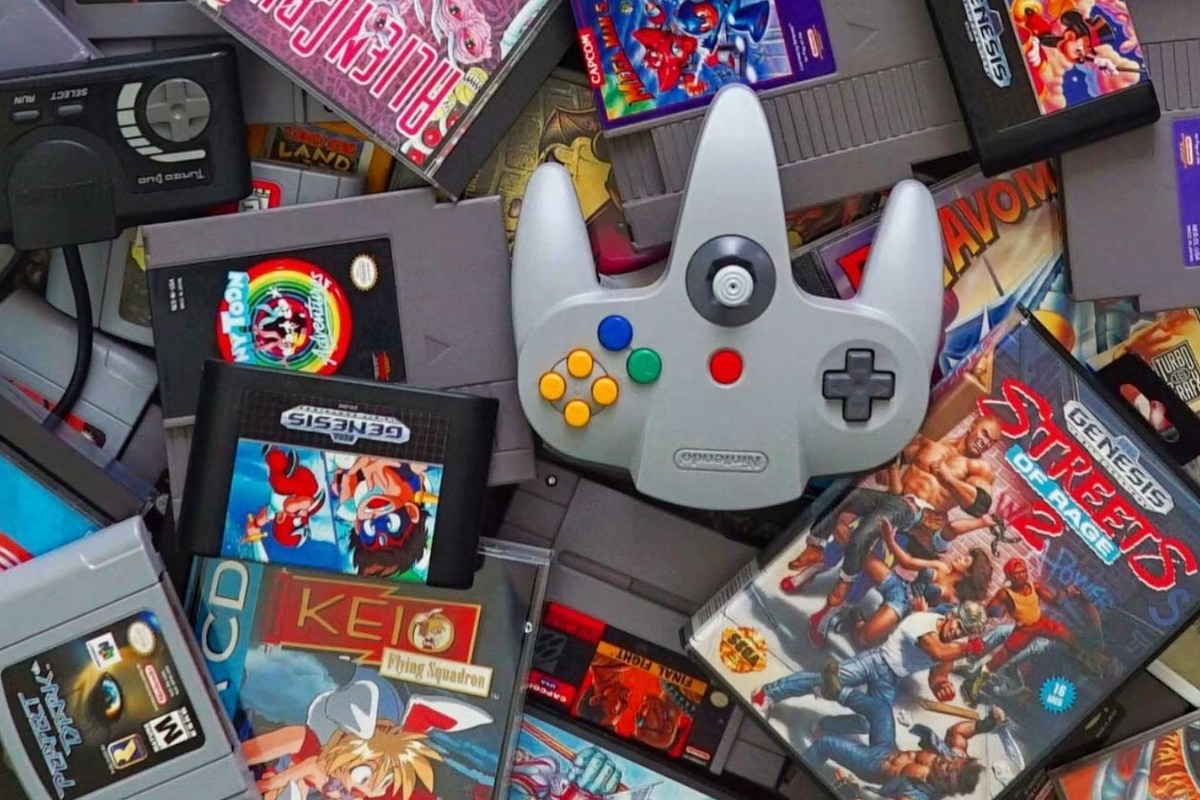
Option 2: Old-School Consoles
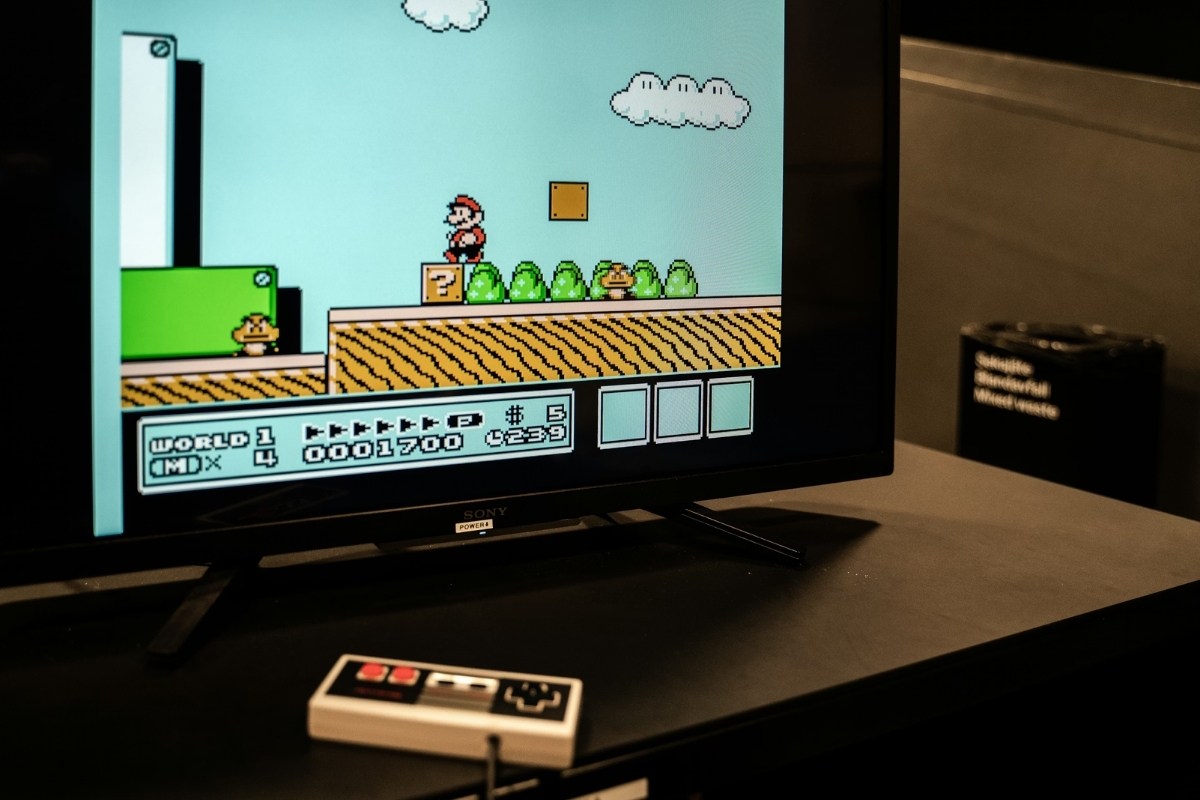
There is a strong case for starting kids on older games. NES. SNES. N64. GameCube. The classics. Old-school games have a few advantages: they’re simpler, less connected, and usually free from in-game purchases, endless updates, and strangers messaging your kid.
They also teach a brutal lesson modern games often avoid: Sometimes you lose, and the game does not care about your feelings. There’s value in that. A kid playing an old Mario game learns patience, timing, pattern recognition, persistence, and the quiet dignity of getting smoked by a turtle shell and trying again.
The downside is that old consoles can be expensive, unreliable, and annoying to set up with modern TVs. Also, your nostalgic memory may be lying to you. Some of those games are brutally hard. You may think you’re introducing your child to wholesome retro gaming and instead you’re handing them a pixelated frustration grenade.
A nice compromise is Nintendo Switch Online, which offers access to retro NES, SNES, Game Boy, and N64 titles depending on your subscription level. That gives you old-school flavor without blowing dust out of a cartridge like it’s 1998.
Old-school gaming is a good dad move. Just don’t pretend this is only for the children. We see you.
Option 3: PlayStation or Xbox
PlayStation and Xbox are great systems, but for younger kids, they’re a little more grown-up by default. There’s more online play, more mature games, more complicated stores, and more opportunities for your child to accidentally discover a game trailer that makes you say, “Absolutely not, Captain Pajamas.”
That said, both ecosystems have strong parental controls. So if you already own a PlayStation or Xbox, you do not necessarily need to buy another console. You just need to set it up correctly.
Do not hand over your adult account. Do not let your kid roam the store. Do not leave the payment method wide open. Do not assume “he only plays racing games” will remain true forever. Set up a child account, set the age rating, block chat unless you intentionally allow it, disable purchases or require approval, use time limits, and know the password.
The console is not the problem. The unlocked console is the problem.
Option 4: Nex Playground and Movement-Based Games
A few dads in the Slack mentioned the Nex Playground. This kind of system makes a lot of sense for younger kids because it gets them moving. Instead of slumping into the couch, kids jump, dodge, wave, dance, and generally look like they’re fighting invisible bees in the living room.
That’s not a bad thing. For the 4-to-7-year-old crowd, movement-based games can be a nice bridge. They scratch the video game itch without turning every session into a sedentary button marathon.
The downside is that you’re limited to that platform’s game library. But for families with younger kids, that limitation might actually be a feature. Not every door needs to be open. Sometimes a smaller playground is better.
The Case for Making Video Games a Family Thing
One of the best comments in the Slack thread was simple: make it a family thing. That’s the move. A 6-year-old alone with unlimited games is not the same as a 6-year-old playing Mario Kart with Dad on a Saturday morning. Same screen. Totally different experience.
When you play with your kids, you get to see how they handle competition, frustration, winning, losing, rules, cheating, gloating, and teamwork. In other words, video games become a parenting laboratory with better music.
You can teach a lot in a 20-minute game session. How to lose without quitting. How to win without being a jerk. How to take turns. How to help a younger sibling. How to laugh when something goes sideways. How to say, “Good game.” How to not throw the controller into the drywall like a tiny Viking.
Screens are less sketchy when they’re shared, discussed, and bounded. A family movie night feels different than a kid disappearing into YouTube for three hours. Same with games. Co-play beats solo drift.
The Saturday Morning Gaming Rule
One dad in the Slack mentioned a system where his kid could earn gaming time throughout the week and then use it on Saturday morning. This is excellent. Not because every kid needs to “earn” every fun thing. Childhood should include joy that is not attached to a chore chart. But gaming works better when it has a container.
Saturday morning gaming is clean, predictable, limited, and special. It also avoids the dreaded weekday spiral: “Can I play after school?” “Can I play before dinner?” “Can I play after dinner?” “Can I play before bed?” “Can I play while brushing my teeth?” “Can I play in my dreams?” No thank you.
A scheduled gaming window removes daily negotiation. Try something like Saturday morning: 45 to 60 minutes. Maybe Sunday too, depending on your family rhythm. Weekdays? Usually no gaming, unless it’s a special family night.
That may sound strict, but kids thrive when the rule is clear. The worst system is not “strict.” The worst system is random. Random rules create tiny lawyers. And kids are already excellent attorneys.
How Much Gaming Time Should Young Kids Get?
There is no magic number, but for younger kids, less is usually more. For a 5-, 6-, or 7-year-old, a good starting point might be 20 to 30 minutes for a casual session, or 45 to 60 minutes for a weekend family session. Keep gaming away from bedtime, avoid it before school, and do not let it become the default activity.
The better principle is this: Gaming should fit around childhood, not replace it. Before games, ask a few simple questions. Did they move their body? Did they go outside? Did they read or get read to? Did they help around the house? Did they have real-world play? Did they sleep enough? Did they look another human in the face today?
If yes, a little Mario Kart is probably fine. If no, the controller can wait.
The “Earn It or Lose It” System
Several dads mentioned using gaming as something kids can earn or lose based on behavior. This can work, but use it carefully. You don’t want video games to become the center of the family economy, where every act of kindness is performed for Nintendo wages.
Still, gaming is a privilege, and privileges can be connected to responsibility. Kids can earn gaming time by finishing basic chores, being kind to siblings, getting ready without drama, doing homework or reading, handling “no” without losing their mind, and showing good sportsmanship during games.
They can lose gaming time by whining when time is up, sneaking extra time, being cruel to siblings, throwing controllers, melting down every time they lose, or acting like the console owns their soul.
The key is not to make it complicated. You are not launching a cryptocurrency. Keep it simple. “You handled your responsibilities this week. We’ll play Saturday.” Or: “You lost your mind when the timer went off, so we’re taking a break tomorrow.” Cause. Effect. Calm voice. Dad law.
The Most Important Rule: End Before the Meltdown
The hardest part of gaming with kids is not starting. It’s stopping. Young kids struggle with transitions, and video games make transitions harder because games are designed to keep you engaged.
One more race. One more level. One more match. One more try. One more “I’m almost done.” Buddy, you are never almost done. That is how games work.
So build the exit ramp before you begin. Say, “We’re playing three races,” or “We’re playing until the timer goes off,” or “We’re stopping after this level.” Give a five-minute warning. Then follow through.
Do not negotiate with digital terrorists. The moment your child learns that whining earns extra time, you have trained them beautifully. Unfortunately, you trained the wrong thing.
A visual timer helps. So does giving a warning. So does ending with a small ritual: “Good game. Controller on the dock. High five. Go outside.” Make the shutdown predictable. Kids can handle rules. They struggle with surprises.
Keep the Console Out of Sight
One dad in the Slack said something smart: they don’t keep the Switch where their son can see it. It goes in a cabinet when not in use. This is old-school wisdom. Out of sight, out of mind.
Adults pretend we are above this, but we are not. Leave a bag of chips on the counter and suddenly you’re “just evening it out” until the family-size bag is a crime scene. Kids are the same.
Visible console equals constant temptation. Hidden console equals occasional activity. Put it away. Dock it in a cabinet. Keep controllers stored. Make gaming something you bring out intentionally, not something that sits there glowing like the Eye of Sauron.
Your house design shapes behavior. Use that.
Avoid Roblox? Let’s Talk About Online Games
One dad in the Slack said his family would “absolutely never” allow Roblox based on what he had seen around child predators. That concern is not rare. Roblox, Minecraft servers, Fortnite, Discord-adjacent gaming, and other online spaces can be fun, creative, and social. They can also expose kids to strangers, chat, user-generated content, scams, and behavior you may not want anywhere near your second grader.
This does not mean every online game is bad. It means online games require a different level of supervision. For young kids, the safest default is no open chat, no playing with strangers, no public servers without parent approval, no usernames with real names, no voice chat, no unsupervised friend requests, and no in-game purchases without permission.
For younger kids, local multiplayer is usually better. That means people in the same room. Cousins on the couch. Dad in the recliner. Siblings yelling because someone “cheated” by being better. That’s the good stuff.
Online play can come later. There is no prize for rushing it.

Best Types of Video Games for Young Kids
Not all games are created equal. A calm puzzle game and an online shooter are both “video games” in the same way a tricycle and a Ducati are both “transportation.”
For younger kids, look for games that are easy to pause, easy to stop, local multiplayer, low on reading requirements, low on violence, low pressure, and free from open chat, in-game purchases, and endless feed-style reward loops.
Good video game categories for kids include racing games, sports games, co-op adventure games, creative games, puzzle games, and retro games. Be careful with online multiplayer, free-to-play games, loot boxes, constant purchases, daily reward systems, open voice chat, and games that look cartoony but are socially chaotic.
A game can look kid-friendly and still be a behavioral dumpster fire. Do your homework. That’s annoying. So is hearing your 6-year-old repeat something he learned from a stranger named xXDragonButt92Xx.
Parental Controls Are Not Optional
Dads love to research grills for nine months before buying one. Apply 12% of that energy to parental controls.
Before your kid plays, set the system up properly. Do this before the console becomes part of family life. Not after. Not “when we get around to it.” Before.
Set age restrictions, play time limits, purchase restrictions, friend request limits, chat restrictions, content filters, parent approval settings, and separate child profiles. Keep the parent password private. Do not let your kid help you set up the restrictions. That’s like asking the raccoon to install the trash-can lock.
Gaming and Siblings: Blessing and Bloodsport
The original Slack dad had another concern: if the 7-year-old gets a system, the almost-5-year-old will want to play too. Correct. He will. You cannot bring a glowing fun machine into the house and expect the younger sibling to say, “I respect that this is developmentally tailored to my older brother.”
So plan for siblings from the start. Everyone gets a turn. Older kids do not dominate. Younger kids get simple games. Dad controls the timer. No mocking beginners. No snatching controllers. No changing the game without agreement. No “accidentally” choosing the harder course because your little brother can’t read.
Gaming can be great for siblings. They teach each other. They cheer. They laugh. They occasionally scream like shareholders during a market crash. But with structure, it can become a bonding activity. Without structure, it becomes Lord of the Flies with Joy-Cons.
Use Video Games to Teach Losing
This is an underrated benefit. Kids need to lose. Not constantly. Not cruelly. But enough to learn they can survive it.
Video games are a low-stakes way to practice losing. You get hit with a shell. You fall off the track. You miss the jump. Your brother wins. Dad wins. Mom wins despite claiming she “doesn’t know the buttons,” which is suspicious and should be investigated.
The lesson is simple: you can be frustrated and still be respectful. You can lose and try again. You can congratulate someone else. You can improve. You can laugh.
A lot of childhood today is padded. Everyone gets the snack. Everyone gets the certificate. Everyone is special. Then Mario Kart comes along and says, “You are in 8th place.” Good. Reality has entered the chat.
Should You Let Your Kid Beat You?
No. Well, sometimes.
Look, you don’t need to go full Cobra Kai on a kindergartner. But don’t fake everything either. Kids know. They can smell fake losing.
A better move is to handicap yourself. Use a worse character. Start late. Let them use assist mode. Play on teams. Choose easier courses. Give coaching. But still play. Still try.
Let them experience the joy of actually improving enough to beat you one day. That moment is gold. Also, when they finally beat you, immediately claim controller drift. This is fatherhood tradition.
The Problem Is Not Video Games. The Problem Is Replacement.
Here’s the cleanest way to think about it. Video games are fine when they add. They’re a problem when they replace.
If games replace outdoor play, that’s bad. If games replace sleep, bad. If games replace reading, bad. If games replace family conversation, bad. If games replace boredom, very bad.
Boredom is where kids build imagination. It’s where forts happen. It’s where cardboard boxes become spaceships. It’s where your child stares at a stick and somehow creates an entire medieval economy. Do not let screens murder boredom completely.
A little gaming after a full day of real childhood? Fine. Gaming as childhood? Nope. That’s the line.
A Simple Family Gaming Plan
- First, choose the right system. For most families, the Nintendo Switch is probably the easiest answer. For active younger kids, look at movement-based systems like Nex Playground. For families who already own PlayStation or Xbox, use child accounts and lock everything down.
- Second, start with family play only. No solo gaming at first. Dad plays. Mom plays. Siblings rotate. Make it communal.
- Third, keep sessions short. Start with 20 to 30 minutes. Weekend sessions can be longer, but stop before everyone is fried.
- Fourth, use clear stop points. Three races. One level. Timer ends. No vague “a little bit.”
- Fifth, set parental controls immediately. Time, spending, ratings, chat, friends, all of it.
- Sixth, keep the console put away. Use a cabinet, drawer, or parent-controlled location. Not the bedroom. Not the kitchen counter. Not visible 24/7.
- Seventh, avoid screens before school or bed. Morning gaming turns school prep into trench warfare. Bedtime gaming can make winding down harder. Protect those zones.
- Eighth, watch the behavior. The game is not the only thing to evaluate. Watch your kid after the game. Are they regulated? Are they kind? Can they move on? Or are they twitchy, angry, and bargaining like a tiny casino addict?
- Ninth, avoid open online play early. No strangers. No open chat. No public voice. Keep it local and simple as long as possible.
- Tenth, make real life bigger. Sports, books, outside time, chores, family dinner, bike rides, fishing, Legos, wrestling, walks. Gaming should be a side dish. Not the steak.
Good First Games for Dad and Kid
Mario Kart 8 Deluxe is the best overall starter. It’s fun for everyone, and assist settings help younger kids stay on the track. Dad can still assert dominance.
Nintendo Switch Sports is movement-based and easy to understand. It brings great family-room energy and gets kids moving.
Kirby and the Forgotten Land is friendly, colorful, and forgiving. It’s a strong option for younger players.
Yoshi’s Crafted World has a gentle pace and low-stress gameplay. It’s a good starter platformer.
LEGO games like LEGO Star Wars, LEGO Marvel, and LEGO Harry Potter are good co-op options. They’re funny, forgiving, and better for kids who can follow slightly more complex objectives.
Minecraft has great creative potential, but supervise it. Start in creative mode and avoid public servers for young kids.
Mario Party is fun family chaos. It can be slow, and it can also start fights over stars, coins, and perceived injustice. So basically, a board game.
Red Flags That Gaming Is Becoming a Problem
Video games are not automatically harmful, but your kid will tell you, through behavior, whether the setup is working.
Watch for daily begging, meltdowns every time gaming ends, sneaking play, lying about time, losing interest in other activities, anger after playing, sleep issues, constant talk about games and nothing else, fighting with siblings over turns, and wanting to watch gaming videos when not playing games.
That last one sneaks up on families. Sometimes the problem is not just gaming. It’s gaming plus YouTube plus streamers plus walkthroughs plus endless clips. Suddenly your kid’s hobby has a 24-hour media ecosystem attached to it.
Be careful there. Playing Mario Kart with Dad is one thing. Watching adults scream on YouTube for two hours is another.
What About Kids Who Don’t Care About Games?
Bless them. Let them be. Some kids don’t care. One dad in the thread said his 4-year-old wasn’t into the Switch yet. Great. There is no need to introduce gaming just because other families have it.
Childhood does not need a software update. If your kid is happy without games, ride that wave. They will discover screens eventually. No need to sprint toward the dragon.
The Dad Rule: Be More Interesting Than the Screen
This is the uncomfortable part. Sometimes our kids want screens because screens are easy. But sometimes they want screens because we’re boring, tired, distracted, or unavailable.
No guilt trip here. We’re dads. We’re working. We’re cooking. We’re fixing the sink. We’re paying bills. We’re trying to remember if the wet laundry is from today or a previous administration.
But the best defense against screen obsession is a life full of better options. Go outside. Throw the ball. Take the walk. Build the fire. Cook the pancakes. Invite the cousins. Start the project. Let them help badly.
A kid who has access to real adventure is less likely to worship digital adventure. Not immune. Just less likely. The goal is not to make video games forbidden fruit. The goal is to make real life rich enough that games stay in their proper place.
So, Should You Buy the Gaming System?
Maybe.
Here’s the Dad Day verdict: for a 7-year-old and an almost-5-year-old, a gaming system can be totally fine if you treat it like a family tool with rules, not a toy with no guardrails.
The Nintendo Switch is probably the best bet for most families. Old-school games are great if you want simplicity and nostalgia. Movement-based systems are smart for younger kids. PlayStation and Xbox can work if you lock them down properly.
But the system matters less than the system. Meaning: your rules matter more than the console.
Start small. Play together. Use parental controls. Keep it out of sight. Avoid online strangers. Make stopping part of the deal. Let them earn time. Let them lose. Let them laugh.
And yes, every once in a while, absolutely smoke them in Mario Kart. Not because you’re mean. Because humility is a life skill. And apparently, so is avoiding blue shells.
Takeaway
Video games are not the enemy. Lazy boundaries are. Make gaming a family thing. Keep it limited. Keep it age-appropriate. Keep it out of the bedroom. Keep real life bigger.
And when your kid finally beats you fair and square, shake his hand. Tell him “good game.” Then spend the next 20 years demanding a rematch.
Nobody hands you a scorecard when you become a dad.
There is no performance review. No quarterly check-in. No one pulls you aside at year three and says you are doing great or that you are quietly losing them. You just show up every day and hope the accumulation of it means something.
But some dads do figure it out. Not perfectly. Not without hard stretches. But their kids grow up and want to be around them. They call. They come back. They say things like “my dad taught me that” in a tone that means something.
What those dads have in common is not what most people think.
It Is Not About Being Present
You have heard it a thousand times. Show up. Be present. Put down your phone. And yes, that is the floor, not the ceiling. The dads who actually figure this out are not just physically in the room. They are genuinely interested.
Interested in what their kid is building, watching, obsessing over, afraid of. Interested in the weird phase and the bad week and the question that doesn’t have a clean answer. Not performing interest. Actually having it.
That is harder than it sounds, especially when you are tired and the thing they want to talk about is Minecraft for the fourth consecutive evening.
The dads who get it right are curious about their kids the way they are curious about things they actually care about. Not managing them. Not monitoring them. Genuinely wanting to know what is going on in there.
They Give Themselves, Not Just Their Time
There is a version of fatherhood that looks good on paper. The game attendance. The school pickup. The vacations. The financial security. All of it real, all of it necessary, none of it sufficient on its own.
What separates good dads from great ones is that the great ones also give themselves. Their actual attention. Their honest reactions. Their real opinions when asked. Their presence in the conversation, not just the room.
A kid can feel the difference between a dad who is there and a dad who has shown up. They always know which one they are getting.
They Do Not Bluff
Kids are better lie detectors than most adults give them credit for. They clock hypocrisy early and file it away. A dad who preaches patience and then loses it in traffic. A dad who talks about honesty and then makes excuses. A dad who says family comes first and then consistently proves otherwise.
The dads who earn lasting respect are the ones who own it when they are wrong. Who say “I don’t know” when they don’t know. Who apologize to their kids the same way they would apologize to anyone else. Directly, without the qualifier that undermines it.
You do not have to be perfect. You have to be real. Your kid is not looking for a flawless man. They are looking for an honest one.
They Lead Positive, Not Negative
The dads who figure it out are not the ones running a tight ship of rules and consequences. They are the ones who make the right thing feel good.
Not through bribery. Through genuine enthusiasm for the things that matter. They make work feel like something worth doing. They make honesty feel like the obvious choice. They make being a decent person feel like something to be proud of rather than something that is forced.
The old instinct is to correct. The better move is to build. “Let’s do this” lands differently than “don’t do that.” Every time.
They Respect Their Kids
This one gets skipped in most conversations about fatherhood, and it is one of the most important.
Good dads treat their kids like people. Not small problems to manage. Not projects to optimize. People with their own interior lives, their own preferences, their own reasonable need to be taken seriously.
That means listening when they talk about something you do not care about. Knocking before you enter. Asking what they think and actually waiting to hear it. Admitting when they have a point.
Kids who are treated with consistent respect grow up knowing how to demand it from the world. That is not an accident.
Respect is not something you compel from your kids. It is something you earn. The way you earn it is by giving it first.
They Have a Clear Idea of What They Are Building
The dads who figure it out know what they are trying to do. Not in a rigid, controlling way. But they have thought about what kind of person they want their kid to become and they use daily life as the material.
The boring Tuesday is not an interruption from parenting. It is the parenting. The way you handle frustration in the car. The way you talk about people you disagree with. The way you treat the server, the neighbor, the person who cut you off. All of it is instruction, whether you mean it to be or not.
The dads who get this right are intentional about the small moments, not because they are performing for their kids, but because they understand that character is caught more than it is taught.
Join the Family
They Know the Difference Between Driving and Guiding
One of the most persistent mistakes in fatherhood is confusing control with influence. Driving your kid toward an outcome: the grade, the sport, the career, the version of themselves you have decided they should be. That tends to produce one of two results. Compliance without conviction, or rebellion. Neither is what you were going for.
Guiding looks different. It means introducing your kid to things and letting the interest find its own shape. It means asking more than telling. It means having standards without making your love conditional on meeting them.
A broken will, as one writer put it nearly a century ago, is a greater misfortune than a crippled body. The goal is not an obedient kid. The goal is a kid who has learned to direct themselves.
Your job is not to produce a specific outcome. Your job is to raise someone capable of choosing their own.
They Stay in the Game
The dads who matter to their kids long-term are not the ones who peaked during the Little League years. They are the ones who stayed interested through every phase. Including the phases where their kid did not particularly want them around.
The teenage years are not a wall to get through. They are the years when everything you built starts to get tested. The relationship you made when they were eight is the credit you spend when they are fifteen and don’t want to talk to you. It either holds or it doesn’t. And whether it holds depends almost entirely on what you did before things got complicated.
Stay in it. Stay curious. Stay available. Not in a suffocating way. Just in the way that communicates: I am still here, I am still interested, and that is not going to change.
The Thing Nobody Talks About
Here is what does not get said enough in conversations about what makes a good dad.
The dads who get it right are not the ones who sacrifice everything else to be a father. They are the ones who take their own life seriously enough that their kids have something to admire.
They have interests. They have standards for themselves. They do things that are hard and they do not hide that they are hard. They care about their work, their health, their friendships, their own growth. Not instead of their kids. Alongside them.
A dad who has given up everything for his family is not a model of selflessness. He is a cautionary tale. Kids do not want to be the thing that cost their father his life. They want a father who has a life. And who makes room for them in it.
That is what they will remember. That is what they will try to become.
The boys, and the girls, always know.
What It Actually Comes Down To
You need to be someone worth knowing. Someone your kid can read clearly: who means what he says, shows up when it counts, and takes his own life seriously enough that there is something there to inherit.
The dads who get it right are not the ones who tried the hardest. They are the ones who stayed honest the longest. With their kids, with themselves, with what actually matters.
That is the whole thing. Everything else is detail.
We cover this kind of stuff every week. Practical ideas, things worth thinking about, and the kind of advice that holds up in the real world. Our Monday, Wednesday, and Friday newsletter goes out to 50,000 dads who want more of the good stuff and less of the noise.
My buddy Jake didn’t think about family culture until his seven-year-old came home from a friend’s house and said, “Dad, how come we don’t do anything?”
That one hit different. Because they did do things. They just hadn’t built any of it on purpose.
You Already Have a Culture (you just didn’t design it)
Your family has a culture right now. Today. Whether you’ve thought about it or not.
The question is just whether you made it or inherited it.
Most dads are running their parents’ software. The unspoken rules. The weekend rhythms. The way conflict gets handled, or doesn’t. The things that get celebrated and the things that don’t. We absorb all of it as kids, carry it in like luggage we didn’t know we packed, and unzip it the moment we have a family of our own.
That’s not always bad. Some of what your parents built was worth keeping. But none of it was chosen. And there’s a real difference between running a culture by default and building one on purpose.
Most families drift. They fill time. They react to whatever the week throws at them. And then one day the kids are teenagers who don’t want to be around, and nobody knows exactly when it went that way.
You don’t have to be that family. But you have to actually decide not to be.

What Family Culture Actually Is
It’s not a framed quote in the hallway. It’s not a family mission statement you wrote at a retreat in 2019 and never looked at again.
Family culture is the stuff that just is. It’s the phrase your kids will use for the rest of their lives without knowing it came from you. It’s the fact that in your house, you always say “I love you” before anyone gets in the car. It’s Friday night being pizza and a movie with no phones, non-negotiable, without anyone having to announce it.
It’s how you handle an apology. It’s whether sarcasm is a love language or a wound in your house. It’s what’s allowed at the dinner table and what gets left at the door. It’s the playlist in the kitchen on Sunday mornings.
Researchers who study family systems describe the family as a mini-culture: it develops its own language, its own rules, its own worldview, its own customs. All of it gets created through daily communication, the ordinary exchanges that feel like nothing but add up to everything.
The culture is the thing your kids will describe to their future partners when they say “in my family, we always…” That sentence is being written right now, in your house, today.
Make sure you like what comes after it.
Why Dads Are the Ones Who Set It
Erik Erikson’s foundational work on child development made one thing plain: kids build their identity primarily through their relationships with other people. Fathers are one of the earliest and most important players in that process. What you signal about who this family is, what it values, how it treats people, that shapes how your kid understands themselves.
When being a father is a central part of a man’s identity, not just a role he fills but something that actually guides how he moves through the world, the research shows better outcomes across the board. For the dad and the kids both.
The flip side is also true. When a dad is present in the house but absent from the culture, someone else fills the gap. The school fills it. Peers fill it. Screens fill it. The algorithm builds your family’s culture if you don’t.
You’re not just a provider or a protector. You’re a culture-setter. That’s the job inside the job.
The Rituals That Actually Stick
A 1992 study published in Family Process found that adolescents who reported strong family rituals showed higher self-esteem and a stronger sense of belonging than peers who didn’t. A 2015 study of around 250 teenagers found that ritual-rich families produced kids with less anxiety, less depression, and greater social connectedness. The Institute of Child Psychology points to ritual as something that literally lowers stress hormones. Kids’ brains are wired for predictability, and ritual delivers it consistently.
The stuff that sticks is almost always simple.
Sunday morning pancakes where your kid cracks the eggs, every single week, no matter what. A made-up handshake at school drop-off. The birthday meal the birthday person picks, every year, no matter how old they get. Reading one chapter out loud before lights out, even when they’re twelve and pretend they’re too old for it.
Seasonal anchors matter too. Not just holidays, but your family’s version of them. First day of fall, same orchard. First snow, same soup. Summer starts with a camping trip, no exceptions.
The goal isn’t a packed schedule. It’s a handful of touchpoints your kid can count on no matter how chaotic everything else gets.
That predictability isn’t comfort. It’s identity.
How to Build It On Purpose
Start with one conversation with your partner. Not a planning session. Just this question: what do we actually want our kids to say about this family when they’re grown?
Write down three words. Not paragraphs. Three words that describe the culture you want. Let them be the filter. When you’re deciding whether to add a commitment or cut one, run it through those three words.
Then pick one ritual. One. Not five. Something you can do this week and next week and the week after without it becoming a production. A Saturday morning walk. Wednesday night cooking together. Something you say before bed every night that’s yours.
Then give your family a phrase. “We figure it out.” “We show up.” “Not in this family.” Every tribe has language. Make yours.
The researchers who study intentional parenting draw a clear line between parents who make conscious choices based on their actual values, and parents who just react to whatever the moment brings. Most of us default to reactive. Most family rules were never stated out loud. Kids learn them by breaking them.
That’s the opposite of building something on purpose.
You don’t need a framework. You don’t need a book. You need a handful of rituals, a few clear values, and the discipline to keep showing up for the things you said matter.
Simple. Repeatable. Yours.
What culture actually does for kids is give them a home inside themselves. A fixed point. Something they carry when everything around them shifts, when school gets hard or friendships fall apart or the world gets loud and confusing. They reach back for it: this is who we are, this is where I come from, this is what we do.
You are building that right now. Not with the big moments. With the ordinary ones.
The only question is whether you’re building it on purpose or just letting it happen.
Start this week. One ritual. One phrase. One decision to make it real.
That’s how you build a family culture.
Your kid isn’t the problem. The internet is just very, very good at its job.
It was designed by the smartest engineers on earth to hold attention for as long as possible. It works on adults. It absolutely works on kids. And if you don’t have a plan, the algorithm does.
Here are 10 family tech rules for kids that hold up in the real world.
Rule 1: Phones Sleep Outside the Bedroom
This one is non-negotiable in our book. The bedroom is for sleep. The phone is not. When a device lives on a nightstand, it doesn’t just disrupt sleep. It becomes the last thing kids think about and the first thing they reach for. Neither of those is good.
Get a cheap charging station in the kitchen or hallway. Everyone plugs in before bed, including you. Make it the norm, not the punishment.
Rule 2: The Internet Earns Trust, It Doesn’t Start With It
New device means limited access. As your kid demonstrates judgment, access expands. This isn’t about distrust. It’s about building a track record. We do this with cars. We do this with curfews. We should do it with the internet too.
Start narrow. Widen with time and evidence.
Rule 3: You Know the Password to Everything
Every app. Every account. Every platform. This isn’t surveillance. It’s the same reason you know where your kid is going on a Friday night. They’re not in trouble. You’re just in the loop.
If an app doesn’t allow parent access, that app doesn’t live on your kid’s phone. Simple math.
Rule 4: Screens Don’t Come to the Table
Meals are one of the few moments in a day where a family is in the same room with no agenda. Don’t give that up for TikTok. This means everyone, you included. The research on this is clear: one of the strongest predictors of a child’s screen time is a parent’s screen time. (NPR) You can’t ask them to put it down if yours is face-up next to the salt.
Set the standard. Then live it.
Rule 5: Boredom Is Not a Screen Emergency
When your kid says they’re bored, the answer is not a device. Boredom is where creativity lives. It’s where kids figure out what they actually like. When we fill every quiet moment with a screen, we rob them of that.
Let them be bored. They’ll figure it out.

A house that cares about what food goes in the body should also care about what media goes in the mind.
Rule 6: Content Has Consequences
What goes into the brain matters. This isn’t about sheltering. It’s about standards. A house that cares about what food goes in the body should also care about what media goes in the mind. Talk about it directly. Ask what they’re watching. Watch it with them sometimes. You can’t shape what you don’t know about.
Rule 7: Screens Off One Hour Before Bed
Children age 8 to 18 in the United States average seven and a half hours of screen time per day. (AACAP) A good chunk of that is happening right before sleep and it’s wrecking their ability to fall asleep and stay asleep. Sleep-deprived kids are harder to parent and harder to teach. The one-hour wind-down isn’t optional.
Read. Talk. Decompress. Then sleep.
Rule 8: Real Life Comes First
Homework done. Chores done. Time outside. Then screens. This order matters. When screens are available before the other stuff, the other stuff never gets done with any intention. You’re just waiting for it to be over.
Flip the sequence. Everything changes.

Rule 9: We Talk About What We See Online
The worst thing that happens to kids online usually isn’t the thing they stumble into. It’s the thing they feel like they can’t tell you about. Create a standing policy in your house: if you see something weird, uncomfortable, or confusing online, you bring it to dad. No judgment. No phone confiscation. Just a conversation.
Kids are more likely to follow rules they help create. (Center for Online Safety) Include them in this one. Ask what they think the rules should be. You might be surprised.
Rule 10: Model the Life You Want Them to Have
This is the one that hurts. Because most of us aren’t setting great examples. We pick up the phone at dinner. We scroll before we get out of bed. We half-listen to our kids while checking email. And then we wonder why they can’t put it down.
You can’t outsource this to parental controls. The most powerful thing you can do is let your kids see you choosing presence over a screen. Not perfectly. Just consistently enough that they know what it looks like.
That’s the whole job.
Before You Close This Tab
Here is where most dads stand. Check the ones you have locked in. Start on the rest this week.
- ☐ Phones out of the bedroom
- ☐ Internet earns trust, it doesn’t start with it
- ☐ You know every password
- ☐ No screens at the table
- ☐ Boredom is allowed
- ☐ Content has standards
- ☐ Screens off one hour before bed
- ☐ Real life comes first
- ☐ Open door policy for what they see online
- ☐ You are modeling it
- ☐ Daily time limit is set
- ☐ No hiding screens from each other
- ☐ Tech-free day is on the calendar
- ☐ Rules get reviewed every year
If you checked five or more, you are ahead of most. If you checked fewer than five, pick one and start there. Progress beats perfection every time.
We send practical stuff like this every Monday, Wednesday, and Friday to 50,000 dads who are figuring it out as they go. No noise. No fluff. Just the good stuff.