Let us save you the 15 hours of reading we just did. The research is not subtle. It is not mixed. It is not “well, it depends.”
Screens are doing real damage to kids. And the younger the kid, the worse it is.
We know that’s not what you want to hear when you’re trying to get through a flight or survive a restaurant dinner or just finish one phone call without someone losing their mind. We get it. We’ve been there. We’ve all been there.
But “it’s convenient” is not the same as “it’s okay.” And it’s time we stopped pretending they’re the same thing.
Here’s everything you actually need to know.
The Numbers That Should Wake You Up
Before we get into the research, let’s just talk about where things stand right now.
- Toddlers aged 2 to 5 are averaging about 3.5 hours of screen time per day. Kids aged 8 to 10 average 6 hours. Eleven to fourteen year olds are hitting 9 hours a day. Older teens clock around 7.5 hours.
- Forty percent of 2-year-olds already own their own tablet. By age 4 that number climbs to 58%.
Read those sentences again.
We’re not talking about kids occasionally watching a movie on a rainy Saturday afternoon. We’re talking about screen exposure on par with a part-time job. Starting in diapers.
And somehow we’re surprised that anxiety, depression, and attention disorders are at generational highs.
Jonathan Haidt Said the Quiet Part Out Loud
If you haven’t heard of Jonathan Haidt, he’s a social psychologist out of NYU who spent years researching exactly this. His 2024 book “The Anxious Generation” sat on the New York Times nonfiction bestseller list for over 52 consecutive weeks. It topped the list five times. Oprah endorsed it. Governors sent copies to each other.
His argument is simple and devastating.
Somewhere around 2010 to 2015, we made a collective decision as a society. We handed kids smartphones. We gave them Instagram and TikTok and YouTube and gaming. And in doing so, we replaced what Haidt calls the play-based childhood with the phone-based childhood.
We didn’t think about it much. It happened gradually and then all at once.
The results showed up almost immediately. Anxiety rates surged. Depression rates surged. Self-harm rates among teenage girls went up. Loneliness went up. Sleep went down. Close friendships went down.
And this wasn’t just a self-reporting issue. The behavior changes showed up in hospitalizations, in emergency room visits, in actual clinical data. It happened in the United States. It happened in the UK, Canada, Australia, and across Europe. All at roughly the same time. Right when smartphones hit mass adoption.
Haidt’s line that stuck with me: “We have overprotected our children in the real world and underprotected them online.”
We won’t let them ride their bikes around the block alone. But we’ll hand them a portal to the entire internet at age 7 and call it fine.
What the Research Actually Found
Okay. Let’s go through what the science says is happening to kids’ brains and bodies. Category by category.
The Brain
New research published in late 2025 followed children for more than a decade and found that high screen exposure before age two was linked to accelerated brain maturation in some regions and slower decision-making later on. Kids with more screen time in infancy showed premature specialization in brain networks involved in visual processing and cognitive control.
Which sounds good until you realize premature specialization reduces flexibility. Those kids had slower reaction times at age eight and higher rates of anxiety at age thirteen.
The critical window here is under two years old. Screens before age two predicted long-term brain changes. Screens at age three or four did not show the same effect. That’s how sensitive those early years are.
A separate study in Psychological Medicine found that infant screen time altered brain networks that govern emotional regulation. But here’s the hopeful part: parent-child reading could counteract some of those changes. Shared reading provided the kind of back-and-forth engagement, language exposure, and emotional connection that passive screen consumption just doesn’t deliver.
More screens equals less of that. Less screens equals more.
Attention and ADHD
Multiple studies have now linked excessive screen time, especially fast-paced interactive media like social media and video games, to shortened attention spans and ADHD-related behaviors.
The mechanism isn’t complicated. Fast-paced content constantly rewards the brain with novelty. Dopamine gets triggered. The brain starts to expect that level of stimulation. Real life, school, conversation, reading, can’t compete. So the brain checks out.
Haidt identifies attention fragmentation as one of four core harms of the phone-based childhood. And it’s not theoretical. Teachers across the country have been saying for years that kids can’t focus the way they used to. Now there’s biology behind the complaint.
Sleep
Screen time before bed disrupts melatonin production. Melatonin is the hormone that tells your brain it’s time to sleep. Blue light from screens suppresses it.
The result? Kids who use devices in the evening take longer to fall asleep, sleep fewer total hours, and wake up less rested. And poor sleep in kids does not just mean a cranky morning. It compounds across time into mood disorders, cognitive impairment, and behavioral problems.
The same research Haidt cites shows that between 2010 and now, the number of teens getting less than seven hours of sleep per night has increased significantly. That’s not coincidence. That’s causation wearing a very thin disguise.
Anxiety and Depression
This is the big one.
The correlation between smartphone adoption and adolescent mental health decline is one of the most consistent findings in recent research. Across dozens of studies, across multiple countries, the trend is the same.
Mental health among young people started getting measurably worse right around 2012. That’s when smartphone penetration hit the tipping point. That’s when Instagram got going. That’s when the phone-based childhood began in earnest.
Girls are hit harder by social media. The comparison loops, the constant social evaluation, the exposure to image-based content that warps body image, it compounds in ways that are uniquely brutal for adolescent girls.
Boys are hit differently. Gaming and pornography and digital entertainment gradually crowd out real-world relationships, ambition, and the motivation to do hard things. Haidt describes it as a slow creep that changes behavior without the kid even realizing what’s happening.
Both are bad. Just bad in different directions.
Heart and Metabolic Health
A 2025 study published in the Journal of the American Heart Association found that screen time in childhood and adolescence is associated with cardiometabolic and cardiovascular disease risk. Not just mental health. Actual heart health.
More screen time means less movement. Less movement means higher BMI, worse metabolic markers, and greater cardiovascular risk down the road. The research on the more-than-two-year-old who watches a lot of TV already showed a correlation between screen time and higher BMI.
Kids who are on screens are not outside. They are not moving. They are not building the physical foundation that will carry them into adulthood.

iPads and Phones Are Not the Same as TV
Here’s where we need to draw a clear line. And Haidt actually makes this distinction himself, which is important.
Passive storytelling, a movie, a TV show with a beginning middle and end, is different from interactive, reward-based, variable-schedule content. Variable-ratio reinforcement is the same mechanism behind slot machines. You don’t know when the reward is coming so you keep going. Social media likes. YouTube autoplay. Game unlocks. Swipe. Pull down to refresh. Repeat.
That’s what an iPad in a young kid’s hands delivers. Not a story. A slot machine.
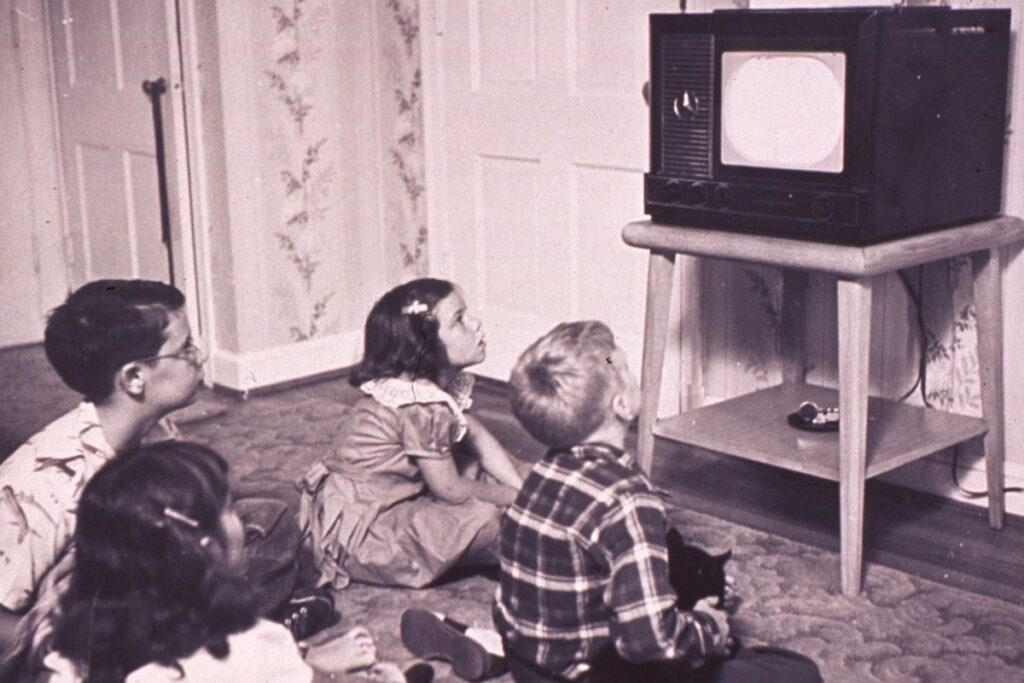
A movie has a narrative arc. It ends. It can be a shared experience. A family sits around and watches a film together and that’s actually a bonding moment. Haidt explicitly gives this a pass.
The iPad alone in a room? Different animal entirely. The phone? Don’t even start.
This is not about being anti-technology for the sake of it. It’s about understanding that these products were designed by rooms full of very smart people whose entire job was to make them as addictive as possible. They did their job well. Our kids are on the receiving end of that.
The Opportunity Cost Nobody Talks About
Here’s Haidt’s most underrated point and it’s the one I think about most as a dad.
The harm of screen time isn’t only what the screen does to the brain. It’s what the screen replaces.
Every hour a kid spends on an iPad is an hour they are not:
Building something. Figuring something out. Getting bored and then solving their own boredom. Playing with other kids and navigating actual social dynamics. Reading. Climbing something. Getting scraped up and learning they can handle it. Using their imagination in a way that nobody else can script or optimize for them.
Play is not optional for kids. It’s not a reward for finishing homework. Play is how children wire their brains.
Mammals have played for 200 million years. It’s the mechanism. And we’ve quietly been replacing it with a screen because it’s easier in the short term.
“We have outsourced the entertainment of our children,” Haidt says, “to the cheapest, most addictive solution we could find.”
That’s what an iPad is. Cheap entertainment designed to keep kids occupied so adults can get things done. I’m not judging. I’m just being honest about what it is.
So What Do You Actually Do
Here’s where I give you the practical part instead of just leaving you feeling terrible.
Under two: zero screens. This is the American Academy of Pediatrics recommendation and the research supports it hard. Video chatting with grandparents is the one exception most experts allow. Everything else can wait. Their brain is in a critical wiring window. Protect it.
Two to five: less than one hour on weekdays, slightly more on weekends. And the content matters. Slow, narrative, age-appropriate shows. Not YouTube autoplay. Not games. Not anything with a variable reward schedule. Sit with them and watch it together when you can.
Six and up: set firm limits and stick to them. The research does not show a cliff where screens suddenly become fine. The problems just become different as kids get older. Keep limits. Keep phones out of bedrooms. Keep mealtimes screen-free.
No smartphones until high school at the earliest. Haidt recommends waiting until high school or even 8th grade at minimum. The “Wait Until 8th” pledge is a real thing. Thousands of families have signed it. The idea is collective action because no kid should have to be the only one without a phone. Do it together with other families in your school or neighborhood.
Replace the screen with something real. This is the part parents skip. You can’t just take away the iPad without filling the void. Get outside. Build something. Have them help cook dinner. Let them get bored. Boredom is not a problem. Boredom is where creativity lives. If they say there’s nothing to do, you’re doing it right. Give it twenty minutes and watch what happens.
Hold the line even when it’s hard. Every kid who doesn’t have a smartphone thinks they’re the only one. They’re not. More parents are drawing this line than you think. The number is growing. The culture is shifting. You’re not weird for protecting your kid. You’re paying attention.
The Honest Bottom Line
The research is not complicated.
Screens mess with developing brains. They disrupt sleep. They fragment attention. They replace play. They wire kids for anxiety and comparison and the need for constant stimulation. The younger the child, the more damage is done. The more interactive and reward-based the screen, the worse it is.
TV, in reasonable amounts, with good content, watched together as a family? That’s fine. That’s always been fine.
An iPad handed to a toddler to keep them quiet? That’s a different thing entirely. That’s borrowing against your kid’s future for a few minutes of convenience today.
You already knew this. The research just confirms what your gut has been telling you.
Put the iPad away. Go outside with your kid. That’s the whole article.