There comes a moment in every dad’s life when his child looks him dead in the eye and says something terrifying. Not “I crashed the car.” Not “I flushed your watch.” Not even “Mom said we can get a puppy.” No. The sentence is worse: “Dad, can I get a gaming system?”
And just like that, you’re standing at the crossroads of childhood innocence, modern parenting anxiety, and your own deep desire to dust off an N64 and ruin your kid’s afternoon in Mario Kart.
This exact question came up recently in the Dad Day Slack. A dad with a 7-year-old asked the room for advice because his son wanted a gaming system. The reason? “All his friends have one.” Classic kid negotiation. The kind of peer-pressure opening statement that has launched a thousand family purchases.
He was considering going old school. Maybe an N64. Something simple, nostalgic, and free from the chaos of modern online gaming. Something that would let him introduce his son to one of life’s great truths: Dad does not brake on Rainbow Road.
But jokes aside, he had a real question. What’s the move with video games for young kids? His 7-year-old wants to play. His almost-5-year-old will definitely want in. He’s open to it, but he wants boundaries. Time limits. Age-appropriate games. Maybe a console that doesn’t immediately turn the family room into a Fortnite bunker.
The responses from other dads were exactly what you’d expect from a good dad group: practical, funny, lightly opinionated, and full of guys trying to do the right thing while also admitting they’d like to play after bedtime.
So let’s unpack it. Should young kids play video games? The answer is not a clean yes or no. The better answer is: yes, maybe, but only if Dad acts like Dad and not like the family’s unpaid IT intern.
Video games are not evil. They are also not babysitters sent from heaven. They are tools, toys, social spaces, reward systems, digital playgrounds, and occasionally tiny rage machines with sound effects. Handled well, they can become a fun family activity. Handled poorly, they can become a daily hostage negotiation with a 6-year-old holding a controller and demanding “five more minutes” like he’s brokering peace in Geneva.
What Age Should Kids Start Playing Video Games?
There is no perfect age to start video games. Sorry. Parenting remains annoyingly resistant to clean spreadsheets. Some kids can handle video games at 5. Some 9-year-olds still melt into a puddle when the screen turns off. Some children play calmly for 20 minutes and move on. Others act like you just unplugged their oxygen supply.
The real question isn’t, “Is my kid old enough for video games?” It’s this: Can my kid handle stopping? That’s the tell. Not whether they can play. Every kid can play. Kids can figure out an iPad before they can reliably wipe peanut butter off their face.
The real maturity test is what happens when the game ends. Do they hand over the controller? Do they whine for 30 seconds and recover? Or do they collapse like a Victorian widow at a funeral?
A few signs your kid might be ready for video games:
- They can follow basic rules.
- They can lose without going full volcano.
- They can stop with some warning.
- They understand that gaming is a privilege, not a constitutional right.
- They still prefer real-world play most of the time.
That last one matters. If your kid would still rather ride bikes, build forts, throw balls, dig holes, wrestle siblings, or turn your couch into a pirate ship, you’re probably in decent shape. If video games instantly become the sun around which every family decision orbits, pump the brakes.
The Best First Gaming System for Young Kids
The Dad Day Slack had a few clear camps. One dad wanted the old-school route: Nintendo 64, Mario Kart, simple controllers, and no online weirdness. Another dad said his family was considering a Nintendo Switch because it travels well. Several dads praised the Switch for its parental controls, ability to play on the TV or handheld, and family-friendly games like Mario Kart, Super Smash Bros., Mario Party, and retro Nintendo titles.
A couple dads mentioned PlayStation or Xbox because their parental-control systems allow time limits, approvals, and account restrictions. Others brought up the Nex Playground, a movement-based gaming system where kids are not just sitting in a controller trance, but actually jumping, moving, and playing more physically.
So what’s best? Depends on your family. But here’s the practical breakdown.
Option 1: Nintendo Switch
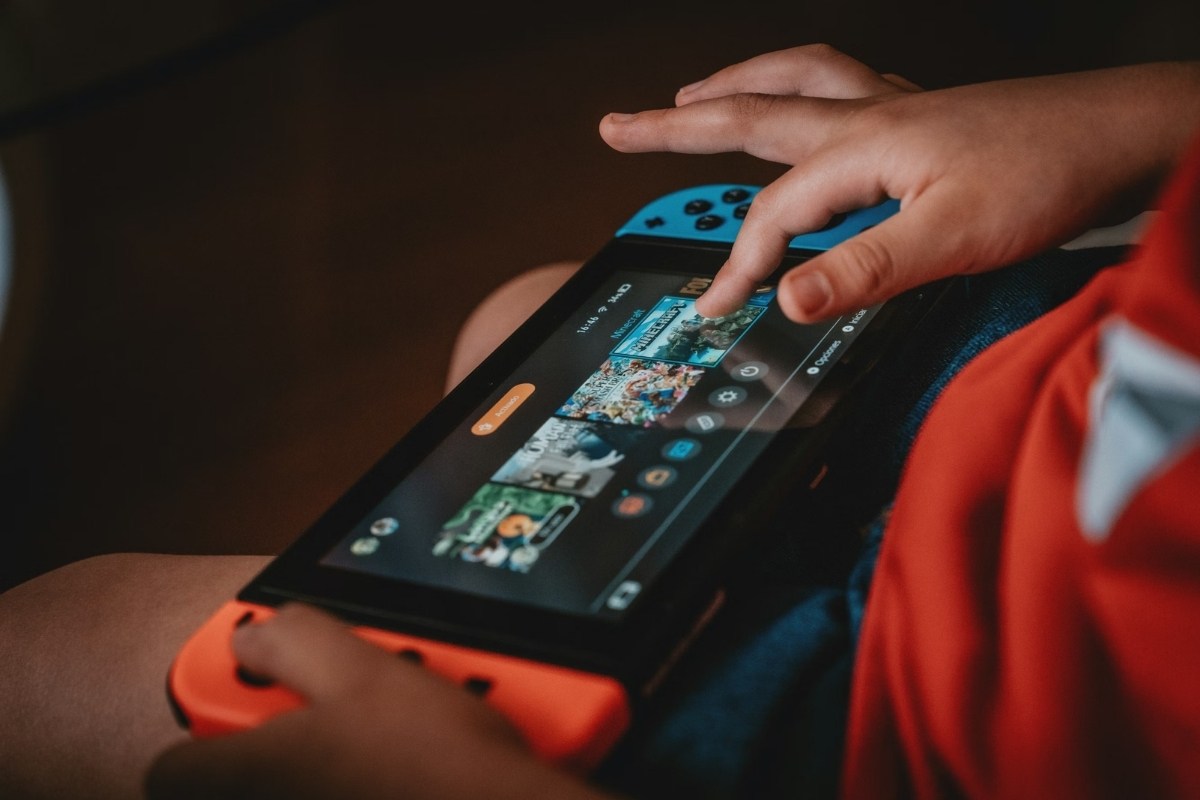
The Nintendo Switch is probably the best all-around family gaming console for younger kids. It has the games kids actually want. It can be played on the TV. It can be used handheld. It travels. The controllers are small enough for younger kids. And most importantly, Nintendo has a strong bench of family-friendly games that do not involve headset strangers yelling things that would get them banned from Thanksgiving.
A few good starter games for young kids include Mario Kart 8 Deluxe, Nintendo Switch Sports, Mario Party, Yoshi’s Crafted World, Kirby and the Forgotten Land, and Minecraft. Each brings something different to the table.
Mario Kart 8 Deluxe is still the king. It’s easy to learn, fun for parents, great for family play, and useful for teaching humility. Nintendo Switch Sports is movement-based, silly, and good for siblings. It’s less “zombie on couch” and more “why is Dad sweating during virtual bowling?” Mario Party brings chaotic family board game energy, but beware: it can cause sibling diplomacy issues.
Yoshi’s Crafted World is gentle, colorful, and low-stress. Kirby and the Forgotten Land is cute, approachable, and forgiving. Minecraft has great creative upside, but it’s probably better once kids are a little older and can handle open-ended play without turning into tiny zoning commissioners.
The biggest downside of the Switch is also one of its biggest selling points: it’s portable. That sounds great until your kid wants to bring it to restaurants, car rides, weddings, church, the grocery store, and possibly the dentist chair. So make the rule early: The Switch lives where Dad says it lives. A console without boundaries becomes a pocket-sized dictator.
Option 2: Old-School Consoles
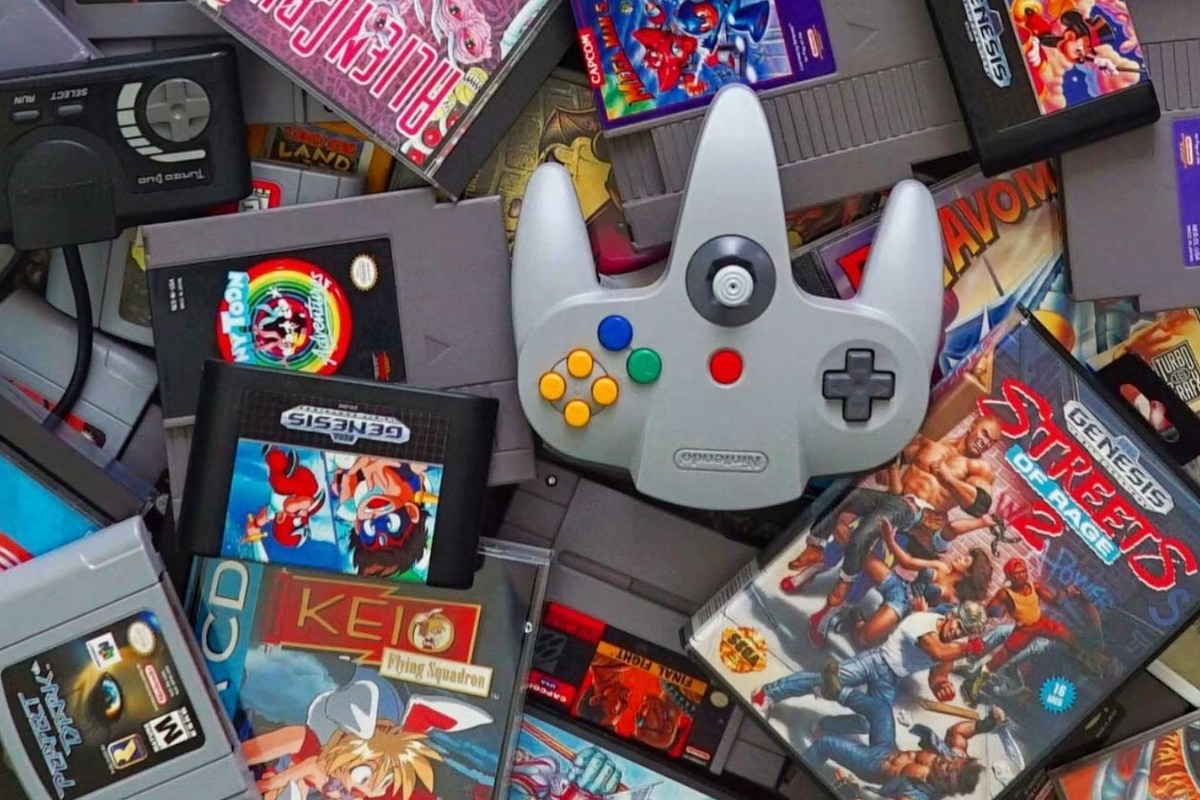
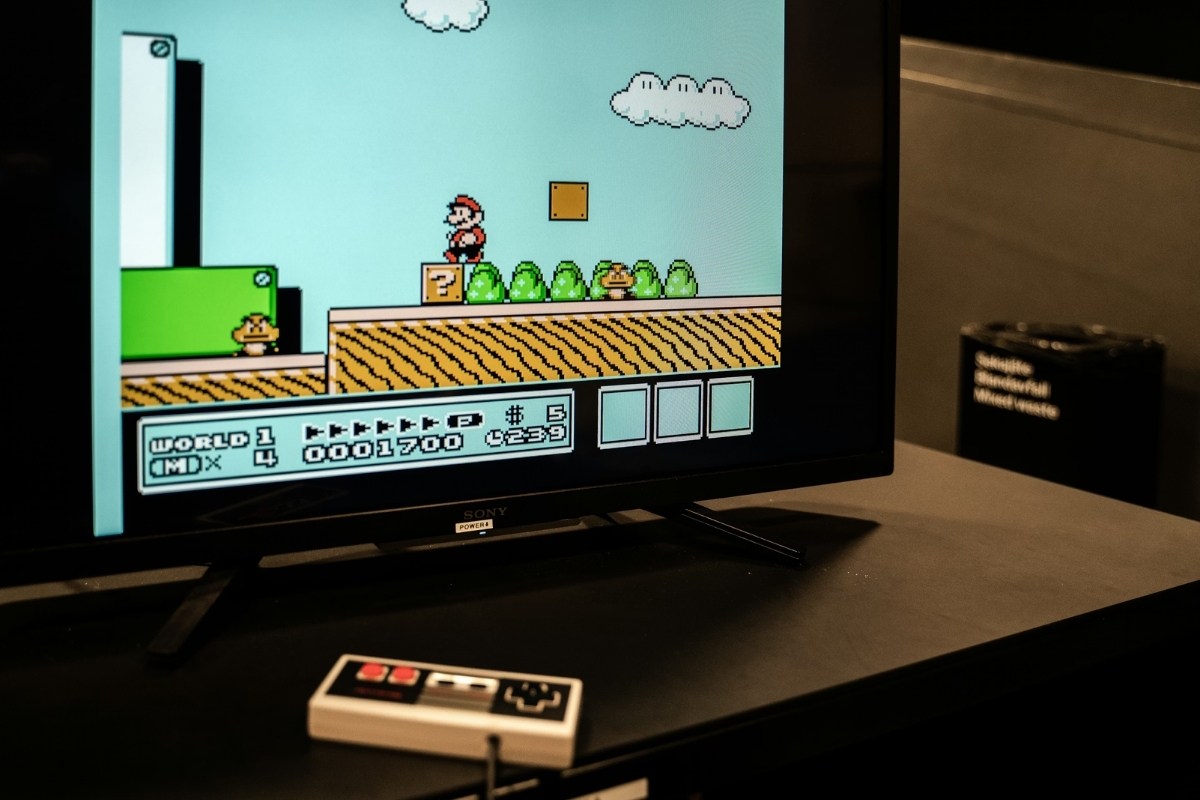
There is a strong case for starting kids on older games. NES. SNES. N64. GameCube. The classics. Old-school games have a few advantages: they’re simpler, less connected, and usually free from in-game purchases, endless updates, and strangers messaging your kid.
They also teach a brutal lesson modern games often avoid: Sometimes you lose, and the game does not care about your feelings. There’s value in that. A kid playing an old Mario game learns patience, timing, pattern recognition, persistence, and the quiet dignity of getting smoked by a turtle shell and trying again.
The downside is that old consoles can be expensive, unreliable, and annoying to set up with modern TVs. Also, your nostalgic memory may be lying to you. Some of those games are brutally hard. You may think you’re introducing your child to wholesome retro gaming and instead you’re handing them a pixelated frustration grenade.
A nice compromise is Nintendo Switch Online, which offers access to retro NES, SNES, Game Boy, and N64 titles depending on your subscription level. That gives you old-school flavor without blowing dust out of a cartridge like it’s 1998.
Old-school gaming is a good dad move. Just don’t pretend this is only for the children. We see you.
Option 3: PlayStation or Xbox
PlayStation and Xbox are great systems, but for younger kids, they’re a little more grown-up by default. There’s more online play, more mature games, more complicated stores, and more opportunities for your child to accidentally discover a game trailer that makes you say, “Absolutely not, Captain Pajamas.”
That said, both ecosystems have strong parental controls. So if you already own a PlayStation or Xbox, you do not necessarily need to buy another console. You just need to set it up correctly.
Do not hand over your adult account. Do not let your kid roam the store. Do not leave the payment method wide open. Do not assume “he only plays racing games” will remain true forever. Set up a child account, set the age rating, block chat unless you intentionally allow it, disable purchases or require approval, use time limits, and know the password.
The console is not the problem. The unlocked console is the problem.
Option 4: Nex Playground and Movement-Based Games
A few dads in the Slack mentioned the Nex Playground. This kind of system makes a lot of sense for younger kids because it gets them moving. Instead of slumping into the couch, kids jump, dodge, wave, dance, and generally look like they’re fighting invisible bees in the living room.
That’s not a bad thing. For the 4-to-7-year-old crowd, movement-based games can be a nice bridge. They scratch the video game itch without turning every session into a sedentary button marathon.
The downside is that you’re limited to that platform’s game library. But for families with younger kids, that limitation might actually be a feature. Not every door needs to be open. Sometimes a smaller playground is better.
The Case for Making Video Games a Family Thing
One of the best comments in the Slack thread was simple: make it a family thing. That’s the move. A 6-year-old alone with unlimited games is not the same as a 6-year-old playing Mario Kart with Dad on a Saturday morning. Same screen. Totally different experience.
When you play with your kids, you get to see how they handle competition, frustration, winning, losing, rules, cheating, gloating, and teamwork. In other words, video games become a parenting laboratory with better music.
You can teach a lot in a 20-minute game session. How to lose without quitting. How to win without being a jerk. How to take turns. How to help a younger sibling. How to laugh when something goes sideways. How to say, “Good game.” How to not throw the controller into the drywall like a tiny Viking.
Screens are less sketchy when they’re shared, discussed, and bounded. A family movie night feels different than a kid disappearing into YouTube for three hours. Same with games. Co-play beats solo drift.
The Saturday Morning Gaming Rule
One dad in the Slack mentioned a system where his kid could earn gaming time throughout the week and then use it on Saturday morning. This is excellent. Not because every kid needs to “earn” every fun thing. Childhood should include joy that is not attached to a chore chart. But gaming works better when it has a container.
Saturday morning gaming is clean, predictable, limited, and special. It also avoids the dreaded weekday spiral: “Can I play after school?” “Can I play before dinner?” “Can I play after dinner?” “Can I play before bed?” “Can I play while brushing my teeth?” “Can I play in my dreams?” No thank you.
A scheduled gaming window removes daily negotiation. Try something like Saturday morning: 45 to 60 minutes. Maybe Sunday too, depending on your family rhythm. Weekdays? Usually no gaming, unless it’s a special family night.
That may sound strict, but kids thrive when the rule is clear. The worst system is not “strict.” The worst system is random. Random rules create tiny lawyers. And kids are already excellent attorneys.
How Much Gaming Time Should Young Kids Get?
There is no magic number, but for younger kids, less is usually more. For a 5-, 6-, or 7-year-old, a good starting point might be 20 to 30 minutes for a casual session, or 45 to 60 minutes for a weekend family session. Keep gaming away from bedtime, avoid it before school, and do not let it become the default activity.
The better principle is this: Gaming should fit around childhood, not replace it. Before games, ask a few simple questions. Did they move their body? Did they go outside? Did they read or get read to? Did they help around the house? Did they have real-world play? Did they sleep enough? Did they look another human in the face today?
If yes, a little Mario Kart is probably fine. If no, the controller can wait.
The “Earn It or Lose It” System
Several dads mentioned using gaming as something kids can earn or lose based on behavior. This can work, but use it carefully. You don’t want video games to become the center of the family economy, where every act of kindness is performed for Nintendo wages.
Still, gaming is a privilege, and privileges can be connected to responsibility. Kids can earn gaming time by finishing basic chores, being kind to siblings, getting ready without drama, doing homework or reading, handling “no” without losing their mind, and showing good sportsmanship during games.
They can lose gaming time by whining when time is up, sneaking extra time, being cruel to siblings, throwing controllers, melting down every time they lose, or acting like the console owns their soul.
The key is not to make it complicated. You are not launching a cryptocurrency. Keep it simple. “You handled your responsibilities this week. We’ll play Saturday.” Or: “You lost your mind when the timer went off, so we’re taking a break tomorrow.” Cause. Effect. Calm voice. Dad law.
The Most Important Rule: End Before the Meltdown
The hardest part of gaming with kids is not starting. It’s stopping. Young kids struggle with transitions, and video games make transitions harder because games are designed to keep you engaged.
One more race. One more level. One more match. One more try. One more “I’m almost done.” Buddy, you are never almost done. That is how games work.
So build the exit ramp before you begin. Say, “We’re playing three races,” or “We’re playing until the timer goes off,” or “We’re stopping after this level.” Give a five-minute warning. Then follow through.
Do not negotiate with digital terrorists. The moment your child learns that whining earns extra time, you have trained them beautifully. Unfortunately, you trained the wrong thing.
A visual timer helps. So does giving a warning. So does ending with a small ritual: “Good game. Controller on the dock. High five. Go outside.” Make the shutdown predictable. Kids can handle rules. They struggle with surprises.
Keep the Console Out of Sight
One dad in the Slack said something smart: they don’t keep the Switch where their son can see it. It goes in a cabinet when not in use. This is old-school wisdom. Out of sight, out of mind.
Adults pretend we are above this, but we are not. Leave a bag of chips on the counter and suddenly you’re “just evening it out” until the family-size bag is a crime scene. Kids are the same.
Visible console equals constant temptation. Hidden console equals occasional activity. Put it away. Dock it in a cabinet. Keep controllers stored. Make gaming something you bring out intentionally, not something that sits there glowing like the Eye of Sauron.
Your house design shapes behavior. Use that.
Avoid Roblox? Let’s Talk About Online Games
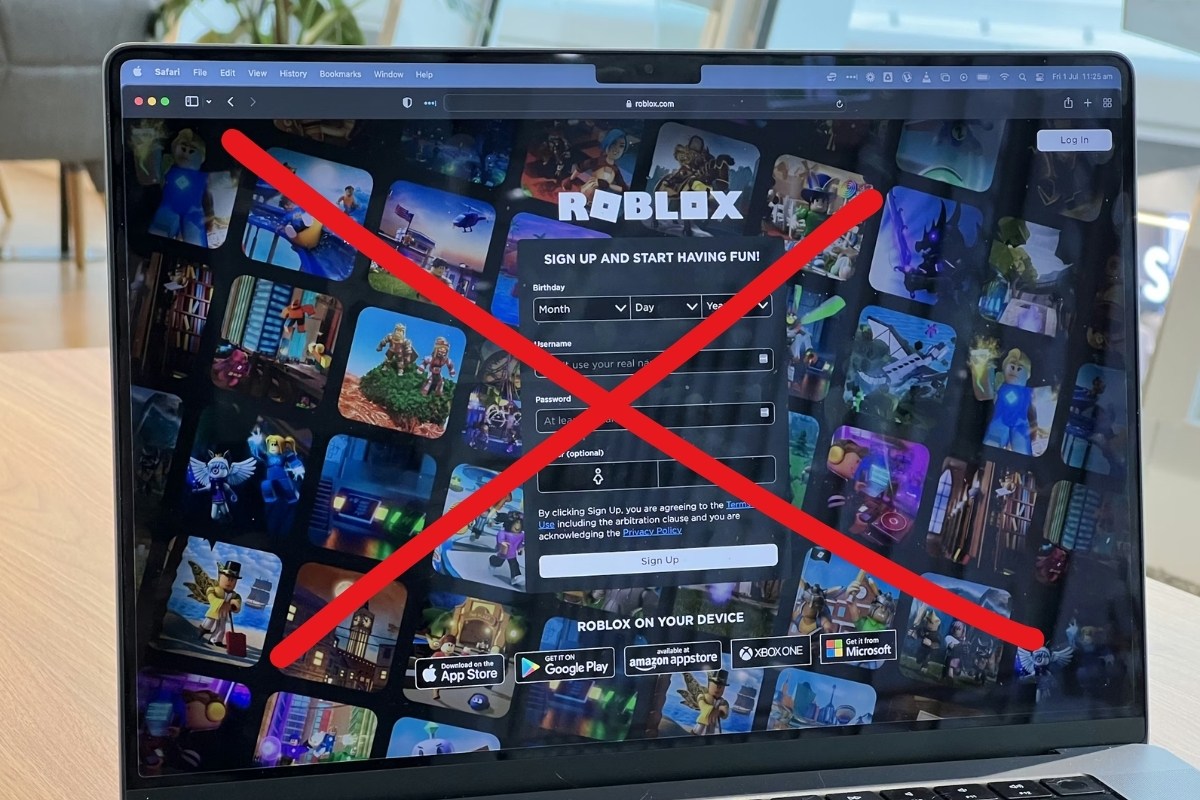
One dad in the Slack said his family would “absolutely never” allow Roblox based on what he had seen around child predators. That concern is not rare. Roblox, Minecraft servers, Fortnite, Discord-adjacent gaming, and other online spaces can be fun, creative, and social. They can also expose kids to strangers, chat, user-generated content, scams, and behavior you may not want anywhere near your second grader.
This does not mean every online game is bad. It means online games require a different level of supervision. For young kids, the safest default is no open chat, no playing with strangers, no public servers without parent approval, no usernames with real names, no voice chat, no unsupervised friend requests, and no in-game purchases without permission.
For younger kids, local multiplayer is usually better. That means people in the same room. Cousins on the couch. Dad in the recliner. Siblings yelling because someone “cheated” by being better. That’s the good stuff.
Online play can come later. There is no prize for rushing it.
Best Types of Video Games for Young Kids
Not all games are created equal. A calm puzzle game and an online shooter are both “video games” in the same way a tricycle and a Ducati are both “transportation.”
For younger kids, look for games that are easy to pause, easy to stop, local multiplayer, low on reading requirements, low on violence, low pressure, and free from open chat, in-game purchases, and endless feed-style reward loops.
Good video game categories for kids include racing games, sports games, co-op adventure games, creative games, puzzle games, and retro games. Be careful with online multiplayer, free-to-play games, loot boxes, constant purchases, daily reward systems, open voice chat, and games that look cartoony but are socially chaotic.
A game can look kid-friendly and still be a behavioral dumpster fire. Do your homework. That’s annoying. So is hearing your 6-year-old repeat something he learned from a stranger named xXDragonButt92Xx.
Parental Controls Are Not Optional
Dads love to research grills for nine months before buying one. Apply 12% of that energy to parental controls.
Before your kid plays, set the system up properly. Do this before the console becomes part of family life. Not after. Not “when we get around to it.” Before.
Set age restrictions, play time limits, purchase restrictions, friend request limits, chat restrictions, content filters, parent approval settings, and separate child profiles. Keep the parent password private. Do not let your kid help you set up the restrictions. That’s like asking the raccoon to install the trash-can lock.
Gaming and Siblings: Blessing and Bloodsport
The original Slack dad had another concern: if the 7-year-old gets a system, the almost-5-year-old will want to play too. Correct. He will. You cannot bring a glowing fun machine into the house and expect the younger sibling to say, “I respect that this is developmentally tailored to my older brother.”
So plan for siblings from the start. Everyone gets a turn. Older kids do not dominate. Younger kids get simple games. Dad controls the timer. No mocking beginners. No snatching controllers. No changing the game without agreement. No “accidentally” choosing the harder course because your little brother can’t read.
Gaming can be great for siblings. They teach each other. They cheer. They laugh. They occasionally scream like shareholders during a market crash. But with structure, it can become a bonding activity. Without structure, it becomes Lord of the Flies with Joy-Cons.
Use Video Games to Teach Losing
This is an underrated benefit. Kids need to lose. Not constantly. Not cruelly. But enough to learn they can survive it.
Video games are a low-stakes way to practice losing. You get hit with a shell. You fall off the track. You miss the jump. Your brother wins. Dad wins. Mom wins despite claiming she “doesn’t know the buttons,” which is suspicious and should be investigated.
The lesson is simple: you can be frustrated and still be respectful. You can lose and try again. You can congratulate someone else. You can improve. You can laugh.
A lot of childhood today is padded. Everyone gets the snack. Everyone gets the certificate. Everyone is special. Then Mario Kart comes along and says, “You are in 8th place.” Good. Reality has entered the chat.
Should You Let Your Kid Beat You?
No. Well, sometimes.
Look, you don’t need to go full Cobra Kai on a kindergartner. But don’t fake everything either. Kids know. They can smell fake losing.
A better move is to handicap yourself. Use a worse character. Start late. Let them use assist mode. Play on teams. Choose easier courses. Give coaching. But still play. Still try.
Let them experience the joy of actually improving enough to beat you one day. That moment is gold. Also, when they finally beat you, immediately claim controller drift. This is fatherhood tradition.
The Problem Is Not Video Games. The Problem Is Replacement.
Here’s the cleanest way to think about it. Video games are fine when they add. They’re a problem when they replace.
If games replace outdoor play, that’s bad. If games replace sleep, bad. If games replace reading, bad. If games replace family conversation, bad. If games replace boredom, very bad.
Boredom is where kids build imagination. It’s where forts happen. It’s where cardboard boxes become spaceships. It’s where your child stares at a stick and somehow creates an entire medieval economy. Do not let screens murder boredom completely.
A little gaming after a full day of real childhood? Fine. Gaming as childhood? Nope. That’s the line.
A Simple Family Gaming Plan
- First, choose the right system. For most families, the Nintendo Switch is probably the easiest answer. For active younger kids, look at movement-based systems like Nex Playground. For families who already own PlayStation or Xbox, use child accounts and lock everything down.
- Second, start with family play only. No solo gaming at first. Dad plays. Mom plays. Siblings rotate. Make it communal.
- Third, keep sessions short. Start with 20 to 30 minutes. Weekend sessions can be longer, but stop before everyone is fried.
- Fourth, use clear stop points. Three races. One level. Timer ends. No vague “a little bit.”
- Fifth, set parental controls immediately. Time, spending, ratings, chat, friends, all of it.
- Sixth, keep the console put away. Use a cabinet, drawer, or parent-controlled location. Not the bedroom. Not the kitchen counter. Not visible 24/7.
- Seventh, avoid screens before school or bed. Morning gaming turns school prep into trench warfare. Bedtime gaming can make winding down harder. Protect those zones.
- Eighth, watch the behavior. The game is not the only thing to evaluate. Watch your kid after the game. Are they regulated? Are they kind? Can they move on? Or are they twitchy, angry, and bargaining like a tiny casino addict?
- Ninth, avoid open online play early. No strangers. No open chat. No public voice. Keep it local and simple as long as possible.
- Tenth, make real life bigger. Sports, books, outside time, chores, family dinner, bike rides, fishing, Legos, wrestling, walks. Gaming should be a side dish. Not the steak.
Good First Games for Dad and Kid
Mario Kart 8 Deluxe is the best overall starter. It’s fun for everyone, and assist settings help younger kids stay on the track. Dad can still assert dominance.
Nintendo Switch Sports is movement-based and easy to understand. It brings great family-room energy and gets kids moving.
Kirby and the Forgotten Land is friendly, colorful, and forgiving. It’s a strong option for younger players.
Yoshi’s Crafted World has a gentle pace and low-stress gameplay. It’s a good starter platformer.
LEGO games like LEGO Star Wars, LEGO Marvel, and LEGO Harry Potter are good co-op options. They’re funny, forgiving, and better for kids who can follow slightly more complex objectives.
Minecraft has great creative potential, but supervise it. Start in creative mode and avoid public servers for young kids.
Mario Party is fun family chaos. It can be slow, and it can also start fights over stars, coins, and perceived injustice. So basically, a board game.
Red Flags That Gaming Is Becoming a Problem
Video games are not automatically harmful, but your kid will tell you, through behavior, whether the setup is working.
Watch for daily begging, meltdowns every time gaming ends, sneaking play, lying about time, losing interest in other activities, anger after playing, sleep issues, constant talk about games and nothing else, fighting with siblings over turns, and wanting to watch gaming videos when not playing games.
That last one sneaks up on families. Sometimes the problem is not just gaming. It’s gaming plus YouTube plus streamers plus walkthroughs plus endless clips. Suddenly your kid’s hobby has a 24-hour media ecosystem attached to it.
Be careful there. Playing Mario Kart with Dad is one thing. Watching adults scream on YouTube for two hours is another.
What About Kids Who Don’t Care About Games?
Bless them. Let them be. Some kids don’t care. One dad in the thread said his 4-year-old wasn’t into the Switch yet. Great. There is no need to introduce gaming just because other families have it.
Childhood does not need a software update. If your kid is happy without games, ride that wave. They will discover screens eventually. No need to sprint toward the dragon.
The Dad Rule: Be More Interesting Than the Screen
This is the uncomfortable part. Sometimes our kids want screens because screens are easy. But sometimes they want screens because we’re boring, tired, distracted, or unavailable.
No guilt trip here. We’re dads. We’re working. We’re cooking. We’re fixing the sink. We’re paying bills. We’re trying to remember if the wet laundry is from today or a previous administration.
But the best defense against screen obsession is a life full of better options. Go outside. Throw the ball. Take the walk. Build the fire. Cook the pancakes. Invite the cousins. Start the project. Let them help badly.
A kid who has access to real adventure is less likely to worship digital adventure. Not immune. Just less likely. The goal is not to make video games forbidden fruit. The goal is to make real life rich enough that games stay in their proper place.
So, Should You Buy the Gaming System?
Maybe.
Here’s the Dad Day verdict: for a 7-year-old and an almost-5-year-old, a gaming system can be totally fine if you treat it like a family tool with rules, not a toy with no guardrails.
The Nintendo Switch is probably the best bet for most families. Old-school games are great if you want simplicity and nostalgia. Movement-based systems are smart for younger kids. PlayStation and Xbox can work if you lock them down properly.
But the system matters less than the system. Meaning: your rules matter more than the console.
Start small. Play together. Use parental controls. Keep it out of sight. Avoid online strangers. Make stopping part of the deal. Let them earn time. Let them lose. Let them laugh.
And yes, every once in a while, absolutely smoke them in Mario Kart. Not because you’re mean. Because humility is a life skill. And apparently, so is avoiding blue shells.
Takeaway
Video games are not the enemy. Lazy boundaries are. Make gaming a family thing. Keep it limited. Keep it age-appropriate. Keep it out of the bedroom. Keep real life bigger.
And when your kid finally beats you fair and square, shake his hand. Tell him “good game.” Then spend the next 20 years demanding a rematch.