
There’s a subtle mistake a lot of us make on family adventures. We become the cameraman.
The hike starts, the beach day unfolds, the birthday candles get lit, and we’re behind a screen trying to capture it all. We tell ourselves we’re preserving memories. And we are. But we’re also missing pieces of them. There’s a better move.
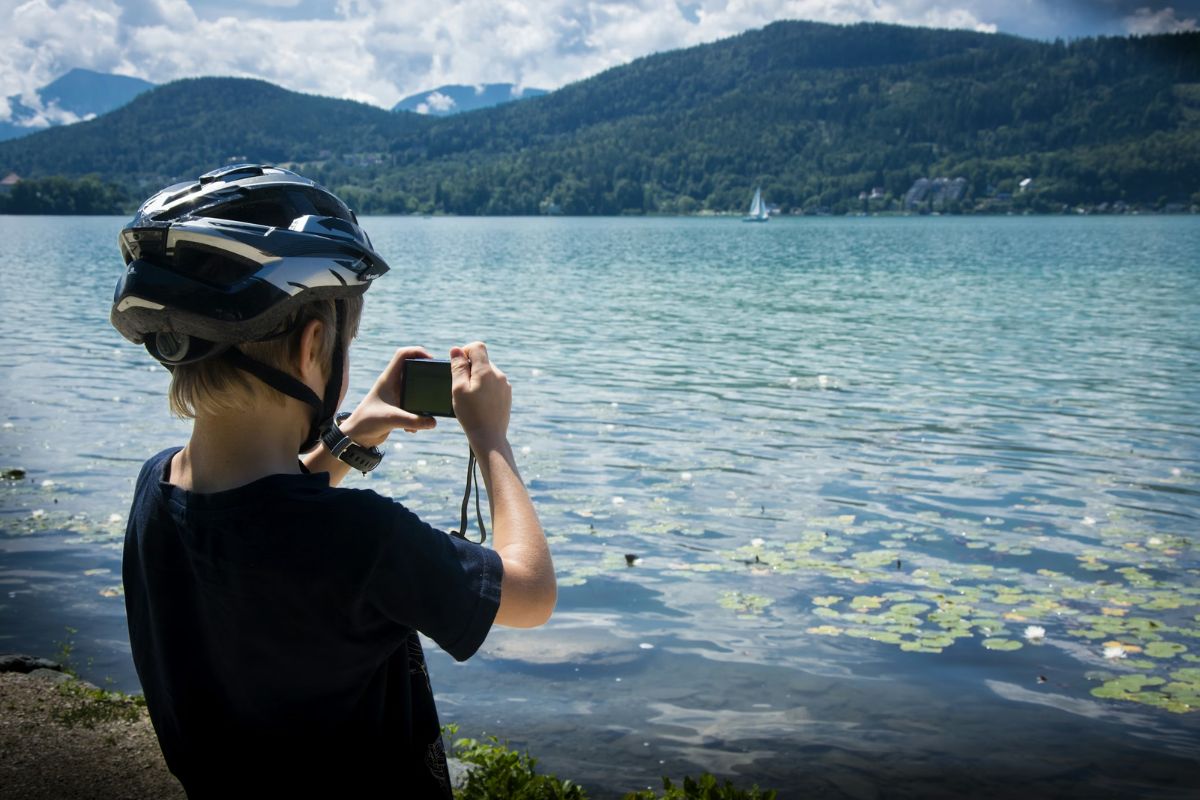
Buy your kid a camcorder. Then make them the official family documentarian. It sounds simple. It is. And it changes more than you’d think.
The Problem With Dad Holding the Camera
When Dad runs the camera, Dad disappears from the footage. You get great clips of your kids jumping off docks and chasing waves. What you don’t get is you — laughing, wrestling, cannonballing, being fully present.
And if you’re honest, when you’re filming, you’re only half in the moment anyway. You’re adjusting angles. Checking focus. Making sure you “got it.” Hand the camera over, and something shifts.
You stop managing the memory. You start living it.
A Camcorder Changes How Kids See the World
Give a kid a camera and a normal Saturday becomes a mission.
They don’t just walk through the woods, they look for shots. They notice light coming through the trees. They film the dog shaking off water in slow motion. They zoom in on things you’d never think to capture. It trains attention. It builds awareness.
Instead of passively consuming the day, they start actively observing it. That’s a skill most adults are trying to relearn through meditation apps and productivity books. Kids can build it with a camera.
You’re Not Buying a Gadget — You’re Giving Responsibility
This isn’t about tech. It’s about trust.
When you hand your kid a camcorder and say, “You’re in charge of documenting today,” you’re sending a message:
- I trust you with something valuable.
- Your perspective matters.
- You’re part of telling our story.
That’s a different level of ownership than just tagging along on a trip Dad planned. Kids rise to responsibility when we give it to them. Not perfectly. But meaningfully.
The Hidden Win: You Get to Be in the Frame
Here’s the part most dads don’t realize until later.
If you’re always filming, you’re rarely in the footage. Years from now, your kids won’t care about 4K resolution or cinematic angles. They’ll care that you were there…in the water, on the trail, at the table. When they’re the one holding the camera, you get to wrestle in the grass. You get to jump off the dock. You get to sit back at the campfire without thinking about storage space and battery life.
You get to be Dad, not the production crew.
Watching It Back Is the Real Magic
The best part happens later.
You sit down together and watch the footage. It’s shaky. The framing is off. There are 30 seconds of someone’s forehead. And it’s perfect. Because you’re seeing the day through their eyes.
What they chose to film says something about what mattered to them. What they ignored says something too. It’s a time capsule of their perspective at that exact age, something no perfectly edited highlight reel can replicate.
A Few Rules So You Don’t Ruin It
If you try this, keep it simple.
- Don’t micromanage the shots.
- Don’t critique the footage.
- Don’t turn it into a film class.
Let it be messy. Messy is honest.
If they drop it or forget to hit record, that’s part of the learning. The goal isn’t perfect documentation. The goal is participation and ownership.
The Bigger Lesson
Modern parenting often swings between control and anxiety. We try to manage every detail, optimize every experience, preserve every memory. Giving your kid the camera is a small act of letting go.
You’re handing over control of the narrative, just a little. And in doing that, you gain something better: presence. You’ll end up with a collection of imperfect videos. But more importantly, you’ll have been fully inside the moments they captured.
And one day, when you watch those clips years later, you won’t just see what your family did.
You’ll see how your child saw you.
There is a difference between being present and being reachable. Ben O’Meara is learning that in real time.
Ben lives in Austin, Texas and serves as Chief Brand Officer at Huckberry, a brand many of us have been fans of for years.
If you have watched Huckberry’s 72 Hour Challenge series on YouTube, you have seen Ben in action. Two teams. 72 hours. Over 100 challenges. Toyota 4Runners. Mountains. Rivers. Gear pushed hard in the real world.
It is durability under pressure. Performance in motion. Real field testing. But the most important tests do not happen in the Rockies. They happen at home.
The Downshift
Ben describes his work world as fast paced and high output. Campaign launches. Creative reviews. Big wins. Big stress. The hardest part of parenting for him is not logistics. It is the transition. Leaving that frequency at the front door.
He protects family time. He is physically there. But often his brain is still spinning on a project or deadline. His wife said something that stuck.
It is one thing to be in the room. It is another thing to be reachable.
That is the work now.
Adventure Is the Reward
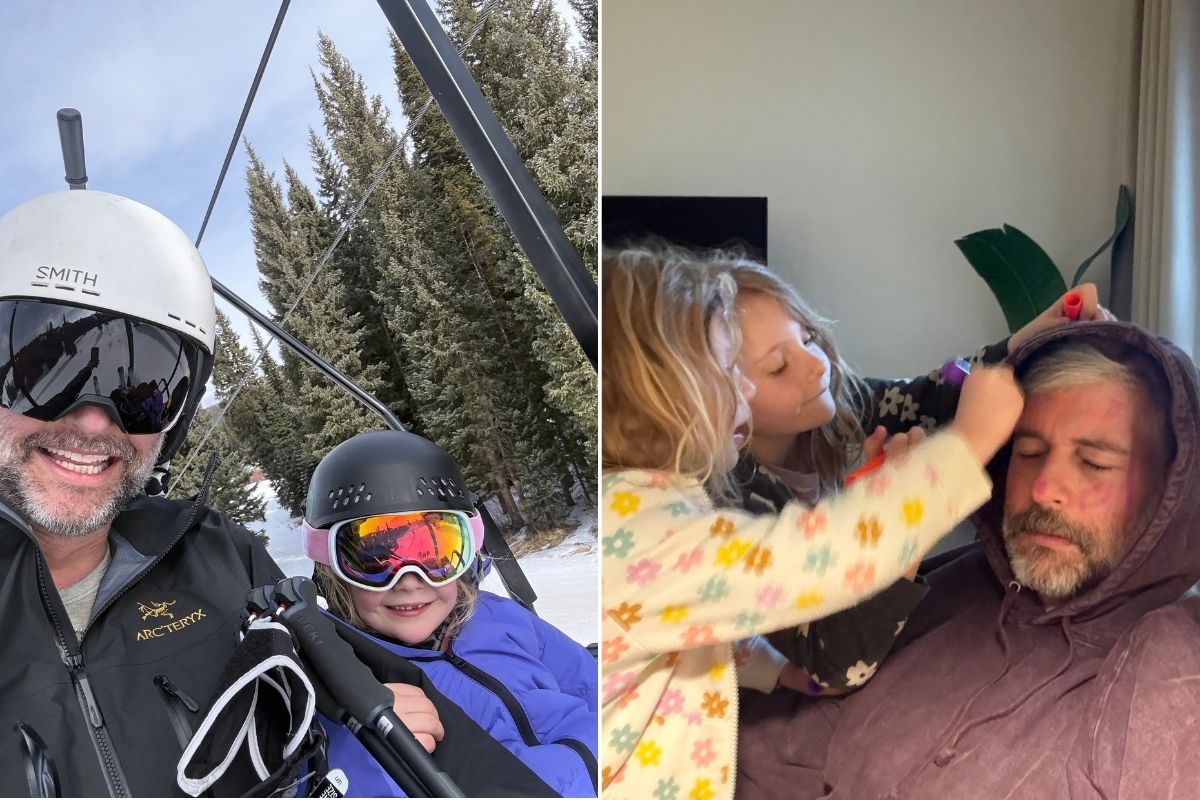
The most rewarding part of fatherhood for Ben has been watching his daughters fall in love with adventure. His family travels often. They spend time outside. They test gear with him. They sit in on video edits. They show up to his sandlot baseball games.
He used to think balance meant clean separation. Work in one box. Family in another. Now he believes integration beats isolation. The more he brings his girls into his world, the more connected they feel. Instead of building walls between passions and parenting, he invites them in.
He hopes that by showing them what lights him up, they will learn how to find their own spark.
Community Matters
Growing up, his mom always told him that you are who you hang with. That advice hits differently as a dad. You cannot raise great kids in a vacuum. You need other fathers. Other families. Community that fills your cup and challenges you.
Your kids are not just listening to your advice. They are watching your friendships.
And in classic Ben fashion, he has one practical tip for new dads. Skip the fancy diaper bag. Buy a great outdoor backpack with real pockets. You will use it long after the diaper days are over.
The Daily Rhythm
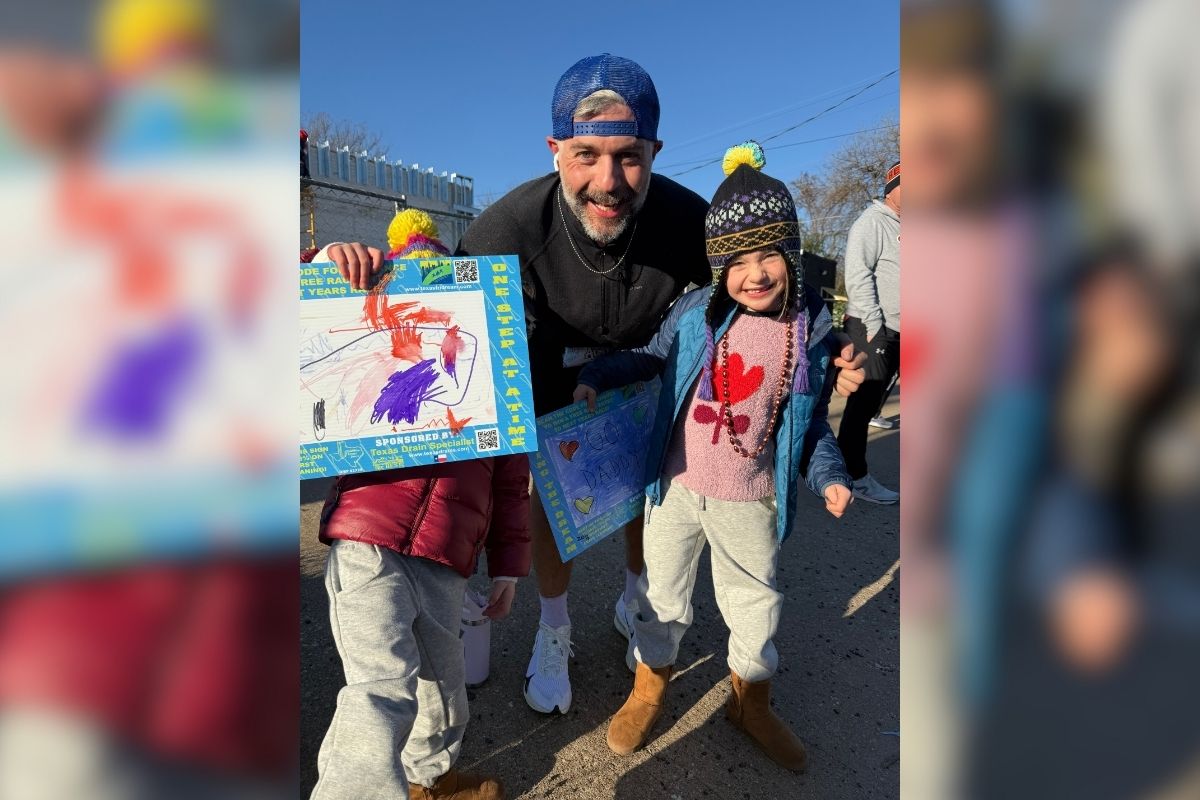
Ben wakes at 5am. That window before the house wakes up is sacred. Movement. Exercise. Reset.
Breakfast with the girls. School drop offs. Full workday. Pickups around 5. Dinner together. Bedtime routine. His wife works full time too, and he calls her the glue. They hold weekly meetings after the kids go down. Tea or sometimes something stronger. They talk through schedules and remind each other to find joy in the chaos.
Reset Button
When things feel loud, Ben runs. Short run. Long run. It does not matter.
Running clears the mental clutter and creates momentum before a big day or after a heavy one. Add the right playlist and it works every time.
Non Negotiables
Saturday morning pancakes with music blasting in the kitchen. Morning workouts. Community. He plays on an Austin sandlot baseball team called the Moontowers. The friendships built there will last a lifetime.
Fatherhood for Ben is not about separating life into neat boxes. It is about integration. Bring your passions home. Slow the frequency. Be reachable.
Building a company around presence doesn’t automatically make it easy to live that way. Daniel Ng knows this better than most.
Daniel lives in Vancouver, Canada with his wife and their two kids, ages four and six. He’s the co-founder of No Reception Club, a brand rooted in the idea of disconnecting from technology and reconnecting with your family through travel, adventure, and shared experiences.
But as any small business owner knows, the irony is real.
When Work Brain Won’t Shut Off
The hardest part of parenting for Daniel isn’t logistics or scheduling. It’s presence.
As a founder, his mind is often racing. Ideas, problems, decisions. Even while physically with his kids, it takes real effort not to drift into work-related thoughts. That tension feels especially sharp given what his company stands for.
Presence, for him, isn’t automatic. It’s a daily practice.
The Gift of Flexibility
On the flip side, owning a small business has given Daniel something he deeply values. Freedom from the traditional 9-to-5 mold.
Being able to show up for school pick-ups, tough days, and moments when kids need support matters more than any title. Daniel believes those moments shape a child’s internal monologue as they grow up.
One recent example stuck with him. While skiing, his younger child felt scared on a difficult stretch of the mountain. Without prompting, his older child stepped in and said, “Believe in yourself. You can do anything.”
That kind of language doesn’t come out of nowhere. Daniel hopes those quiet “dad-isms” echo for years to come.
Doing the Inner Work
Looking back, Daniel wishes he had known earlier that showing up better for his kids often starts with working on himself. Therapy. Honest conversations with his partner. Strong friendships, especially with other dads. Vulnerability matters. Investing in yourself isn’t selfish. It’s part of investing in your kids.
One thing he actively works on is letting go of his own insecurities so they don’t get passed down. Parenting, he’s learned, has a way of exposing what still needs healing.
Being Dad, Not Coach
Some of the most impactful advice Daniel’s carried came from actor Jeff Daniels, who once spoke about long car rides to and from hockey games. The time spent not talking about hockey, he said, paved the way for closeness later in life.
As a coach for his six-year-old’s hockey team, Daniel thinks about this often. It’s easy to slip into feedback mode. But that’s not his job in the car.
His job is to take off the coach hat and just be dad. Safe space. Cheerleader. Biggest fan.
A Very Real Dad Day
Mornings aren’t optimized. Daniel and his wife aren’t 5am workout people, and their kids are slow risers too.
Daniel wakes the kids while his wife makes breakfast. Those wake-up moments are his favorite part of the day. One-on-one connection. Imaginative play with a favorite stuffy. Helping each child start the day on the right foot.
After drop-offs, it’s work mode. Afternoons bring activities, lessons, or intentional one-on-one dates. Dinner is always together, with a strict no-phones-at-the-table rule.
Bedtime means baths, stories, and lights out. Once the kids are asleep, Daniel and his wife often log back in for a second work shift. Founder life doesn’t always fit neatly into daylight hours.
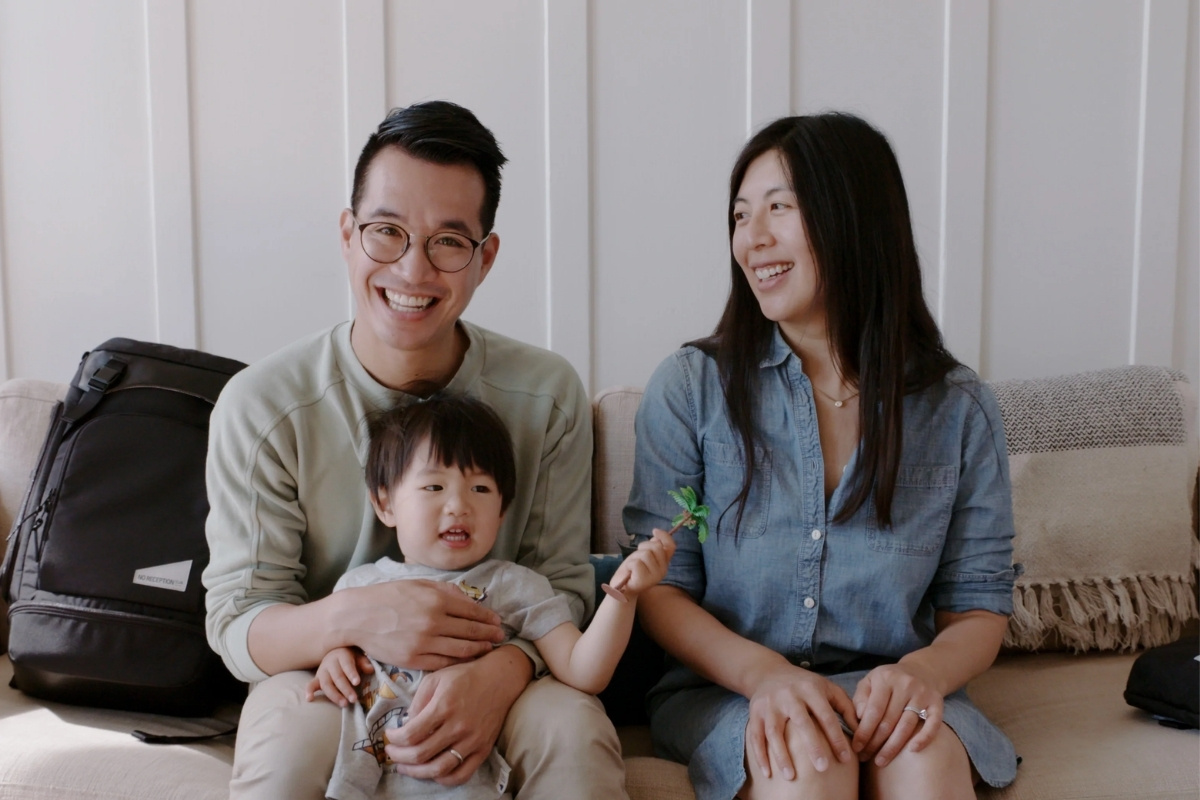
Photo from No Reception Club
Accepting What Won’t Get Done
Juggling work, life, and family often means accepting tradeoffs. A messy house. A delayed launch. A skipped workout. Forgotten show-and-tell. Daniel’s learned that hyper-prioritization is the only way through peak seasons.
Clear, constant communication with his wife, who is also his co-founder, makes it possible. Divide and conquer only works if you’re aligned.
He’s also learned that “life” can’t be ignored for too long. Health, hobbies, friendships, and interests outside work and family are the fuel that make everything else possible.
Music as a Reset
When things feel overwhelming, Daniel turns to music. Not podcasts. Not algorithms. Music.
Putting on an album from start to finish on the drive to pick up his kids has become a reset ritual. He’s started collecting vinyl and choosing records intentionally. Listening the way artists intended feels grounding in a world of constant noise.
And yes, he’s officially retired “Beautiful Things” from his playlists.
Teaching the First Spark
Daniel hopes to be his kids’ first teacher in many things. Skiing. Biking. Swimming. Sports.
The first time is always hard. It’s scary. You’re bad at it. But pushing through that initial discomfort opens the door to lifelong joy. He hopes that one day, when his kids carry those hobbies into adulthood, they’ll remember that their dad was the one who taught them how to start.
When he’s flying solo, Daniel pushes himself physically. Running, biking, skiing, hockey. He also prioritizes dad trips. A weekend with other guys in the same season of life goes a long way.
Daniel’s story is a reminder that presence isn’t about perfection. It’s about choosing, again and again, to show up where your feet are.
Like this? Sign up for our weekly newsletter.
Fatherhood has a way of stripping away the illusion of control. Peter Nelson II learned that quickly.
Peter lives in Cleveland, Ohio with his wife and their three kids, ages four, two, and a newborn just weeks old. He’s the founder of SISU, a wellness brand rooted in heat, resilience, and ritual, and Hell on Hogsback, an endurance race that pushes people toward their physical and mental edge.
Those same themes show up at home.
Letting Go of Control
The hardest part of parenting for Peter hasn’t been the lack of sleep or the packed schedule.
It’s accepting that no matter how much you plan or prepare, you’re not fully in control.
Instead of fighting that reality, Peter and his wife choose to focus on balance and inclusion. Their kids see their faith practices. They see focused family time. They see the work of building a business. They see the discomfort that comes with training for races and adventures.
Nothing is hidden. Life is lived out loud.
Why the Small Moments Matter
The most rewarding part of fatherhood has been watching how inquisitive his kids are and how much they remember. The smallest actions stick. A tone of voice. A habit. A response in a stressful moment.
Those observations force Peter to double down on what he and his wife feel called to do each day. It’s deeply rewarding and a little bittersweet. A reminder that time is passing whether you’re ready or not.

Learning Fatherhood in the Trenches
One thing Peter wishes he knew earlier is that there’s no manual for being a great dad. You learn it in real time. In the trenches.
That means trusting your gut. Knowing when to lead and when to support. Understanding your role as a husband as much as a father. And remembering that while the days feel long, the years move fast.
The advice that’s guided him most is built around what he calls the three P’s. A dad is called to be a Provider, a Protector, and a Priest. Providing fulfillment for each family member. Protecting a home that feels safe and open. And keeping faith at the center so everyone can lean into God’s calling for their lives.
A Day Built on Intention
Life looks different with a newborn in the house, but when they’re outside that window, Peter and his wife start early. Around 4:45am, coffee and workouts come first. He jumps into the SISU sauna, then wakes the kids around 6:30.
Mornings are for pancakes, lunches, hugs, and school drop-offs. Work runs from mid-morning through early afternoon, followed by a daily run. Late afternoons are for pickups and evenings with the family.
A few rhythms anchor the week. Twice-weekly no-phone evenings. Monthly one-on-one dates with each kid. Regular date nights with his wife. None of it is perfect, but the intention is clear.
Keeping Priorities in Order
When work, life, and family all collide, Peter filters everything through a simple hierarchy. Faith first. Family second. Fitness third. Work last.
If something pulls him away from family time, the answer is usually no.
When things feel overwhelming, it’s often a sign that the order slipped. Re-centering on movement, training, and time alone helps him reset. His grounding tools are consistent. Running. Sauna. Physical strain that clears mental noise.

Non-Negotiables That Last
Peter’s non-negotiables are rooted in presence. When his kids are talking, the phone stays down. Eye contact matters. Listening matters. And when they ask him to wrestle, he always says yes. Every time. Because you never know when the last time will come.
When he’s flying solo, Peter leans into travel, long races, lifting heavy, good food, and a cold beer. Simple pleasures that fuel the bigger work.
Peter’s approach to fatherhood mirrors how he lives everywhere else. Lead with intention. Embrace discomfort. Stay present. And don’t miss the moments that matter most.
You can follow Peter at @peternelsonii, @sisu_sauna, or visit sisulifestyle.com.
Parenting has seasons. Some feel light. Others feel heavy. Brooks Reitz understands both.
Brooks lives in Charleston, South Carolina, where he owns and operates multiple businesses across food, clothing, CPG, and writing. He’s also a husband and a dad to two kids, one six years old and one seventeen, which means he’s parenting in two very different worlds at the same time.
When Childhood Changes
When asked about the hardest part of parenting, Brooks doesn’t point to logistics or schedules. He points to something quieter.
Watching his children lose pieces of their innocence. It shows up when they realize some people suffer for no reason. When teasing happens at school. When the protective varnish of childhood starts to wear thin.
Brooks knows childhood is short, and seeing those shifts reminds him how fleeting it really is.
Leading by Example
The most rewarding part of parenting, for Brooks, is also layered.
He values being an example. Teaching humility, kindness, and manners. Not just saying those things matter, but living them in front of his kids and watching those lessons take root.
That kind of influence isn’t loud. It’s built slowly, over time.
What He Wishes He Knew
One thing Brooks wishes he’d understood sooner is something many parents learn the hard way. Teenagers don’t want to talk to you. Not because you did something wrong, but because they need space to form their own identity.
Letting go, without disengaging, becomes the work.
Advice That Stuck
Brooks became a father at a young age, and not under easy circumstances. During a difficult season, his mom gave him advice that’s stayed with him ever since.
“You’re only one workout away from a good mood.”
It wasn’t parenting advice on the surface, but it became foundational. Taking care of your body matters. Movement creates margin. Many parents would benefit from remembering that.
A Day Built on Rhythm
Brooks’ days run on routine, and that’s by design.
He’s up at 6am for coffee and reading while his wife meditates. Their six-year-old joins them downstairs around 6:45 for snuggles and breakfast. After school drop-off, Brooks heads to the gym, then back home to work.
He runs multiple businesses, mostly from home, working in focused blocks until lunch, which he prepares and eats with his wife. Afternoons bring more work, meetings, or writing. When his wife handles school pickup, Brooks uses that time to reset. A bike ride, a sauna, or a walk.
By late afternoon, the day slows. Family time. Dinner at 5:30. A walk around the block. Bedtime routines. Reading or a show. Lights out by 9.
It’s a schedule that works, and Brooks protects it.
Staying Grounded When Things Get Heavy
Balancing work, life, and family isn’t always smooth. Some seasons feel manageable. Others feel overwhelming. Brooks keeps his footing by returning to what gives him ballast.
Regular exercise. Time outdoors. Home-cooked food, heavy on vegetables and quality protein. Good sleep. Plenty of water. No alcohol. Sunshine and fresh air.
Nothing lasts forever, he reminds himself. Not the easy seasons. Not the hard ones.
Non-Negotiables That Matter
One rule stands firm in the Reitz household. Breakfast and dinner happen at the dining room table, together. No eating separately. No screens. No counter meals.
Those daily touchpoints matter more than they seem. When Brooks gets time alone, he keeps it simple. Long walks and hikes. Museum visits. Reading. Listening to music. Quiet pursuits that refill the tank.
Brooks’ approach to fatherhood isn’t flashy. It’s intentional, rhythmic, and grounded. A reminder that consistency, presence, and shared meals can quietly shape a beautiful life.
You can follow Brooks at @brooksreitz or read his newsletter A Small & Simple Thing on Substack.
Parenting requires both conviction and flexibility. Nick Sabio is learning how to live in that tension every day.
Nick lives in Laguna Hills with his wife and their three kids, ages eight, five, and three. He serves as an associate pastor, a role that shapes not just how he leads others, but how he approaches fatherhood at home.
Same Values, Different Kids
The hardest part of parenting, Nick says, is learning how to parent each child differently while holding onto the same core values.
What works for one doesn’t always work for another. Personalities differ. Needs change. The challenge is finding the balance between extending grace and calling kids toward growth they can’t yet see in themselves.
That balance is ongoing. And humbling.
Why Connection Matters Most
The most rewarding moments of fatherhood aren’t the big wins. They’re the invitations.
When his kids ask him to play. When they come to him for help. When they say “I love you” without being prompted. Nick also sees the fruit of connection when his kids show kindness and hospitality to friends at church or neighbors in their community.
Those moments are quiet confirmations that love is landing.
What Kids Multiply
One thing Nick wishes he knew earlier is how much kids multiply whatever you give them. Love and affection tend to come back as joy and trust. Constant criticism and judgment tend to create distance and insecurity.
That realization changed how he parents. Less pressure. More presence.
The advice that stuck most reinforces that approach: the best thing you can do for your kids is love their mother well. For Nick, that’s not just good marriage advice. It’s foundational parenting wisdom.
A Typical Day at Home
Nick’s days start with a workout, then time with the kids while his wife makes breakfast. After work, evenings are built around presence. Walks together. Playing outside. Dinner. A few rounds of Uno. Then bedtime.
It’s not flashy. It’s consistent.
When work, life, and family collide, Nick is quick to credit his wife. She’s the anchor of the household. She manages the calendar, homeschools the kids, runs the home, and supports him. After nearly ten years of marriage, they’ve learned to function as a team, especially in busy seasons.
A Rhythm That Grounds Them
One of the most life-giving practices in the Sabio household is their weekly 24-hour Sabbath. Phones off. No distractions. Time together.
They eat meals as a family, play outside at the beach, explore off-road trails, and practice intentional joy. That rhythm has become a reset not just for Nick, but for the entire family.
A Non-Negotiable Tradition
For more than six years, Thursday nights have been sacred. Every week, without exception, it’s Slumber Party Night.
The kids and Nick set up a massive bed that takes over the living room floor. Movies play. Games come out. Snacks disappear. They stay up as late as they can. It’s loud, messy, and easily the most fun tradition their family has.
Time Alone
When Nick gets time to himself, he keeps it simple. Surfing. Working on his truck. Organizing the garage. Quiet, hands-on work that clears his head.
Nick’s story is a reminder that great fatherhood isn’t about perfection. It’s about love that multiplies, rhythms that restore, and showing up again and again.
You can follow Nick at @sicknabio or @lazarusoverlandfam.
Raising kids while building something of your own is a constant balancing act. Charlie Lima knows that tension well.
Charlie lives in College Station, Texas, where he owns and operates a gym while raising four kids. Three boys, ages six, eight, and ten, and a thirteen-year-old daughter. Different stages. Different needs. All happening at once.
Holding the Line While Adapting
The hardest part of parenting, Charlie says, isn’t effort. It’s discernment.
He’s constantly navigating the space between how he was raised and how his kids need to be raised in a completely different time. The goal isn’t to copy and paste his childhood. It’s to carry forward the big themes and values, then shape them around the world his kids are growing up in.
That tension is ongoing. And intentional.
Why the Small Moments Matter
The most rewarding part of fatherhood for Charlie is the way his kids love. Purely. Loyally. Fully.
That loyalty makes even the smallest interactions meaningful. A hug. A quick conversation. A shared laugh. Those moments add up, even when the days feel long.
Becoming a dad also revealed something unexpected. How much patience parenting actually requires and how quickly kids expose perfectionism. With four kids, control disappears fast. Charlie admits he’s still working on both, but those lessons have made him a better father and a better person.

Showing Up for the Big Stuff
One piece of advice that stuck with Charlie came from a 2013 EntreLeadership Master Series. Dave Ramsey spoke on a panel with his daughter about work and family balance. When asked if her dad worked too much, she said yes, but added that he was always there for the big stuff.
That line stuck.
It stuck because Charlie’s own dad lived the same way. Self-employed. Building a business. Still coaching teams. Still showing up when it mattered. That example shaped how Charlie approaches fatherhood today.
You can’t be everywhere. But you can be present for what counts.
A Day in the Lima Household
Charlie’s days start early. His favorite part of the morning is when the kids wake up and find him at the table. Wrapped in blankets. Half asleep. Full hugs.
Before heading out, he kisses his daughter on the cheek while she’s still sleeping. Then the day begins.
If he’s home before dark, he’s in the front yard playing football with the boys. Evenings mean dinner together, baths, and bedtime. Charlie and his wife tuck the kids in together every night and pray with them before sleep.
It’s a rhythm. One built on consistency.
Navigating Busy Seasons
Owning a business pulls you in multiple directions, and Charlie doesn’t pretend otherwise. The biggest blessing, he says, is how he and his wife, Alicia, complement each other.
When the gym needs more from him, she carries more at home. When things are lighter, he steps back in. Communication is key, especially during heavier seasons when missing things at home hurts the most. They navigate it together.
Resetting and Staying Grounded
About a year and a half ago, Charlie found a reset that stuck. Sauna and cold plunge sessions at Sweatscape. It’s become a grounding ritual. Every time he leaves, he feels renewed.
Physically and mentally.
Non-Negotiables
Charlie’s non-negotiables are clear and deeply rooted. Hugs and kisses. Saying “I love you” often. Tucking the kids in every night. Praying together. Being present. Providing.
When he gets time alone, it usually involves movement. CrossFit. Running. Ironman training. Sauna and cold plunge.
Charlie’s story is a reminder that fatherhood isn’t about perfection or control. It’s about presence, patience, and showing up for the moments your kids will remember.
You can follow him at @trainwithcharlie.
Raising kids in a major city has a rhythm of its own. Faster pace. Tighter schedules. More noise. Billy Parks knows that rhythm well.
Billy lives in Los Angeles with his wife and their two boys, ages twelve and fourteen. By day, he works as an investment professional. By night and weekend, he’s deep in the work of raising teenage boys in a world that’s always online.
Parenting in the Age of Screens
Ask Billy what the hardest part of parenting is right now and he doesn’t hesitate. Technology.
Managing screens without turning into a full-blown psychopath is a daily challenge. There’s no clear roadmap, no perfect system, and definitely no magic hack.
Billy’s goal isn’t control for control’s sake. It’s raising kids who know how to engage with the world without being consumed by it.
He doesn’t want to raise screenagers. He wants to raise capable humans. Billy has written openly about navigating tech and teens, including a thoughtful piece on giving his son an iPhone (a loaded gun). You can read it here.
Watching Independence Take Shape
The most rewarding part of fatherhood, especially at this stage, is autonomy. Billy lights up when he talks about seeing his boys run their own program. Getting themselves where they need to be. Handling responsibilities without constant reminders.
Those moments signal something deeper. Trust. Confidence. Growth.
They’re proof that the slow, often invisible work of parenting is doing its job.
The Crew Matters
One thing Billy wishes he’d known sooner is how critical community is. Finding like-minded dads to walk the journey alongside you isn’t optional. It’s essential.
Advice is helpful. Books are useful. But nothing replaces a crew of parents in the same season, dealing with the same chaos, and finding ways to make it work together.
In Billy’s world, the village is real. And when things get hectic, the squad shows up.

via @billyfilm IG
A Typical Day, LA Style
A normal day looks like two working parents and two busy kids operating in urban sync. Mornings start with breakfast before the boys take the train to school. They’re even working toward a couple days a week where the kids fully own breakfast themselves.
Afternoons and evenings are filled with practices, games, and quick dinners. Sometimes that means cheap-and-cheerful neighborhood spots. Sometimes it’s eating at home. It’s nonstop movement. Pickups. Drop-offs. Hangs.
Weekends slow down in a different way. Less structure. More dirt. More outdoors.
Keeping Perspective When It Gets Messy
When work, life, and family all hit at once, Billy admits it doesn’t always run smoothly. Sometimes it clicks. Often it doesn’t.
The key is perspective. Progress over perfection. Keep moving forward, course-correct when needed, and don’t beat yourself up for missing a step.
When he needs to reset, Billy heads outside. Away from tech. Into the dirt. Whether it’s fishing, riding motorcycles, or just being in nature, the outdoors recalibrates everything.
Non-Negotiables and What Matters Most
Billy’s one hard line in dad life is simple. Don’t mess with mom. She’s the heart and soul of their home, and everything flows better when that’s respected.
When he gets time alone, he gravitates toward the same things he loves doing with his kids. Fly fishing. Sea fishing. Motorcycle rides. Movies. Dirt under his boots.
Billy’s story is a reminder that modern fatherhood doesn’t require perfection. It requires intention, community, and a willingness to keep learning as the kids grow.
You can follow him at @billyfilm.
Some businesses grow fast. Others grow deep.
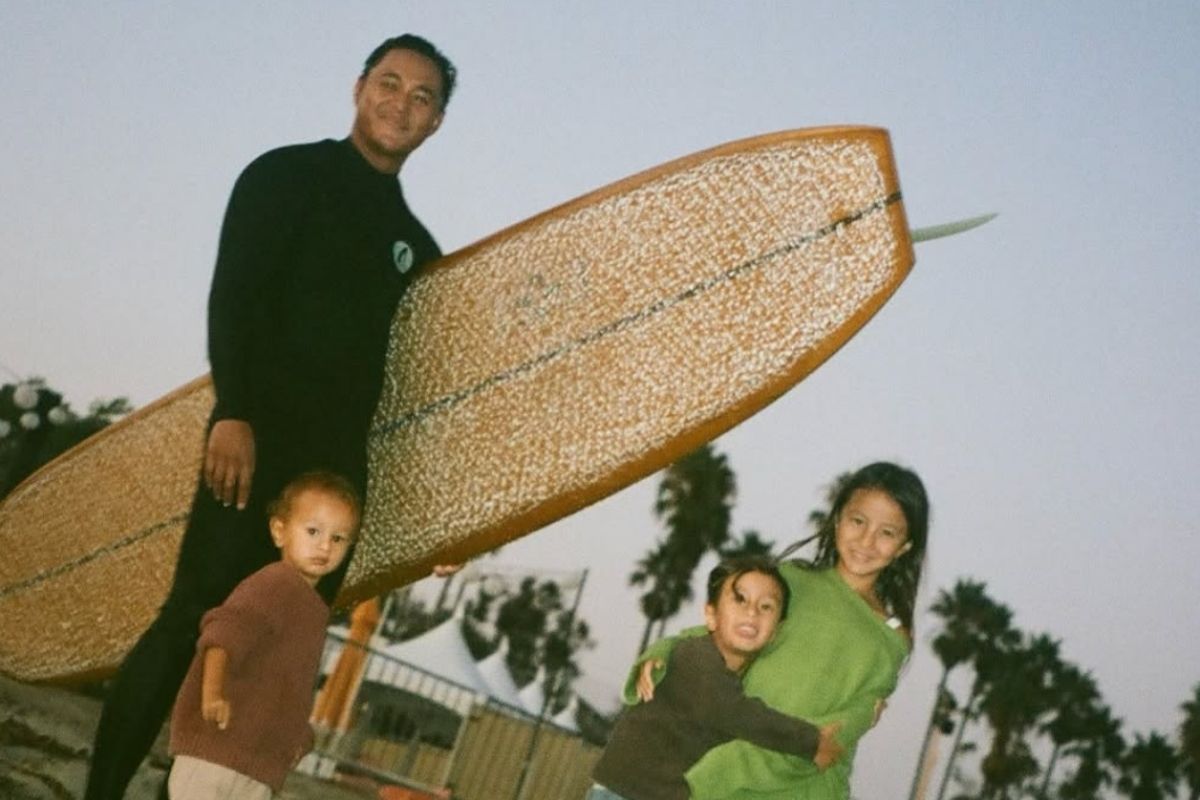
Dave Allee started Almond Surfboards 17 years ago in his hometown of Costa Mesa, California. What began as a custom surfboard operation turned into a respected surf brand rooted in craftsmanship, patience, and doing things the right way. Nearly two decades later, Dave still runs the business, while also building a family-run bison jerky company on the side.
He’s also a dad of two, raising a six-year-old and a three-year-old between Costa Mesa, California and Coeur d’Alene, Idaho.

Photo:@scottsnyderphoto
Ambition vs. Presence
For Dave, the hardest part of parenting isn’t a lack of time. It’s managing attention.
As an entrepreneur, his ambitions run deep. As a dad, so does his desire to be present and intentional at home. Those two don’t always coexist peacefully.
His kids don’t love seeing a laptop open, and they’re quick to call it out. The solution is simple but not always easy. When it’s work time, Dave physically removes himself so that when he’s with the kids, he’s actually with them.
The tradeoff is worth it. He gets a lot of time with his family. Midweek pancakes are a thing. Breakfast matters.
The Power of Small Moments
The most rewarding part of fatherhood, Dave says, is all the little moments. The stuff you don’t plan for.
Letting the kids help with projects. Bringing them into the kitchen. Getting them outside and giving them a wide range of experiences to draw from later in life. While answering this very interview, Dave got pulled away to build Hot Wheels tracks with his three-year-old son. That’s kind of the point.
Becoming a dad also gave him a deeper understanding of love. He didn’t fully grasp how much his own parents loved him until he had kids of his own. Fatherhood became a constant reminder of grace, patience, and God’s love.
Lessons Learned Along the Way
Nothing, Dave says, can truly prepare you for becoming a dad. No book. No advice. No mental framework.
If he could change one thing, it wouldn’t be how he parents. It would be how he lived before kids. He opened a retail store at 22, which meant weekends were mostly spoken for throughout his adult life. He wishes he and his wife had traveled more early in their marriage. Not out of regret, but perspective.
The advice that stuck most came from John Eldredge: It’s the little things that build a beautiful life. Dave sees that play out daily.
A Day in the Allee Household
Dave’s days start early. His alarm goes off at 5:05 a.m., six days a week. He loves the quiet hours before the house wakes up. That’s when deep work happens. Or a workout. Or reading. Ideally all three.
That early start allows him to pause, make breakfast for his family, and then get back to work once the kids head to school. If he sleeps in, the whole day feels off. The balance comes from going to bed early. Around 9:30.
When work, life, and family collide, Dave tries to be fully where he is. One hundred percent at work when working. One hundred percent present when with the kids. The in-between, he says, is a dead zone and best avoided.
Staying Grounded
When things get busy, Dave resets through simple rhythms. Reading at night. Writing in the morning. Moving his body whenever possible.
His non-negotiable in dad life is breakfast. Burritos. Pancakes. Bacon. Anything goes, as long as he’s making it.
When he gets time alone, it looks like solo surf sessions, scouting for elk, whiskey neat, and old jazz. Quiet, focused, and intentional. Much like the way he’s built his businesses and his family.
You can follow Dave at @almondsurfboards and @rangerbison.