
Fatherhood has a way of stripping away the illusion of control. Peter Nelson II learned that quickly.
Peter lives in Cleveland, Ohio with his wife and their three kids, ages four, two, and a newborn just weeks old. He’s the founder of SISU, a wellness brand rooted in heat, resilience, and ritual, and Hell on Hogsback, an endurance race that pushes people toward their physical and mental edge.
Those same themes show up at home.
Letting Go of Control
The hardest part of parenting for Peter hasn’t been the lack of sleep or the packed schedule.
It’s accepting that no matter how much you plan or prepare, you’re not fully in control.
Instead of fighting that reality, Peter and his wife choose to focus on balance and inclusion. Their kids see their faith practices. They see focused family time. They see the work of building a business. They see the discomfort that comes with training for races and adventures.
Nothing is hidden. Life is lived out loud.
Why the Small Moments Matter
The most rewarding part of fatherhood has been watching how inquisitive his kids are and how much they remember. The smallest actions stick. A tone of voice. A habit. A response in a stressful moment.
Those observations force Peter to double down on what he and his wife feel called to do each day. It’s deeply rewarding and a little bittersweet. A reminder that time is passing whether you’re ready or not.

Learning Fatherhood in the Trenches
One thing Peter wishes he knew earlier is that there’s no manual for being a great dad. You learn it in real time. In the trenches.
That means trusting your gut. Knowing when to lead and when to support. Understanding your role as a husband as much as a father. And remembering that while the days feel long, the years move fast.
The advice that’s guided him most is built around what he calls the three P’s. A dad is called to be a Provider, a Protector, and a Priest. Providing fulfillment for each family member. Protecting a home that feels safe and open. And keeping faith at the center so everyone can lean into God’s calling for their lives.
A Day Built on Intention
Life looks different with a newborn in the house, but when they’re outside that window, Peter and his wife start early. Around 4:45am, coffee and workouts come first. He jumps into the SISU sauna, then wakes the kids around 6:30.
Mornings are for pancakes, lunches, hugs, and school drop-offs. Work runs from mid-morning through early afternoon, followed by a daily run. Late afternoons are for pickups and evenings with the family.
A few rhythms anchor the week. Twice-weekly no-phone evenings. Monthly one-on-one dates with each kid. Regular date nights with his wife. None of it is perfect, but the intention is clear.
Keeping Priorities in Order
When work, life, and family all collide, Peter filters everything through a simple hierarchy. Faith first. Family second. Fitness third. Work last.
If something pulls him away from family time, the answer is usually no.
When things feel overwhelming, it’s often a sign that the order slipped. Re-centering on movement, training, and time alone helps him reset. His grounding tools are consistent. Running. Sauna. Physical strain that clears mental noise.

Non-Negotiables That Last
Peter’s non-negotiables are rooted in presence. When his kids are talking, the phone stays down. Eye contact matters. Listening matters. And when they ask him to wrestle, he always says yes. Every time. Because you never know when the last time will come.
When he’s flying solo, Peter leans into travel, long races, lifting heavy, good food, and a cold beer. Simple pleasures that fuel the bigger work.
Peter’s approach to fatherhood mirrors how he lives everywhere else. Lead with intention. Embrace discomfort. Stay present. And don’t miss the moments that matter most.
You can follow Peter at @peternelsonii, @sisu_sauna, or visit sisulifestyle.com.
Parenting has seasons. Some feel light. Others feel heavy. Brooks Reitz understands both.
Brooks lives in Charleston, South Carolina, where he owns and operates multiple businesses across food, clothing, CPG, and writing. He’s also a husband and a dad to two kids, one six years old and one seventeen, which means he’s parenting in two very different worlds at the same time.
When Childhood Changes
When asked about the hardest part of parenting, Brooks doesn’t point to logistics or schedules. He points to something quieter.
Watching his children lose pieces of their innocence. It shows up when they realize some people suffer for no reason. When teasing happens at school. When the protective varnish of childhood starts to wear thin.
Brooks knows childhood is short, and seeing those shifts reminds him how fleeting it really is.
Leading by Example
The most rewarding part of parenting, for Brooks, is also layered.
He values being an example. Teaching humility, kindness, and manners. Not just saying those things matter, but living them in front of his kids and watching those lessons take root.
That kind of influence isn’t loud. It’s built slowly, over time.
What He Wishes He Knew
One thing Brooks wishes he’d understood sooner is something many parents learn the hard way. Teenagers don’t want to talk to you. Not because you did something wrong, but because they need space to form their own identity.
Letting go, without disengaging, becomes the work.
Advice That Stuck
Brooks became a father at a young age, and not under easy circumstances. During a difficult season, his mom gave him advice that’s stayed with him ever since.
“You’re only one workout away from a good mood.”
It wasn’t parenting advice on the surface, but it became foundational. Taking care of your body matters. Movement creates margin. Many parents would benefit from remembering that.
A Day Built on Rhythm
Brooks’ days run on routine, and that’s by design.
He’s up at 6am for coffee and reading while his wife meditates. Their six-year-old joins them downstairs around 6:45 for snuggles and breakfast. After school drop-off, Brooks heads to the gym, then back home to work.
He runs multiple businesses, mostly from home, working in focused blocks until lunch, which he prepares and eats with his wife. Afternoons bring more work, meetings, or writing. When his wife handles school pickup, Brooks uses that time to reset. A bike ride, a sauna, or a walk.
By late afternoon, the day slows. Family time. Dinner at 5:30. A walk around the block. Bedtime routines. Reading or a show. Lights out by 9.
It’s a schedule that works, and Brooks protects it.
Staying Grounded When Things Get Heavy
Balancing work, life, and family isn’t always smooth. Some seasons feel manageable. Others feel overwhelming. Brooks keeps his footing by returning to what gives him ballast.
Regular exercise. Time outdoors. Home-cooked food, heavy on vegetables and quality protein. Good sleep. Plenty of water. No alcohol. Sunshine and fresh air.
Nothing lasts forever, he reminds himself. Not the easy seasons. Not the hard ones.
Non-Negotiables That Matter
One rule stands firm in the Reitz household. Breakfast and dinner happen at the dining room table, together. No eating separately. No screens. No counter meals.
Those daily touchpoints matter more than they seem. When Brooks gets time alone, he keeps it simple. Long walks and hikes. Museum visits. Reading. Listening to music. Quiet pursuits that refill the tank.
Brooks’ approach to fatherhood isn’t flashy. It’s intentional, rhythmic, and grounded. A reminder that consistency, presence, and shared meals can quietly shape a beautiful life.
You can follow Brooks at @brooksreitz or read his newsletter A Small & Simple Thing on Substack.
Growing up, I can vividly remember the playhouses and forts my dad built for my sister and me at different stages of our childhood. Watching him plan, haul materials, and bring those spaces to life created core memories long before I understood what that meant. It also sparked an early interest in working with my hands.
Now, as a dad to two boys, I’ve had the chance to carry that legacy forward—building places for their imaginations to run wild and, hopefully, creating memories that stick with them the way mine did with me.
The first structure my dad built was a classic wooden playset: sandbox underneath, swings off the side, and a slide for quick escapes from the upper level. When we outgrew that, I was old enough to help with the next project—a treehouse in a massive lakeside weeping willow behind our first home in Virginia.
That treehouse never got finished. When we moved west to Colorado when I was nine, we left it behind mid-build, with the platform laid and walls framed. I still don’t know if it was ever completed. That half-built fort I once dreamed of sleeping in under the stars remains a mystery.
After settling in Colorado, my dad, uncle, and I built a whimsical, canvas-sided, two-story playhouse beneath the deck at our new home. I played in it until middle school, long after I’d technically outgrown it. Eventually, the deck and the fort came down, but the memories never did.
Those spaces were our worlds. Places to invent stories, play games, hide out, and disappear into imagination. Being part of building them alongside my dad made those experiences even more meaningful, and they remain some of my most treasured memories.
A few months ago, my wife and I decided it was time to build something similar for our boys. In 2021, we moved from Colorado to the Blue Ridge Mountains of North Carolina and bought our first home. For the first time, we had a blank canvas. Over the years, we’ve tackled plenty of DIY projects, but nothing compared to this one.
I sketched a few concepts, estimated materials, and got to work. The whole family pitched in, and I spent most evenings after work building, sometimes finishing a phase by headlamp on summer nights.
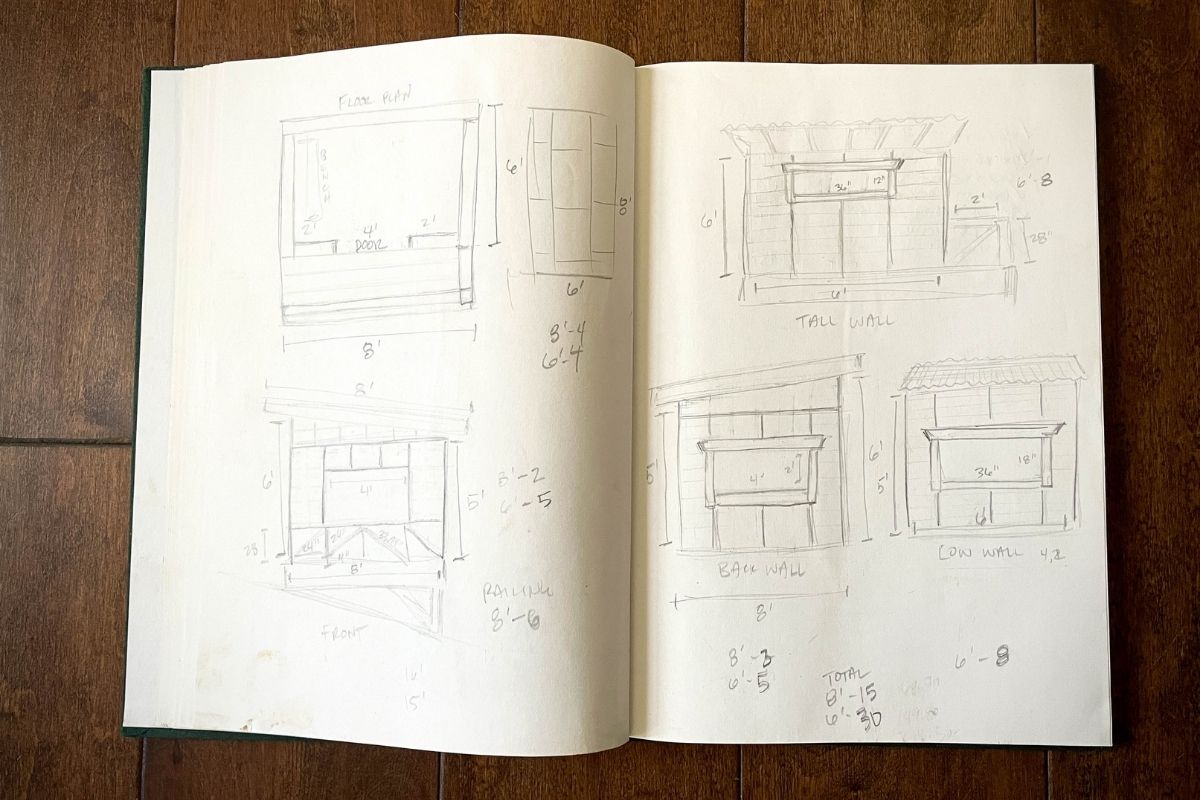
Even from thousands of miles away, my dad was part of the process. He checked my plans, offered advice, and helped sanity-check the materials list. Our goal was to finish the structure by our youngest son’s second birthday and get it painted before winter. Somehow, we pulled it off.
The design evolved as we went. I tend to build the plane while flying it, occasionally discovering that an idea that made sense in my head didn’t quite translate in real life. That’s part of the fun, though. You learn as you go. Kind of like fatherhood.
We knew we wanted a shed roof and lots of light, so we used clear roofing panels. We added a climbing wall, a captain’s wheel, a telescope, and a small countertop to invite creative play. Big windows look out into the woods, with clerestory windows above to bring in even more light—though not much help with the mosquitoes.
Details mattered. The blue exterior matches our front door. The green interior wall ties into the siding. A barn quilt, a Southern touch echoes one my wife and I made for the front of our house. Someday, we’ll add a Dutch door. For now, the open doorway feels just right.


Watching our boys’ excitement grow with each completed phase was the most rewarding part of the project. Passing along early building skills I learned from my dad made it even better.
Being a dad has a way of letting you relive the best parts of childhood…this time from the other side. Helping your kids build core memories has a funny way of reminding you of your own. And every now and then, after bedtime, it also means slipping out to the playhouse with a cold drink, listening to the birds, and appreciating how full life feels in those quiet moments.
Parenting requires both conviction and flexibility. Nick Sabio is learning how to live in that tension every day.
Nick lives in Laguna Hills with his wife and their three kids, ages eight, five, and three. He serves as an associate pastor, a role that shapes not just how he leads others, but how he approaches fatherhood at home.
Same Values, Different Kids
The hardest part of parenting, Nick says, is learning how to parent each child differently while holding onto the same core values.
What works for one doesn’t always work for another. Personalities differ. Needs change. The challenge is finding the balance between extending grace and calling kids toward growth they can’t yet see in themselves.
That balance is ongoing. And humbling.
Why Connection Matters Most
The most rewarding moments of fatherhood aren’t the big wins. They’re the invitations.
When his kids ask him to play. When they come to him for help. When they say “I love you” without being prompted. Nick also sees the fruit of connection when his kids show kindness and hospitality to friends at church or neighbors in their community.
Those moments are quiet confirmations that love is landing.
What Kids Multiply
One thing Nick wishes he knew earlier is how much kids multiply whatever you give them. Love and affection tend to come back as joy and trust. Constant criticism and judgment tend to create distance and insecurity.
That realization changed how he parents. Less pressure. More presence.
The advice that stuck most reinforces that approach: the best thing you can do for your kids is love their mother well. For Nick, that’s not just good marriage advice. It’s foundational parenting wisdom.
A Typical Day at Home
Nick’s days start with a workout, then time with the kids while his wife makes breakfast. After work, evenings are built around presence. Walks together. Playing outside. Dinner. A few rounds of Uno. Then bedtime.
It’s not flashy. It’s consistent.
When work, life, and family collide, Nick is quick to credit his wife. She’s the anchor of the household. She manages the calendar, homeschools the kids, runs the home, and supports him. After nearly ten years of marriage, they’ve learned to function as a team, especially in busy seasons.
A Rhythm That Grounds Them
One of the most life-giving practices in the Sabio household is their weekly 24-hour Sabbath. Phones off. No distractions. Time together.
They eat meals as a family, play outside at the beach, explore off-road trails, and practice intentional joy. That rhythm has become a reset not just for Nick, but for the entire family.
A Non-Negotiable Tradition
For more than six years, Thursday nights have been sacred. Every week, without exception, it’s Slumber Party Night.
The kids and Nick set up a massive bed that takes over the living room floor. Movies play. Games come out. Snacks disappear. They stay up as late as they can. It’s loud, messy, and easily the most fun tradition their family has.
Time Alone
When Nick gets time to himself, he keeps it simple. Surfing. Working on his truck. Organizing the garage. Quiet, hands-on work that clears his head.
Nick’s story is a reminder that great fatherhood isn’t about perfection. It’s about love that multiplies, rhythms that restore, and showing up again and again.
You can follow Nick at @sicknabio or @lazarusoverlandfam.
If you want to be a better parent, here’s the uncomfortable truth:
You have to parent yourself first.
That’s not Instagram fluff. That’s straight from Daniel G. Amen, one of the most well-known brain doctors in the world — and a guy who’s spent decades studying how our thoughts literally shape our brains.
In a short but powerful clip making the rounds on Instagram, Dr. Amen drops a line every dad should sit with for a minute:
“You want to be a really good parent? Number one, you have to parent yourself.”
No toys. No hacks. No parenting tricks. Just you. And the voice in your head.
View this post on Instagram
The Chatter That’s Always On
Dr. Amen asks a deceptively simple question:
What’s the chatter going on in your head like?
Is it:
-
Thoughtful?
-
Kind?
-
Loving?
-
Forgiving?
Or is it:
-
Harsh
-
Critical
-
Short-tempered
-
Always assuming the worst
Because here’s the part that hits hardest: That voice? That’s the voice your kids eventually inherit.
Not because you tell them to. But because they watch you live with it.
You’re Modeling More Than You Think
We spend a lot of time worrying about how we talk to our kids. But we spend almost no time thinking about how we talk to ourselves.
- When you blow a fuse in traffic.
- When you beat yourself up for missing a workout.
- When you replay a mistake from work for the hundredth time.
Your kids are learning something in those moments.
They’re learning:
-
How men handle stress
-
How men respond to failure
-
How men speak to themselves when things don’t go their way
As Dr. Amen puts it, the first step to raising mentally strong kids is managing the thoughts in your own head.
Why This Comes From a Brain Doctor (Not a Motivational Poster)
Dr. Amen isn’t just tossing out feel-good advice.
He’s the founder of Amen Clinics and a pioneer in brain imaging using SPECT scans. His work has shown — over and over — that thought patterns physically affect the brain.
Negative self-talk isn’t just “in your head.”
It’s wiring your brain toward stress, anxiety, and reactivity.
And when dads live in that mode? Kids feel it.
Not because we’re bad fathers. But because brains are contagious.
A Simple Gut Check for Dads
Here’s a quick exercise worth trying tonight.
Ask yourself:
If I talked to my kid the way I talk to myself… would I be proud of that? If the answer makes you uncomfortable, good. That’s the work.
Parenting yourself doesn’t mean pretending everything is fine or chanting affirmations in the mirror.
It means:
-
Catching the spiral before it runs the show
-
Replacing “I’m screwing this up” with “I’m learning”
-
Coaching yourself the way you’d coach your son or daughter
Firm. Encouraging. On their side.
The Real Flex of Fatherhood
We all want confident, resilient kids. But confidence isn’t taught. It’s absorbed.
And resilience doesn’t come from perfect parents. It comes from watching imperfect parents regulate themselves, reset, and keep going.
That starts upstairs…in the six inches between your ears.
Dad Day Takeaway
Parenting isn’t just what you say to your kids. It’s what you say to yourself when no one’s listening.
Clean that up, and you’re already ahead of the game.
Raising kids while building something of your own is a constant balancing act. Charlie Lima knows that tension well.
Charlie lives in College Station, Texas, where he owns and operates a gym while raising four kids. Three boys, ages six, eight, and ten, and a thirteen-year-old daughter. Different stages. Different needs. All happening at once.
Holding the Line While Adapting
The hardest part of parenting, Charlie says, isn’t effort. It’s discernment.
He’s constantly navigating the space between how he was raised and how his kids need to be raised in a completely different time. The goal isn’t to copy and paste his childhood. It’s to carry forward the big themes and values, then shape them around the world his kids are growing up in.
That tension is ongoing. And intentional.
Why the Small Moments Matter
The most rewarding part of fatherhood for Charlie is the way his kids love. Purely. Loyally. Fully.
That loyalty makes even the smallest interactions meaningful. A hug. A quick conversation. A shared laugh. Those moments add up, even when the days feel long.
Becoming a dad also revealed something unexpected. How much patience parenting actually requires and how quickly kids expose perfectionism. With four kids, control disappears fast. Charlie admits he’s still working on both, but those lessons have made him a better father and a better person.

Showing Up for the Big Stuff
One piece of advice that stuck with Charlie came from a 2013 EntreLeadership Master Series. Dave Ramsey spoke on a panel with his daughter about work and family balance. When asked if her dad worked too much, she said yes, but added that he was always there for the big stuff.
That line stuck.
It stuck because Charlie’s own dad lived the same way. Self-employed. Building a business. Still coaching teams. Still showing up when it mattered. That example shaped how Charlie approaches fatherhood today.
You can’t be everywhere. But you can be present for what counts.
A Day in the Lima Household
Charlie’s days start early. His favorite part of the morning is when the kids wake up and find him at the table. Wrapped in blankets. Half asleep. Full hugs.
Before heading out, he kisses his daughter on the cheek while she’s still sleeping. Then the day begins.
If he’s home before dark, he’s in the front yard playing football with the boys. Evenings mean dinner together, baths, and bedtime. Charlie and his wife tuck the kids in together every night and pray with them before sleep.
It’s a rhythm. One built on consistency.
Navigating Busy Seasons
Owning a business pulls you in multiple directions, and Charlie doesn’t pretend otherwise. The biggest blessing, he says, is how he and his wife, Alicia, complement each other.
When the gym needs more from him, she carries more at home. When things are lighter, he steps back in. Communication is key, especially during heavier seasons when missing things at home hurts the most. They navigate it together.
Resetting and Staying Grounded
About a year and a half ago, Charlie found a reset that stuck. Sauna and cold plunge sessions at Sweatscape. It’s become a grounding ritual. Every time he leaves, he feels renewed.
Physically and mentally.
Non-Negotiables
Charlie’s non-negotiables are clear and deeply rooted. Hugs and kisses. Saying “I love you” often. Tucking the kids in every night. Praying together. Being present. Providing.
When he gets time alone, it usually involves movement. CrossFit. Running. Ironman training. Sauna and cold plunge.
Charlie’s story is a reminder that fatherhood isn’t about perfection or control. It’s about presence, patience, and showing up for the moments your kids will remember.
You can follow him at @trainwithcharlie.
Once upon a time, greeting another man was simple. You stuck out your hand. He stuck out his hand. You shook. Eye contact. Done.
Then 2020 happened and turned the handshake into a psychological obstacle course. Now every greeting feels like a split‑second game of rock, paper, scissors where the loser feels awkward for the next ten minutes.
Is this guy a handshake guy? A fist bump guy? A hugger? A wave from six feet away guy who still keeps his mask in the glove compartment just in case?
Welcome to the Post‑Covid Handshake Era.
This is your field guide.
Why This Is Weird Now
The handshake used to be muscle memory. It was automatic.
Covid broke that muscle memory.
Some guys spent years actively avoiding hand contact like it was radioactive. Others never stopped shaking hands. Today, it still feels a little awkward.
We’ve become a generation of men who half-commit to greetings. Hands extended, then pulled back. Fists turning into open palms. Awkward laughs covering deep confusion.
This guide exists so you do not have to relive that moment again.
The Five Greeting Archetypes You Will Encounter
1. The Formal Handshake Guy
This guy never stopped. Firm grip. Two pumps. Direct eye contact. He probably owns real leather shoes and still writes thank‑you notes. We’re all for it. No knock here.
How to handle it: If he goes in strong, meet him there. Commit fully. A weak handshake here is worse than no handshake at all.
Rule: Never out‑formal the Formal Handshake Guy. Just match his energy.

2. The No‑Touch Guy
Hands in pockets. Little wave. Polite nod. He is not rude. He is cautious. Or tired. Or both.
How to handle it: Don’t force the contact.
A nod and a “good to see you” is more than enough. Confidence here is non‑attachment.
3. The Fist Bump Loyalist
The fist bump is clean. Efficient. Emotionally neutral.
How to handle it: The key is timing. Present the fist early and clearly. Half fists create chaos.
Bonus tip: Don’t add sound effects. Just own the bump, man. Once again, commit fully.
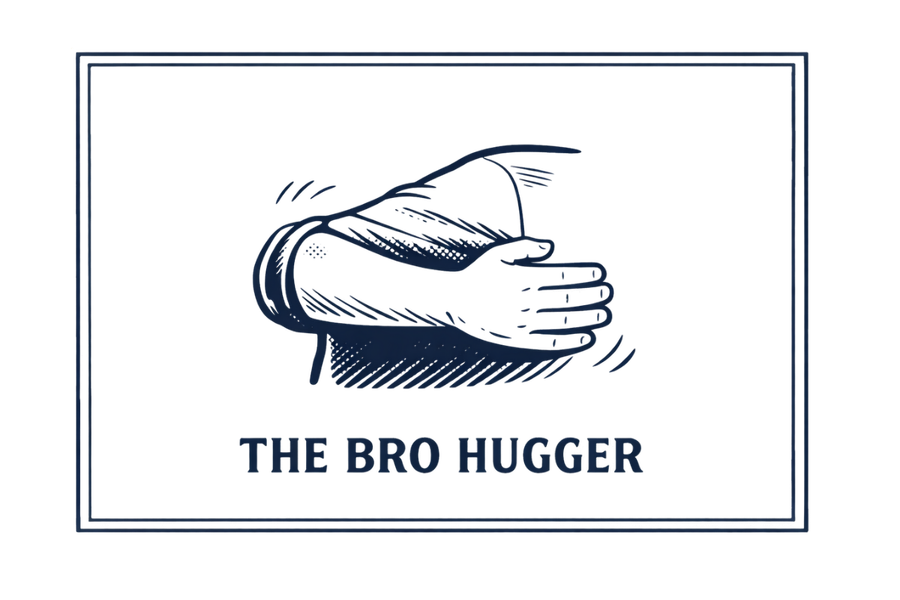
4. The Bro Hugger
One arm. Chest tap. Quick release. Usually reserved for friends, teammates, or guys you have shared a grill with.
How to handle it: If you hesitate, you will collide. If you commit, it works.
Lead with a smile. Angle the body. One arm only. Anything more turns it into an awkward moment.
5. The Chaos Hybrid
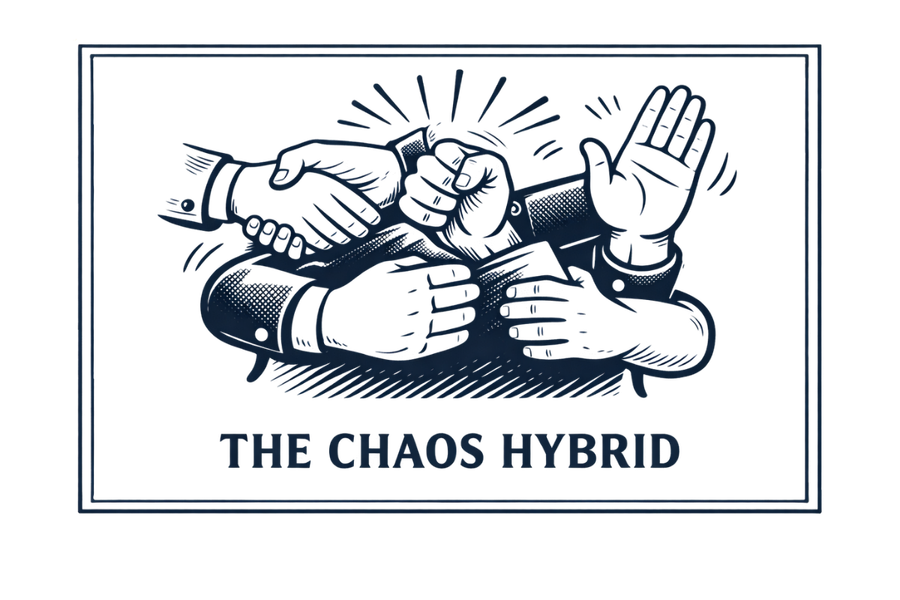
This guy doesn’t know what he wants, and neither do you. Handshake turns into fist bump turns into half hug.
This is the most dangerous archetype.
How to handle it: Slow down. Let him lead. Mirror what he does, not what you think he might do.
The Universal Dad Rule
When in doubt, pause for half a beat. That micro‑pause lets the other guy declare his intentions. Rushing is what creates the infamous hand‑fist‑thumb lock that will haunt you at 2 a.m.
Calm beats cool every time.
The Bigger Lesson
This isn’t really about handshakes. It’s about reading the room. And adapting without making it weird. Your kids are watching how you navigate these moments. They are learning how to meet the world. Literally.
Show them that being a man is not about forcing tradition or rejecting it.
It’s about awareness.
Raising kids in a major city has a rhythm of its own. Faster pace. Tighter schedules. More noise. Billy Parks knows that rhythm well.
Billy lives in Los Angeles with his wife and their two boys, ages twelve and fourteen. By day, he works as an investment professional. By night and weekend, he’s deep in the work of raising teenage boys in a world that’s always online.
Parenting in the Age of Screens
Ask Billy what the hardest part of parenting is right now and he doesn’t hesitate. Technology.
Managing screens without turning into a full-blown psychopath is a daily challenge. There’s no clear roadmap, no perfect system, and definitely no magic hack.
Billy’s goal isn’t control for control’s sake. It’s raising kids who know how to engage with the world without being consumed by it.
He doesn’t want to raise screenagers. He wants to raise capable humans. Billy has written openly about navigating tech and teens, including a thoughtful piece on giving his son an iPhone (a loaded gun). You can read it here.
Watching Independence Take Shape
The most rewarding part of fatherhood, especially at this stage, is autonomy. Billy lights up when he talks about seeing his boys run their own program. Getting themselves where they need to be. Handling responsibilities without constant reminders.
Those moments signal something deeper. Trust. Confidence. Growth.
They’re proof that the slow, often invisible work of parenting is doing its job.
The Crew Matters
One thing Billy wishes he’d known sooner is how critical community is. Finding like-minded dads to walk the journey alongside you isn’t optional. It’s essential.
Advice is helpful. Books are useful. But nothing replaces a crew of parents in the same season, dealing with the same chaos, and finding ways to make it work together.
In Billy’s world, the village is real. And when things get hectic, the squad shows up.

via @billyfilm IG
A Typical Day, LA Style
A normal day looks like two working parents and two busy kids operating in urban sync. Mornings start with breakfast before the boys take the train to school. They’re even working toward a couple days a week where the kids fully own breakfast themselves.
Afternoons and evenings are filled with practices, games, and quick dinners. Sometimes that means cheap-and-cheerful neighborhood spots. Sometimes it’s eating at home. It’s nonstop movement. Pickups. Drop-offs. Hangs.
Weekends slow down in a different way. Less structure. More dirt. More outdoors.
Keeping Perspective When It Gets Messy
When work, life, and family all hit at once, Billy admits it doesn’t always run smoothly. Sometimes it clicks. Often it doesn’t.
The key is perspective. Progress over perfection. Keep moving forward, course-correct when needed, and don’t beat yourself up for missing a step.
When he needs to reset, Billy heads outside. Away from tech. Into the dirt. Whether it’s fishing, riding motorcycles, or just being in nature, the outdoors recalibrates everything.
Non-Negotiables and What Matters Most
Billy’s one hard line in dad life is simple. Don’t mess with mom. She’s the heart and soul of their home, and everything flows better when that’s respected.
When he gets time alone, he gravitates toward the same things he loves doing with his kids. Fly fishing. Sea fishing. Motorcycle rides. Movies. Dirt under his boots.
Billy’s story is a reminder that modern fatherhood doesn’t require perfection. It requires intention, community, and a willingness to keep learning as the kids grow.
You can follow him at @billyfilm.
Four weeks into flu season, one dad dropped a message into the Dad Day Slack that felt a little too familiar. 4 weeks is how long he and his wife have been stuck trading colds like Pokémon cards. Cough clears up. New sniffles arrive. Energy never quite comes back.
Workouts? Paused.
Routines? Shot.
Mood? Somewhere between “meh” and “please don’t talk to me.”
And the replies came flooding in.
“Same here.”
“Month six over here.”
“Kids bring home EVERYTHING.”
Welcome to flu season with kids in daycare. If you’re in it, this isn’t a failure of discipline or immunity. It’s the tax we all pay for tiny humans with sticky hands and zero personal boundaries.
What followed was a surprisingly helpful dad field report — no miracle cures, just what’s actually helped guys stay upright while the germs run wild.
Here’s the playbook.
First, the Big Truth Dads Need to Hear
This stretch is normal.
Daycare kids are basically exposure therapy with shoes. Families pass bugs around. It can last weeks. Sometimes months. And ironically, this brutal stretch often leads to fewer sick days later as immune systems level up.
It’s not fun. But it is part of the deal.
Once you accept that, everything else gets easier.
What Dads Are Actually Using to Stay Healthy (or at Least Functional)
No silver bullets. Just tools that help tilt the odds.
The Supplement Stack (Nothing Exotic)
These came up over and over:
-
Zinc – often at the first sign of symptoms
-
Vitamin C – basic, cheap, still useful
-
Vitamin D – especially in darker winter months
-
Elderberry – polarizing, but plenty of dads swear by it
None of these are magic. Think support, not prevention.
Gut Health = Immune Health
A lot of dads mentioned probiotics, especially after back-to-back illnesses. The logic is simple: if your gut’s wrecked, your immune system usually is too. Yogurt, kefir, probiotic supplements — pick your lane.
Old-School Dad Medicine Still Has a Place
Call it placebo. Call it tradition. It still shows up:
-
Raw garlic
-
Honey
-
Ginger
-
Smoothies packed with frozen fruit and greens
-
Cod liver oil (for the truly committed)
You’re not trying to cure the flu. You’re trying to feel 10–20% better, which honestly matters.
Symptom Management > Heroics
A lot of dads said the same thing:
Stop trying to “power through.”
-
Nasal sprays
-
Decongestants
-
Throat lozenges
-
Hot showers and steam
You’re not weak for managing symptoms. You’re strategic.
IV Therapy: Not Cheap, Sometimes Effective
A few dads mentioned IV hydration or vitamin drips helped them feel human again, temporarily.
Not necessary. Not a cure. But if you’re deep in the hole and need a reset, some found it useful.
The Movement Rule: Don’t Go to Zero
This one might’ve been the most important takeaway. When you’re sick for weeks, the instinct is to shut everything down. Total rest. Couch mode. No movement at all.
Most dads agreed that’s a mistake.
The rule: 👉 Don’t go to zero.
That can look like:
-
A walk around the block
-
A long warm-up
-
One set of pushups
-
Bodyweight squats
-
Stretching for 10 minutes
Movement keeps the rust off. It keeps routines alive. And it makes the return to real workouts way less painful. You’re not training. You’re maintaining the signal.

The Mental Side Nobody Warns You About
The physical symptoms are annoying. The mental drag is worse.
When routines fall apart, it’s easy to spiral:
-
“I’m losing momentum.”
-
“I’ll start again next week.”
-
“What’s the point?”
That’s normal too.
This is where the dad wisdom kicked in: Zoom out. A rough month doesn’t erase years of consistency. Your job right now isn’t optimization. It’s not making things worse.
Rest when you need it. Move when you can. Laugh at how absurd it is that your kid sneezed once and now the house is under quarantine.
A Flu Season Reality Check for Dads
-
You’re not broken
-
Your immune system isn’t trash
-
You didn’t “fall off”
You’re just parenting during flu season. No silver bullet. Just dads comparing notes, sharing what helped, and reminding each other that this phase passes — even if it takes longer than we’d like.
If you’re in it right now, you’re not doing anything wrong.
You’re just in the trenches.
Some businesses grow fast. Others grow deep.
Dave Allee started Almond Surfboards 17 years ago in his hometown of Costa Mesa, California. What began as a custom surfboard operation turned into a respected surf brand rooted in craftsmanship, patience, and doing things the right way. Nearly two decades later, Dave still runs the business, while also building a family-run bison jerky company on the side.
He’s also a dad of two, raising a six-year-old and a three-year-old between Costa Mesa, California and Coeur d’Alene, Idaho.

Photo:@scottsnyderphoto
Ambition vs. Presence
For Dave, the hardest part of parenting isn’t a lack of time. It’s managing attention.
As an entrepreneur, his ambitions run deep. As a dad, so does his desire to be present and intentional at home. Those two don’t always coexist peacefully.
His kids don’t love seeing a laptop open, and they’re quick to call it out. The solution is simple but not always easy. When it’s work time, Dave physically removes himself so that when he’s with the kids, he’s actually with them.
The tradeoff is worth it. He gets a lot of time with his family. Midweek pancakes are a thing. Breakfast matters.
The Power of Small Moments
The most rewarding part of fatherhood, Dave says, is all the little moments. The stuff you don’t plan for.
Letting the kids help with projects. Bringing them into the kitchen. Getting them outside and giving them a wide range of experiences to draw from later in life. While answering this very interview, Dave got pulled away to build Hot Wheels tracks with his three-year-old son. That’s kind of the point.
Becoming a dad also gave him a deeper understanding of love. He didn’t fully grasp how much his own parents loved him until he had kids of his own. Fatherhood became a constant reminder of grace, patience, and God’s love.
Lessons Learned Along the Way
Nothing, Dave says, can truly prepare you for becoming a dad. No book. No advice. No mental framework.
If he could change one thing, it wouldn’t be how he parents. It would be how he lived before kids. He opened a retail store at 22, which meant weekends were mostly spoken for throughout his adult life. He wishes he and his wife had traveled more early in their marriage. Not out of regret, but perspective.
The advice that stuck most came from John Eldredge: It’s the little things that build a beautiful life. Dave sees that play out daily.
A Day in the Allee Household
Dave’s days start early. His alarm goes off at 5:05 a.m., six days a week. He loves the quiet hours before the house wakes up. That’s when deep work happens. Or a workout. Or reading. Ideally all three.
That early start allows him to pause, make breakfast for his family, and then get back to work once the kids head to school. If he sleeps in, the whole day feels off. The balance comes from going to bed early. Around 9:30.
When work, life, and family collide, Dave tries to be fully where he is. One hundred percent at work when working. One hundred percent present when with the kids. The in-between, he says, is a dead zone and best avoided.
Staying Grounded
When things get busy, Dave resets through simple rhythms. Reading at night. Writing in the morning. Moving his body whenever possible.
His non-negotiable in dad life is breakfast. Burritos. Pancakes. Bacon. Anything goes, as long as he’s making it.
When he gets time alone, it looks like solo surf sessions, scouting for elk, whiskey neat, and old jazz. Quiet, focused, and intentional. Much like the way he’s built his businesses and his family.
You can follow Dave at @almondsurfboards and @rangerbison.