Some of the best memories we have involve a dock, a rod, and a dad who had the patience to sit there with us.
That’s what this is about.
Getting your kid into fishing isn’t complicated. It doesn’t require a boat, a tackle collection, or years of experience. It requires a rod, some bait, a body of water, and showing up.
This guide covers everything. Gear, location, technique, what fish to target, how to keep kids engaged, and what to do when they inevitably get bored 20 minutes in. Whether you’ve fished your whole life or have never held a rod, we’ve got you covered.
Let’s get into it.
Why Fishing Is One of the Best Things You Can Do With Your Kid
Before the gear list, a quick word on why this matters.
Fishing teaches patience. Real patience, not the fake kind. The kind where you sit with uncertainty and learn to be okay with it.
It teaches cause and effect. Cast here, not there. Use this bait, not that one. Adjust the depth. Try again.
It’s screen-free time that doesn’t feel like punishment. Kids love it because something might happen at any second. The bobber might go under. There might be something on the line. That anticipation keeps them locked in better than almost anything else.
And it’s one of the few activities where a six-year-old and a 45-year-old can fish side by side and have the exact same experience. Same water. Same chance. No age advantage.
That’s the magic of it.
Start Here: The One Rule That Makes or Breaks the First Trip
Before we talk gear and fish, we need to talk about this.
The goal of your first fishing trip is not to catch fish.
The goal is for your kid to have fun and want to go again.
Keep the first trip short. One to two hours max. Pick a spot where fish are plentiful and easy to catch. Bring snacks. Bring patience. Celebrate every single thing, the cast that almost worked, the bite they missed, the tiny fish they threw back.
The first trip plants the seed. Every trip after that grows it.
If you push too long, pick a hard spot, get frustrated, or make it feel like school, you lose them. And you may not get a second chance.
One good hour beats a miserable four-hour marathon every time.
What Fish to Target First: The Beginner’s Best Friend
If you want your kid to actually catch something, start with bluegill.
Bluegill are found in virtually every freshwater pond, lake, and river across the United States except Alaska. They’re aggressive biters, they fight surprisingly hard for their size, and they’re absolutely everywhere. A public pond in a city park almost certainly has bluegill in it right now.
Here’s why bluegill are perfect for kids:
They bite constantly. No sitting for two hours waiting for a nibble. Bluegill will hit a worm on a hook within minutes of it hitting the water in a good spot. That constant action is everything for a kid’s attention span.
They’re small enough for kids to handle. A typical bluegill runs 6 to 10 inches. A kid can hold one, look at it, show it to dad, and release it without drama.
They’re basically everywhere. You don’t need to travel. You don’t need a boat. A local pond with a grassy bank is perfect.
Other great beginner species: crappie, sunfish, yellow perch, and small catfish. All easy to find, all aggressive biters, all manageable for small hands.
Save bass, walleye, and trout for later. They’re great fish, but harder to catch consistently, and a day of zero bites will end a kid’s fishing career before it starts.
Where to Fish: Finding the Right Spot
You don’t need to know a secret honey hole. You need to know how to find accessible public water near you.
Local ponds and lakes in city or county parks are your best starting point. These are often stocked with panfish by your state fish and wildlife agency. They have accessible banks, sometimes docks, and are designed for exactly this kind of casual fishing.
State park lakes and reservoirs are another great option. Most states have a system of public fishing areas with easy bank access.
Fishing piers and docks are ideal for young kids. Stable footing, easy casting, and fish tend to congregate underneath them naturally.
How to Find Spots Near You
Search “[your state] fishing license” and go to your state fish and wildlife agency website. Most states have a public fishing area finder that maps every accessible public body of water near you. The Fishbrain app is also solid for finding local spots and seeing what other anglers are catching there.
What Makes a Good Beginner Spot
Calm, accessible bank. Shallow water with some structure nearby like docks, fallen trees, or weeds. Easy parking. Ideally somewhere the kid can also run around a bit while you rig up, because they will not stand still and wait.
Fishing Licenses: Don’t Skip This
Every adult needs a fishing license. Kids under a certain age are usually exempt but this varies by state.
Get yours before you go. You can buy a fishing license online through your state fish and wildlife agency website in about five minutes. They’re typically $20 to $40 for an annual resident license.
If you’re not sure about regulations in your area, the state agency website has everything. Don’t wing it. Getting cited for fishing without a license is an annoying and preventable way to ruin a good trip.
The Gear: Keep It Simple
Here’s where a lot of dads overthink it. You do not need expensive gear to catch fish with a kid. You need gear that’s easy to use, hard to break, and appropriate for the fish you’re targeting.
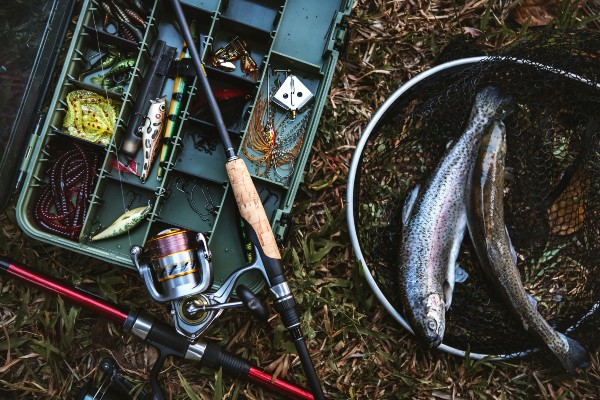
For a first trip with a young kid, you need four things. A rod and reel, some line, a hook, a bobber, and bait. That’s it.
The Rod and Reel
For kids under 8: Zebco Splash Spincast Combo
The Zebco Splash is specifically designed for young kids and it floats if they drop it in the water. That’s not a joke. The floating design alone makes it worth having around docks and boats. Push-button spincast reel, no-tangle design, pre-spooled with 6-pound line. Around $20. This is a great starter rod.
For kids 8 and up: Ugly Stik GX2 Youth Combo
The Ugly Stik is a real rod, not a toy. It’s been around forever, it’s nearly indestructible, and it performs well above its price point. The GX2 Youth Combo comes with a solid spinning reel pre-spooled and ready to go. Around $40 to $50. This rod will last several years and multiple kids.
For older kids or teens ready to step up: Zebco Roam Spinning Combo
A step up in quality and length, the Roam is a legit rod that can grow with them from panfish to bass. Around $40 to $60. A great investment if your kid is genuinely hooked on the sport.
For dads who want their own rod: If you’re fishing alongside your kid and you want your own setup without spending a lot, the Shakespeare Ugly Stik Camo Spinning Combo around $35 to $50 is solid and reliable for pond and lake fishing.
The Tackle: What You Actually Need
Don’t buy a giant tackle box. For bluegill and panfish, here’s all you need:
Hooks: Size 6 or 8 Aberdeen hooks. Light wire, easy to bait, good for small fish. Buy a pack of 50 for a few dollars.
Bobbers: Round clip-on bobbers in red and white. The classic. Clip it on the line about 18 inches above the hook for shallow water, 2 to 3 feet for deeper water.
Split shot sinkers: Small weights you crimp onto the line between the hook and bobber to keep the bait down. Buy a small assorted pack.
That’s it. Seriously. Three items plus the bait below and you are ready to catch fish.
The Bait: Start With Worms
Nothing catches more panfish more consistently than a live worm. Nothing.
Pick up a container of nightcrawlers or red worms at any bait shop or Walmart sporting goods section. Usually $3 to $5. Thread a small piece of worm onto the hook, cast near structure like docks, fallen trees, or weedy edges, and wait for the bobber to go down.
When it goes down, that’s a fish. Set the hook with a quick, firm upward motion of the rod tip. Reel it in.
That is the entire technique. Your kid can absolutely do this.
If worms gross your kid out, try PowerBait Trout Nuggets or small pieces of hot dog. We’re not judging. A fish is a fish.
How to Teach Your Kid to Cast
This is where most first-timers struggle. Casting with a spinning rod takes some practice. That’s why we recommend a spincast push-button rod for younger kids first.
Push-button spincast casting (Zebco style): Hold the rod with your dominant hand. Press and hold the button on the back of the reel. Point the rod tip toward your target. Bring the rod back behind your shoulder (not too far). Push forward and release the button when the rod tip is aimed at where you want the bait to go. That’s the cast. Practice it in the backyard with the hook removed and a small piece of rubber as a casting plug before you ever get to the water.
Spinning reel casting: Hold the rod in your dominant hand. Open the bail (the wire loop) with your other hand. Hook the line with your index finger and close the bail. Bring the rod back, cast forward, and release your finger as the rod tip passes your target. This takes more practice but gives much better control and distance. Teach this to kids 8 and up who have the coordination for it.
Pro tip for teaching: Don’t just explain it. Stand behind them and guide their arm through the motion two or three times. Muscle memory beats verbal instruction every time with kids.
The Setup: Step by Step
Here’s the exact rig for catching bluegill on your first trip.
- Tie your hook to the end of the line using a simple improved clinch knot. There are YouTube videos that teach this in 60 seconds. Practice it at home the night before.
- Clip a round bobber onto the line about 18 to 24 inches above the hook.
- Crimp a tiny split shot sinker onto the line between the bobber and the hook to keep the bait sinking naturally.
- Thread a small piece of worm onto the hook. You don’t need to cover the whole hook. A piece the size of your thumbnail is enough.
- Cast near structure. Docks, fallen logs, weedy edges, shaded areas near overhanging trees. Bluegill love shade and cover.
- Watch the bobber.
- When it goes under, set the hook and reel.
That is a complete fishing system that will catch fish today in virtually any freshwater pond or lake in the country.
Keeping Kids Engaged: What to Do When They Get Bored
Kids will get bored. Accept it. Have a plan.
Keep a bucket of water nearby. Let them catch the fish and put it in the bucket to look at before releasing it. The up-close fish observation buys you another 20 minutes easy.
Give them a job. Let them bait the hook if they’re old enough. Let them cast. Let them hold the rod and watch the bobber. Ownership keeps them in it.
Set small goals. “Let’s catch three fish and then we’ll get ice cream.” Attainable targets keep kids motivated better than open-ended fishing sessions.
Let them roam a little. If there’s a safe area for them to explore, throw rocks, or catch frogs nearby, let them. They’ll come back when something bites.
Don’t force it. When they’re done, they’re done. Pack up cheerfully and talk about coming back next weekend. Ending on their terms means they’ll want to come again.
The Gear Checklist for Your First Trip
Print this out or screenshot it before you go.
- Rod and reel (rigged and ready)
- Extra hooks (size 6 or 8)
- Bobbers
- Split shot sinkers
- Live bait (worms from any bait shop)
- Small needle-nose pliers (for removing hooks safely)
- Sunscreen
- Bug spray
- Snacks and drinks
- A small bucket (to hold the catch for viewing)
- Fishing license (for any adult)
- A good attitude (non-negotiable)
A Note to Dads Who Don’t Fish
If you’ve never fished before, that’s okay. Better than okay, actually. Learning alongside your kid is one of the most connected experiences you can have with them.
You don’t need to be the expert. You need to be the guy who shows up, figures it out, laughs when it doesn’t work, and tries again.
The fish are secondary. The morning together is the whole point.
Get the Zebco, buy the worms, find a local pond, and go. You’ll figure out the rest on the water. Millions of people have done exactly this with no experience and come home with a kid who can’t stop talking about it.
That’s all this is.