
Here’s the tension nobody warns you about.
You want to do things with your kids. Real things. Hikes that go somewhere. Trips that mean something. Weekends that don’t evaporate in front of a screen. You want them to grow up with a sense of the world and their place in it.
And then you actually try to do those things with your kids.
The baby needs a feeding every three hours. The toddler wants to stop and examine every single rock on the trail. The five-year-old has decided halfway up the mountain that their legs don’t work anymore. The eight-year-old is bored five minutes into anything that wasn’t their idea. The twelve-year-old is present in body only.
This is the honest version of adventuring with kids. It is not the Instagram version. It is not the version where everyone is laughing in matching jackets on a summit. It is the version where you are negotiating with a four-year-old about whether they need to use the bathroom before you get in the kayak.
But here’s what we also know. The memories stick. The hard ones especially. The time you pushed a little further than felt comfortable and something happened that none of you saw coming.
The summit that felt impossible until it wasn’t. The moment your kid realized they were capable of something they didn’t know they could do.
That’s worth chasing. You just have to know how to chase it at the right level for where your kid actually is.
Here’s the age-by-age guide for how to do it.
The Philosophy First
Before the ages, a framework that makes everything else work.
Meet them where they are, not where you want them to be.
The biggest mistake dads make when adventuring with kids is planning the trip they want to take and then dragging the kids along. A six-mile hike with 2,000 feet of elevation gain is a great hike for you. For a five-year-old it is a hostage situation.
The adventure has to be sized for them. Not dumbed down. Sized. There’s a difference. A great adventure for a four-year-old might be a half-mile trail to a waterfall. That waterfall is just as real as yours. The mud on their boots is just as satisfying. The sense of having gone somewhere and found something is exactly the same.
Let them set the pace whenever you can.
Kids who feel dragged through an experience don’t absorb it the same way kids who feel like they’re leading it do. Give them ownership. Ask them to navigate. Let them pick which fork to take. Let the trip slow down when something catches their attention.
Yes, this means you will spend twelve minutes looking at a caterpillar. The caterpillar is the adventure for them right now. Let it be.
Build the yes before you push the limit.
Every great adventure with your kid is built on a foundation of smaller ones that went well. The trust gets established in the easy miles. The resilience gets built in the slightly hard ones. The big stuff comes later, when they know you’ve got them.
Don’t skip the foundation. The summit can wait.
Babies and Infants (0 to 1 Year): You’re Training Yourself
Let’s be real about this stage.
The adventure is not for them yet. They won’t remember it. They have no preference about whether they’re on a mountain or in the living room. The world is enormous and confusing either way.
The adventure at this stage is for you. You’re training yourself not to disappear. Not to put the adventurous version of yourself in storage until the kids are older.
Because the dads who do that often discover that by the time the kids are old enough, the habit is gone.
This is the stage to figure out the gear. The carrier is everything. A good structured baby carrier, Ergobaby Omni, BabyBjörn Move, Osprey Poco, changes everything about what’s possible with a baby.
You can hike. You can walk the city. You can explore. The baby is along for the ride and generally happier than you’d expect because the motion and your body heat tend to put them straight to sleep.
Short hikes. Flat walks. Beach days. Farmers markets. Anything that keeps you moving in the world and gets you practiced at doing things with a small human attached to you.
The payoff comes later. The habit is being built now.
Toddlers (1 to 3 Years): The Chaos Stage
Toddlers want to do everything. They also can’t do most things. That gap is where the comedy and the frustration both live.
A toddler on a trail is not hiking. They are conducting a slow-moving scientific investigation of the natural world. Every stick. Every bug. Every puddle. Every pile of dirt that looks slightly different from the last pile of dirt. This investigation has no agenda and no timeline and it is entirely absorbing for them.
Your job is to protect the investigation without killing it.
What works at this age:
Short trails with big payoffs. A quarter mile to a creek. A half mile to a waterfall. Something they can see and touch and interact with at the end. Distance is irrelevant. Destination matters.
Water. Always water. A toddler near a creek or a beach or a puddle is a toddler who is completely occupied. If your adventure involves water in any form, you have bought yourself a minimum of 45 minutes of genuine engagement. Pack dry clothes and lean into it.
Let them walk until they can’t. Then carry them. The moment you force a toddler to keep walking when they’re done, you’ve lost them. Have a carrier or a good pack ready for the second half of anything.
Pack two of every snack. One for now. One for the meltdown that’s coming.
The expectation reset:
You will cover less ground than you planned. The trip will take longer than you expected. Something will go sideways. Plan for all of it and you’ll stop being surprised when it happens.
The metric for success at this stage is: did they have a good time? Did they see something cool? Did they go to sleep easily that night? That’s a win. Nothing else required.
Preschool and Early Elementary (3 to 6 Years): The Golden Age Begins
This is where it starts to get genuinely fun.
Kids in this range are capable of more than most parents give them credit for. They can hike legitimate distances when motivated. They can kayak in a tandem. They can camp and actually sleep. They can snorkel in calm water. They have energy that borders on supernatural.
The key is motivation. A motivated four-year-old will walk further than seems physically possible. An unmotivated one will lie down on the trail and refuse to move regardless of how much it embarrasses you.
Motivation at this age comes from a few places. A destination they can picture. A treat waiting at the end. A friend along for the ride. A story about the place you’re going before you get there. Their own gear that feels real and not like a toy.
What works at this age:
National parks are made for this stage. Junior Ranger programs give kids a mission. They collect badges, answer questions, do activities. The park becomes a game. We cannot overstate how much the Junior Ranger program transforms a trip for a kid in this age range.
It’s free, it’s everywhere, and it turns a passive spectator into an active participant.
Family camping at this age is genuinely one of the best things you can do. Not glamping. Not a cabin. Actual tent camping. Setting it up together, making fire, cooking outside, sleeping in a bag.
Something about sleeping outside does something to kids that is hard to explain and impossible to replicate anywhere else.
Give them a real job. Navigator. Photographer. Camp chef assistant. Fire tender under supervision.
Kids who have a job on the adventure are invested in the adventure.
Kids who are just passengers disengage.
Bikes and scooters extend their range dramatically. A kid who can barely walk two miles can cruise five on a bike. Rail trails and paved paths are underrated adventure infrastructure for this age group.
The thing to push gently:
Start introducing discomfort as something survivable. A hill that’s hard. Weather that’s not perfect. A day that doesn’t go as planned. How you handle those moments in front of your kid is some of the most important teaching you will ever do. Stay calm. Stay positive. Show them the problem-solving version of yourself.
They are watching everything.
Elementary School (6 to 10 Years): Level Up
Kids in this range can do real things.
Actual summits. Multi-day backpacking with the right planning. Whitewater in the appropriate class. Mountain biking on beginner to intermediate trails. Surfing. Rock climbing. The list of what’s accessible opens up dramatically.
This is also the age where the adventure starts to belong to them in a different way. They remember it afterward. They talk about it at school. They ask when you’re going back. The investment starts paying dividends that compound.
What works at this age:
Let them have a say in the planning. Not full control. A say. Show them the map and ask what looks interesting. Give them two or three options and let them vote.
When a kid chooses the destination, they arrive with ownership of the experience.
Introduce the concept of earning it. The best views come after the hardest climbs. The best campsites require the most miles. This is not a difficult lesson for kids to absorb at this age when it’s presented right. Hard things have good things on the other side of them. That lesson lives in the body differently than it lives in the head.
Gear matters more now. A kid with a real pack that fits them correctly, a headlamp they actually own, trekking poles if the terrain calls for it, a journal to record what they see, is a kid who feels like a real adventurer rather than someone being dragged through someone else’s adventure.
Multi-day trips become possible and powerful at this age. One night becomes two. A weekend becomes four days. The deeper you go, the more it changes them.
The tension at this age:
They have their own friends and interests now. Weekends fill up with parties and sports and sleepovers. The window for dad-led adventure starts to compete with other things for the first time.
Don’t cede the ground. Protect the trips. Put them on the calendar. Let them be the thing the family does, not the thing that gets sacrificed when something else comes up.
Tweens (10 to 13 Years): The Critical Window
Something shifts around ten or eleven.
They become self-conscious. They start caring what their peers think. The wide-eyed openness of the elementary years gets a little more guarded. Fatherhood in general gets more complicated during this stretch.
But here’s what we know from the dads who’ve navigated it: the ones who stayed consistent with adventure during these years came out the other side with something real. A through-line. A shared language with their kid that never fully went away even when everything else felt distant.
Adventure at this age works best when it respects their growing autonomy.
What works at this age:
Let them lead. Literally. Put them at the front of the group on the trail. Let them make route decisions. Give them the map and follow their call. The shift from being guided to guiding is significant at this age. They feel the difference and they rise to it.
Bring a friend. A tween who would drag their feet on a dad-led hike will often push harder and complain less when a buddy is along. Use that. A trip with another family, a friend they choose, or a cousin closes the engagement gap significantly.
Choose challenges that feel genuinely impressive to a twelve-year-old. Not impressive to you. To them.
A technical rock climb. A remote backcountry camp that requires real miles to reach. A surf session with actual waves. Something they can tell their friends about and have it land.
Keep the ratio of talking to listening heavily weighted toward listening. The long car ride, the hours on the trail, the camp dinner where you’re not looking at each other directly, these are where the real conversations happen at this age. Create the conditions and then let it come to you.
Teenagers (13 and Up): Invest Harder Than Feels Natural
The conventional wisdom says teenagers don’t want to do things with their parents. The conventional wisdom is partly right. But it’s missing something important.
Teenagers don’t want to be managed. They don’t want to be organized into fun. They don’t want to feel like a project.
But they absolutely still want connection. They want to be known by the people who matter to them. They want to do real things. They just want to feel like an equal participant, not a child being enriched.
What works at this age:
Ask them what they want to do and actually do it. If they’ve expressed interest in something, even once, in passing, over months, file that away and build a trip around it. Nothing signals “I was paying attention” to a teenager like a trip to somewhere they mentioned they wanted to go.
Make it hard enough to matter. The teenage years are when the summit really does the work. Something that requires genuine effort, that tests them, that they weren’t sure they could do until they did it, that’s the experience that resets the relationship and their sense of what they’re capable of.
Step back from the teaching role. You’re not their guide anymore. You’re their companion on this one.
Let them feel the weight of that. Let the experience happen without narrating it.
And don’t stop. Don’t decide the trips are done because the interest seems lower or the schedule got complicated or they pushed back the last time you suggested something.
The data on father-teen relationships is unambiguous. This is when the investment matters most. This is when the presence or absence of a dad who shows up has the longest shadow.
Book the trip. They can be annoyed about it on the way there. They’ll be glad you did on the way home.
The Through Line
Every stage has its version of the tension you named.
The toddler who wants to stop at every rock. The five-year-old who can’t stop moving. The eight-year-old who has their own ideas about what’s fun. The twelve-year-old who’s somewhere else in their head. The teenager who acts like they’d rather be anywhere but here.
The answer to the tension is the same at every stage.
Show up anyway. Size it right for where they are. Let them lead when you can. Push gently when it’s worth it. Stay calm when it goes sideways.
The adventures don’t have to be perfect. They don’t have to go according to plan. They don’t have to produce the moment you envisioned when you were driving to the trailhead.
They just have to happen.
That’s the whole thing. The kids who grew up adventuring with their dads don’t remember the miles or the elevation. They remember that their dad was there. That they went places together. That the door was always open for the next one.
Keep the door open.
There’s a version of you that used to just go. Throw a pack together on a Friday, drive until the pavement ran out, sleep under something that wasn’t a roof.
That guy still exists. He just needs a different gear list now.
Camping with young kids isn’t harder than camping solo. It’s harder. The problems aren’t physical. They’re logistical. The wrong tent means no sleep. The wrong sleeping bag means a miserable kid at 2 am. The wrong stove means cold hot dogs while your four-year-old decides the whole outdoors thing was your idea and she’s done with it.
This is a gear guide for camping with young kids, specifically the 10 items that make or break a first family camping trip. Every pick has a best version and a budget version, because the goal is getting out there, not waiting until you can afford the premium kit.
Get the gear right and most of those problems disappear. Here’s what we actually use.
The goal for the first trip is not adventure. The goal is that everyone wants to go back. That changes everything about how you gear up.
One note before the list: start with one night, a flat campsite twenty minutes from the car, and a hike under two miles. The gear below supports that. Scale up from there once everyone’s bought in.
01 — Best Family Camping Tent
Why It Matters
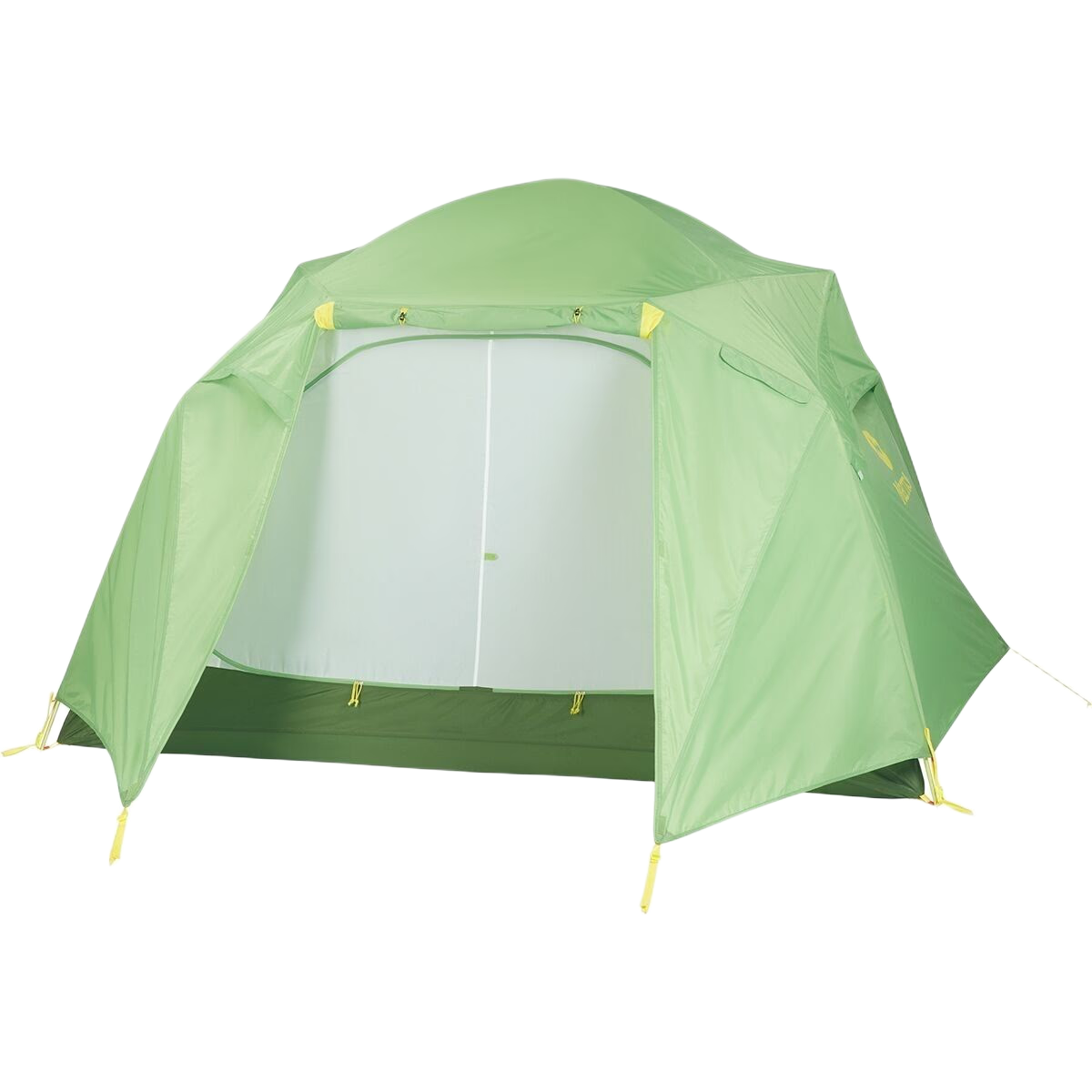
Whatever size you think you need, go one up. Two adults and one kid in a two-person tent is a math problem that doesn’t work. You need room to actually exist. Gear, kids, and all. Freestanding setup matters more than you think when a four-year-old is actively trying to help. Weather-worthy enough to handle a surprise rainstorm without drama.
Best Pick
Marmot Limestone 4 Tent at Backcountry · ~$429
Four-season-ready aluminum poles, color-coded clips so setup is fast, and vertical walls that actually give you headroom to move around. This is the tent you buy once and stop thinking about.
Budget Pick
Ozark Trail 4 Person Family Instant Cabin Tent at Walmart · ~$119
Punches well above its price point. Waterproof, roomy, easy to pitch. It’s not sexy but it’s not going to let rain in at midnight either.
02 — Best Kids Sleeping Bag for Camping
Why It Matters
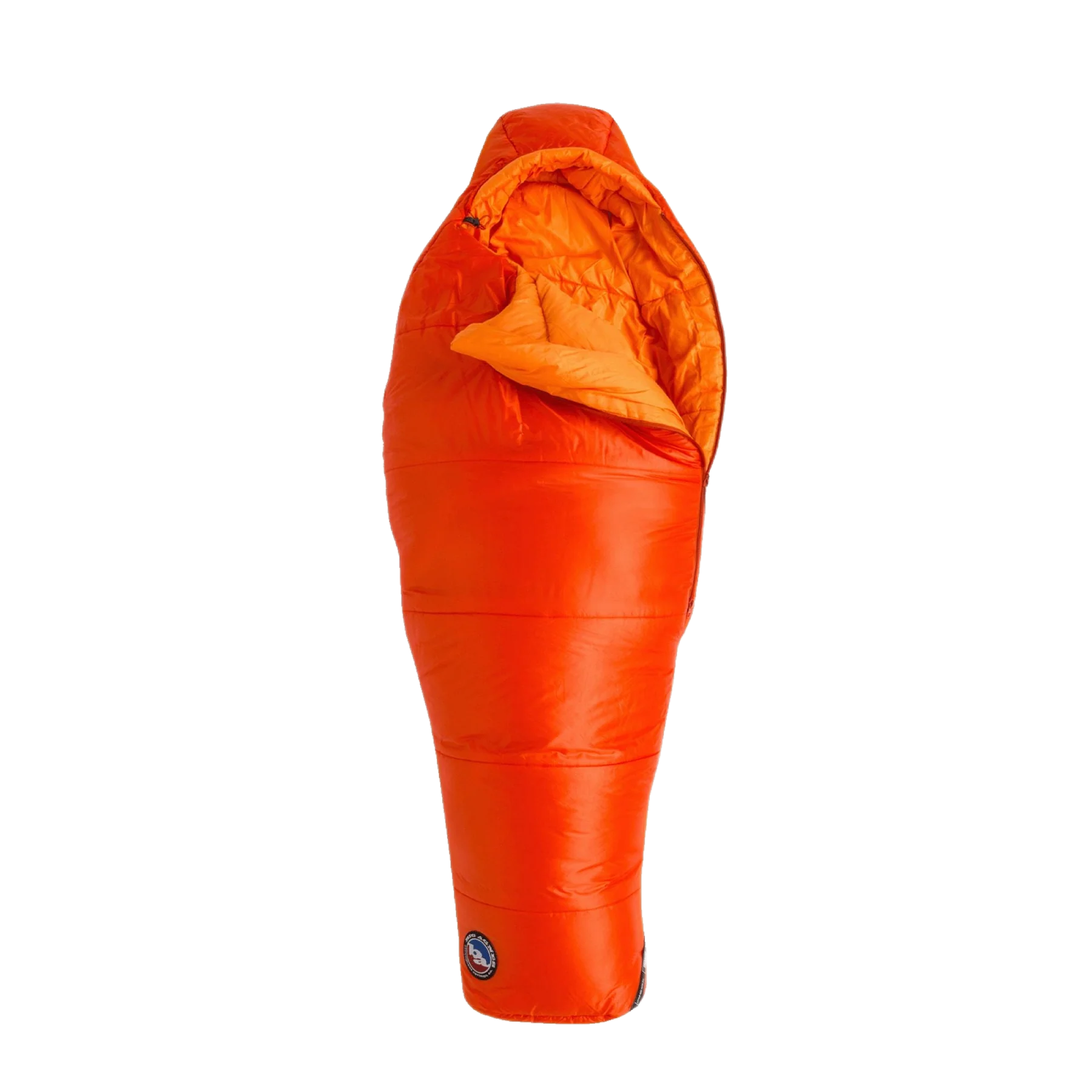
A cold kid at midnight shuts the whole trip down. Buy a bag rated 15 to 20 degrees colder than the lowest temp you expect. Kids sleep cold and they won’t tell you until they’re already miserable. You want real margin, not theoretical margin.
Best Pick
Big Agnes Little Red 15°F Kids’ Sleeping Bag at Backcountry · ~$100
Built like an adult bag scaled down. Mummy cut, insulated hood, quality synthetic fill that handles moisture. Rated 15°F means you’ve got serious buffer on a cold spring night. This is the bag that won’t let you down at 2am.
Budget Pick
Firefly! Outdoor Gear Youth Sleeping Bag at Walmart · ~$40
Machine washable, sized for kids up to 5 feet, and cheap enough that you don’t panic when it ends up muddy. Not a cold-weather bag. Pair it with a liner if temps drop below 40°F. For three-season campground use, it does the job.
03 — Best Sleeping Pad for Car Camping
Why It Matters
Don’t bring your ultralight backpacking pad to a car camping trip. You’re not saving any weight that matters. Your back after 40 has opinions about the ground that your back at 25 did not. Go thick. Go comfortable. Nobody’s judging you at the trailhead.
Best Pick
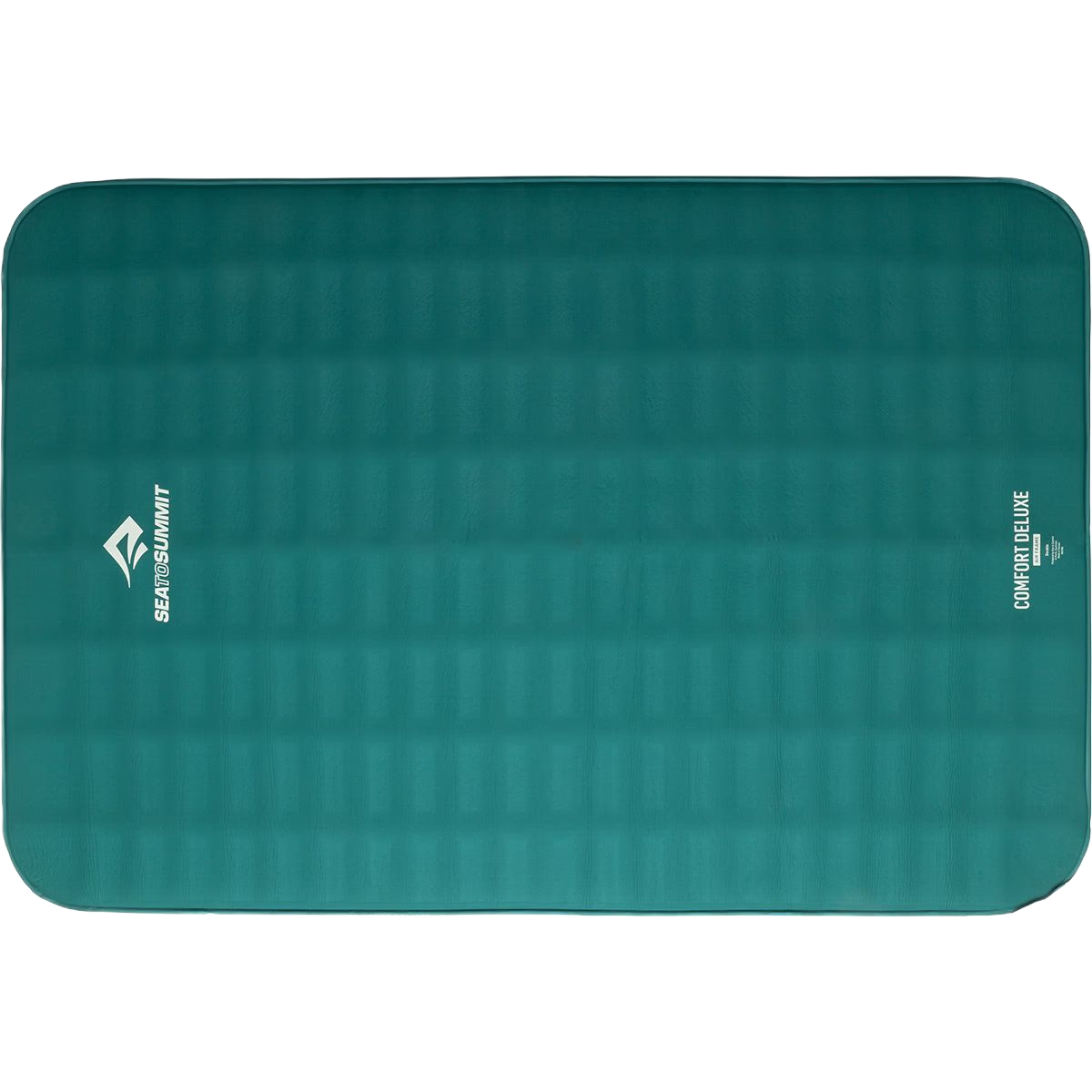
Sea to Summit Comfort Deluxe SI Sleeping Pad at Backcountry · ~$300
Four inches of self-inflating foam that comes close to sleeping on an actual mattress. Self-inflating means you open the valve and walk away. The closest thing to your bed that fits in a stuff sack.
Budget Pick
Ozark Trail Self-Inflating Camp Pad with Pillow at Walmart · ~$30
Two inches thick, self-inflating, comes with a built-in pillow. It’s not the Comfort Deluxe, but it’s a thousand times better than sleeping on bare ground. For a campground trip where you’re parked twenty feet from the car, it gets the job done.
04 — Best Camp Stove for Families
Why It Matters
You don’t need the three-burner monster with the side table and the propane regulator the size of a small appliance. You need something that boils water fast, runs on fuel you can grab at any gas station, and doesn’t require a manual when you’ve had four hours of sleep and a kid demanding oatmeal.
Best Pick
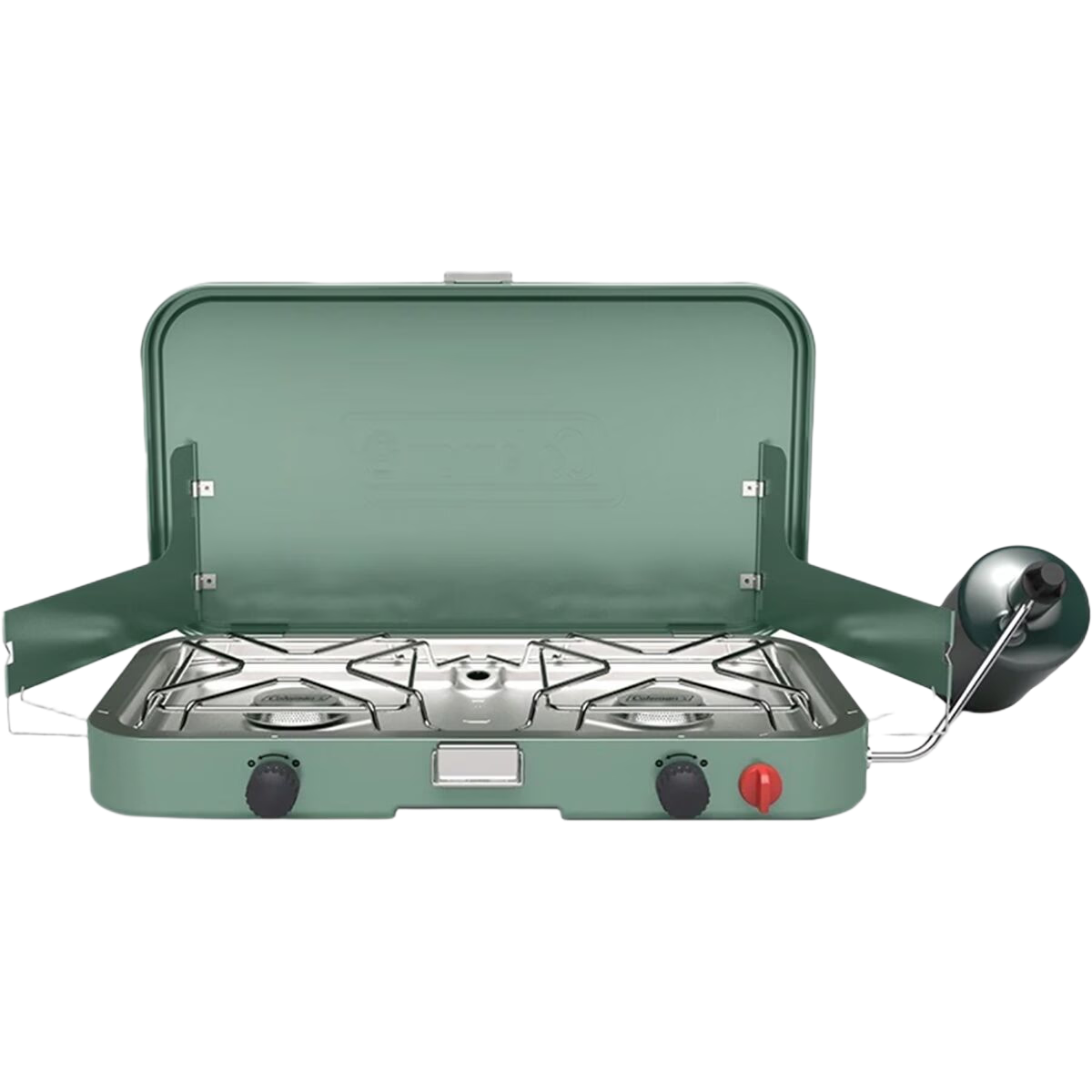
Coleman Cascade 222 Stove at Backcountry · ~$230
Two burners, removable pan supports, and a design that packs flat. Run them independently: boil water on one side, build something worth eating on the other. Pan supports lift out when dinner’s done. This is the stove for people tired of one-pot meals.
Budget Pick
Coleman Matchlight 2-Burner Propane Camp Stove at Walmart · ~$70
Coleman has been making this stove in various forms since before your dad was camping. It works. Standard propane canisters, independent burner controls, fits two pans at once. If your goal is hot food and a working camp kitchen, this is all you need.
05 — Best Headlamps for Camping with Kids
Why It Matters
One per adult. No sharing. The red light mode keeps your night vision intact and doesn’t blast a sleeping kid awake at 3am when you’re making your way to the bathroom. This is not the place to cheap out on batteries.
Best Pick
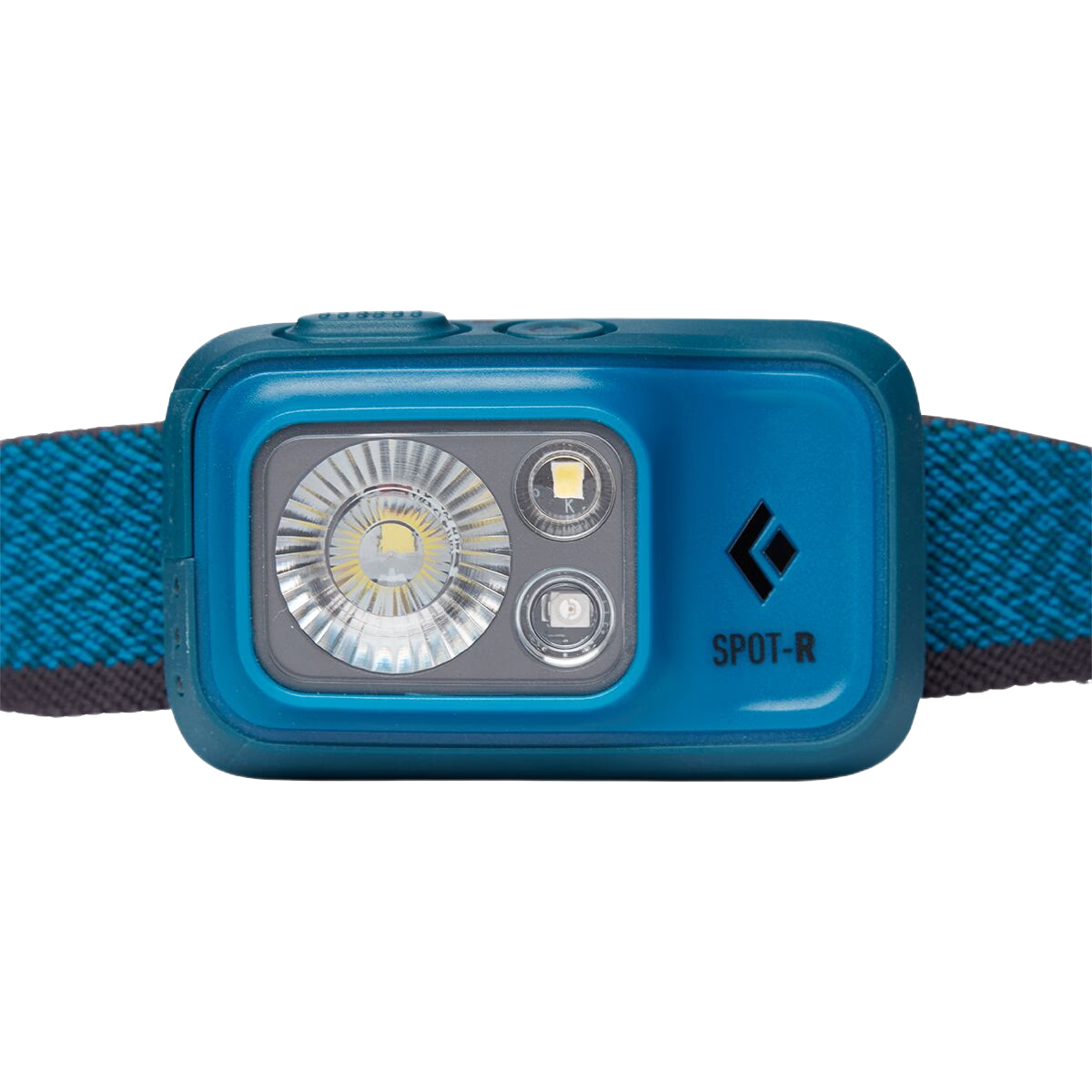
Black Diamond Spot 400-R Rechargeable Headlamp at Backcountry · ~$80
400 lumens, red light mode, waterproof, USB rechargeable. The digital lockout keeps it from draining in your pack. Black Diamond has been the standard answer in headlamps for a reason. Get two.
Budget Pick
Lepro Rechargeable LED Headlamps 2-Pack at Walmart · ~$25
Two headlamps for $25. IPX4 waterproof rating, red light mode, USB rechargeable, adjustable headband. They won’t last ten seasons but they’ll last this one. Buy two sets and you’ve got headlamps for the whole family.
06 — Best Camp Lantern for Family Camping
Why It Matters
Rechargeable, dimmable, and doubles as a phone charger. The table needs light that isn’t a headlamp pointed at everyone’s face. Camp lanterns are underrated. They’re what makes a campsite feel like a place rather than just a spot.
Best Pick
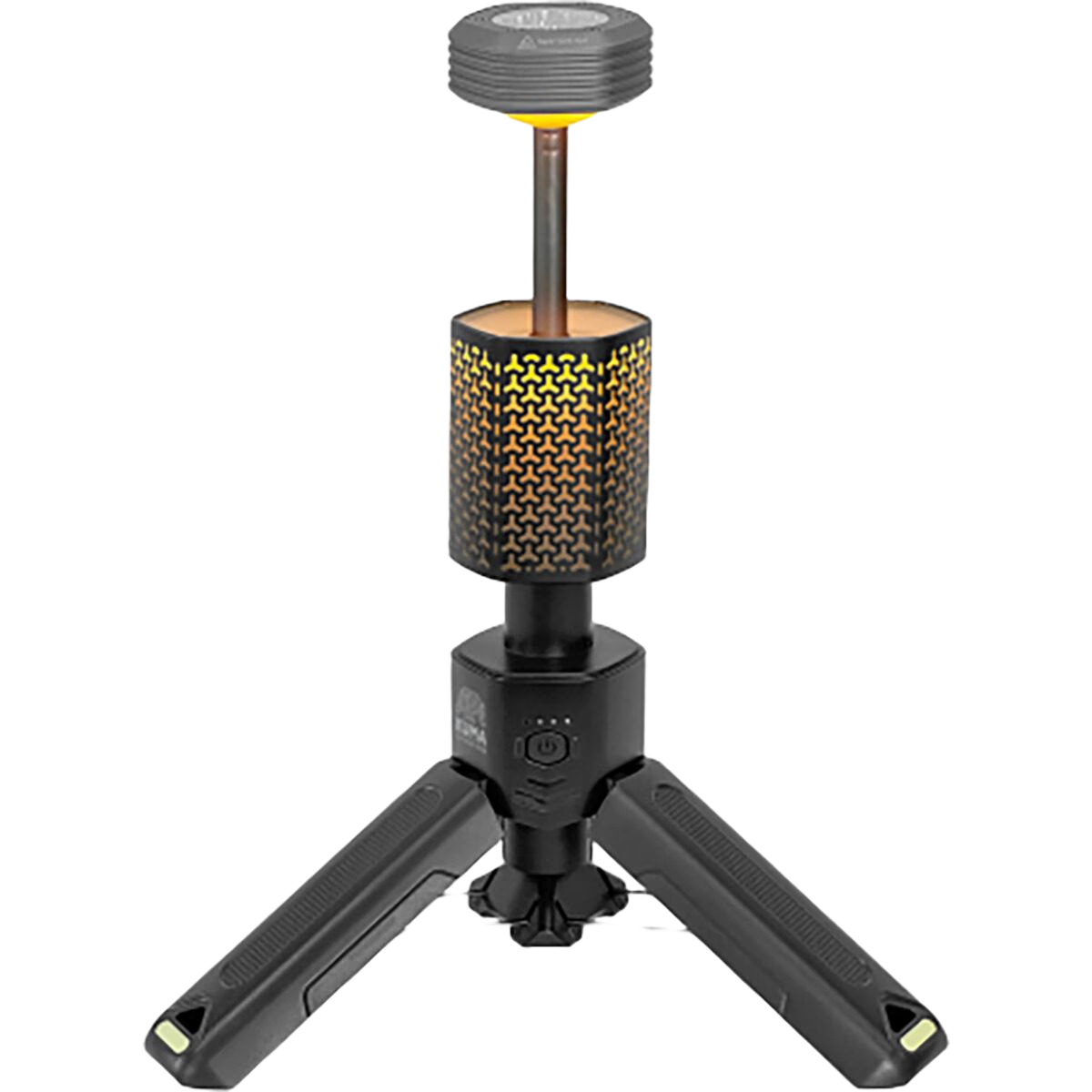
Kuma Trek ‘N’ Glo Tripod Lantern at Backcountry · ~$150
Telescoping tripod, rotating head, and a battery that outlasts the weekend. Point the light where you need it, plant the spikes when the wind picks up. Swap to handheld when the tripod stays packed. This is the lantern for people tired of fumbling in the dark.
Budget Pick
Coleman Classic Recharge 400 Lumen LED Lantern at Walmart · ~$76
400 lumens on high, 100 on low, and a battery that recharges from any outlet. Clip it to your pack, hang it at the campsite, or use the USB port to keep your phone alive. LEDs that never burn out and never get hot.

07 — Best Child Carrier for Hiking
Why It Matters
If your kid is under five, a trail is only as long as their legs want it to be. Which is not very long. A good carrier keeps you moving and keeps them comfortable. Sunshade for the bluebird days, ergonomic hip belt so the weight rides on your hips where it belongs. Buy it once. Use it for years.
Best Pick
Osprey Poco LT Child Carrier at Backcountry · ~$350
Osprey’s Poco is the standard the rest of the category gets measured against. Built-in sunshade, integrated kickstand so you can load and unload solo, padded child seat, and a torso-adjustable harness that fits most adults. It’s what you bring when the trail actually matters.
Budget Pick
ClevrPlus Premium Cross Country Baby Backpack Child Carrier at Walmart · ~$120
Metal frame, padded straps, and a kickstand that lets you load your kid without dropping the pack. Two water bottle pockets, a big rear pocket for diapers, and a canopy that comes off when you don’t need it. Holds up to 33 pounds of whoever’s along for the ride.
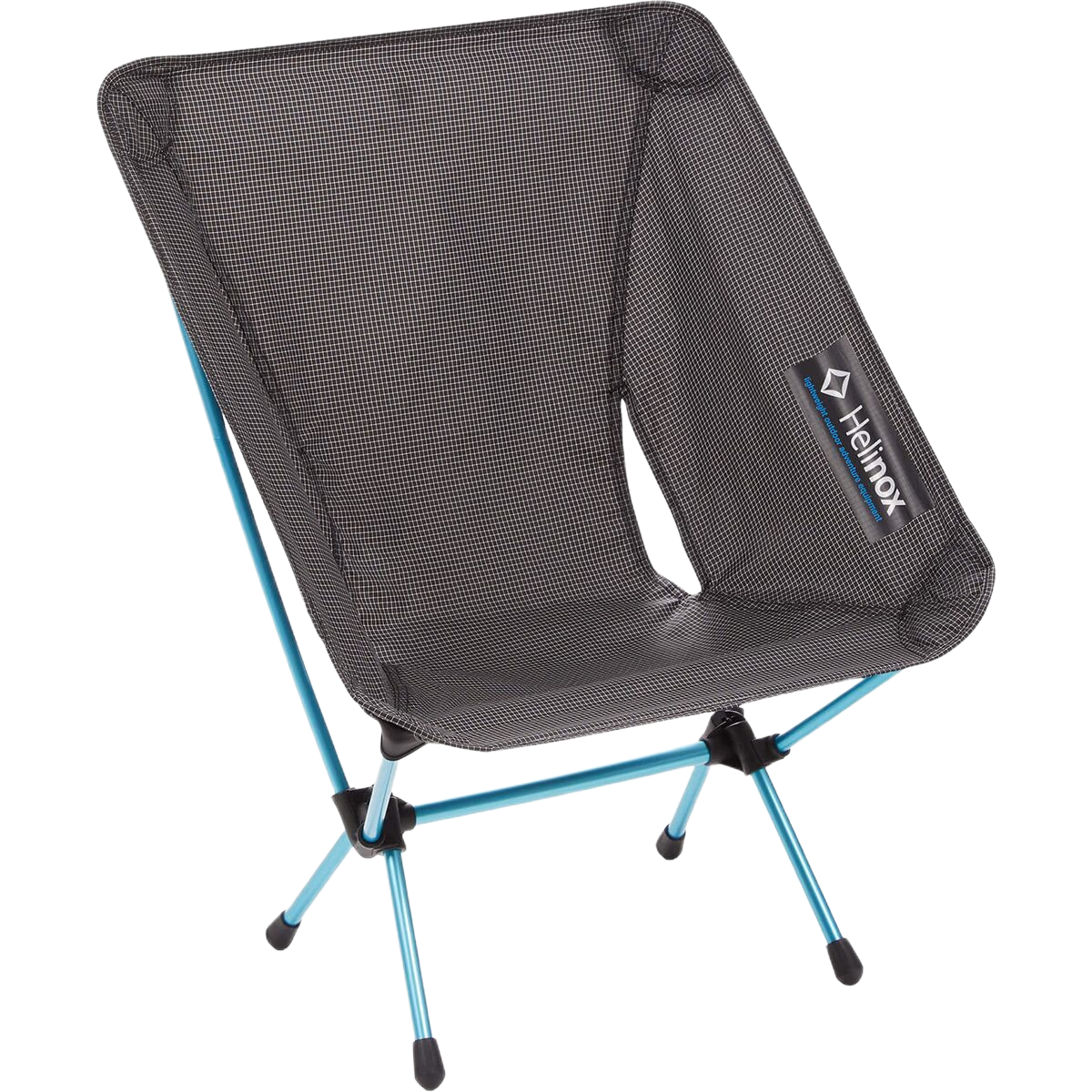
08 — Best Camping Chairs for Kids (and the Adults Who Brought Them)
Why It Matters
A kid with her own chair at the fire feels like a full member of the expedition. That matters more than it sounds. The right chair packs small enough to not take over the car and holds up long enough to be worth owning.
Best Pick
Helinox Chair Zero Camp Chair at Backcountry · ~$150
DAC aluminum poles, breathable mesh, and a packed size that fits next to your water bottle. Sets up fast, breaks down faster. Weighs almost nothing and holds you off the ground. This is the chair for people who stopped leaving chairs at home.
Budget Pick
Ozark Trail Basic Quad Folding Camp Chair at Walmart · ~$10
Steel frame, polyester fabric, and a cup holder that keeps your drink in reach. Folds in four moves and drops into the carry bag. Holds 250 pounds. This is the chair you grab when comfort matters more than pack weight.
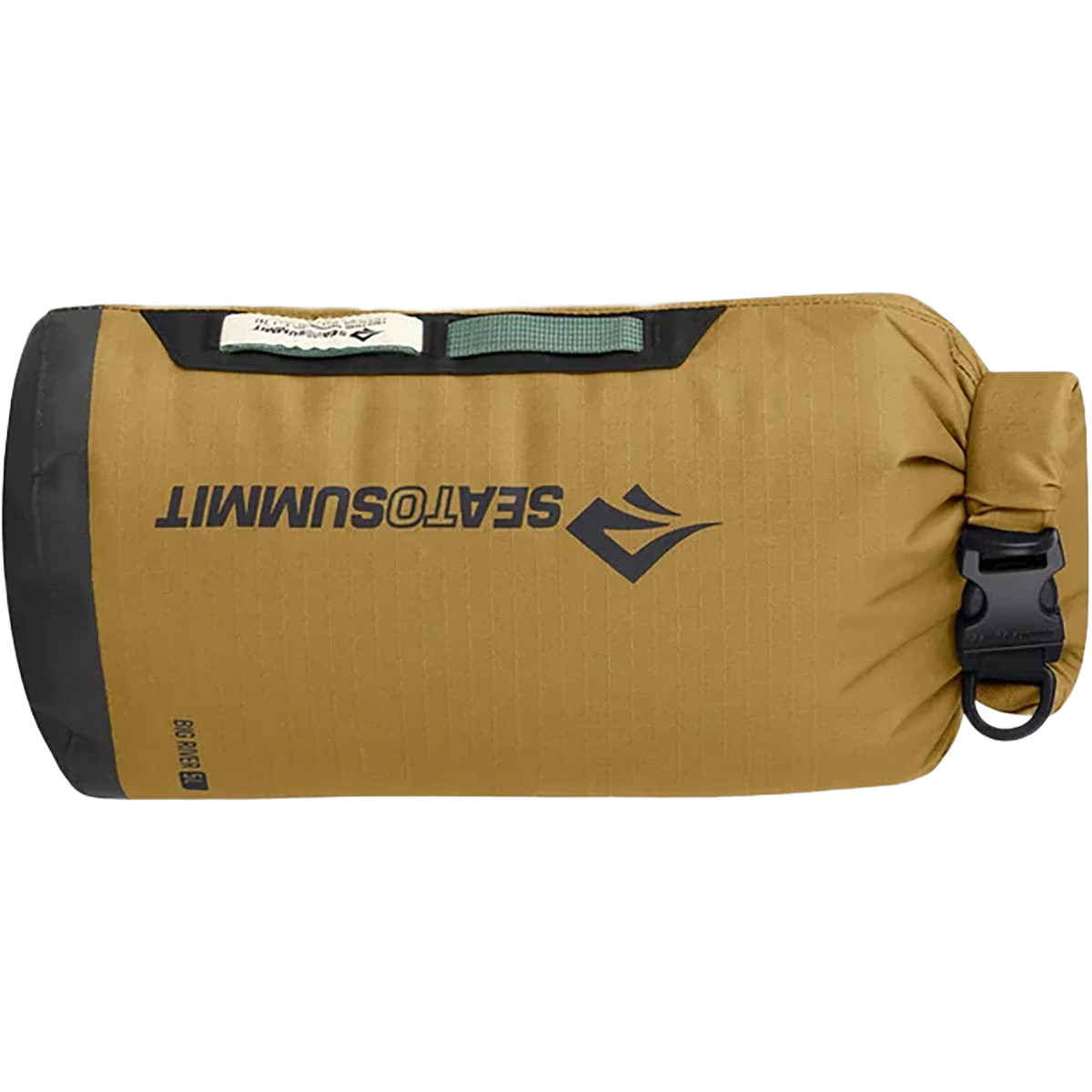
09 — Best Dry Bag for Camping
Why It Matters
Rain happens. A wet sleeping bag is useless. One dry bag solves this completely. Stuff sleeping bags in before you leave the car. Everything that cannot get wet goes in the dry bag. Simplest and most overlooked piece of kit on the list.
Best Pick
Sea to Summit Big River Dry Bag 20L at Backcountry · ~$55
TPU-laminated nylon, fully sealed seams, and a roll-top closure that keeps water out when it has no business getting in. Rated to 10K. This is the bag for gear you can’t afford to lose to a downpour.
Budget Pick
Sirius Survival PVC Waterproof Dry Bag at Walmart · ~$15
Waterproof roll-top, adjustable straps, and 20 liters of space for everything that can’t get wet. Toss in a phone, a dry layer, and a camera. Stuff it at the end of the day and it doubles as a pillow.
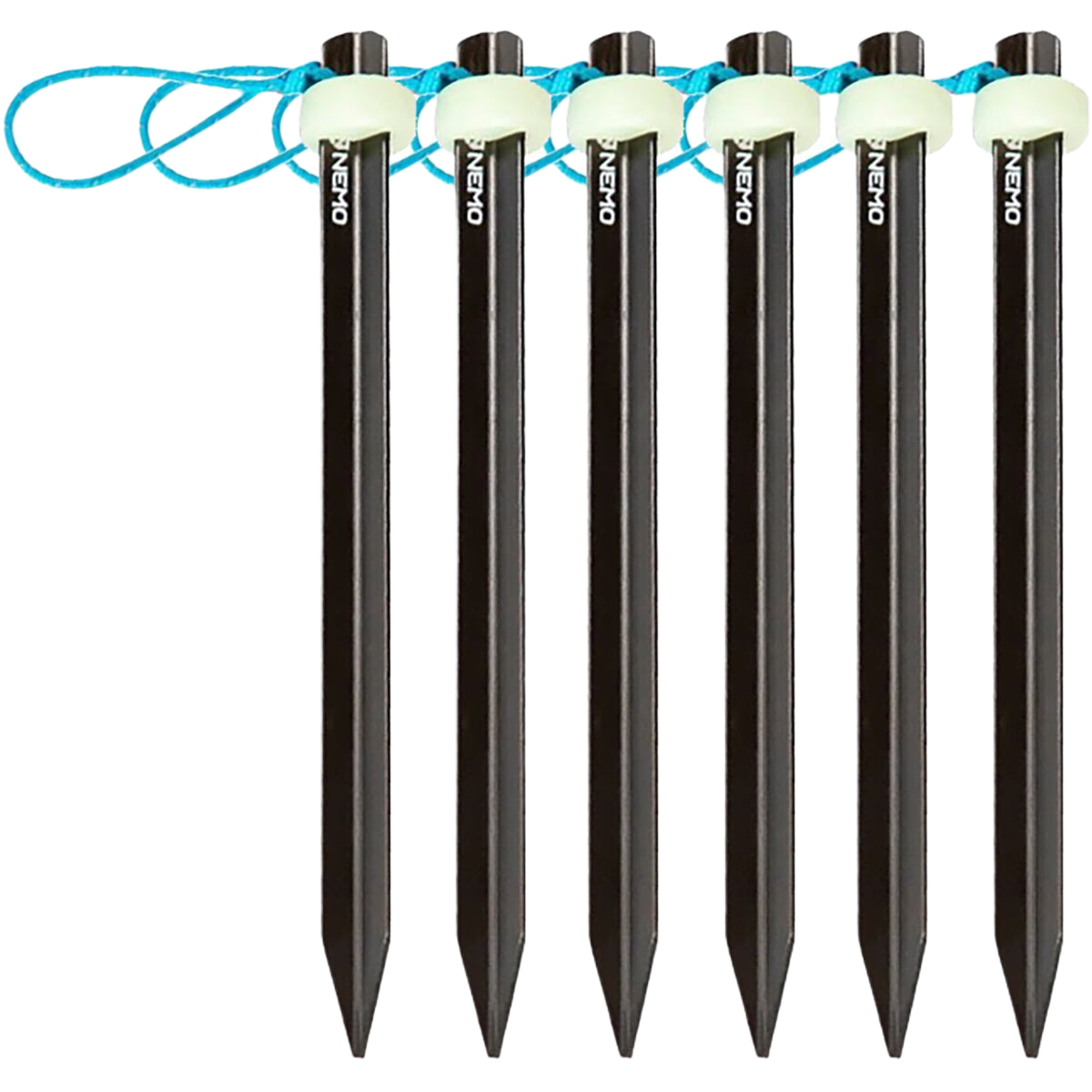
10 — Best Tent Stakes for Family Camping
Why It Matters
You will trip over tent stakes in the dark. You will also want to know where your kid is wandering at dusk. High-visibility stakes solve at least one of those problems. This is a sub-$20 decision that prevents a turned ankle and a small child disappearing into the treeline.
Best Pick
NEMO Sweepstake Tent Stake – 6-Pack at Backcountry · ~$25
Aluminum stakes with a built-in scraper that pushes dirt off before it dries. Glow-in-the-dark, so you stop tripping over your guylines in the dark. Light enough to forget they’re in your pack.
Budget Pick
Richgv 12-Pack Aluminum Tent Stakes at Walmart · ~$12
7075 aluminum Y-stakes in orange so you actually find them when breaking camp. Seven inches of grip in soft ground, hard ground, and everything in between. Twelve stakes, pull cords, and a storage pouch.
The First Trip Checklist
Print this. Check it twice. Leave the stuff you second-guessed at home.
Sleep
- 4-person tent (or larger)
- Kids sleeping bag, rated 15 to 20°F below expected low
- Adult sleeping pad (self-inflating, 2 inches or thicker)
- Dry bag for sleeping bags
Camp Kitchen
- 2-burner camp stove
- Propane canister (grab a backup)
- Pot, pan, utensils
- Camp coffee setup
Light
- Headlamp x2 (one per adult, red light mode)
- Camp lantern (rechargeable)
On the Trail
- Child carrier (if kids are under 5)
- Kid’s camp chair
- Daypack with water and snacks
Camp Setup
- High-visibility tent stakes
- First aid kit
- Trash bags
One rule: one night, drive-in site, hike under two miles. Do that one well.
Frequently Asked Questions
What size tent do I need for camping with 2 adults and 1 kid?
Go one size up from what you think you need. Two adults and one child in a 2-person tent doesn’t work. You have nowhere to put gear, no room to move, and no one sleeps well. A 4-person tent gives a family of three real living space. If you have two young kids, consider a 6-person.
What sleeping bag temperature rating is best for kids?
Buy a bag rated 15 to 20°F colder than the lowest temperature you expect. Kids sleep cold and won’t tell you they’re uncomfortable until they’re already miserable. A bag rated to 15°F gives you meaningful buffer on a cold spring or fall night, not just theoretical coverage.
What’s the best first camping trip setup for young kids?
One night. A drive-in campsite no more than 20 to 30 minutes from the car. A hike under two miles. The goal of trip one is not adventure. It’s making sure everyone wants to go back. Get that right and you’ve got a kid asking when you’re going again. Then you start adding miles.
Do I need a child carrier for camping with a toddler?
If your kid is under five, yes. Trails are only as long as little legs want to be on them, which usually isn’t very long. A good child carrier keeps your hike going when motivation runs out. The Osprey Poco LT is the benchmark. If budget is a constraint, the ClevrPlus frame carrier does the job for car camping day hikes.
One last thing. The dads who have the worst camping trips with their kids are the ones trying to run their old camping program with new personnel.
One night. Drive-in site. Short trail. Real fire. Good food. Kid stays up a little late and falls asleep looking at stars.
That’s the trip. Do that one well and you’ll go home with a kid who’s already asking when you’re going back. That’s when you start adding miles.
The outdoors didn’t get smaller when you had kids. Your approach just needs to change. Start this weekend.
Disclosure: Some links in this post are affiliate links. We only recommend gear we’d actually bring. If you buy through a link, we may earn a small commission at no extra cost to you.