
Let us save you the 15 hours of reading we just did. The research is not subtle. It is not mixed. It is not “well, it depends.”
Screens are doing real damage to kids. And the younger the kid, the worse it is.
We know that’s not what you want to hear when you’re trying to get through a flight or survive a restaurant dinner or just finish one phone call without someone losing their mind. We get it. We’ve been there. We’ve all been there.
But “it’s convenient” is not the same as “it’s okay.” And it’s time we stopped pretending they’re the same thing.
Here’s everything you actually need to know.
The Numbers That Should Wake You Up
Before we get into the research, let’s just talk about where things stand right now.
- Toddlers aged 2 to 5 are averaging about 3.5 hours of screen time per day. Kids aged 8 to 10 average 6 hours. Eleven to fourteen year olds are hitting 9 hours a day. Older teens clock around 7.5 hours.
- Forty percent of 2-year-olds already own their own tablet. By age 4 that number climbs to 58%.
Read those sentences again.
We’re not talking about kids occasionally watching a movie on a rainy Saturday afternoon. We’re talking about screen exposure on par with a part-time job. Starting in diapers.
And somehow we’re surprised that anxiety, depression, and attention disorders are at generational highs.

Jonathan Haidt Said the Quiet Part Out Loud
If you haven’t heard of Jonathan Haidt, he’s a social psychologist out of NYU who spent years researching exactly this. His 2024 book “The Anxious Generation” sat on the New York Times nonfiction bestseller list for over 52 consecutive weeks. It topped the list five times. Oprah endorsed it. Governors sent copies to each other.
His argument is simple and devastating.
Somewhere around 2010 to 2015, we made a collective decision as a society. We handed kids smartphones. We gave them Instagram and TikTok and YouTube and gaming. And in doing so, we replaced what Haidt calls the play-based childhood with the phone-based childhood.
We didn’t think about it much. It happened gradually and then all at once.
The results showed up almost immediately. Anxiety rates surged. Depression rates surged. Self-harm rates among teenage girls went up. Loneliness went up. Sleep went down. Close friendships went down.
And this wasn’t just a self-reporting issue. The behavior changes showed up in hospitalizations, in emergency room visits, in actual clinical data. It happened in the United States. It happened in the UK, Canada, Australia, and across Europe. All at roughly the same time. Right when smartphones hit mass adoption.
Haidt’s line that stuck with me: “We have overprotected our children in the real world and underprotected them online.”
We won’t let them ride their bikes around the block alone. But we’ll hand them a portal to the entire internet at age 7 and call it fine.
What the Research Actually Found
Okay. Let’s go through what the science says is happening to kids’ brains and bodies. Category by category.
The Brain
New research published in late 2025 followed children for more than a decade and found that high screen exposure before age two was linked to accelerated brain maturation in some regions and slower decision-making later on. Kids with more screen time in infancy showed premature specialization in brain networks involved in visual processing and cognitive control.
Which sounds good until you realize premature specialization reduces flexibility. Those kids had slower reaction times at age eight and higher rates of anxiety at age thirteen.
The critical window here is under two years old. Screens before age two predicted long-term brain changes. Screens at age three or four did not show the same effect. That’s how sensitive those early years are.
A separate study in Psychological Medicine found that infant screen time altered brain networks that govern emotional regulation. But here’s the hopeful part: parent-child reading could counteract some of those changes. Shared reading provided the kind of back-and-forth engagement, language exposure, and emotional connection that passive screen consumption just doesn’t deliver.
More screens equals less of that. Less screens equals more.
Attention and ADHD
Multiple studies have now linked excessive screen time, especially fast-paced interactive media like social media and video games, to shortened attention spans and ADHD-related behaviors.
The mechanism isn’t complicated. Fast-paced content constantly rewards the brain with novelty. Dopamine gets triggered. The brain starts to expect that level of stimulation. Real life, school, conversation, reading, can’t compete. So the brain checks out.
Haidt identifies attention fragmentation as one of four core harms of the phone-based childhood. And it’s not theoretical. Teachers across the country have been saying for years that kids can’t focus the way they used to. Now there’s biology behind the complaint.
Sleep
Screen time before bed disrupts melatonin production. Melatonin is the hormone that tells your brain it’s time to sleep. Blue light from screens suppresses it.
The result? Kids who use devices in the evening take longer to fall asleep, sleep fewer total hours, and wake up less rested. And poor sleep in kids does not just mean a cranky morning. It compounds across time into mood disorders, cognitive impairment, and behavioral problems.
The same research Haidt cites shows that between 2010 and now, the number of teens getting less than seven hours of sleep per night has increased significantly. That’s not coincidence. That’s causation wearing a very thin disguise.
Anxiety and Depression
This is the big one.
The correlation between smartphone adoption and adolescent mental health decline is one of the most consistent findings in recent research. Across dozens of studies, across multiple countries, the trend is the same.
Mental health among young people started getting measurably worse right around 2012. That’s when smartphone penetration hit the tipping point. That’s when Instagram got going. That’s when the phone-based childhood began in earnest.
Girls are hit harder by social media. The comparison loops, the constant social evaluation, the exposure to image-based content that warps body image, it compounds in ways that are uniquely brutal for adolescent girls.
Boys are hit differently. Gaming and pornography and digital entertainment gradually crowd out real-world relationships, ambition, and the motivation to do hard things. Haidt describes it as a slow creep that changes behavior without the kid even realizing what’s happening.
Both are bad. Just bad in different directions.
Heart and Metabolic Health
A 2025 study published in the Journal of the American Heart Association found that screen time in childhood and adolescence is associated with cardiometabolic and cardiovascular disease risk. Not just mental health. Actual heart health.
More screen time means less movement. Less movement means higher BMI, worse metabolic markers, and greater cardiovascular risk down the road. The research on the more-than-two-year-old who watches a lot of TV already showed a correlation between screen time and higher BMI.
Kids who are on screens are not outside. They are not moving. They are not building the physical foundation that will carry them into adulthood.

iPads and Phones Are Not the Same as TV
Here’s where we need to draw a clear line. And Haidt actually makes this distinction himself, which is important.
Passive storytelling, a movie, a TV show with a beginning middle and end, is different from interactive, reward-based, variable-schedule content. Variable-ratio reinforcement is the same mechanism behind slot machines. You don’t know when the reward is coming so you keep going. Social media likes. YouTube autoplay. Game unlocks. Swipe. Pull down to refresh. Repeat.
That’s what an iPad in a young kid’s hands delivers. Not a story. A slot machine.
A movie has a narrative arc. It ends. It can be a shared experience. A family sits around and watches a film together and that’s actually a bonding moment. Haidt explicitly gives this a pass.
The iPad alone in a room? Different animal entirely. The phone? Don’t even start.
This is not about being anti-technology for the sake of it. It’s about understanding that these products were designed by rooms full of very smart people whose entire job was to make them as addictive as possible. They did their job well. Our kids are on the receiving end of that.
The Opportunity Cost Nobody Talks About
Here’s Haidt’s most underrated point and it’s the one I think about most as a dad.
The harm of screen time isn’t only what the screen does to the brain. It’s what the screen replaces.
Every hour a kid spends on an iPad is an hour they are not:
Building something. Figuring something out. Getting bored and then solving their own boredom. Playing with other kids and navigating actual social dynamics. Reading. Climbing something. Getting scraped up and learning they can handle it. Using their imagination in a way that nobody else can script or optimize for them.
Play is not optional for kids. It’s not a reward for finishing homework. Play is how children wire their brains.
Mammals have played for 200 million years. It’s the mechanism. And we’ve quietly been replacing it with a screen because it’s easier in the short term.
“We have outsourced the entertainment of our children,” Haidt says, “to the cheapest, most addictive solution we could find.”
That’s what an iPad is. Cheap entertainment designed to keep kids occupied so adults can get things done. I’m not judging. I’m just being honest about what it is.
So What Do You Actually Do
Here’s where I give you the practical part instead of just leaving you feeling terrible.
Under two: zero screens. This is the American Academy of Pediatrics recommendation and the research supports it hard. Video chatting with grandparents is the one exception most experts allow. Everything else can wait. Their brain is in a critical wiring window. Protect it.
Two to five: less than one hour on weekdays, slightly more on weekends. And the content matters. Slow, narrative, age-appropriate shows. Not YouTube autoplay. Not games. Not anything with a variable reward schedule. Sit with them and watch it together when you can.
Six and up: set firm limits and stick to them. The research does not show a cliff where screens suddenly become fine. The problems just become different as kids get older. Keep limits. Keep phones out of bedrooms. Keep mealtimes screen-free.
No smartphones until high school at the earliest. Haidt recommends waiting until high school or even 8th grade at minimum. The “Wait Until 8th” pledge is a real thing. Thousands of families have signed it. The idea is collective action because no kid should have to be the only one without a phone. Do it together with other families in your school or neighborhood.
Replace the screen with something real. This is the part parents skip. You can’t just take away the iPad without filling the void. Get outside. Build something. Have them help cook dinner. Let them get bored. Boredom is not a problem. Boredom is where creativity lives. If they say there’s nothing to do, you’re doing it right. Give it twenty minutes and watch what happens.
Hold the line even when it’s hard. Every kid who doesn’t have a smartphone thinks they’re the only one. They’re not. More parents are drawing this line than you think. The number is growing. The culture is shifting. You’re not weird for protecting your kid. You’re paying attention.
The Honest Bottom Line
The research is not complicated.
Screens mess with developing brains. They disrupt sleep. They fragment attention. They replace play. They wire kids for anxiety and comparison and the need for constant stimulation. The younger the child, the more damage is done. The more interactive and reward-based the screen, the worse it is.
TV, in reasonable amounts, with good content, watched together as a family? That’s fine. That’s always been fine.
An iPad handed to a toddler to keep them quiet? That’s a different thing entirely. That’s borrowing against your kid’s future for a few minutes of convenience today.
You already knew this. The research just confirms what your gut has been telling you.
Put the iPad away. Go outside with your kid. That’s the whole article.
Over the last year, Dad Day has evolved from a simple email newsletter into something bigger. A community. A place to highlight dads who are building, creating, and showing up a little differently.
That evolution led to Go West.
Go West is a short film series from Dad Day that spotlights modern dads carving their own path. Founders, makers, and builders who chose the long road instead of the safe one.
These aren’t ads or highlight reels. They’re real stories about why someone started something, how fatherhood fits into it, and what they’re trying to build long-term.
Episode One features Robert Huffman, founder of Camino Caffeino.
Meet Robert Huffman
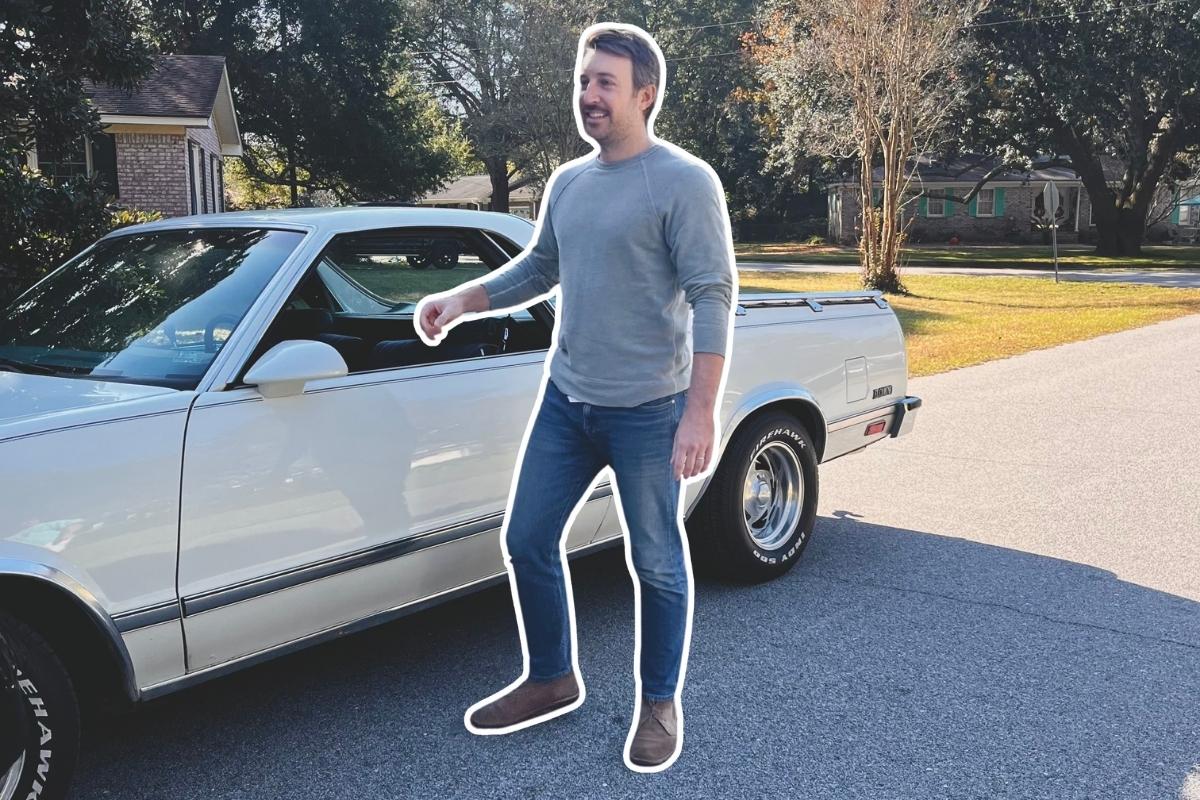
Robert Huffman sells coffee out of an old El Camino in Charleston, South Carolina. But Camino Caffeino isn’t really about coffee.
It’s about community.
In a world of polished brands and carefully engineered launches, Robert took a different route. He built something simple, human, and intentionally analog. A mobile coffee setup that invites conversation, connection, and presence.
Robert is also a dad, and that reality shapes how he thinks about work, time, and legacy. Camino Caffeino isn’t about scaling as fast as possible or chasing the next big thing. It’s about creating something meaningful, showing up consistently, and building relationships that last.
Why This Story Matters
Go West exists to tell stories like Robert’s.
Stories that don’t always fit neatly into a pitch deck. Stories about dads who are building businesses, communities, and lives that reflect their values. Stories rooted in purpose instead of polish.
Robert’s journey with Camino Caffeino captures the heart of what Go West is about. Choosing an unconventional path. Betting on connection. And building something with intention, even when there’s no clear roadmap.
Shot in Charleston, South Carolina
This episode was filmed in Charleston, a city that values craft, conversation, and community. The setting mirrors Robert’s approach and reinforces the tone of the series: grounded, human, and unforced.
Go West isn’t about geography. It’s about mindset. Charleston just happened to be the right place to tell this particular story.
Watch Episode One
Below is Episode One of Go West, featuring Robert Huffman of Camino Caffeino.
If this story resonates, we encourage you to watch it all the way through, share it with someone who’d appreciate it, and subscribe to our YouTube channel. This is just the beginning.
What’s Next for Go West
Episode One sets the tone.
We’re continuing to film and share stories of dads who are carving their own path. Some of these stories will be about business. Some about community. Some about family. All of them are about choosing a different way forward.
Because ordinary’s been done.
Most dad content feels stale. Same cliche jokes. Same advice. Same version of what a “good dad” is supposed to look like.
Over the last year of building Dad Day, one thing became obvious: there are a lot of dads out there doing things differently. Building businesses from scratch. Creating community in unexpected ways. Taking the long road instead of the safe one. Not because it’s trendy, but because it feels right.
That’s where Go West came from.
Why Go West?
We’ve always been drawn to the people who went west before there was a clear path or a paved road. Not because it was easy, but because it was open. Uncertain. Full of possibility. Going west meant betting on yourself. Trusting your gut. Building something where there wasn’t much to build from yet.
That same mindset still exists today. It just shows up differently.
Go West isn’t about geography. It’s about choosing the harder, less obvious route. The one that doesn’t come with a script. The one where you figure things out as you go and build something meaningful along the way.
That’s the kind of dad we’re drawn to. And those are the stories we want to tell.
What Is Go West?
Go West is a short film series from Dad Day that spotlights modern dads carving their own path.
These aren’t highlight reels or polished success stories. They’re real looks at dads who build, dream, and act on ideas that don’t always fit the mold. Founders. Creators. Makers. Doers. Guys who decided not to follow the script and see where it led.
Some of these stories will be about business. Some about community. Some about family. All of them are about choosing a different way forward.
Because ordinary’s been done.
Why We’re Doing This
Dad Day has always been about more than tips, gear, or surface-level inspiration. It’s about showing what modern fatherhood actually looks like when you care deeply about how you spend your time, what you build, and the example you’re setting.
We wanted to create something that reflects that.
Go West is our way of telling deeper stories. Slower stories. Stories that don’t try to wrap everything up neatly in 60 seconds.
Episode One
The first episode features Robert Huffman, who sells coffee out of an old El Camino with one simple goal: foster connection and community.
It’s not about scale. It’s not about optimization. It’s about showing up, pouring into people, and building something meaningful in a way that feels human.
That episode drops soon.
What to Expect Going Forward
Each Go West film will focus on one dad and one story. No formulas. No templates. Just honest looks at people doing things their own way and sticking with it. This is just the beginning.
Watch the trailer below, and if it resonates, you’ll feel right at home with what’s coming next. Do us a solid and subscribe if it lands.
Parenting during the holidays can feel like controlled chaos. Less structure. More sugar. More screen time. More meltdowns.
In this Dad Lab session, we sat down with Kirk Martin, founder of the Calm Parenting Podcast and Celebrate Calm, to talk about how dads can navigate meltdowns without yelling, threatening, or escalating the situation.
This conversation is packed with real-world strategies you can use immediately.
Watch the Full Dad Lab Session
Calm Parenting Strategies Every Dad Should Know (Live Dad Lab Session)
What This Session Covers
Kirk breaks down why meltdowns happen and how dads can respond in a way that actually works.
Key themes include:
-
Why kids melt down more during the holidays
-
The difference between discipline and punishment
-
How dads unintentionally escalate situations
-
Why tone and body language matter more than words
-
How movement and space help kids regulate emotions
One Shift That Changes Everything
One of the most important ideas from the session is this: You cannot calm a child down if you are not calm yourself. Kids read tone, posture, and energy before they process words. When dads slow things down and stay grounded, kids follow.
That’s leadership, not permissiveness.
Practical Takeaways for Dads
Here are a few strategies Kirk recommends:
-
Use an even, matter-of-fact tone instead of yelling or whispering
-
De-escalate before trying to discipline
-
Introduce movement to reset emotions
-
Give kids space instead of hovering
-
Model the behavior you want to see
None of this is about being perfect. It’s about being intentional.
Want More Like This?
Dad Lab is a live series where we bring in experts to help dads get better at the stuff that matters. Parenting. Health. Money. Mindset.
If this session resonated, make sure you’re subscribed to Dad Day and keep an eye out for the next Dad Lab.
If you’ve ever seen a photo that made you want to quit your job, buy a Sprinter, and chase cold waves until your eyelashes freeze, chances are Chris Burkard took it. The world-famous photographer and filmmaker from Pismo Beach has turned remote landscapes into a global calling card. But behind the wild adventures is a dad with two boys who is still figuring out the playbook like the rest of us.
And that is exactly why this Q&A hits.
Who Is Chris Burkard (Beyond the Screensavers)
Burkard is the guy brands call when they need a shot of someone doing something incredible in a place most of us only see on postcards. His images show the edges of the world, but his life at home is surprisingly grounded. He is a surfer, a husband, and a dad trying to raise two boys with wonder instead of worry.
View this post on Instagram
The Q&A
When you ask Chris Burkard about the hardest part of parenting, he barely pauses. This is a man who has stood on icebergs and photographed storms, yet fatherhood still brought him to his knees in a way the Arctic never could. He told us the real challenge was accepting that he had no idea what he was doing and learning, slowly, that the early years he once feared were unappreciated were actually the moments that mattered most.
Chris grew up without a father, so he had no blueprint to follow. Every chapter he is writing now, he is writing for the first time. And the thing he learned early is this: showing up is the job.
Ask him about the rewards and his shoulders drop a little, the way people soften when they talk about the good stuff. For Chris, the payoff is watching his boys find joy. Not achievements or polished milestones.
Pure, unfiltered joy. Laughing together. Losing themselves in awe, even when the house feels chaotic. Coming from a guy who has chased awe across continents, it says something that the best version of it still happens in his living room.
If he could go back and tell his younger self something, it would be this: your kids might become your best friends.
It is a truth no one tells you when you’re knee deep in diapers, but it hits like a warm wave once you’re there.
One piece of advice stuck with him through the years. Someone once told him that being a dad is not an old man’s job. He carries that line like a compass. You don’t wait for the perfect moment, the perfect bank account, or the perfect career arc. You learn to parent in the mess. And sometimes the mess ends up being beautiful.
A typical day in the Burkard house reads exactly how you hope it might. He drops off his oldest son at school, then sneaks in an hour-long surf before the emails and projects take over. His wife handles the younger one’s school run. Midday is work. Afternoon folds into pickup, food, sports, more food, and the nightly wind-down.
For all the airports and expeditions, the rhythm at home is familiar to every dad. It is proof that even the world’s most adventurous photographer still spends half his life in the same cycle the rest of us do.
Balancing work, life, and family for Chris starts with a simple practice: knowing what he needs each day to show up well. Some days that means sleeping in. Other days it is a three-hour bike ride. The point, he says, is to advocate for your needs and communicate clearly with your partner. Burnout is real, and the best way to fight it is honesty.
His reset button is easy to imagine. The ocean. Even a few minutes in the water recalibrates him. It reminds him what matters.
The one non-negotiable in his dad life is time with his kids doing something that costs nothing. Teaching them how to have fun in nature. Passing down the kind of joy you cannot buy.
And when he is solo on the road, he laughs at himself a little. He admits he spends way too much on boujee snacks and great coffee. Every dad has a weakness. His just happens to taste better.
THE TAKEAWAY
Chris Burkard travels farther than most of us ever will, but his parenting philosophy is simple. Show up. Keep wonder alive. Invest in the moments that cost nothing and matter most. The world will always pull, but the real adventure is at home. Follow Chris here.
We’ve been talking about this for a while. Guys Being Dads is live.
This podcast is about fatherhood, life, and everything that comes with it. No experts. No scripts. No pretending we have it all figured out. Just real conversations between dads who are in it right now.
Some episodes are just two guys talking through parenting, marriage, work, and friendships. Other episodes bring in fellow dads to share stories and lessons they’ve picked up along the way.
That’s it. That’s the show.
Now Streaming on Spotify and Apple Podcasts
You can listen to Guys Being Dads now on:
Whether you’re driving to work, folding laundry, or hiding in the garage for ten minutes of quiet, this podcast is meant to feel like a conversation you’d actually want to be part of.
Why We Started It
Fatherhood can feel isolating. Most of what’s out there either feels preachy or way too polished. So we started Guys Being Dads to talk honestly about what it’s really like. The good. The hard. The in-between.
From Dad Day, For Dads
Guys Being Dads is presented by Dad Day, a newsletter and community built by dads, for dads. If you’re figuring it out as you go, you’re in the right place.
Go listen. Subscribe. And come hang out with us.
Because nothing says “holiday bonding” like a pile of blankets, hot cocoa, and a film that keeps the kids smiling and lets Dad stay awake past the first act.
Not all Christmas movies are created equal. Some are pure magic. Others feel like punishment for sins you didn’t know you committed.
This is the Dad Day shortlist — films that deliver nostalgia, laughs, heart, and just enough chaos to feel like your actual living room in December.
1. Home Alone (1990)
The gold standard of Christmas chaos. Kids love the traps. Dads love imagining what they’d do with that kind of real estate and free time.
2. Elf (2003)
Will Ferrell in an elf suit = a perfect movie. One of the rare “everyone actually enjoys this” holiday picks.
3. The Polar Express (2004)
A Christmas serotonin boost engineered by Tom Hanks. Kids don’t notice the uncanny faces. They’re too locked into the magic.
4. The Santa Clause (1994)
Ah yes — the Tim Allen classic. The moment Tim Allen puts on the suit, you know you’re in for peak ’90s holiday comfort. A certified Christmas must-watch — and one that actually gets better as you get older.
5. How the Grinch Stole Christmas (2000)
Jim Carrey at full throttle. Loud, weird, colorful, and somehow still deeply wholesome.
6. Klaus (2019)
A modern masterpiece. Beautiful animation + big heart + genuinely smart writing.
7. The Muppet Christmas Carol (1992)
The best version of Dickens. Yes, better than the “serious” ones. Michael Caine acting like he’s in a Shakespeare play while surrounded by puppets = cinema.
8. Arthur Christmas (2011)
The most underrated Christmas movie of the last 20 years. If Santa had a logistics department, this is it.
9. A Charlie Brown Christmas (1965)
Slow, simple, classic. A perfect wind-down film after the sugar-high chaos of December.
10. The Christmas Chronicles (2018)
Kurt Russell as Santa. A Santa who looks like he lifts and owns a motorcycle jacket. Kids love it. Dads respect it.
Bonus Picks for “One More Before Bed?”
-
Frosty the Snowman
-
Rudolph the Red-Nosed Reindeer
-
Jingle Jangle
-
The Star (for younger kids)
The Dad Day Takeaway
Christmas movies aren’t just movies this time of year. They’re memory-makers. Couch-pile moments. Affordable holiday magic at a time when everything else costs triple.
And that’s the real gift.
Shaun Murray has been doing backflips off wakes since most of us were still trying to parallel park. Orlando local. Pro wakeboarder. YouTuber. Three-time girl dad.
The guy’s lived the kind of life teenage you would’ve doodled on a Trapper Keeper.
But here’s the twist: behind all the airtime and American Ninja Warrior backyard antics, Murray’s dad game is straight-up grounded. Practical. Thoughtful. And honestly? Pretty dang refreshing.
The Hard Stuff (AKA: Every Parent’s Tightrope)
Ask him the toughest part of parenting and he doesn’t talk about travel or work-life balance or raising teenagers.
He says this:
“Guiding kids toward making the right decisions and them continuing to like me while doing so.”
That’s the whole job, right? Lead them. Shape them. Nudge them. But don’t lose the relationship in the process.
Shaun’s figured out the rare middle lane—firm hand, open heart. And yes, some laughing in between, because that’s the part he calls the most rewarding.
The Best New-Dad Advice You’ve Never Heard
Most dads would say something like “sleep when the baby sleeps.”
Shaun? He hits you with a mic drop:
“Show up empty-handed.”
Literally.
When you get home, don’t carry bags, boxes, backpacks, or your whole day’s stress through the door. Leave it all in the car.
Now your hands are free—for your kids, for your partner, for the little moment you miss when you’re juggling Amazon returns and a laptop.
You can hug, scoop, wrestle, high-five. You can even invite them outside to help you carry stuff in. This is dad presence in its purest form. Zero cost. Massive ROI.
The Wisdom That Stuck
Shaun’s dad wasn’t dropping Instagram quotes before breakfast—but he did give him two gems that Shaun now passes to his girls:
-
“You become who your friends are.”
Simple. Brutal. True. And maybe the most important filter a kid can learn early. -
Write down the funny stuff.
Kids are walking stand-up specials, and your brain will absolutely forget 99% of it. Shaun’s dad literally kept a book. Shaun keeps a note on his phone. You should too.
A Day in the Life of a Pro Wakeboard Dad
When he’s home, Shaun’s day looks like the ideal mix of discipline and play:
-
Up before 6. Coffee. A few pages of the Bible. Prayer.
-
7:00 AM → Wake the kids, help with the morning scramble.
-
8:00 AM → Office catch-up.
-
Rest of the day:
-
Shooting/editing content
-
Backyard ninja workouts (yes, he’s competed on the show four times)
-
Wakeboarding, foiling, trampoline sessions
-
House projects
-
Cooking on his new griddle (his words: “love it more than a grill”)
-
It’s a buffet of creativity, movement, and dad-ing—exactly the stuff kids remember.
The Good Stuff
Ask Shaun his favorite part of having kids?
“Getting on the boat together. And when they start driving me while wakeboarding—pretty epic.”
That’s a dad dream:
Your kids growing into the life you love, and then literally pulling you into it.
His non-negotiable?
Family trips.
No debating. No rescheduling. Load the car.
When He’s Flying Solo
The dude doesn’t slow down.
He’s either:
-
Playing guitar or piano
-
Running heavy machinery like an overgrown Tonka-truck fan
-
Or even messing with RC equipment like he did on the Sandbox Boys Podcast
If it moves, Shaun’s operating it.
A Few Things Every Dad Can Steal from Shaun
-
Show up empty-handed. The simplest “be present” hack we’ve ever heard.
-
Laugh with your kids. Not at them. With them. It builds something deep.
-
Curate their circle. Because who they run with becomes who they are.
-
Capture the moments. The funny stuff disappears if you don’t catch it.
-
Keep adventure normal. Your hobbies become their memories.
-
Take the trips. Don’t wait for the perfect time. It doesn’t exist.
The Dad Day Close
Shaun Murray proves something big: You can chase wild goals, build a career doing the thing you loved as a kid, run a household, raise three daughters—and still show up at the door with open hands.
Modern fatherhood isn’t about perfection. It’s about presence, momentum, and a little wake spray in the face along the way.
If you want more Murray in your life:
YouTube → @Shaun.Murray
Instagram → @shaunmurray