
You used to be the first one up. Now you’re the last one moving. The kids are loud, the to-do list is long, and somewhere between the second cup of coffee and noon, you’ve already hit a wall that would’ve stopped you cold at 25.
That’s not stress. That’s not age. That’s your hormones.
01: You’re Not Imagining It
Testosterone drops about 1% per year after 35. Total T. Free testosterone (the stuff your body actually uses) falls even faster, closer to 1.3% per year, according to a 2020 paper published in Reproductive Biology and Endocrinology. Run those numbers for a decade and you understand why 45 feels nothing like 35.
But here’s the part most people miss. The Massachusetts Male Aging Study compared testosterone levels across generations and found that a 60-year-old man in 2004 had testosterone roughly 17% lower than a 60-year-old man in 1987. Same age. Completely different hormonal reality. That’s a generational collapse, not a personal one.
And it starts earlier than anyone wants to admit. A 2021 study published in European Urology Focus tracked men aged 15 to 39 between 1999 and 2016 and found testosterone declining across that entire age range. Young men. Prime years. Numbers still heading south.
So no, you’re not imagining it. Something real is happening. And a lot of it is within your control.
02: The Sleep Problem Nobody Talks About
If you’re getting fewer than six hours of sleep, you are not a tough guy. You are a guy with low testosterone.
A University of Chicago study published in JAMA had healthy young men sleep fewer than five hours a night for one week. One week. Their testosterone dropped 10 to 15%. That’s the equivalent of aging 10 to 15 years in seven days. Let that land.
The mechanism matters. Testosterone production peaks during the first three hours of sleep and during the first REM episode, according to research published in the Asian Journal of Andrology. You’re not producing T during your afternoon espresso. You’re producing it at 11pm, midnight, and 2am when your body hits deep sleep. Cut that window short and you cut production short.
This is where most dads are losing the game. Not because they’re making bad choices at the gym or eating junk. Because they’re watching sports highlights until midnight, lying in bed scrolling until 1am, and waking up at 6 before their body has finished the job.
Seven to nine hours isn’t a luxury. It’s the protocol.
03: Stress Is Literally Stealing Your Testosterone
Cortisol and testosterone share the same raw material. They’re both made from cholesterol, and when your body is under stress, it prioritizes cortisol. Every time you’re running on fumes, behind on deadlines, locked in a hard conversation, or grinding through a terrible workday, your body is making a biological bet that survival matters more than drive.
It gets worse. Cortisol suppresses the signal chain that tells your testes to produce testosterone in the first place. And elevated cortisol ramps up the aromatase enzyme, which converts whatever testosterone you do have into estrogen.
So stress doesn’t just slow production. It actively runs the conversion in the wrong direction.
We’re not telling you to meditate. But pretending chronic stress doesn’t show up in your bloodwork is wishful thinking. Sleep more. Cut what’s draining you. Control what you can.
Chronic stress is a hormone leak. Patch it.
04: Pick Up Something Heavy
You don’t need a gym membership. You need to do compound movements three times a week.
Resistance training, particularly free-weight compound movements like squats, deadlifts, and rows, triggers a testosterone spike immediately after the workout and increases androgen receptor density over time. Machine-based exercises produce a weaker hormonal response. Your body responds to the coordination demand, the full-body load, the real-world effort.
Three sets of squats, three times a week. That’s not a program. That’s a minimum. Add deadlifts. Add overhead press. Move real weight through real range of motion.
The androgen receptor density piece is worth sitting with. More receptors mean your existing testosterone has more places to plug in and do work. You’re not just making more T. You’re getting more out of what you already have.
This is the lever that dads ignore because they think they don’t have time. You have 45 minutes. Anyone who says otherwise is negotiating with excuses.
Lift heavy. Do it consistently. Everything else is secondary.
05: The Nutrients You’re Probably Missing
Three things. Most dads are low on all three.
Vitamin D: 3,000 to 4,000 IU daily. A study in Hormone and Metabolic Research had men take 3,332 IU daily for a year. Testosterone increased 25%. Vitamin D stimulates the Leydig cells that produce testosterone and lowers SHBG, the binding protein that renders free testosterone inactive. If you work indoors or live north of Atlanta, you are almost certainly deficient. Get a blood test first.
Zinc: 15 to 30 mg daily. Zinc directly supports Leydig cell function and inhibits aromatase, the enzyme that converts your testosterone into estrogen. A deficiency causes a significant drop in T. Get it from red meat, oysters, and pumpkin seeds. If your diet is light on those, a zinc supplement is cheap and worth taking seriously.
Magnesium: 450 mg daily. A study in Biological Trace Element Research found 450mg daily increased testosterone 24% in four weeks. Four weeks. Magnesium supports deep sleep and lowers SHBG, which means more of your testosterone is free and active. Most men don’t get close to 450mg through food. Magnesium glycinate before bed is the move.
These aren’t exotic biohacks. They’re nutrients. Your body needs them to do the job.
06: One More Thing Worth Knowing
Ashwagandha has earned its spot on the shelf.
A randomized controlled trial found that 600mg of ashwagandha root extract daily for eight weeks significantly increased testosterone and muscle strength compared to placebo. A separate study found a 17% boost after three months of use. The mechanism is tied to cortisol reduction. Ashwagandha is an adaptogen that helps regulate the stress response, and when cortisol drops, the hormonal pathway for testosterone opens back up.
We’re not telling you it’s a magic fix. It’s not. But it’s one of the few supplements with actual human clinical data behind it, and if you’re a dad in a high-stress environment (so, all of you), the cortisol angle alone makes it worth trying.
400 to 600mg in the morning. Give it eight weeks before you decide if it’s working.
The Reset: What to Do Starting This Week
Here’s what this week looks like if you actually want to change something.
01. Go to bed earlier tonight. Seven hours minimum, eight if you can get it. Protect the first three hours like they’re the only three that matter. Because hormonally, they are. No negotiating.
02. Get a blood panel done. Ask your doctor to check total testosterone, free testosterone, vitamin D, and magnesium. Most men have no idea where their numbers are. You need to know yours before you can move them. We like Function Health btw. Worth the money. Save $25 bucks here.
03. Add three lifting sessions to your week. Squats, deadlifts, rows. Free weights. You can do this in 45 minutes at any gym, a garage, or with a single barbell in your basement. Three times a week is the line between a guy who talks about it and a guy who does it.
04. Start your supplements tonight. If you’re not getting daily sun and you’re not testing above 50 ng/mL on vitamin D, start at 3,000 to 4,000 IU daily. Add zinc if your diet is light on red meat and oysters. Take magnesium glycinate before bed. Tonight.
05. Look honestly at your stress load. Not to feel bad about it. To recognize that your body is making hormonal decisions based on what you ask of it every day. Cortisol and testosterone are in a zero-sum competition, and the winner is determined by the conditions you create.
None of this is complicated. All of it requires that you stop treating your health like something to get to eventually.
The dad you want to be, the one with the energy, the presence, the strength to keep up, he’s not some younger version of you that’s gone. He’s the version that’s waiting on the other side of a few consistent weeks.
Note: This article is for informational purposes only. We’re not medical professionals. Consult your doctor before making changes to your health or fitness routine.
Four weeks into flu season, one dad dropped a message into the Dad Day Slack that felt a little too familiar. 4 weeks is how long he and his wife have been stuck trading colds like Pokémon cards. Cough clears up. New sniffles arrive. Energy never quite comes back.
Workouts? Paused.
Routines? Shot.
Mood? Somewhere between “meh” and “please don’t talk to me.”
And the replies came flooding in.
“Same here.”
“Month six over here.”
“Kids bring home EVERYTHING.”
Welcome to flu season with kids in daycare. If you’re in it, this isn’t a failure of discipline or immunity. It’s the tax we all pay for tiny humans with sticky hands and zero personal boundaries.
What followed was a surprisingly helpful dad field report — no miracle cures, just what’s actually helped guys stay upright while the germs run wild.
Here’s the playbook.
First, the Big Truth Dads Need to Hear
This stretch is normal.
Daycare kids are basically exposure therapy with shoes. Families pass bugs around. It can last weeks. Sometimes months. And ironically, this brutal stretch often leads to fewer sick days later as immune systems level up.
It’s not fun. But it is part of the deal.
Once you accept that, everything else gets easier.
What Dads Are Actually Using to Stay Healthy (or at Least Functional)
No silver bullets. Just tools that help tilt the odds.
The Supplement Stack (Nothing Exotic)
These came up over and over:
-
Zinc – often at the first sign of symptoms
-
Vitamin C – basic, cheap, still useful
-
Vitamin D – especially in darker winter months
-
Elderberry – polarizing, but plenty of dads swear by it
None of these are magic. Think support, not prevention.
Gut Health = Immune Health
A lot of dads mentioned probiotics, especially after back-to-back illnesses. The logic is simple: if your gut’s wrecked, your immune system usually is too. Yogurt, kefir, probiotic supplements — pick your lane.
Old-School Dad Medicine Still Has a Place
Call it placebo. Call it tradition. It still shows up:
-
Raw garlic
-
Honey
-
Ginger
-
Smoothies packed with frozen fruit and greens
-
Cod liver oil (for the truly committed)
You’re not trying to cure the flu. You’re trying to feel 10–20% better, which honestly matters.
Symptom Management > Heroics
A lot of dads said the same thing:
Stop trying to “power through.”
-
Nasal sprays
-
Decongestants
-
Throat lozenges
-
Hot showers and steam
You’re not weak for managing symptoms. You’re strategic.
IV Therapy: Not Cheap, Sometimes Effective
A few dads mentioned IV hydration or vitamin drips helped them feel human again, temporarily.
Not necessary. Not a cure. But if you’re deep in the hole and need a reset, some found it useful.
The Movement Rule: Don’t Go to Zero
This one might’ve been the most important takeaway. When you’re sick for weeks, the instinct is to shut everything down. Total rest. Couch mode. No movement at all.
Most dads agreed that’s a mistake.
The rule: 👉 Don’t go to zero.
That can look like:
-
A walk around the block
-
A long warm-up
-
One set of pushups
-
Bodyweight squats
-
Stretching for 10 minutes
Movement keeps the rust off. It keeps routines alive. And it makes the return to real workouts way less painful. You’re not training. You’re maintaining the signal.

The Mental Side Nobody Warns You About
The physical symptoms are annoying. The mental drag is worse.
When routines fall apart, it’s easy to spiral:
-
“I’m losing momentum.”
-
“I’ll start again next week.”
-
“What’s the point?”
That’s normal too.
This is where the dad wisdom kicked in: Zoom out. A rough month doesn’t erase years of consistency. Your job right now isn’t optimization. It’s not making things worse.
Rest when you need it. Move when you can. Laugh at how absurd it is that your kid sneezed once and now the house is under quarantine.
A Flu Season Reality Check for Dads
-
You’re not broken
-
Your immune system isn’t trash
-
You didn’t “fall off”
You’re just parenting during flu season. No silver bullet. Just dads comparing notes, sharing what helped, and reminding each other that this phase passes — even if it takes longer than we’d like.
If you’re in it right now, you’re not doing anything wrong.
You’re just in the trenches.
If you’ve ever caught yourself walking backwards down the sidewalk and wondered how you got there, there’s a good chance Ben Patrick is to blame.
Known to millions as the Knees Over Toes Guy, Ben Patrick didn’t rise to fame by chasing trends or flashy fitness hacks. He took off by doing the opposite. He shared his failures. Years of chronic knee pain. Surgeries that didn’t work. Training methods that left him worse off than before. Then he started rebuilding his body from the ground up and documenting what actually helped.
That honesty struck a nerve.
What started as unconventional rehab content quickly became a movement. Ben challenged long-held beliefs around knee health, mobility, and longevity, showing people that the joints most of us were told to protect were actually meant to get strong through full ranges of motion.
Suddenly, athletes, parents, and everyday guys were rethinking how they train, how they move, and how long they want their bodies to last.
And yes, a lot of us started walking backwards. Our neighbors are still confused.
From Rehab to Movement
Ben’s rise wasn’t overnight. It came from years of testing, teaching, and refining ideas that went against the grain. Instead of avoiding knee stress, he showed how to build resilience. Instead of accepting pain as inevitable, he made the case for rebuilding capacity.
His approach resonated because it wasn’t about aesthetics. It was about durability. Being able to run, jump, squat, and move well not just in your twenties, but decades later. For dads especially, that message hits different. Longevity matters when you want to keep up with your kids.
Today, Ben is one of the most recognizable voices in modern fitness, with a global audience and a training philosophy that’s influenced everyone from elite athletes to weekend warriors.
But at home, he’s just dad.
Dad of Two (Soon to Be Three)
Ben and his wife have two young kids, ages three and five, with a third on the way. Fatherhood has reshaped how he sees the world, and not always comfortably.
The hardest part of parenting for him has been realizing how poorly modern systems are set up for kids. The schedules. The environments. The lack of space to move, explore, and grow. Rather than accepting that as normal, Ben’s response has been patience and intention. Slowly building better setups and systems for his family, even if it takes time.
The most rewarding part has nothing to do with fitness or career wins. It’s the smallest moments. The little things his kids do that bring more joy than any physical achievement or professional milestone.
Before becoming a dad, he wishes he understood the importance of land, space, and family over cities, stuff, and outsourcing influence. That realization has shaped his long-term vision. He’s actively working toward moving to land in the coming years to create a simpler, more grounded environment for raising his kids.
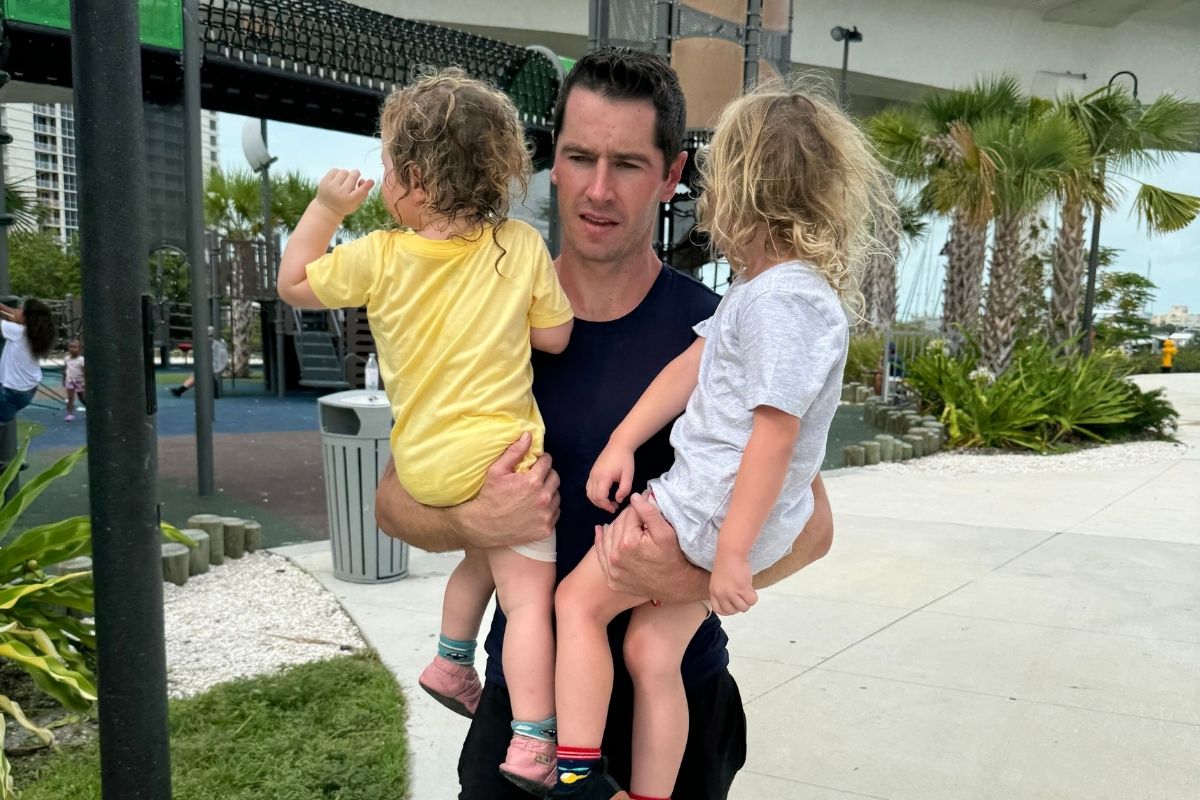
A Realistic Dad Day
Ben doesn’t pretend his days are perfectly balanced. He calls it juggling, and he’s honest about the messiness.
Mornings often start with a dog walk before the kids wake up. Breakfast follows, then a fluid mix of parenting, work, and time with his wife and friends. There’s no perfect symmetry. Just seasons.
This year, he also volunteered to coach a high school basketball team. His kids often tag along, and while it’s not always convenient, it’s meaningful. He loves coaching kids and already knows he can’t wait to coach his own.
When work, life, and family all collide, Ben focuses on patience and building better systems instead of sweating the small stuff. His reset is simple. Get at least a couple workouts in for himself. Move his body. Clear his head.
What’s Non-Negotiable
Ben’s non-negotiables for dad life are refreshingly straightforward.
- Get outside.
- Take action.
- Practice good manners.
- Work hard at something meaningful.
- Love deeply.
When he gets time alone, there’s no elaborate hobby list. He works out. He plays basketball occasionally. That’s it.
And through it all, his perspective is grounded by a reminder many dads need to hear. The days are long, but the years are short. Put the work in now and you’ll be proud of it later.
Whether he’s rebuilding knees or building a family, Ben Patrick is playing the long game.
You can follow him at @kneesovertoesguy and @atgonlinecoaching
Here’s a bold claim:
If you want to stay strong, capable, and independent as you age, grip strength matters more than your biceps.
And yet, most dads ignore it completely.
We train the “mirror muscles.” We chase steps, miles, and maxes. But grip strength? That’s the quiet foundation. The thing that determines whether strength actually transfers to real life.
Opening stubborn jars. Carrying all the groceries in one trip. Hanging on during a pull-up. Picking up your kid without tweaking something you didn’t know you had.
Grip is the handshake between your brain and your body. When it’s weak, everything else leaks.
Why Grip Strength Is So Important
Grip strength isn’t just a gym metric. It’s a real-world survival skill.
Studies consistently show grip strength correlates with:
-
Overall muscle mass
-
Bone density
-
Injury resistance
-
Longevity and healthy aging
Translation: stronger hands often mean a stronger, more resilient body.
From a dad perspective, grip strength is functional strength. It’s the difference between being fit and being useful.
You can’t deadlift heavy without it. You can’t climb, carry, hang, or wrestle without it. And once it goes, everything else follows faster than you think.
Why Most Guys Overlook It
Simple answer: it’s not flashy.
No one flexes their forearms in the mirror (unless you’re deep into a midlife kettlebell phase). Grip work doesn’t feel sexy. It doesn’t get its own machine at the gym.
Most people assume grip will “just improve on its own.”
It doesn’t.
Modern life kills grip strength:
-
Keyboards replace tools
-
Cars replace carrying
-
Grocery carts replace loaded hands
Your hands used to work all day. Now they mostly scroll.
The Hidden Benefits of Better Grip
Here’s what happens when you train grip intentionally:
-
Lifts get stronger without changing the program
-
Elbows and shoulders feel better
-
Posture improves
-
Confidence goes up (there’s something primal about strong hands)
Strong grip = strong connection. You feel more capable in your body.
That matters as a dad. Your kids notice it. You notice it.
Simple Ways to Improve Grip Strength (No Gym Required)
You don’t need fancy gear. You need consistency.
1. Carry Heavy Things (On Purpose)
Farmer carries are king. Grab dumbbells, kettlebells, or heavy bags. Walk until your grip gives out.
Do this 2–3 times a week. Short. Brutal. Effective.
2. Hang More
Dead hangs from a pull-up bar build grip, shoulders, and spine health.
Start with 20–30 seconds. Accumulate time. Your hands will adapt fast.
3. Use Fat Grips or Towels
Wrap a towel around dumbbells or a bar. Thicker handles force your grip to work harder with lighter weight.
Old-school trick. Still undefeated.
4. Train Your Hands Directly
Hand grippers, rice buckets, towel wringing—simple tools that work.
Do them while watching TV. Low friction beats motivation.
5. Stop Using Straps for Everything
Straps have their place. But if you rely on them for every pull, your grip never gets a vote.
Let your hands struggle a bit. That’s where the adaptation happens.
Grip Strength and Aging: The Dad Reality Check
Grip strength declines faster than almost any other physical quality if you don’t train it.
And once it’s gone, daily life gets harder:
-
Falls become more dangerous
-
Lifting becomes risky
-
Independence shrinks
Training grip is future-proofing your body. It’s not about looking strong. It’s about staying capable.
The Takeaway
Grip strength is the foundation nobody talks about.
Train it, and everything else improves. Ignore it, and strength becomes theoretical.
Strong hands. Strong body.
The Busy Dad Running Plan
Here is the truth every dad eventually learns the hard way:
Life gets louder. Your free time shrinks. Your energy gets divided between kids, career, and keeping the house from turning into a feral wasteland.
So workouts? They become aspirational. Like owning a boat or having a garage without Amazon boxes.
But here is the hack most dads miss:
Running is the only fitness plan that bends around your chaos instead of fighting it.
You do not need a gym.
You do not need a babysitter.
You do not need perfect weather, perfect motivation, or a perfect schedule.
You just need shoes, a sidewalk, and 20 minutes.
And the return on investment is huge.
Why Running Works for Busy Dads
Let’s keep it simple.
1. Running is portable dad therapy.
Every dad feels the grind: bills, tantrums, deadlines, dishes, repeat. Running is a pressure valve. It lowers anxiety, boosts mood, and gives your brain the same clarity you get on a long drive with music on and zero kids yelling in the back.
2. Running stacks wins fast.
You can feel noticeably fitter in three to four weeks. Your heart adapts quickly. Your legs remember. And the confidence boost from being consistent for two weeks is unreal.
3. Running fits between kid chaos.
Got 18 minutes before daycare pickup? Run.
Kid fell asleep early? Run.
Spouse takes the kids for a quick errand? Run.
You cannot do that with CrossFit or a fitness class you keep telling yourself you will start on Monday.
4. Running makes you a better dad.
Calmer dads are better dads. Fitter dads are more patient. And kids copy what we model. Running shows them what it looks like to chase goals instead of coasting.
The Busy Dad Running Plan (The No Excuses Version)
This is not a marathon plan. Although if you want to know why marathon training becomes jet fuel for dads, we break it down here.
This is the simple routine any dad can follow.
Three runs a week. That is it.
Run 1: The Reset Run (15 to 20 minutes)
Slow. Conversational. No pressure. Just move.
Run 2: The Dad Strength Run (20 to 30 minutes)
Warm up for five minutes.
Alternate one minute fast and one minute easy for eight to ten cycles.
Then cool down for five minutes.
This one gives you the feeling that you actually trained without wrecking your legs.
Run 3: The Weekend Longish Run (30 to 45 minutes)
Not long long. Just longer than your weekday runs.
This is the one that builds real endurance and the quiet pride that carries into the rest of the weekend.
Rules for Busy Dad Sanity
-
If you miss a run, move on. No guilt.
-
If you are tired, slow down.
-
If life explodes, do ten minutes and call it a win.
-
If you want to quit, picture your kid watching you finish the last block.
Where Runna Fits In (Zero Pressure)
You do not need an app. But most dads need one thing: fewer decisions. Between family, work, school drop-offs, and remembering which kid has which practice, your brain is overloaded. Decision fatigue kills fitness.
That is why when I trained for a sub-3 marathon, I used Runna. It creates a plan based on your goals, syncs to your watch, adjusts your training, and tells you exactly what pace to hit. It removes the mental load. You open the app, press start, and go.
Dad Day readers can try it free for two weeks with code DADDAY, and you can read more about why structure helps dads stay motivated here.
The Big Mindset Shift
Running is not about getting shredded or hitting personal records.
It is about showing your kids what it looks like when a man:
-
keeps promises to himself
-
protects his mental health
-
chases goals even when life is insane
-
stays in the arena
That is what they remember. That is what they copy.
Your Next Run Starts Today
Do not complicate this.
- Put your shoes by the door.
- Pick a 20 minute window.
- Run slow enough to smile.
Tomorrow you will feel like a better version of the dad your kids already think you are.
Join the Dad Day Strava Group
Running hits different when you know other dads are grinding too. Come track your miles, share your wins, and stay accountable with the Dad Day crew.
👉 Join here.
As a dad and lifelong competitor, I’ve always been wired for progress. I grew up in the pool as a collegiate swimmer, but it was never just about the races. It was the discipline. The structure. The grind. Those habits shaped how I train and how I show up as a father today.
After college, fitness became my anchor. More recently, I leaned into endurance training, the kind that forces you to measure everything. That focus is what pushed me toward WHOOP back in 2021. I wanted data. I wanted clarity. And the biggest variable holding me back was the one I didn’t expect. Alcohol wasn’t wrecking my life, but it was wrecking my recovery.
The tricky part was social life. Saying no when everyone else is saying yes wears you down. It felt like the only way to participate was to drink, even when I didn’t want to sacrifice a morning run or drag through breakfast with my kids.
By 2023, I wanted a reset. So I committed to a dry year. That decision led me to Athletic Brewing, and it immediately became the solution I didn’t know I needed. It let me keep the ritual without the slowdown. A cold beer after work. A beer with friends. A beer on the weekend. Same experience. Better outcomes.
Two years later, there is always a six pack of Run Wild, Free Wave, or Athletic Lite in my fridge. Before, I used to rush through drinks without really tasting them. Now I slow down and actually enjoy them. One or two at dinner is plenty, and the flavor stands on its own.
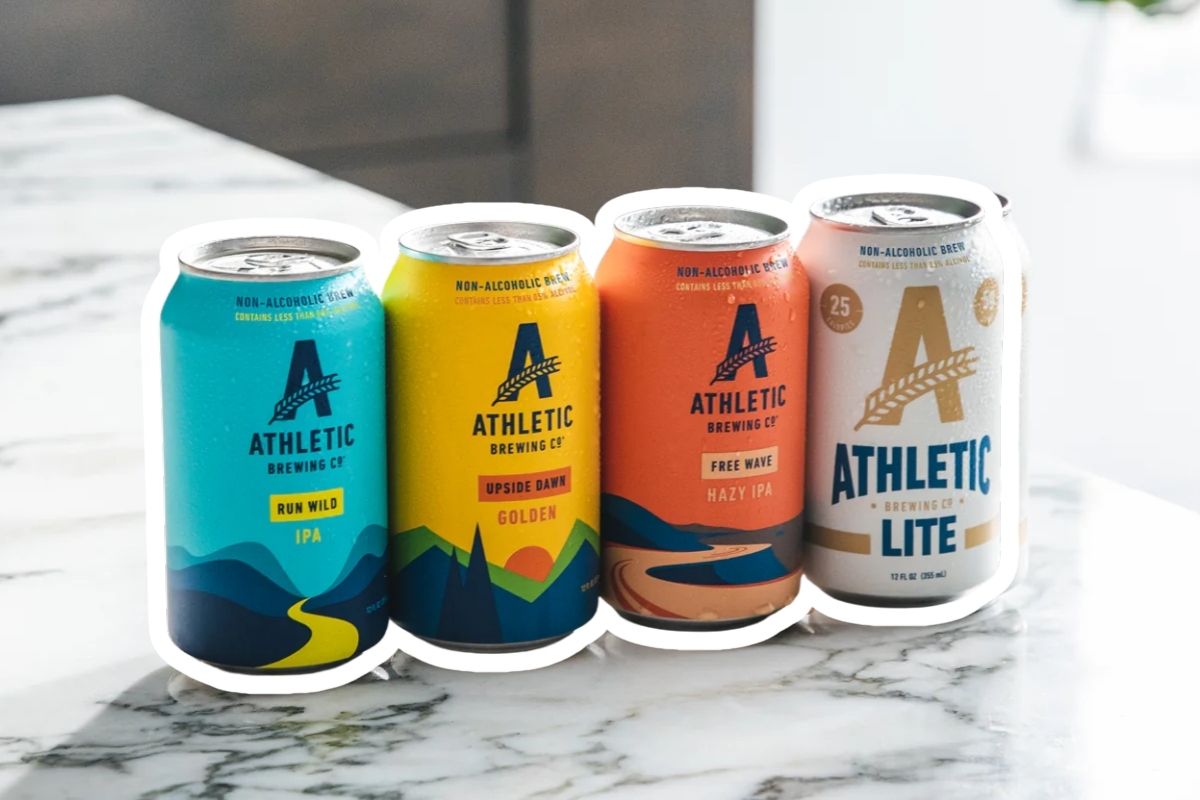
What surprised me most is how normal everything still feels. I can hang with friends, celebrate wins, and keep the social connection, all while staying aligned with my training. No foggy mornings. No sluggish workouts. No wasted Saturdays. It’s the same ritual, just with a better tradeoff. And the more I bring NA options around, the more people around me try them too.
There’s also the example my kids get to see. They watch their dad unwind with something that never changes who he is. They see consistency. The same person at night and in the morning. They see someone who can relax and celebrate while staying present. That matters to me. It shows them that balance is possible.
On weekends, I still get the urge to reward myself after a long run or a few hours of yard work. Athletic Brewing gives me that satisfying moment without the drag. I get the dopamine hit, the refresh, and I’m still fully engaged with my family afterward.
If you’re curious, just mix in an Athletic on your next night out. Keep your edge. Keep the fun. Keep the next morning. You might find the switch happens faster than you expect.