
Most dads are operating at capacity. Full calendar, full inbox, full mental load. And somewhere in the middle of all of it, there’s supposed to be time to be a good dad, a solid partner, and a functioning human being.
AI doesn’t fix all of that. But it handles enough of the noise that the signal gets clearer.
We’re not talking about replacing your thinking. We’re talking about outsourcing the stuff that eats your time without earning it. The emails. The research. The first drafts. The scheduling. The planning. All of it.
Here’s how dads are actually using AI right now to save time and think bigger.
1. Writing Emails That Should Take 30 Seconds but Don’t
You know the email. The one where you need to say something diplomatically, or follow up on something awkward, or push back on someone without burning a bridge. You’ve been sitting on it for two days.
Paste the context into ChatGPT or Claude. Tell it the tone you want. Get a draft in 10 seconds. Edit it down to you. Done.
Use this for: Work emails, HOA complaints, contractor follow-ups, school administrator conversations.
2. Building a Weekly Family Schedule That Actually Works
Tell the AI your kids’ ages, activities, your work hours, and any constraints. Ask it to build a weekly schedule that accounts for homework time, wind-down routines, and a realistic bedtime. It won’t just spit out a template. It’ll think through the sequence.
Most dads spend more time arguing about the schedule than the schedule deserves. Let AI draft it. You decide what stays.
3. Meal Planning for the Week in Under Five Minutes
Tell it how many people are eating, any dietary restrictions, how much time you have on weeknights, and what your kids actually eat. Ask for a full week of dinners with a consolidated grocery list.
ChatGPT can generate a week of kid-friendly dinner ideas that take less than 30 minutes to prepare. That used to take a Sunday afternoon. Now it takes a prompt.
4. Summarizing Long Articles and Reports You’ll Never Actually Read
That 40-page school district report. The long thread about something at work. The article someone sent you that matters but that you haven’t touched in three weeks.
Paste it into Claude or ChatGPT. Ask for a summary in plain language with the three most important points. Read that instead. Make the call.
5. Researching a Big Purchase Without Going Down a Rabbit Hole
Car seat. Lawn mower. Home security system. New mattress. You know the drill. Three hours of tabs, conflicting Reddit threads, and you’re more confused than when you started.
Ask Perplexity. It searches the web and gives you a sourced summary of what actually matters. Ask it to compare the top three options with pros and cons. You get an answer, not a spiral.
6. Preparing for a Hard Conversation
With your kid. With your boss. With your partner. With a contractor who did the job wrong.
Ask the AI to help you think through the conversation. What’s the goal? What’s the other person likely to say? What’s the most important thing to land? This is not about scripting. It’s about clarity before you walk in.
7. Drafting a Budget and Actually Understanding It
Paste in your income and major expenses. Ask for a simple breakdown, a savings recommendation, and where the obvious leaks are. Ask follow-up questions in plain English.
You don’t need a financial advisor to run basic numbers. You need a patient, non-judgmental tool that does the math and explains the thinking.
8. Turning Your Random Notes Into Something Usable
The voice memo from the parking lot. The note you typed at 11pm. The three bullet points that were supposed to become a plan.
Dump them into Claude. Ask it to turn them into a structured document, a to-do list, or a short outline. The thinking is already there. AI just organizes it.
9. Helping Your Kids With Homework Without Doing It for Them
The right prompt isn’t “do my kid’s homework.” The right prompt is “explain this concept like my 10-year-old doesn’t understand it yet” or “give me three ways to help a kid understand fractions.”
You become the tutor. AI gives you the material. That’s a different thing entirely.

10. Writing Performance Reviews, Self-Evaluations, and Work Documents
Most dads are not bad at their jobs. They’re bad at writing about being good at their jobs. It’s a different skill.
Give Claude or ChatGPT your bullet points of what you actually did. Ask it to turn them into professional language for a performance review or self-evaluation. Edit for accuracy. Submit.
11. Planning a Trip Without Using a Travel Agent
Tell it where you want to go, how many days, who’s coming, what ages, what your budget is, and what you do not want to do. Ask for a day-by-day itinerary with restaurant suggestions and logistics built in.
It won’t book the flights for you. But it will save you 6 hours of browser tabs.
12. Getting Smarter on a Topic Fast
Your kid just got diagnosed with something. Your company is pivoting to a new market. You’re about to negotiate a salary. You have 20 minutes to get smart.
Ask Perplexity or Claude to give you a grounded, sourced overview of the topic. Ask what the most important things to know are. Ask what questions you should be asking.
AI is an amplifier. If you have deep knowledge of how something should be done and you can articulate it well, AI is your superpowered sidekick.
13. Writing Speeches, Toasts, and Cards That Don’t Sound Generic
Father of the groom toast. Your kid’s graduation card. A eulogy for someone who mattered.
Tell the AI who the person is, what they mean to you, and two or three specific memories or qualities. Ask for a draft. It gives you a structure and language you can make your own. Nobody has to know it started somewhere else.
14. Processing a Decision You’ve Been Stuck On
Should we move? Should I take the new job? Should we pull our kid from the school?
Write out the situation to Claude or ChatGPT like you’re explaining it to a smart friend. Ask it to help you think through the tradeoffs. Ask what questions you haven’t considered. Ask it to steelman the option you’re leaning against.
It won’t make the decision. But it’ll get you unstuck.
The tools are free. The time you get back is not
15. Automating the Stuff That Repeats
The weekly check-in email. The monthly expense summary. The quarterly update for your side project. These things happen over and over and you write them from scratch every time.
Build a template prompt once. Paste in the new data. Get a draft. Takes two minutes instead of twenty.
16. Getting a Second Opinion on Something You Wrote
Ask Claude to review your email, your proposal, your cover letter, your complaint. Ask it to tell you what’s unclear, what’s missing, and what’s working. It won’t flatter you. It’ll just tell you what it sees.
17. Explaining Something Complicated to Your Kids
Death. Divorce. Money problems. Why the country feels tense right now.
Ask the AI to help you explain it in age-appropriate language. Give it the age of your kid and the topic. It’ll give you a starting point and language that doesn’t either oversimplify or overwhelm.
18. Finding the Right Doctor, Contractor, or Professional
Ask Perplexity what to look for when hiring a pediatric specialist, a general contractor, a financial planner. Ask what questions to ask in the first conversation. Walk in knowing what you’re evaluating.
19. Building a Fitness Plan You’ll Actually Follow
Tell it your schedule, your equipment, your goals, and your honest fitness level. Ask for a realistic program that fits in 30 minutes three times a week. Ask it to build in progression so it stays relevant as you improve.
No gym required. No app subscription. Just a plan that fits your life.
20. Cutting Your Meeting Prep Time in Half
Before a big meeting, give Claude the context: who’s in the room, what the goal is, what the likely objections are, what you need to leave with. Ask it to help you prepare talking points and anticipate what comes up.
You walk in sharp instead of winging it.
21. Writing a Job Description for a Role You’re Hiring
Most job descriptions are either too vague or copied from someone else’s. Tell the AI the actual work the person will do, the skills that matter, and the culture of your team. Ask for a draft that sounds human and attracts the right people.
22. Organizing Your Finances Before Tax Season
Ask it to build you a simple spreadsheet template for tracking deductions, categorizing expenses, or summarizing a year of spending by category. Ask it to explain what’s deductible in plain English. Ask follow-up questions.
You still need an accountant for the filing. But you show up way more prepared.
23. Learning a New Skill Without Paying for a Course
Pick a skill. Ask Claude or ChatGPT to teach it to you in a structured way over four weeks. Ask for the most important concepts first, then the practice exercises, then the common mistakes. Ask questions as you go.
This is how self-education works now.
24. Drafting a Will or Estate Plan Outline
AI can’t replace an estate attorney. But it can help you understand what questions to ask, what a basic will needs to cover, and what you haven’t thought about yet. Go into that attorney meeting informed.
25. Getting Your Side Project Off the Ground
The idea that’s been living in your notes for two years. Ask AI to help you validate it, outline the first steps, identify the three things you have to figure out first, and draft a simple one-page plan.
It won’t do the work. But it’ll get you started, which is the hardest part.
Which AI Tool for Which Job: The Dad Day Breakdown
Not all AI tools are built the same. Here’s the honest breakdown of the main players and where each one earns its place.
ChatGPT (OpenAI)
Free tier available. Plus plan $20 per month.
The most widely used AI in the world. It’s fast, capable, and good at a wide range of tasks. Best when you need something done quickly across a variety of use cases. The free tier handles most everyday needs. The paid tier adds more power for complex tasks and longer documents.
Best for: General productivity, brainstorming, quick drafts, coding help, math explanations.
Not ideal for: Deep research where you need citations. Writing that needs to sound exactly like you.
Claude (Anthropic)
Free tier available. Pro plan $20 per month.
The best writer in the room. Claude produces cleaner, more natural prose than any other major AI. It’s also better at reading long documents, understanding nuance, and helping you think through complex problems without giving you a surface-level answer.
Best for: Writing, editing, long documents, thinking through decisions, preparing for hard conversations.
Not ideal for: Real-time research. If you need current information, it won’t browse the web on the free tier.
Perplexity
Free tier available. Pro plan $20 per month.
Think of it as a search engine that actually reads the results. Every answer comes with cited sources. It’s built for research, not conversation. If you need to get smart on a topic quickly and you want to know where the information came from, this is the tool.
Best for: Research, fact-checking, finding sourced answers fast, comparing options before a purchase.
Not ideal for: Writing help, creative tasks, or anything where you need a back-and-forth conversation.
Gemini (Google)
Free tier available. AI Pro plan $20 per month.
Google’s AI. Lives inside Google Docs, Gmail, and Drive. If your work life runs on Google’s ecosystem, Gemini is the most frictionless option because it works right where you already are. It also has one of the largest context windows of any AI, meaning it can read and summarize very long documents.
Best for: Anything you’re already doing in Google Docs or Gmail. Summarizing long research. Current events and news.
Not ideal for: Writing that needs personality. It tends to sound corporate.
The Honest Answer on Cost
Every tool has a free tier. For most of what’s on this list, free is enough to get started. If you end up using one tool heavily, one $20 per month subscription covers most needs. You do not need all four.
Start with one. Figure out what you actually use it for. Then decide.
You do not need to become a tech person. You need to know what you want and be able to say it clearly. That is the entire skill set.
The 3-Minute Takeaway
You do not need to become a tech person. You need to know what you want and be able to say it clearly. That is the entire skill set.
Pick one thing on this list. Try it today. If it saves you 20 minutes, that is 20 minutes you did not have yesterday.
The tools are free. The time you get back is not.
What to Use and When
Writing and thinking: Claude
Research and fact-checking: Perplexity
General tasks and quick answers: ChatGPT
Anything in Google Docs or Gmail: Gemini
Start with one. Add a second when the first becomes habit.
Try It This Week
Pick the task on this list that costs you the most time or mental energy. Run it through whichever tool fits. See what comes back. The first time feels weird. The second time feels obvious. By the third time you will wonder what you were doing before.
We cover this kind of stuff every week. Practical ideas, gear worth buying, and the kind of advice that actually holds up in the real world. Our Monday, Wednesday, and Friday newsletter goes out to 50,000 dads who want more of the good stuff and less of the noise.
My buddy Jake didn’t think about family culture until his seven-year-old came home from a friend’s house and said, “Dad, how come we don’t do anything?”
That one hit different. Because they did do things. They just hadn’t built any of it on purpose.
You Already Have a Culture (you just didn’t design it)
Your family has a culture right now. Today. Whether you’ve thought about it or not.
The question is just whether you made it or inherited it.
Most dads are running their parents’ software. The unspoken rules. The weekend rhythms. The way conflict gets handled, or doesn’t. The things that get celebrated and the things that don’t. We absorb all of it as kids, carry it in like luggage we didn’t know we packed, and unzip it the moment we have a family of our own.
That’s not always bad. Some of what your parents built was worth keeping. But none of it was chosen. And there’s a real difference between running a culture by default and building one on purpose.
Most families drift. They fill time. They react to whatever the week throws at them. And then one day the kids are teenagers who don’t want to be around, and nobody knows exactly when it went that way.
You don’t have to be that family. But you have to actually decide not to be.

What Family Culture Actually Is
It’s not a framed quote in the hallway. It’s not a family mission statement you wrote at a retreat in 2019 and never looked at again.
Family culture is the stuff that just is. It’s the phrase your kids will use for the rest of their lives without knowing it came from you. It’s the fact that in your house, you always say “I love you” before anyone gets in the car. It’s Friday night being pizza and a movie with no phones, non-negotiable, without anyone having to announce it.
It’s how you handle an apology. It’s whether sarcasm is a love language or a wound in your house. It’s what’s allowed at the dinner table and what gets left at the door. It’s the playlist in the kitchen on Sunday mornings.
Researchers who study family systems describe the family as a mini-culture: it develops its own language, its own rules, its own worldview, its own customs. All of it gets created through daily communication, the ordinary exchanges that feel like nothing but add up to everything.
The culture is the thing your kids will describe to their future partners when they say “in my family, we always…” That sentence is being written right now, in your house, today.
Make sure you like what comes after it.
Why Dads Are the Ones Who Set It
Erik Erikson’s foundational work on child development made one thing plain: kids build their identity primarily through their relationships with other people. Fathers are one of the earliest and most important players in that process. What you signal about who this family is, what it values, how it treats people, that shapes how your kid understands themselves.
When being a father is a central part of a man’s identity, not just a role he fills but something that actually guides how he moves through the world, the research shows better outcomes across the board. For the dad and the kids both.
The flip side is also true. When a dad is present in the house but absent from the culture, someone else fills the gap. The school fills it. Peers fill it. Screens fill it. The algorithm builds your family’s culture if you don’t.
You’re not just a provider or a protector. You’re a culture-setter. That’s the job inside the job.
The Rituals That Actually Stick
A 1992 study published in Family Process found that adolescents who reported strong family rituals showed higher self-esteem and a stronger sense of belonging than peers who didn’t. A 2015 study of around 250 teenagers found that ritual-rich families produced kids with less anxiety, less depression, and greater social connectedness. The Institute of Child Psychology points to ritual as something that literally lowers stress hormones. Kids’ brains are wired for predictability, and ritual delivers it consistently.
The stuff that sticks is almost always simple.
Sunday morning pancakes where your kid cracks the eggs, every single week, no matter what. A made-up handshake at school drop-off. The birthday meal the birthday person picks, every year, no matter how old they get. Reading one chapter out loud before lights out, even when they’re twelve and pretend they’re too old for it.
Seasonal anchors matter too. Not just holidays, but your family’s version of them. First day of fall, same orchard. First snow, same soup. Summer starts with a camping trip, no exceptions.
The goal isn’t a packed schedule. It’s a handful of touchpoints your kid can count on no matter how chaotic everything else gets.
That predictability isn’t comfort. It’s identity.
How to Build It On Purpose
Start with one conversation with your partner. Not a planning session. Just this question: what do we actually want our kids to say about this family when they’re grown?
Write down three words. Not paragraphs. Three words that describe the culture you want. Let them be the filter. When you’re deciding whether to add a commitment or cut one, run it through those three words.
Then pick one ritual. One. Not five. Something you can do this week and next week and the week after without it becoming a production. A Saturday morning walk. Wednesday night cooking together. Something you say before bed every night that’s yours.
Then give your family a phrase. “We figure it out.” “We show up.” “Not in this family.” Every tribe has language. Make yours.
The researchers who study intentional parenting draw a clear line between parents who make conscious choices based on their actual values, and parents who just react to whatever the moment brings. Most of us default to reactive. Most family rules were never stated out loud. Kids learn them by breaking them.
That’s the opposite of building something on purpose.
You don’t need a framework. You don’t need a book. You need a handful of rituals, a few clear values, and the discipline to keep showing up for the things you said matter.
Simple. Repeatable. Yours.
What culture actually does for kids is give them a home inside themselves. A fixed point. Something they carry when everything around them shifts, when school gets hard or friendships fall apart or the world gets loud and confusing. They reach back for it: this is who we are, this is where I come from, this is what we do.
You are building that right now. Not with the big moments. With the ordinary ones.
The only question is whether you’re building it on purpose or just letting it happen.
Start this week. One ritual. One phrase. One decision to make it real.
That’s how you build a family culture.
Some of the best memories we have involve a dock, a rod, and a dad who had the patience to sit there with us.
That’s what this is about.
Getting your kid into fishing isn’t complicated. It doesn’t require a boat, a tackle collection, or years of experience. It requires a rod, some bait, a body of water, and showing up.
This guide covers everything. Gear, location, technique, what fish to target, how to keep kids engaged, and what to do when they inevitably get bored 20 minutes in. Whether you’ve fished your whole life or have never held a rod, we’ve got you covered.
Let’s get into it.
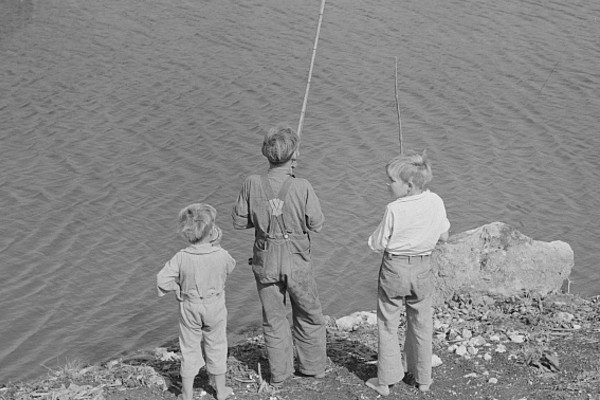
Why Fishing Is One of the Best Things You Can Do With Your Kid
Before the gear list, a quick word on why this matters.
Fishing teaches patience. Real patience, not the fake kind. The kind where you sit with uncertainty and learn to be okay with it.
It teaches cause and effect. Cast here, not there. Use this bait, not that one. Adjust the depth. Try again.
It’s screen-free time that doesn’t feel like punishment. Kids love it because something might happen at any second. The bobber might go under. There might be something on the line. That anticipation keeps them locked in better than almost anything else.
And it’s one of the few activities where a six-year-old and a 45-year-old can fish side by side and have the exact same experience. Same water. Same chance. No age advantage.
That’s the magic of it.
Start Here: The One Rule That Makes or Breaks the First Trip
Before we talk gear and fish, we need to talk about this.
The goal of your first fishing trip is not to catch fish.
The goal is for your kid to have fun and want to go again.
Keep the first trip short. One to two hours max. Pick a spot where fish are plentiful and easy to catch. Bring snacks. Bring patience. Celebrate every single thing, the cast that almost worked, the bite they missed, the tiny fish they threw back.
The first trip plants the seed. Every trip after that grows it.
If you push too long, pick a hard spot, get frustrated, or make it feel like school, you lose them. And you may not get a second chance.
One good hour beats a miserable four-hour marathon every time.
What Fish to Target First: The Beginner’s Best Friend
If you want your kid to actually catch something, start with bluegill.
Bluegill are found in virtually every freshwater pond, lake, and river across the United States except Alaska. They’re aggressive biters, they fight surprisingly hard for their size, and they’re absolutely everywhere. A public pond in a city park almost certainly has bluegill in it right now.
Here’s why bluegill are perfect for kids:
They bite constantly. No sitting for two hours waiting for a nibble. Bluegill will hit a worm on a hook within minutes of it hitting the water in a good spot. That constant action is everything for a kid’s attention span.
They’re small enough for kids to handle. A typical bluegill runs 6 to 10 inches. A kid can hold one, look at it, show it to dad, and release it without drama.
They’re basically everywhere. You don’t need to travel. You don’t need a boat. A local pond with a grassy bank is perfect.
Other great beginner species: crappie, sunfish, yellow perch, and small catfish. All easy to find, all aggressive biters, all manageable for small hands.
Save bass, walleye, and trout for later. They’re great fish, but harder to catch consistently, and a day of zero bites will end a kid’s fishing career before it starts.
Where to Fish: Finding the Right Spot
You don’t need to know a secret honey hole. You need to know how to find accessible public water near you.
Local ponds and lakes in city or county parks are your best starting point. These are often stocked with panfish by your state fish and wildlife agency. They have accessible banks, sometimes docks, and are designed for exactly this kind of casual fishing.
State park lakes and reservoirs are another great option. Most states have a system of public fishing areas with easy bank access.
Fishing piers and docks are ideal for young kids. Stable footing, easy casting, and fish tend to congregate underneath them naturally.
How to Find Spots Near You
Search “[your state] fishing license” and go to your state fish and wildlife agency website. Most states have a public fishing area finder that maps every accessible public body of water near you. The Fishbrain app is also solid for finding local spots and seeing what other anglers are catching there.
What Makes a Good Beginner Spot
Calm, accessible bank. Shallow water with some structure nearby like docks, fallen trees, or weeds. Easy parking. Ideally somewhere the kid can also run around a bit while you rig up, because they will not stand still and wait.
Fishing Licenses: Don’t Skip This
Every adult needs a fishing license. Kids under a certain age are usually exempt but this varies by state.
Get yours before you go. You can buy a fishing license online through your state fish and wildlife agency website in about five minutes. They’re typically $20 to $40 for an annual resident license.
If you’re not sure about regulations in your area, the state agency website has everything. Don’t wing it. Getting cited for fishing without a license is an annoying and preventable way to ruin a good trip.
The Gear: Keep It Simple
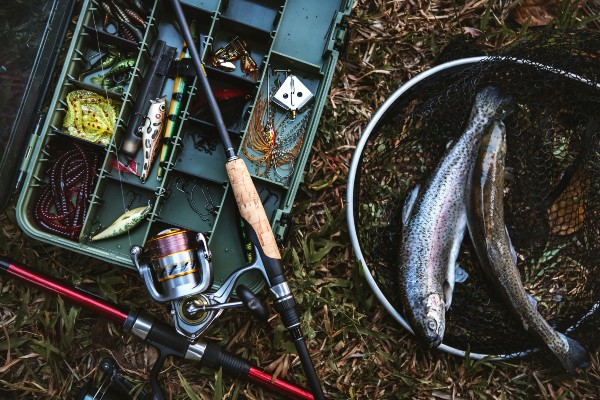
Here’s where a lot of dads overthink it. You do not need expensive gear to catch fish with a kid. You need gear that’s easy to use, hard to break, and appropriate for the fish you’re targeting.
For a first trip with a young kid, you need four things. A rod and reel, some line, a hook, a bobber, and bait. That’s it.
The Rod and Reel
For kids under 8: Zebco Splash Spincast Combo
The Zebco Splash is specifically designed for young kids and it floats if they drop it in the water. That’s not a joke. The floating design alone makes it worth having around docks and boats. Push-button spincast reel, no-tangle design, pre-spooled with 6-pound line. Around $20. This is a great starter rod.
For kids 8 and up: Ugly Stik GX2 Youth Combo
The Ugly Stik is a real rod, not a toy. It’s been around forever, it’s nearly indestructible, and it performs well above its price point. The GX2 Youth Combo comes with a solid spinning reel pre-spooled and ready to go. Around $40 to $50. This rod will last several years and multiple kids.
For older kids or teens ready to step up: Zebco Roam Spinning Combo
A step up in quality and length, the Roam is a legit rod that can grow with them from panfish to bass. Around $40 to $60. A great investment if your kid is genuinely hooked on the sport.
For dads who want their own rod: If you’re fishing alongside your kid and you want your own setup without spending a lot, the Shakespeare Ugly Stik Camo Spinning Combo around $35 to $50 is solid and reliable for pond and lake fishing.
The Tackle: What You Actually Need
Don’t buy a giant tackle box. For bluegill and panfish, here’s all you need:
Hooks: Size 6 or 8 Aberdeen hooks. Light wire, easy to bait, good for small fish. Buy a pack of 50 for a few dollars.
Bobbers: Round clip-on bobbers in red and white. The classic. Clip it on the line about 18 inches above the hook for shallow water, 2 to 3 feet for deeper water.
Split shot sinkers: Small weights you crimp onto the line between the hook and bobber to keep the bait down. Buy a small assorted pack.
That’s it. Seriously. Three items plus the bait below and you are ready to catch fish.
The Bait: Start With Worms
Nothing catches more panfish more consistently than a live worm. Nothing.
Pick up a container of nightcrawlers or red worms at any bait shop or Walmart sporting goods section. Usually $3 to $5. Thread a small piece of worm onto the hook, cast near structure like docks, fallen trees, or weedy edges, and wait for the bobber to go down.
When it goes down, that’s a fish. Set the hook with a quick, firm upward motion of the rod tip. Reel it in.
That is the entire technique. Your kid can absolutely do this.
If worms gross your kid out, try PowerBait Trout Nuggets or small pieces of hot dog. We’re not judging. A fish is a fish.
How to Teach Your Kid to Cast
This is where most first-timers struggle. Casting with a spinning rod takes some practice. That’s why we recommend a spincast push-button rod for younger kids first.
Push-button spincast casting (Zebco style): Hold the rod with your dominant hand. Press and hold the button on the back of the reel. Point the rod tip toward your target. Bring the rod back behind your shoulder (not too far). Push forward and release the button when the rod tip is aimed at where you want the bait to go. That’s the cast. Practice it in the backyard with the hook removed and a small piece of rubber as a casting plug before you ever get to the water.
Spinning reel casting: Hold the rod in your dominant hand. Open the bail (the wire loop) with your other hand. Hook the line with your index finger and close the bail. Bring the rod back, cast forward, and release your finger as the rod tip passes your target. This takes more practice but gives much better control and distance. Teach this to kids 8 and up who have the coordination for it.
Pro tip for teaching: Don’t just explain it. Stand behind them and guide their arm through the motion two or three times. Muscle memory beats verbal instruction every time with kids.
The Setup: Step by Step
Here’s the exact rig for catching bluegill on your first trip.
- Tie your hook to the end of the line using a simple improved clinch knot. There are YouTube videos that teach this in 60 seconds. Practice it at home the night before.
- Clip a round bobber onto the line about 18 to 24 inches above the hook.
- Crimp a tiny split shot sinker onto the line between the bobber and the hook to keep the bait sinking naturally.
- Thread a small piece of worm onto the hook. You don’t need to cover the whole hook. A piece the size of your thumbnail is enough.
- Cast near structure. Docks, fallen logs, weedy edges, shaded areas near overhanging trees. Bluegill love shade and cover.
- Watch the bobber.
- When it goes under, set the hook and reel.
That is a complete fishing system that will catch fish today in virtually any freshwater pond or lake in the country.
Keeping Kids Engaged: What to Do When They Get Bored
Kids will get bored. Accept it. Have a plan.
Keep a bucket of water nearby. Let them catch the fish and put it in the bucket to look at before releasing it. The up-close fish observation buys you another 20 minutes easy.
Give them a job. Let them bait the hook if they’re old enough. Let them cast. Let them hold the rod and watch the bobber. Ownership keeps them in it.
Set small goals. “Let’s catch three fish and then we’ll get ice cream.” Attainable targets keep kids motivated better than open-ended fishing sessions.
Let them roam a little. If there’s a safe area for them to explore, throw rocks, or catch frogs nearby, let them. They’ll come back when something bites.
Don’t force it. When they’re done, they’re done. Pack up cheerfully and talk about coming back next weekend. Ending on their terms means they’ll want to come again.
The Gear Checklist for Your First Trip
Print this out or screenshot it before you go.
- Rod and reel (rigged and ready)
- Extra hooks (size 6 or 8)
- Bobbers
- Split shot sinkers
- Live bait (worms from any bait shop)
- Small needle-nose pliers (for removing hooks safely)
- Sunscreen
- Bug spray
- Snacks and drinks
- A small bucket (to hold the catch for viewing)
- Fishing license (for any adult)
- A good attitude (non-negotiable)
A Note to Dads Who Don’t Fish
If you’ve never fished before, that’s okay. Better than okay, actually. Learning alongside your kid is one of the most connected experiences you can have with them.
You don’t need to be the expert. You need to be the guy who shows up, figures it out, laughs when it doesn’t work, and tries again.
The fish are secondary. The morning together is the whole point.
Get the Zebco, buy the worms, find a local pond, and go. You’ll figure out the rest on the water. Millions of people have done exactly this with no experience and come home with a kid who can’t stop talking about it.
That’s all this is.
Nobody warned us.
They told us about the sleepless nights. The diapers. The feeding schedule. The way your life would “change forever.” We heard all of it. We nodded. We thought we understood.
What nobody told us is that you might look at your newborn for the first time and feel… not much.
Not the movie version. Not the flood of emotion and instant bond and tears streaming down your face while a nurse hands you this perfect creature and everything suddenly makes sense.
Just. Not much. Maybe a little shock. Maybe some relief that it’s over. Maybe a vague, bewildered sense that this screaming, purple, cone-headed stranger is apparently yours now.
And then, underneath all of that, a question you’re too afraid to say out loud:
What is wrong with me?
Nothing Is Wrong With You
Let’s get that out of the way first.
The instant bond story is real for some dads. It hits like a freight train the second the baby arrives and they’re done. Completely gone. Overwhelmed with love they didn’t know they had.
That’s great for those guys.
But it’s not the only story. And it might not be yours. And if it’s not, you are not broken, you are not a bad father, and you are not alone.
What we don’t talk about enough is how foreign a newborn actually is. They don’t know you. They can’t see you clearly. They don’t smile yet. They don’t respond to your voice in any way that feels personal. They cry, they eat, they sleep, and they need constant care from a person they have zero relationship with.
You are, for all practical purposes, a stranger to each other.
Connection takes time. That’s not a flaw. That’s just how it works.
The Biology Nobody Explains
Here’s something worth understanding.
For moms, the hormonal surge of labor and delivery triggers an immediate biological attachment response. Oxytocin floods the system. The bond gets a chemical jump start. It’s built into the process.
For dads, that doesn’t happen the same way. We don’t get the hormonal runway. The connection for us tends to build differently. Slower. More gradually. Through doing, not just holding.
Every diaper changed. Every 3am feeding where you’re half asleep and functioning on autopilot. Every bath. Every time you figure out the one specific way to get this specific baby to calm down. That’s how it builds.
It builds through repetition. Through proximity. Through time.
The dads who feel it immediately aren’t doing something different. Their brain just fires first. The dads who take longer aren’t doing anything wrong. Their brain fires later. Both are normal. Both end up in the same place.
What It Actually Feels Like
We’ve heard from a lot of dads on this. Here’s what they describe.
The first few weeks feel more like a job than a relationship. You’re solving problems. You’re executing tasks. You’re learning an entirely new skill set under extreme sleep deprivation. There isn’t a lot of room for feeling in between the feeding and the burping and the desperate attempt to get two consecutive hours of sleep.
Somewhere around week three or four or six something shifts. You’re not sure when it happens exactly. You just notice one day that when the baby cries, something pulls at you in a way it didn’t before. That you’ve started looking forward to the moments they’re awake. That the face that used to look like every other baby now looks unmistakably like your baby.
Then around two or three months, when they look up at you and actually smile for the first time because they see you specifically, because they know your face and they’re happy about it, something cracks open.
That’s usually the moment for dads. That’s when it lands.
It just takes a while to get there. And the wait doesn’t mean the love isn’t coming. It just means it’s loading.

The Danger of Faking It
Here’s the thing we want to say clearly.
Don’t perform the bond you don’t feel yet. Not for your partner. Not for your family. Not for anyone.
Performing it creates distance. It makes you feel like a fraud in your own home, in what should be one of the most significant periods of your life. And it prevents you from actually being present for the real thing when it arrives.
What we’d say instead: show up for the work even when the feeling isn’t there yet. Change the diapers. Do the night shift. Hold the baby even when they’re screaming and nothing is working and you’re not sure why you’re even doing it.
Because the feeling follows the work. It almost always does.
The dads who disconnect, who check out in those early weeks because they’re not feeling what they expected to feel, those are the guys who look back years later and realize they missed the window. Not because the bond never came. But because they weren’t there when it did.
The Part Your Partner Needs to Hear Too
If you have a partner reading this alongside you, here’s something worth saying out loud.
Dads who don’t immediately lose their minds over a newborn are not indifferent. They’re not cold. They’re not going to be bad fathers. They’re just wiring differently and on a slightly longer timeline.
The worst thing that can happen in those early weeks is a dad feeling like something is wrong with him, pulling back out of shame or confusion, and the distance becoming a self-fulfilling prophecy.
Give him the grace to get there. He’ll get there.
It’s Coming
If you’re in the middle of it right now, here’s what we want you to know. The love you’re waiting to feel is real. It exists. It’s on its way.
It’s just getting built right now, one 3am diaper at a time, one bottle at a time, one completely unreasonable crying session at a time.
Keep showing up. Do the work even when the feeling isn’t there yet. Stay in the room. One morning you’re going to look at this kid and it’s going to hit you like a truck and you’re going to wonder how you ever didn’t feel it.
That morning is coming.
Like this?
Make sure you sign up for our free weekly newsletter.
Picture this.
You’re 45 minutes from home. Your kid is in the backseat. You hit a nail. Tire goes flat. You pop the trunk and realize the only thing back there is a reusable grocery bag, a soccer cleat with no partner, and a granola bar from 2022.
That’s a bad day. And it’s completely preventable.
We’re not saying you need a survivalist bunker on wheels. We’re saying five things. Five things that cost less than a nice dinner out and will pay for themselves the first time something goes sideways.
Here’s the list.
1. A Portable Jump Starter
The old way: dead battery, call a friend, wait 45 minutes, feel like an idiot.
The new way: pull a brick out of your glove box, clamp it to your battery, start the car in two minutes. Done.
Portable jump starters have gotten genuinely excellent in the last few years. They’re compact, they hold a charge for months, and they work. No second car needed. No flagging down a stranger. No calling roadside assistance and sitting on the shoulder while your kid asks “are we going to be okay?” seventeen times.
Our pick: NOCO Boost Plus GB40
This is the one. Under two pounds. IP65 water resistant. Handles gas engines up to 6.0L. Has reverse polarity protection so you can’t accidentally hook it up wrong. Built-in LED flashlight. USB port to charge your phone. Around $100 on Amazon.
If you have a larger truck or SUV with a bigger engine, step up to the NOCO GB70 ($180) which handles up to 8.0L. But for most dads driving a sedan or crossover, the GB40 is the move.
Charge it when you get it. Top it off twice a year. Keep it in the car. That’s the whole plan.
2. A Portable Tire Inflator
Here’s something most dads don’t realize. Most roadside tire situations aren’t full blowouts. They’re slow leaks. A nail. A valve stem issue. The kind of thing where your tire isn’t flat flat, it’s just low enough that driving on it is a bad idea.
A portable tire inflator handles that in about three minutes. Get the tire up to a safe pressure, drive to a shop, get the nail pulled, go on with your life. No tow truck. No drama.
It’s also just genuinely useful. Tire pressure changes with temperature. Cold mornings will drop your PSI. Your TPMS light comes on. You no longer have to hunt for a gas station air pump that works and takes your payment in quarters.
Our pick: Fanttik X8 APEX
Compact, cordless, 7800mAh battery, auto-shutoff when it hits your preset pressure, LED display, built-in flashlight, and an SOS beacon. Around $70. Fits in your center console. Works on car tires, bike tires, sports balls, and whatever inflatable thing your kid is currently obsessed with.
If you want a plug-in option that runs off your car’s 12V outlet and never needs charging, the AstroAI Portable Air Compressor is around $30 and has been reliable for years. Put it in the trunk, forget it’s there, use it when you need it.
3. A Compact First Aid Kit
This one sounds obvious. And yet most dads have either nothing or a kit that’s been in the car so long the bandages have fused together.
We’re not talking about a full trauma kit. We’re talking about the stuff that handles real life: the kid who scrapes both knees at the same time, the cut from the tailgate, the bee sting at the baseball field, the headache you get from sitting in summer traffic.
A good kit in the car means you handle it in the parking lot and keep moving. No convenience store detour. No hunting for napkins.
Our pick: My Medic MyFAK (Standard)
This is the gold standard for a car first aid kit. 115-plus supplies. Soft-sided case with clear compartments so you can actually find things when your hands are shaking. Includes hospital-grade trauma shears, a CPR mask, gloves, and a solid range of bandages and wound care supplies. Around $175.
If that feels like overkill for your situation, the Johnson & Johnson All-Purpose First Aid Kit is a solid, affordable option for around $20 that covers the basics and fits in your glove box. It’s not fancy. It does the job.
Whatever kit you get, check it once a year. Restock what’s been used. Replace anything expired. That’s it.
4. A Multi-Tool
The number of times a multi-tool has saved us from a situation that would have otherwise required a phone call is genuinely embarrassing.
Loose screw on a license plate. Kid’s bike needs a quick adjustment. Box that needs opening at a job site. Random wire that needs cutting. Emergency bottle opener situation at a tailgate. The use cases are endless.
A multi-tool is one of those things where if you carry it, you use it constantly. If you don’t carry it, you spend half your life wishing you had one.
Our pick: Leatherman Wave+
The Leatherman Wave+ has been the benchmark multi-tool for years and it’s earned that status. 18 tools including pliers, wire cutters, multiple knife blades, screwdrivers, a file, a saw, scissors, and more. Built in the USA. Comes with a 25-year warranty. Around $110.
If you want something more budget-friendly, the Victorinox Swiss Army SwissChamp comes in around $65 and has 33 functions in a compact package that rides easily in a car door pocket or center console.
Either way, get one. Put it in the car. Stop borrowing things from people.
5. A Car Emergency Kit With Jumper Cables and Road Flares
Here’s the scenario. You get a flat. You can’t change it yourself. Or you’re in a breakdown situation on a highway where you need to be visible. This is where the last piece of the puzzle matters.
A proper roadside emergency kit handles the stuff the other four items don’t cover: getting yourself seen, getting towed, and being able to flag down help safely.
Our pick: Thrive Roadside Emergency Car Kit
This kit is well thought out. It includes heavy-duty jumper cables (yes, keep them even if you have a jump starter), road flares, a reflective safety vest, a tow rope, an emergency hammer for breaking windows and cutting seatbelts, a multi-function tool, and a compact first aid pouch. Rigid carrying case that stands on its own. Around $60.
The emergency hammer is the one thing most people never think about until they need it. If your car goes into water or your doors won’t open after an accident, that thing could save your life or your kid’s. It costs about $10 on its own. Just get it.
The Quick List
In case you need the shopping tab version:
- NOCO Boost Plus GB40 Jump Starter | ~$100 |
- Fanttik X8 APEX Tire Inflator | ~$70 |
- My Medic MyFAK First Aid Kit | ~$175 |
- Leatherman Wave+ Multi-Tool | ~$110 |
- Thrive Roadside Emergency Car Kit | ~$50 |
Total damage: around $500. That’s one tow truck call avoided, one ER visit for a cut that needed a bandage, one missed meeting because your battery died. These things pay for themselves fast.
One More Thing
The best emergency kit is the one you actually have in your car. Not the one you’ve been meaning to put together. Not the one in the Amazon cart you haven’t checked out. The one that’s actually there.
Do it this weekend. Future you will be glad you did.
What happens when you walk away from a safe job to build something you actually love?
Most people think about it. Few actually do it.
In Episode 2 of Go West, we follow Richie, founder of Daylight Burrito, as he makes that leap. The kind that keeps you up at night. The kind that makes you question your sanity. Leaving a stable path to open a burrito shop might sound simple. It’s not. It’s long hours. Financial risk. Sacrifice.
And a voice in the back of your head asking one question on repeat:
“Is this actually going to work?”
For Richie, the answer was clear. Yes. But clear doesn’t mean easy.
Watch Episode 2
The Story Behind Daylight Burrito
Opening a restaurant is one of the hardest businesses in America. Margins are thin. Hours are brutal. And the work never really stops.
But for Richie, it wasn’t about chasing the “safe” option anymore. It was about building something his kids could watch him build. Something real. A place where early mornings smell like fresh tortillas and green chile.
Where regulars become friends. Where a dad can say, “Yeah, I made this.”
That’s what Daylight Burrito is becoming, one burrito at a time.
What Go West Is About
Go West is a Dad Day film series about fathers carving their own paths.
Not the highlight reels. The real stuff.
The builders. The entrepreneurs. The dads trying to create something meaningful while raising a family.
Because the truth is, kids are always watching. They see whether we play it safe. Or whether we try.
And sometimes the most important thing a dad can do is show them what it looks like to bet on yourself.
Follow Richie + Daylight Burrito
If you want to see what Richie’s building:
Website:
https://www.daylightburrito.com/
Instagram:
https://www.instagram.com/daylightburrito/
Want More Stories Like This?
If you like stories about dads building things, chasing ideas, and figuring it out in real time, that’s exactly what we cover at Dad Day.
Join the newsletter here:
https://www.dadday.co/subscribe
There’s a subtle mistake a lot of us make on family adventures. We become the cameraman.
The hike starts, the beach day unfolds, the birthday candles get lit, and we’re behind a screen trying to capture it all. We tell ourselves we’re preserving memories. And we are. But we’re also missing pieces of them. There’s a better move.
Buy your kid a camcorder. Then make them the official family documentarian. It sounds simple. It is. And it changes more than you’d think.
The Problem With Dad Holding the Camera
When Dad runs the camera, Dad disappears from the footage. You get great clips of your kids jumping off docks and chasing waves. What you don’t get is you — laughing, wrestling, cannonballing, being fully present.
And if you’re honest, when you’re filming, you’re only half in the moment anyway. You’re adjusting angles. Checking focus. Making sure you “got it.” Hand the camera over, and something shifts.
You stop managing the memory. You start living it.
A Camcorder Changes How Kids See the World
Give a kid a camera and a normal Saturday becomes a mission.
They don’t just walk through the woods, they look for shots. They notice light coming through the trees. They film the dog shaking off water in slow motion. They zoom in on things you’d never think to capture. It trains attention. It builds awareness.
Instead of passively consuming the day, they start actively observing it. That’s a skill most adults are trying to relearn through meditation apps and productivity books. Kids can build it with a camera.

You’re Not Buying a Gadget — You’re Giving Responsibility
This isn’t about tech. It’s about trust.
When you hand your kid a camcorder and say, “You’re in charge of documenting today,” you’re sending a message:
- I trust you with something valuable.
- Your perspective matters.
- You’re part of telling our story.
That’s a different level of ownership than just tagging along on a trip Dad planned. Kids rise to responsibility when we give it to them. Not perfectly. But meaningfully.
The Hidden Win: You Get to Be in the Frame
Here’s the part most dads don’t realize until later.
If you’re always filming, you’re rarely in the footage. Years from now, your kids won’t care about 4K resolution or cinematic angles. They’ll care that you were there…in the water, on the trail, at the table. When they’re the one holding the camera, you get to wrestle in the grass. You get to jump off the dock. You get to sit back at the campfire without thinking about storage space and battery life.
You get to be Dad, not the production crew.
Watching It Back Is the Real Magic
The best part happens later.
You sit down together and watch the footage. It’s shaky. The framing is off. There are 30 seconds of someone’s forehead. And it’s perfect. Because you’re seeing the day through their eyes.
What they chose to film says something about what mattered to them. What they ignored says something too. It’s a time capsule of their perspective at that exact age, something no perfectly edited highlight reel can replicate.
A Few Rules So You Don’t Ruin It
If you try this, keep it simple.
- Don’t micromanage the shots.
- Don’t critique the footage.
- Don’t turn it into a film class.
Let it be messy. Messy is honest.
If they drop it or forget to hit record, that’s part of the learning. The goal isn’t perfect documentation. The goal is participation and ownership.
The Bigger Lesson
Modern parenting often swings between control and anxiety. We try to manage every detail, optimize every experience, preserve every memory. Giving your kid the camera is a small act of letting go.
You’re handing over control of the narrative, just a little. And in doing that, you gain something better: presence. You’ll end up with a collection of imperfect videos. But more importantly, you’ll have been fully inside the moments they captured.
And one day, when you watch those clips years later, you won’t just see what your family did.
You’ll see how your child saw you.
The other night I was in the garage, reorganizing absolutely nothing, when a song came on that I hadn’t heard in years.
It was Higher by Creed. Seventeen-year-old me used to blast it with the windows down, convinced I understood life. Then I grew up, discovered irony, and decided my music taste had “evolved.”
But standing there between a half-assembled shelf and a bag of grass seed, I didn’t skip it. I turned it up. And it sounded… good.
That’s when it hit me: something has shifted. Not dramatically. Not overnight. But steadily, quietly, over the past few years of becoming a dad.
I Get Choked Up Now
I was never the emotional guy.
- Breakups? Managed.
- Stress? Internalized.
- Movies? Unmoved.
Now I find myself clearing my throat during car commercials. A dad teaching his daughter to drive. A kid hitting a game-winner while his parents lose their minds in the stands. The ending of Toy Story 3? Forget it.
Fatherhood doesn’t turn you fragile. It removes your emotional armor. Once you’ve held your own kid, the world feels more personal. Every story about a child hits closer. Every moment of pride feels earned.
You don’t cry because you’re weaker. You cry because you understand more.
I Care About Things I Used to Mock
I used to think adults were dramatic about household stuff. Now I have strong opinions about lawn stripes. About thermostat settings. About the correct way to load a dishwasher.
The house isn’t just a place anymore. It’s the backdrop of your kids’ childhood. It’s where scraped knees get cleaned up and bedtime stories get read. When something feels off, it’s not about control, it’s about stewardship.
You stop seeing chores as chores. You start seeing them as maintenance on the life you’re building.
Sleep Is a Performance Tool
In my twenties, I optimized for fun. Now I optimize for sleep. Seven and a half hours feels like a competitive advantage. Five hours feels like I’m negotiating a hostage situation with a toddler at 6:12 a.m.
Patience requires fuel. And kids burn through it fast.
My Social Life Got Smaller…And Better
Here’s one nobody talks about.
You don’t just lose time. You lose tolerance. I don’t want to sit around complaining about work, politics, or how “crazy things are right now.” If I’m leaving my house at night, which already feels like a logistical operation, I want to spend it around positive people who are getting after it.
Building something. Training for something. Thinking bigger. Being good dads. The circle gets smaller. But the quality goes up. You realize energy is finite. And who you spend it with matters.
Risk Feels Different
I still believe in big swings. Start the thing. Build the thing. Bet on yourself. But now there’s a second layer to the calculation. Before kids, failure bruised your ego. Now it affects the people who call you Dad.
That doesn’t make you timid. It makes you measured. You’re not less ambitious. You’re more responsible. The math changes when it’s not just your landing anymore.
Music From Your Past Sounds Different
When I was seventeen, Creed felt dramatic and intense.
Now it feels nostalgic. It reminds me of a version of myself who worried about curfews and college applications, not daycare costs and pediatrician copays. Listening to it doesn’t make me young again. It just connects me to who I’ve been.
You don’t go back to old songs because they’re cool. You go back because they anchor you.
The Shift No One Talks About
The biggest change isn’t your taste in music or your bedtime. It’s your tenderness.
You’re quicker to forgive. Slower to judge. More aware of how short everything is. You look at other kids and realize they’re someone’s whole world. You think about your own parents differently. You start to understand their worry, their exhaustion, their quiet sacrifices.
Becoming a dad didn’t harden me the way I expected. It deepened me. I didn’t lose my edge. I lost my indifference.
And honestly? That’s a trade I’ll take.
Building a company around presence doesn’t automatically make it easy to live that way. Daniel Ng knows this better than most.
Daniel lives in Vancouver, Canada with his wife and their two kids, ages four and six. He’s the co-founder of No Reception Club, a brand rooted in the idea of disconnecting from technology and reconnecting with your family through travel, adventure, and shared experiences.
But as any small business owner knows, the irony is real.
When Work Brain Won’t Shut Off
The hardest part of parenting for Daniel isn’t logistics or scheduling. It’s presence.
As a founder, his mind is often racing. Ideas, problems, decisions. Even while physically with his kids, it takes real effort not to drift into work-related thoughts. That tension feels especially sharp given what his company stands for.
Presence, for him, isn’t automatic. It’s a daily practice.
The Gift of Flexibility
On the flip side, owning a small business has given Daniel something he deeply values. Freedom from the traditional 9-to-5 mold.
Being able to show up for school pick-ups, tough days, and moments when kids need support matters more than any title. Daniel believes those moments shape a child’s internal monologue as they grow up.
One recent example stuck with him. While skiing, his younger child felt scared on a difficult stretch of the mountain. Without prompting, his older child stepped in and said, “Believe in yourself. You can do anything.”
That kind of language doesn’t come out of nowhere. Daniel hopes those quiet “dad-isms” echo for years to come.
Doing the Inner Work
Looking back, Daniel wishes he had known earlier that showing up better for his kids often starts with working on himself. Therapy. Honest conversations with his partner. Strong friendships, especially with other dads. Vulnerability matters. Investing in yourself isn’t selfish. It’s part of investing in your kids.
One thing he actively works on is letting go of his own insecurities so they don’t get passed down. Parenting, he’s learned, has a way of exposing what still needs healing.
Being Dad, Not Coach
Some of the most impactful advice Daniel’s carried came from actor Jeff Daniels, who once spoke about long car rides to and from hockey games. The time spent not talking about hockey, he said, paved the way for closeness later in life.
As a coach for his six-year-old’s hockey team, Daniel thinks about this often. It’s easy to slip into feedback mode. But that’s not his job in the car.
His job is to take off the coach hat and just be dad. Safe space. Cheerleader. Biggest fan.
A Very Real Dad Day
Mornings aren’t optimized. Daniel and his wife aren’t 5am workout people, and their kids are slow risers too.
Daniel wakes the kids while his wife makes breakfast. Those wake-up moments are his favorite part of the day. One-on-one connection. Imaginative play with a favorite stuffy. Helping each child start the day on the right foot.
After drop-offs, it’s work mode. Afternoons bring activities, lessons, or intentional one-on-one dates. Dinner is always together, with a strict no-phones-at-the-table rule.
Bedtime means baths, stories, and lights out. Once the kids are asleep, Daniel and his wife often log back in for a second work shift. Founder life doesn’t always fit neatly into daylight hours.
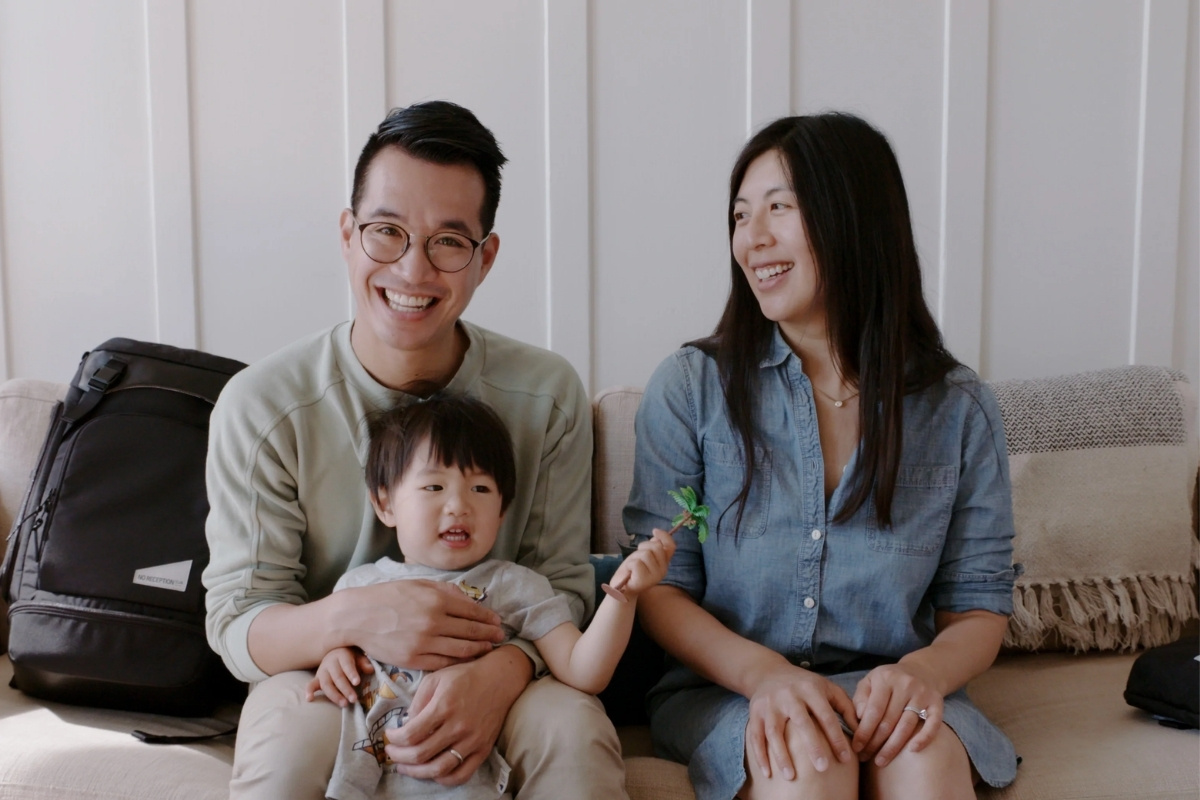
Photo from No Reception Club
Accepting What Won’t Get Done
Juggling work, life, and family often means accepting tradeoffs. A messy house. A delayed launch. A skipped workout. Forgotten show-and-tell. Daniel’s learned that hyper-prioritization is the only way through peak seasons.
Clear, constant communication with his wife, who is also his co-founder, makes it possible. Divide and conquer only works if you’re aligned.
He’s also learned that “life” can’t be ignored for too long. Health, hobbies, friendships, and interests outside work and family are the fuel that make everything else possible.
Music as a Reset
When things feel overwhelming, Daniel turns to music. Not podcasts. Not algorithms. Music.
Putting on an album from start to finish on the drive to pick up his kids has become a reset ritual. He’s started collecting vinyl and choosing records intentionally. Listening the way artists intended feels grounding in a world of constant noise.
And yes, he’s officially retired “Beautiful Things” from his playlists.
Teaching the First Spark
Daniel hopes to be his kids’ first teacher in many things. Skiing. Biking. Swimming. Sports.
The first time is always hard. It’s scary. You’re bad at it. But pushing through that initial discomfort opens the door to lifelong joy. He hopes that one day, when his kids carry those hobbies into adulthood, they’ll remember that their dad was the one who taught them how to start.
When he’s flying solo, Daniel pushes himself physically. Running, biking, skiing, hockey. He also prioritizes dad trips. A weekend with other guys in the same season of life goes a long way.
Daniel’s story is a reminder that presence isn’t about perfection. It’s about choosing, again and again, to show up where your feet are.
Like this? Sign up for our weekly newsletter.
Routine isn’t a bad thing. Most of us work hard to build one. Morning schedules. Work blocks. kids’ activities. Family dinners. Bedtime. Repeat.
The problem is that routine has a way of tightening around you over time. Not all at once, but slowly.
Weeks blur together. You’re doing fine. Life isn’t falling apart. But something feels flat. Predictable. Like you’re always reacting and rarely resetting. I’ve felt that more times than I can count, especially as a dad.
Here’s the thing most people don’t talk about: growth almost never happens inside routine. It happens when you step just far enough outside of it to see yourself clearly again.
Comfort is sneaky like that. It doesn’t announce itself. It shows up as reasonable excuses. I don’t have time. Now’s not the season. Maybe later.
Especially as dads, it’s easy to convince ourselves that putting our heads down and grinding is the responsible move. And sometimes it is. But over time, comfort turns into autopilot. Same conversations. Same inputs. Same people. Same expectations of yourself.
You stop challenging your body. You stop challenging your thinking. You stop putting yourself in rooms where your standards get raised. Not because you don’t want more, but because it’s easier not to disrupt the flow.
Before Dad Day, I spent years running events. Startup events in San Francisco. Then an adventure travel company with trips all over the country and internationally. National parks. Costa Rica. The whole thing. I’ve done big events. I’ve done complicated events. I’ve done way overproduced events.

A couple years ago, I was invited to an event in NYC by the team at Ten Thousand. For the first time, I wasn’t organizing anything. I just showed up.
We worked out. Ate good food. Walked the city. Had conversations that weren’t forced. There were speakers, but nothing dragged. There was structure, but also space. It wasn’t flashy or loud, but I left feeling different. Clearer. Lighter. More motivated. More connected.
I still talk to people I met there. I picked up ideas I actually used. And maybe most importantly, it reminded me how powerful it is to be around people who are setting their bars high.
That experience stuck with me.
As a dad, you carry a lot. Your energy matters. Your mindset matters. The way you show up at home matters. And yet, most dads rarely give themselves permission to reset.
Not escape. Reset.
To move their body differently. To hear new perspectives. To be around people who are building things and pushing themselves. To remember that growth doesn’t stop just because life got full.
There’s something that happens when you put yourself in an environment with people who have big goals. Not loud, chest-thumping goals. Real ones. Being better fathers. Better partners. Better humans.
That kind of environment recalibrates you. You don’t come home a new person. You come home more like yourself.
The best resets aren’t dramatic. They’re clarifying. You remember what matters. You regain momentum. You stop sleepwalking through weeks that are supposed to mean something.
That’s what stepping out of routine can do. Not because routine is bad, but because staying in it forever shrinks your perspective. Sometimes you need a weekend, an experience, or a change of scenery to remind yourself what you’re capable of.
That’s true in business. It’s true in fitness. And it’s especially true in fatherhood.
Built for More exists because I wanted to create the kind of experience I wish I had access to more often. Not a conference. Not a retreat full of awkward icebreakers. Not something performative or forced.
Just a small group. Movement. Time outside. Good food. Real conversations. A chance to break routine in a way that actually sticks.
If you’ve felt a little stuck lately, that doesn’t mean you’re failing. It probably just means you’re due for a reset.
Ready to Step Out of Routine?
Built for More is our first in-person experience, happening April 30 to May 2 in Charleston, SC. We’re capping it at 25 dads to keep it tight and intentional. It’s only 2.5 days, so you’re not away from the fam that long.
Still long enough to step out of the routine to come back sharper.
Early bird pricing is still live, and once spots are gone, they’re gone.
👉 Check out the event and grab your spot here.
And if you’re on the fence, we’re happy to hop on a call and chat. Just head over to our contact page and hit us up. Sometimes the best thing you can do for yourself and your family is say yes to the reset.