
Once upon a time, greeting another man was simple. You stuck out your hand. He stuck out his hand. You shook. Eye contact. Done.
Then 2020 happened and turned the handshake into a psychological obstacle course. Now every greeting feels like a split‑second game of rock, paper, scissors where the loser feels awkward for the next ten minutes.
Is this guy a handshake guy? A fist bump guy? A hugger? A wave from six feet away guy who still keeps his mask in the glove compartment just in case?
Welcome to the Post‑Covid Handshake Era.
This is your field guide.
Why This Is Weird Now
The handshake used to be muscle memory. It was automatic.
Covid broke that muscle memory.
Some guys spent years actively avoiding hand contact like it was radioactive. Others never stopped shaking hands. Today, it still feels a little awkward.
We’ve become a generation of men who half-commit to greetings. Hands extended, then pulled back. Fists turning into open palms. Awkward laughs covering deep confusion.
This guide exists so you do not have to relive that moment again.
The Five Greeting Archetypes You Will Encounter
1. The Formal Handshake Guy
This guy never stopped. Firm grip. Two pumps. Direct eye contact. He probably owns real leather shoes and still writes thank‑you notes. We’re all for it. No knock here.
How to handle it: If he goes in strong, meet him there. Commit fully. A weak handshake here is worse than no handshake at all.
Rule: Never out‑formal the Formal Handshake Guy. Just match his energy.

2. The No‑Touch Guy
Hands in pockets. Little wave. Polite nod. He is not rude. He is cautious. Or tired. Or both.
How to handle it: Don’t force the contact.
A nod and a “good to see you” is more than enough. Confidence here is non‑attachment.

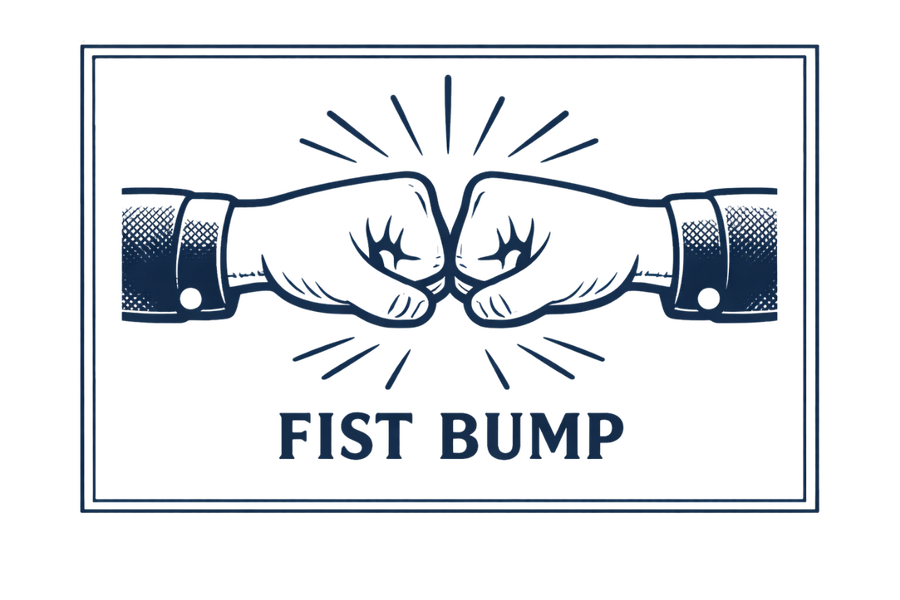
3. The Fist Bump Loyalist
The fist bump is clean. Efficient. Emotionally neutral.
How to handle it: The key is timing. Present the fist early and clearly. Half fists create chaos.
Bonus tip: Don’t add sound effects. Just own the bump, man. Once again, commit fully.
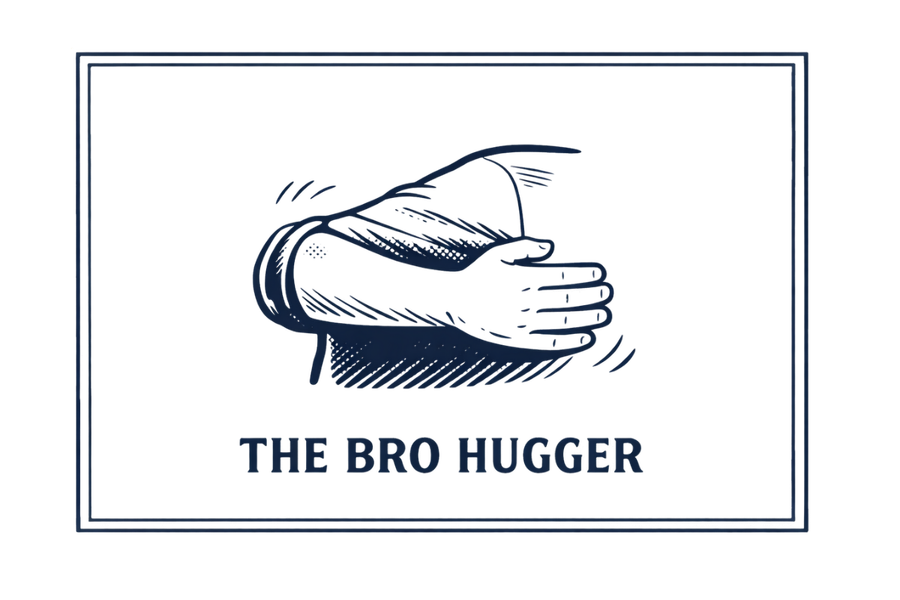
4. The Bro Hugger
One arm. Chest tap. Quick release. Usually reserved for friends, teammates, or guys you have shared a grill with.
How to handle it: If you hesitate, you will collide. If you commit, it works.
Lead with a smile. Angle the body. One arm only. Anything more turns it into an awkward moment.
5. The Chaos Hybrid
This guy doesn’t know what he wants, and neither do you. Handshake turns into fist bump turns into half hug.
This is the most dangerous archetype.
How to handle it: Slow down. Let him lead. Mirror what he does, not what you think he might do.

The Universal Dad Rule
When in doubt, pause for half a beat. That micro‑pause lets the other guy declare his intentions. Rushing is what creates the infamous hand‑fist‑thumb lock that will haunt you at 2 a.m.
Calm beats cool every time.
The Bigger Lesson
This isn’t really about handshakes. It’s about reading the room. And adapting without making it weird. Your kids are watching how you navigate these moments. They are learning how to meet the world. Literally.
Show them that being a man is not about forcing tradition or rejecting it.
It’s about awareness.
If you’ve ever tried to build a home gym, chances are Cooper Mitchell helped you do it, whether you realized it or not.
Coop is the founder of Garage Gym Reviews, one of the most trusted platforms in the fitness world for reviews, guides, and education around home gym equipment. What started as a niche interest grew into a massive resource for everyday lifters who want to train seriously without stepping foot in a commercial gym.
But behind the racks, barbells, and YouTube videos, Coop is also a dad of six.
Yes, six.
His kids range from eight years old to one-year-old twins, and life in the Mitchell household moves fast. When asked about the hardest part of parenting, Coop doesn’t sugarcoat it.
It’s navigating fatherhood alongside all the other responsibilities he has and still wants to keep having. Work matters. Health matters. Faith matters. But so does knowing when to put each in its proper place.
Building a Life Around Priorities
Coop’s days start early. Around 5 a.m., he’s up reading the Bible and praying before heading into his garage gym for a solid training session. From there, it’s coffee with the kids, work, homeschooling breaks, and afternoons filled with play, Legos, throwing balls, and being outside.
Evenings slow down intentionally. Dinner together. Sharing stories from the day. Family worship that includes reading scripture, catechism, singing hymns, and prayer. Then books, board games, and bedtime.
It’s structured, but not rigid. Purposeful, but lived-in.
When everything hits at once, Coop leans on a principle that guides his decisions. Knowing the difference between urgency and importance. Everything feels urgent, but only some things truly matter. His goal is to give his best energy to what’s important, even when the urgent is loud.
The Weight of Time
Before becoming a dad, Coop suspected time moved quickly. Fatherhood confirmed it. The days are long, but the years are short. That awareness shapes how he and his wife process life together. At the end of long days, they sit in bed and trade stories about the kids. Moments they don’t want to forget. A way of slowing time down by remembering it.
The advice that stuck with him most is one he thinks about often. Be the person you want your children to grow into. Not just someone who teaches values, but someone who lives them.
Staying Grounded
When life gets heavy, Coop resets through prayer, time in God’s Word, and lifting heavy. His non-negotiable for dad life is surprisingly simple. Smile. Exude joy. Be the blessing man.
And when he gets time alone, he keeps it classic. Fine cigars and good books.
Coop’s story is a reminder that strength isn’t just built under a barbell. It’s built in routines, priorities, and showing up consistently for the people who matter most.
You can follow Cooper at @homegymcoop, and find Garage Gym Reviews on YouTube.
Over the last year, Dad Day has evolved from a simple email newsletter into something bigger. A community. A place to highlight dads who are building, creating, and showing up a little differently.
That evolution led to Go West.
Go West is a short film series from Dad Day that spotlights modern dads carving their own path. Founders, makers, and builders who chose the long road instead of the safe one.
These aren’t ads or highlight reels. They’re real stories about why someone started something, how fatherhood fits into it, and what they’re trying to build long-term.
Episode One features Robert Huffman, founder of Camino Caffeino.
Meet Robert Huffman
Robert Huffman sells coffee out of an old El Camino in Charleston, South Carolina. But Camino Caffeino isn’t really about coffee.
It’s about community.
In a world of polished brands and carefully engineered launches, Robert took a different route. He built something simple, human, and intentionally analog. A mobile coffee setup that invites conversation, connection, and presence.
Robert is also a dad, and that reality shapes how he thinks about work, time, and legacy. Camino Caffeino isn’t about scaling as fast as possible or chasing the next big thing. It’s about creating something meaningful, showing up consistently, and building relationships that last.

Why This Story Matters
Go West exists to tell stories like Robert’s.
Stories that don’t always fit neatly into a pitch deck. Stories about dads who are building businesses, communities, and lives that reflect their values. Stories rooted in purpose instead of polish.
Robert’s journey with Camino Caffeino captures the heart of what Go West is about. Choosing an unconventional path. Betting on connection. And building something with intention, even when there’s no clear roadmap.
Shot in Charleston, South Carolina
This episode was filmed in Charleston, a city that values craft, conversation, and community. The setting mirrors Robert’s approach and reinforces the tone of the series: grounded, human, and unforced.
Go West isn’t about geography. It’s about mindset. Charleston just happened to be the right place to tell this particular story.
Watch Episode One
Below is Episode One of Go West, featuring Robert Huffman of Camino Caffeino.
If this story resonates, we encourage you to watch it all the way through, share it with someone who’d appreciate it, and subscribe to our YouTube channel. This is just the beginning.
What’s Next for Go West
Episode One sets the tone.
We’re continuing to film and share stories of dads who are carving their own path. Some of these stories will be about business. Some about community. Some about family. All of them are about choosing a different way forward.
Because ordinary’s been done.
There’s a certain honesty you only get from musicians who’ve lived a few lives. Tony Kamel fits squarely in that camp.
Tony writes and performs songs for a living. Some people even listen. He’s toured, recorded, chased the dream, and done the unglamorous work that keeps the lights on. Now, he’s also a dad navigating a very different kind of stage.
Tony lives in the Austin, Texas area with his wife and their four-year-old daughter. Their second child is arriving this February. When asked what the hardest part of parenting has been, he doesn’t romanticize it.
Everything is hard. Once you accept that hard is the baseline, it oddly gets easier. That mindset shift matters, especially in the early years. Sleep deprivation, he admits, is a real personality test.
Finding Meaning in the Small Stuff
For Tony, the most rewarding part of fatherhood isn’t the big milestones. It’s the small moments that show up quietly and disappear just as fast.
Right now, he’s his daughter’s favorite person in the world. He knows that season has an expiration date, and instead of fighting it or brushing past it, he’s choosing to enjoy it fully.
That awareness runs through how he approaches both parenting and work.
How Fatherhood Changed His Career
Before becoming a dad, Tony didn’t realize how much parenting would reshape his relationship with touring. It didn’t end his career, but it did change how it feels.
He still tours, just less. Not because he can’t do it, but because he doesn’t love it the same way anymore. There’s more guilt now. More awareness of what he’s missing. In his words, it’s a total blessing, even if it comes with tradeoffs. He also notes, with dry humor, that the middle-class touring world has mostly disappeared anyway.
Fatherhood didn’t shrink his ambition. It refined it.

The Best Advice He Ever Got
The advice that stuck with Tony is short and absolute.
Never go against your wife’s motherly instincts. Ever. Not even a little.
It’s a reminder that partnership matters, and that parenting works best when trust runs both ways.
A Typical Dad Day
Tony describes his days as suburban bliss. Early mornings, coffee and breakfast, school drop-off, yoga if he’s lucky, then work. It’s not flashy. It’s steady.
When work, life, and family all collide, he admits he doesn’t juggle it gracefully. Balls get dropped. Chaos shows up. The key is getting better at picking things back up and riding the wave instead of fighting it. His wife, who he describes as wildly organized, is the anchor. Without her, the operation falls apart.
Yoga and meditation help too, but he’s clear about what really keeps things moving. Teamwork.
Dad Life Non-Negotiables
Tony’s non-negotiable is one every parent recognizes instantly. If his daughter wants a song repeated, he repeats it. Even when it’s annoying.
He remembers what it felt like to be obsessed with a song as a kid. That joy, that sense of wonder, matters more than convenience.
When he gets time alone, his guilty pleasure isn’t glamorous. He paints houses. It’s a survival job. Not very rock-and-roll. Extremely relaxing. Especially the part where he’s not broke.
Playing the Long Game
Tony’s story is a reminder that fatherhood doesn’t end creative ambition. It reframes it. The wins get quieter. The priorities shift. The meaning deepens.
He’s still writing songs. Still performing. Still building a life that works for this season.
You can follow Tony at @tonykamelmusic.
When I first read Shoe Dog, I wasn’t looking for parenting advice. I was looking for business inspiration—grit, risk, vision, all that good stuff.
But halfway through the book, somewhere between maxed-out credit cards and Nike barely surviving another year, it hit me: This isn’t just a startup memoir. It’s a fatherhood book—just written sideways. Not about kids. About the kind of man kids grow up watching.
The Real Theme of Shoe Dog: Living With Uncertainty
Strip away the swooshes and success and Shoe Dog is really about doubt. Long stretches where nothing feels impressive. Years where the outcome is unclear.
Phil Knight didn’t have a master plan. He didn’t know Nike would work. He just kept moving forward anyway.
That’s dad life.
Most days of fatherhood don’t feel heroic. They feel uncertain. You wonder if you’re doing enough, if you’re screwing it up, if everyone else somehow knows what they’re doing better than you.
Here’s the comfort Shoe Dog offers dads: you don’t need certainty. You need commitment.
Progress Beats Confidence (A Dad Skill No One Teaches)
Knight didn’t wait until he felt ready. He shipped, adjusted, survived another year, and did it again.
Parenting works the same way. You don’t become a great dad because you read the right books or feel confident all the time. You become a great dad because you keep showing up without guarantees.
You don’t know how your kid will turn out. You don’t know which moments will matter most. You don’t know if today’s choice was the “right” one.
Neither did Phil Knight. He just didn’t quit.
The Myth of “Having It Together”
From the outside, Nike looks inevitable. From the inside, according to Shoe Dog, it was chaos held together by belief and stubbornness. That’s true for dads, too.
Your kids don’t see your inner doubts. They see whether you try. Whether you recover. Whether you keep going when things are hard.
That’s the lesson. Not perfection. Not confidence. Momentum.
Playing the Long Game Without a Scoreboard
One of the most underrated ideas in Shoe Dog is patience. Nike didn’t win quickly. It survived, then survived again, then survived some more.
Fatherhood has the same timeline. There’s no scoreboard. No quarterly results. No applause. Just quiet consistency. Bedtime stories. Car rides. Regular Tuesdays that don’t feel special until years later.
You’re building something you won’t fully see for decades. That’s not inefficiency. That’s legacy.
Identity Matters More Than Outcomes
Phil Knight wasn’t obsessed with being rich. He was obsessed with running, with craft, with building something meaningful. Good dads aren’t obsessed with outcomes either. They care about being steady, being available, being someone their kids feel safe copying.
You don’t need to be extraordinary. You need to be clear on who you are.
If Shoe Dog Had Dad Advice
If that book could talk, it would probably say this:
- Don’t wait until you feel ready. Build anyway.
- Your kids don’t need a finished product. They need a builder—someone willing to try, fail, learn, and keep going.
That’s the real win.
My Takeaway
We don’t need more parenting hacks. We need more long-term thinkers. More builders. More dads willing to live unfinished lives out loud. Because one day, your kid will look back and realize you didn’t have it all figured out, but you never stopped showing up.
That’s a hell of a legacy.
Most dad content feels stale. Same cliche jokes. Same advice. Same version of what a “good dad” is supposed to look like.
Over the last year of building Dad Day, one thing became obvious: there are a lot of dads out there doing things differently. Building businesses from scratch. Creating community in unexpected ways. Taking the long road instead of the safe one. Not because it’s trendy, but because it feels right.
That’s where Go West came from.
Why Go West?
We’ve always been drawn to the people who went west before there was a clear path or a paved road. Not because it was easy, but because it was open. Uncertain. Full of possibility. Going west meant betting on yourself. Trusting your gut. Building something where there wasn’t much to build from yet.
That same mindset still exists today. It just shows up differently.
Go West isn’t about geography. It’s about choosing the harder, less obvious route. The one that doesn’t come with a script. The one where you figure things out as you go and build something meaningful along the way.
That’s the kind of dad we’re drawn to. And those are the stories we want to tell.
What Is Go West?
Go West is a short film series from Dad Day that spotlights modern dads carving their own path.
These aren’t highlight reels or polished success stories. They’re real looks at dads who build, dream, and act on ideas that don’t always fit the mold. Founders. Creators. Makers. Doers. Guys who decided not to follow the script and see where it led.
Some of these stories will be about business. Some about community. Some about family. All of them are about choosing a different way forward.
Because ordinary’s been done.
Why We’re Doing This
Dad Day has always been about more than tips, gear, or surface-level inspiration. It’s about showing what modern fatherhood actually looks like when you care deeply about how you spend your time, what you build, and the example you’re setting.
We wanted to create something that reflects that.
Go West is our way of telling deeper stories. Slower stories. Stories that don’t try to wrap everything up neatly in 60 seconds.
Episode One
The first episode features Robert Huffman, who sells coffee out of an old El Camino with one simple goal: foster connection and community.
It’s not about scale. It’s not about optimization. It’s about showing up, pouring into people, and building something meaningful in a way that feels human.
That episode drops soon.
What to Expect Going Forward
Each Go West film will focus on one dad and one story. No formulas. No templates. Just honest looks at people doing things their own way and sticking with it. This is just the beginning.
Watch the trailer below, and if it resonates, you’ll feel right at home with what’s coming next. Do us a solid and subscribe if it lands.
If you are a dad, you know the feeling. Life gets loud. Work deadlines. Kid schedules. A garage that looks like a Home Depot had a meltdown. Most of us are not short on things to do. We are short on intention.
Which is why Jesse Itzler hits so hard.
He is an entrepreneur, ultra endurance athlete, co founder of Marquis Jet, early partner at Zico Coconut Water, owner of the Atlanta Hawks, bestselling author, and creator of the famous Big Ass Calendar (worth a look if you have never seen it: ). He also happens to be a guy who built a big life while staying highly present as a husband and father.
His recent video titled If you want 2026 to be the best year of your life is basically Jesse handing you his entire operating system. It is simple, practical, and built to snap you out of autopilot.
Below is our hot take on it: useful, and written for dads who want a year they can actually remember living.
Why This Video Matters for Dads
Dads drift. It happens slowly. School pickups, work sprints, coaching soccer, a weekend Costco run. You look up and the whole year evaporated.
Jesse’s system stops the drift. It forces you to pause, reflect, clean house, and design a year instead of reacting to one.
This is not a vision board. It is a blueprint.
THE BIG IDEA: Play 2026 on Offense
Jesse’s philosophy:
If you do not plan the year, the year will plan itself. And you probably will not like the result.
Most dads live on defense. We respond to whatever hits our inbox, our calendar, or our kitchen table. Jesse flips it. He wants you attacking life, not absorbing it.
His method has three parts:
-
Close out the year with intention.
-
Identify what needs fixing.
-
Schedule the good stuff first.
1. Close Out 2025 Like a Pro
Before you build 2026, Jesse wants you to clear the runway. Think of this as the dad version of cleaning the garage before starting a big project.
Do a What Worked and What Did Not Audit
Two columns. Be honest. What actually moved your life forward. What drained you. What you tolerated instead of solved.
Declutter Everything
Physical clutter. Digital clutter. Emotional clutter.
Clean the closet. Empty the junk drawer. Delete files you know you will never use. A clear environment creates momentum. A messy one steals it.
Handwritten Thank You Letters
This is Jesse’s superpower. He writes thank you letters to people who impacted his year.
It is old school. It is rare. And it builds real connection.
More important for dads. Your kids see you modeling gratitude and relationship building. That lines up perfectly with our Dad Day principle of creating a life worth copying.
Write five to ten letters. Keep them real and specific.
2. Run Your Life Through the Blender
Jesse’s Life Blender exercise is simple and brutally clarifying.
Rate the major areas of your life from one to ten.
- Health
- Marriage
- Parenting
- Fun
- Career
- Finances
- Community
- Personal Growth
Pick the two or three categories that need the most attention. Not everything should be a priority. Most dads score lowest on fun, health, marriage time, and personal adventure.
That is the signal. Those are your 2026 levers.
3. Build Your Year With Jesse’s Offense Trifecta
Here is where the magic happens. Jesse organizes his entire year using three tools that create momentum instead of waiting for it.
A. Mogis
These are your year defining accomplishments. The big wins you will remember years from now.
Examples:
- Run a half marathon
- Take a one on one trip with your kid
- Start guitar lessons
- Launch a side business
- Repair a relationship
- Complete a 75 day challenge
Pick two to four. No more.
B. Kevin’s Rule
Every sixty days you schedule one new experience. Something you have never done before.
This is the antidote to the dad rut.
Ideas
-Go to a jujitsu class
-Go to a concert with your teenager
-Take a cooking class
-Camp in the backyard with your kid
-Visit a city you have never seen
Newness keeps you awake. It also shows your kids that adulthood is not a slow fade into routine.
C. One Winning Habit Per Quarter
Not ten habits. One habit every ninety days.
Examples
Q1: 10,000 steps per day
Q2: Phone free bedroom
Q3: Weekly date night
Q4: Strength training
Stack four habits and you are a completely different dad by next December.
4. Use the Big Ass Calendar to Schedule the Fun First
This is Jesse’s signature move.
Most dads plan the year like this:
- Work
- Kids’ activities
- Random obligations
- Maybe a little time for yourself if anything is left
Jesse plans it like this:
- Fun
- Mogis
- Adventures
- Family experiences
- Then work fills in the remaining space
It is simple. If you do not aggressively schedule the life you want, someone else will.
That is why his Big Ass Calendar is so effective. You can see the entire year at a glance. You cannot hide from blank space.
Color code it
-Blue for family adventures
-Red for personal Mogis
-Green for health habits
-Yellow for work
-Black for personal reset days
When you schedule the meaningful stuff first, life gets better instantly.
The Takeaway: Build a Year Your Kids Will Remember You Living
This system is not about productivity. It is about presence.
Your kids do not need a perfect dad. They need a dad who is awake. A dad who is intentional. A dad who takes action. A dad who builds a life worth copying. (Our past Dad Day newsletters echo this exactly. Kids watch the pattern. Not the perfection. )
Jesse’s method is your blueprint.
- Audit the past.
- Plan the future.
- Put the fun on the calendar early.
- Live on offense.
Your kids are watching. Give them something worth imitating.
Meet Zack Telander — Austin-based musician, new dad, and the kind of guy who’ll rip a guitar solo at night and crush a diaper change at sunrise. You can find him on Instagram (@zack_telander) and hear his music on Spotify (search “Telander” and turn it up).
His take on fatherhood is honest, grounded, and absolutely on-brand for the Rad Dad universe.
The Dad Who Had to Slow Down to Keep Up
Zack has lived most of his adult life in go-mode. Music careers don’t care about “balance.” They’re fast, unpredictable, and built on momentum.
Then Charlie arrived.
The hardest part for him wasn’t the sleepless nights, although those are real. It was learning to slow down, to let the world shrink to the size of a baby’s hand gripping his finger.
Funny thing. The hardest part became the best part.
Every morning he goes on a walk with his wife, daughter, and their dog. No rushing. No forcing. Just a young family moving through the world together. He told us it’s the one thing he’d happily do forever.
That’s the type of dad moment you remember when you’re old.
View this post on Instagram
Duty Over Balance
A lot of dads talk about “balance.” Zack laughs at that idea.
He told us, “I don’t. It’s my duty to be a good dad and husband first.” No life hacks. No elaborate systems. Just simple duty and excitement to show up for his family. And when things get overwhelming, he returns to the things that reset him: playing guitar, singing, and lifting. The essentials.
He also protects two non-negotiables:
• Alone time
• Real dates with your partner
Quick Hits From Zack
Hardest part of parenting:
Slowing down. And yes, the sleep.
Most rewarding part:
Those morning family walks.
Wish he knew earlier:
Kids bring emotional balance.
Best advice he’s gotten:
“Your kids are watching everything you do. So do right.”
(A perfect Dad Wisdom fit. )
Typical day:
Up around 6:30, diaper, bottle, walk, play, nap. Repeat until bedtime.
Reset button:
Guitar, singing, the gym.
Flying solo hobbies:
Guinness, wings, YouTube. A legendary trio.
Why This Q&A Stuck With Us
Zack is the blueprint for the modern dad. Creative but grounded. Driven but present. Intentional without being precious about it. He is not chasing balance. He is not chasing perfection (we’ve talked about that one. Progress beats perfect every time. ) He is chasing presence.
Dad Day Takeaway
Slow down. Walk with your people. Keep one ritual that reminds you who you are outside of diapers and bottles. Remember your kids are watching. Let them see a life that’s worth following.
Want more of Zack? Follow him on IG (@zack_telander) and stream his music on Spotify. Perfect soundtrack for that early morning stroller walk. 🎧👶🏼
Dig this? You’ll probably like our newsletters, too.
Get our laid-back M/W/F emails → dadday.co/subscribe
There is a special kind of courage required to do the holidays with your in-laws. Whether you’re packing up the kids and staying in their guest room or you’re hosting them in your house where the thermostat mysteriously moves on its own.
Not the “charge into battle” kind. More like the “stay steady while everyone has deeply held opinions about your turkey carving technique” kind.
But here’s the thing: every dad who has spent more than 72 hours in shared holiday space with in-laws knows a secret.
The in-laws aren’t necessarily the challenge. It’s the holiday machinery surrounding them.
It’s the perfect storm of expectations, personalities, traditions, and casseroles that should have been retired long ago.
So here’s your survival kit.
Step 1: Know the Mission Before You Deploy
Holiday gatherings are not just family time. They’re also diplomatic operations.
Your job is not to win the day. Your job is to get home intact without starting a generational feud.
Pick one mission:
-
Keep your partner happy.
-
Keep the kids from swinging ornaments like medieval weapons.
-
Stay away from political conversations.
-
Avoid being tricked into “a quick project.”
That is your priority. Everything else is noise.
Step 2: Become a Ghost When Necessary
Every dad deserves a strategic disappearance.
Bathroom break. Checking on the kids. Taking out the trash. Retrieving something from the car (which may or may not exist).
You are not hiding. You are resetting. A dad who resets is a dad who keeps the peace.
Step 3: Find Your Role and Lean Into It
Every family has roles. You do not choose them; they choose you.
You might be:
-
The Grill Guy
-
The Tech Fixer
-
The Kid Wrangler
-
The Heavy-Lifting Specialist
-
The Person Who Understands Wi-Fi
-
The Tupperware Organizer
Own the role. A man with a clear job gets left alone. A man without one gets recruited for every chore imaginable.
Step 4: Master Emotional Judo
Your in-laws will make comments. Not malicious. Just… comments.
-
“He looks tired.”
-
“She’s very energetic.”
-
“We never did that with our kids.”
-
“Are you sure that’s how you do it?”
Old you tightens up. New you redirects the energy.
Smile. Nod. Say “Interesting.” Move on.
Peace preserved. No emotional bruising.
Step 5: Use the Kids as Shields, Assets, or Distractions
Kids are your all-purpose social tools.
Need to exit a conversation?
“She wants to show you something!”
Need a moment alone?
“We’re going to check on the toys.”
Need to leave early?
“We’re approaching meltdown o’clock.”
Use the chaos wisely.
Step 6: Build Allies in the House
There is always someone running the same internal monologue as you.
The brother-in-law who’s also trying to survive. The cousin with a dry sense of humor. The aunt who hands out snacks and honesty. The dog.
Find them early. Form a silent alliance. You’re stronger together.
Step 7: Remember Why You’re There
This is the grounding moment.
Holidays are messy. Families are complicated. Someone will absolutely comment on your parenting.
But your kids are watching how you handle it.
They’re learning how to be part of a family. How to show up with grace. How to be steady when things get weird. You’re not just surviving the holidays. You’re modeling adulthood.
That’s the whole point. Godspeed.