
My buddy Jake didn’t think about family culture until his seven-year-old came home from a friend’s house and said, “Dad, how come we don’t do anything?”
That one hit different. Because they did do things. They just hadn’t built any of it on purpose.
You Already Have a Culture (you just didn’t design it)
Your family has a culture right now. Today. Whether you’ve thought about it or not.
The question is just whether you made it or inherited it.
Most dads are running their parents’ software. The unspoken rules. The weekend rhythms. The way conflict gets handled, or doesn’t. The things that get celebrated and the things that don’t. We absorb all of it as kids, carry it in like luggage we didn’t know we packed, and unzip it the moment we have a family of our own.
That’s not always bad. Some of what your parents built was worth keeping. But none of it was chosen. And there’s a real difference between running a culture by default and building one on purpose.
Most families drift. They fill time. They react to whatever the week throws at them. And then one day the kids are teenagers who don’t want to be around, and nobody knows exactly when it went that way.
You don’t have to be that family. But you have to actually decide not to be.
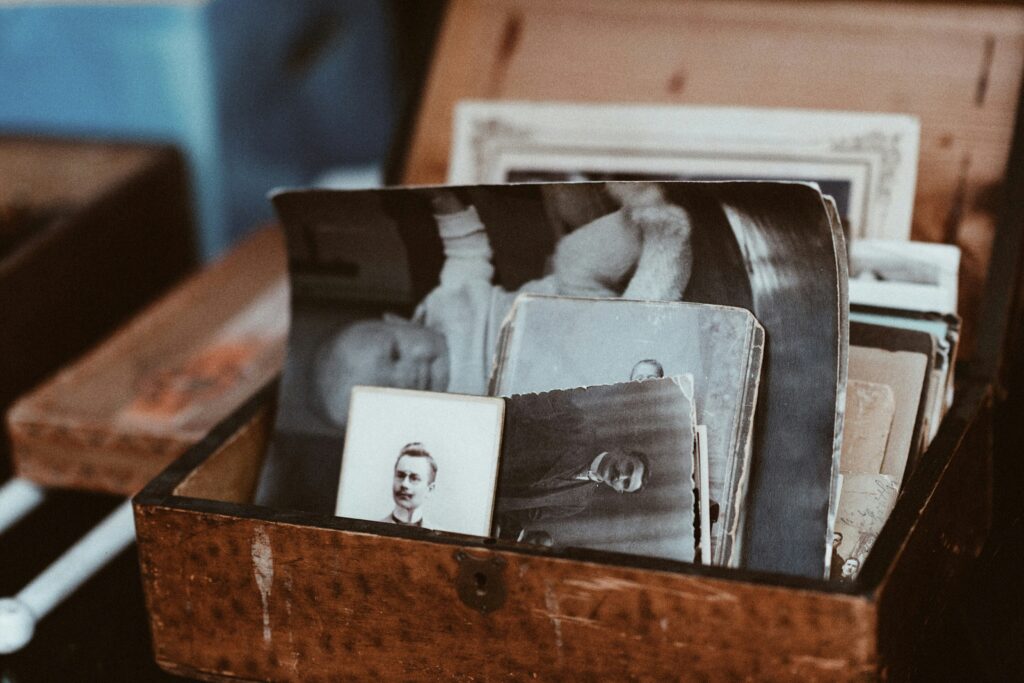
What Family Culture Actually Is
It’s not a framed quote in the hallway. It’s not a family mission statement you wrote at a retreat in 2019 and never looked at again.
Family culture is the stuff that just is. It’s the phrase your kids will use for the rest of their lives without knowing it came from you. It’s the fact that in your house, you always say “I love you” before anyone gets in the car. It’s Friday night being pizza and a movie with no phones, non-negotiable, without anyone having to announce it.
It’s how you handle an apology. It’s whether sarcasm is a love language or a wound in your house. It’s what’s allowed at the dinner table and what gets left at the door. It’s the playlist in the kitchen on Sunday mornings.
Researchers who study family systems describe the family as a mini-culture: it develops its own language, its own rules, its own worldview, its own customs. All of it gets created through daily communication, the ordinary exchanges that feel like nothing but add up to everything.
The culture is the thing your kids will describe to their future partners when they say “in my family, we always…” That sentence is being written right now, in your house, today.
Make sure you like what comes after it.
Why Dads Are the Ones Who Set It
Erik Erikson’s foundational work on child development made one thing plain: kids build their identity primarily through their relationships with other people. Fathers are one of the earliest and most important players in that process. What you signal about who this family is, what it values, how it treats people, that shapes how your kid understands themselves.
When being a father is a central part of a man’s identity, not just a role he fills but something that actually guides how he moves through the world, the research shows better outcomes across the board. For the dad and the kids both.
The flip side is also true. When a dad is present in the house but absent from the culture, someone else fills the gap. The school fills it. Peers fill it. Screens fill it. The algorithm builds your family’s culture if you don’t.
You’re not just a provider or a protector. You’re a culture-setter. That’s the job inside the job.
The Rituals That Actually Stick
A 1992 study published in Family Process found that adolescents who reported strong family rituals showed higher self-esteem and a stronger sense of belonging than peers who didn’t. A 2015 study of around 250 teenagers found that ritual-rich families produced kids with less anxiety, less depression, and greater social connectedness. The Institute of Child Psychology points to ritual as something that literally lowers stress hormones. Kids’ brains are wired for predictability, and ritual delivers it consistently.
The stuff that sticks is almost always simple.
Sunday morning pancakes where your kid cracks the eggs, every single week, no matter what. A made-up handshake at school drop-off. The birthday meal the birthday person picks, every year, no matter how old they get. Reading one chapter out loud before lights out, even when they’re twelve and pretend they’re too old for it.
Seasonal anchors matter too. Not just holidays, but your family’s version of them. First day of fall, same orchard. First snow, same soup. Summer starts with a camping trip, no exceptions.
The goal isn’t a packed schedule. It’s a handful of touchpoints your kid can count on no matter how chaotic everything else gets.
That predictability isn’t comfort. It’s identity.
How to Build It On Purpose
Start with one conversation with your partner. Not a planning session. Just this question: what do we actually want our kids to say about this family when they’re grown?
Write down three words. Not paragraphs. Three words that describe the culture you want. Let them be the filter. When you’re deciding whether to add a commitment or cut one, run it through those three words.
Then pick one ritual. One. Not five. Something you can do this week and next week and the week after without it becoming a production. A Saturday morning walk. Wednesday night cooking together. Something you say before bed every night that’s yours.
Then give your family a phrase. “We figure it out.” “We show up.” “Not in this family.” Every tribe has language. Make yours.
The researchers who study intentional parenting draw a clear line between parents who make conscious choices based on their actual values, and parents who just react to whatever the moment brings. Most of us default to reactive. Most family rules were never stated out loud. Kids learn them by breaking them.
That’s the opposite of building something on purpose.
You don’t need a framework. You don’t need a book. You need a handful of rituals, a few clear values, and the discipline to keep showing up for the things you said matter.
Simple. Repeatable. Yours.
What culture actually does for kids is give them a home inside themselves. A fixed point. Something they carry when everything around them shifts, when school gets hard or friendships fall apart or the world gets loud and confusing. They reach back for it: this is who we are, this is where I come from, this is what we do.
You are building that right now. Not with the big moments. With the ordinary ones.
The only question is whether you’re building it on purpose or just letting it happen.
Start this week. One ritual. One phrase. One decision to make it real.
That’s how you build a family culture.
Growing up, my dad had a handful of sayings he’d repeat to us before school, parties, or big events. Whether it was “read the damn problem” before a test, “proper planning prevents poor performance” before a speech or game, or “the hurrier I go, the behinder I get” when we rushed through something and made it worse — they were endless.
And, in my adolescence, admittedly annoying. But one that’s always stuck with me is: “Remember who you are, and where you came from.” That one usually came out before dates, going to a “friend’s house” (aka party) in high school, or leaving for college.
It was my dad’s simple reminder that our actions reflected not just on us, but on our family — and that first impressions are what reputations are built on.
As I’ve gotten older, I’ve started to see that phrase differently. Whether it’s in a job search, finding a spouse, or becoming a dad, the best thing you can do is know who you are, be proud of that, and stick to your values. When something doesn’t sit right, have the courage to speak up — but also the humility to listen and respect a different perspective.
Now, as a new father, that saying hits even deeper. It makes me think about how I want my kids to remember me — how I make them feel. I want to be the kind of supportive dad mine was: someone they can come to with anything.
And while discipline has its place, love and understanding should always lead the way. For others, “remember who you are and where you came from” might mean something entirely different — maybe it’s a promise to never return to a painful place or mindset. And that’s just as meaningful.
In the end, that phrase can mean many things to many people — and that’s the beauty of it. But I do believe it’s one of the most important lessons we can pass down to the next generation.