Nobody hands you a scorecard when you become a dad.
There is no performance review. No quarterly check-in. No one pulls you aside at year three and says you are doing great or that you are quietly losing them. You just show up every day and hope the accumulation of it means something.
But some dads do figure it out. Not perfectly. Not without hard stretches. But their kids grow up and want to be around them. They call. They come back. They say things like “my dad taught me that” in a tone that means something.
What those dads have in common is not what most people think.
It Is Not About Being Present
You have heard it a thousand times. Show up. Be present. Put down your phone. And yes, that is the floor, not the ceiling. The dads who actually figure this out are not just physically in the room. They are genuinely interested.
Interested in what their kid is building, watching, obsessing over, afraid of. Interested in the weird phase and the bad week and the question that doesn’t have a clean answer. Not performing interest. Actually having it.
That is harder than it sounds, especially when you are tired and the thing they want to talk about is Minecraft for the fourth consecutive evening.
The dads who get it right are curious about their kids the way they are curious about things they actually care about. Not managing them. Not monitoring them. Genuinely wanting to know what is going on in there.
They Give Themselves, Not Just Their Time
There is a version of fatherhood that looks good on paper. The game attendance. The school pickup. The vacations. The financial security. All of it real, all of it necessary, none of it sufficient on its own.
What separates good dads from great ones is that the great ones also give themselves. Their actual attention. Their honest reactions. Their real opinions when asked. Their presence in the conversation, not just the room.
A kid can feel the difference between a dad who is there and a dad who has shown up. They always know which one they are getting.
They Do Not Bluff
Kids are better lie detectors than most adults give them credit for. They clock hypocrisy early and file it away. A dad who preaches patience and then loses it in traffic. A dad who talks about honesty and then makes excuses. A dad who says family comes first and then consistently proves otherwise.
The dads who earn lasting respect are the ones who own it when they are wrong. Who say “I don’t know” when they don’t know. Who apologize to their kids the same way they would apologize to anyone else. Directly, without the qualifier that undermines it.
You do not have to be perfect. You have to be real. Your kid is not looking for a flawless man. They are looking for an honest one.
They Lead Positive, Not Negative
The dads who figure it out are not the ones running a tight ship of rules and consequences. They are the ones who make the right thing feel good.
Not through bribery. Through genuine enthusiasm for the things that matter. They make work feel like something worth doing. They make honesty feel like the obvious choice. They make being a decent person feel like something to be proud of rather than something that is forced.
The old instinct is to correct. The better move is to build. “Let’s do this” lands differently than “don’t do that.” Every time.
They Respect Their Kids
This one gets skipped in most conversations about fatherhood, and it is one of the most important.
Good dads treat their kids like people. Not small problems to manage. Not projects to optimize. People with their own interior lives, their own preferences, their own reasonable need to be taken seriously.
That means listening when they talk about something you do not care about. Knocking before you enter. Asking what they think and actually waiting to hear it. Admitting when they have a point.
Kids who are treated with consistent respect grow up knowing how to demand it from the world. That is not an accident.
Respect is not something you compel from your kids. It is something you earn. The way you earn it is by giving it first.
They Have a Clear Idea of What They Are Building
The dads who figure it out know what they are trying to do. Not in a rigid, controlling way. But they have thought about what kind of person they want their kid to become and they use daily life as the material.
The boring Tuesday is not an interruption from parenting. It is the parenting. The way you handle frustration in the car. The way you talk about people you disagree with. The way you treat the server, the neighbor, the person who cut you off. All of it is instruction, whether you mean it to be or not.
The dads who get this right are intentional about the small moments, not because they are performing for their kids, but because they understand that character is caught more than it is taught.
Join the Family


They Know the Difference Between Driving and Guiding
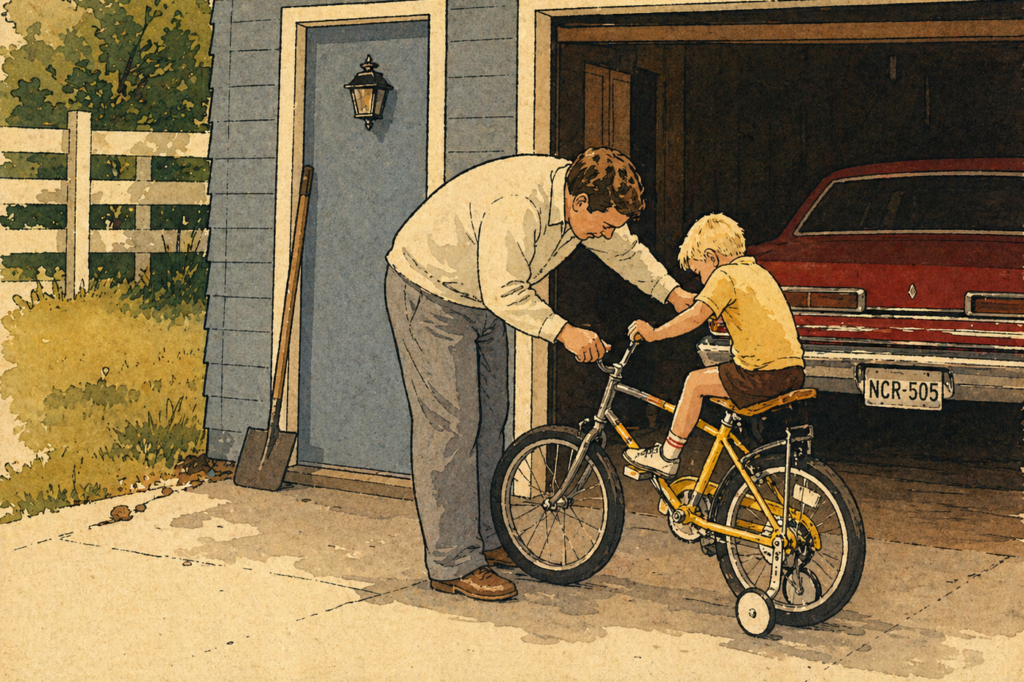
One of the most persistent mistakes in fatherhood is confusing control with influence. Driving your kid toward an outcome: the grade, the sport, the career, the version of themselves you have decided they should be. That tends to produce one of two results. Compliance without conviction, or rebellion. Neither is what you were going for.
Guiding looks different. It means introducing your kid to things and letting the interest find its own shape. It means asking more than telling. It means having standards without making your love conditional on meeting them.
A broken will, as one writer put it nearly a century ago, is a greater misfortune than a crippled body. The goal is not an obedient kid. The goal is a kid who has learned to direct themselves.
Your job is not to produce a specific outcome. Your job is to raise someone capable of choosing their own.
They Stay in the Game
The dads who matter to their kids long-term are not the ones who peaked during the Little League years. They are the ones who stayed interested through every phase. Including the phases where their kid did not particularly want them around.
The teenage years are not a wall to get through. They are the years when everything you built starts to get tested. The relationship you made when they were eight is the credit you spend when they are fifteen and don’t want to talk to you. It either holds or it doesn’t. And whether it holds depends almost entirely on what you did before things got complicated.
Stay in it. Stay curious. Stay available. Not in a suffocating way. Just in the way that communicates: I am still here, I am still interested, and that is not going to change.
The Thing Nobody Talks About
Here is what does not get said enough in conversations about what makes a good dad.
The dads who get it right are not the ones who sacrifice everything else to be a father. They are the ones who take their own life seriously enough that their kids have something to admire.
They have interests. They have standards for themselves. They do things that are hard and they do not hide that they are hard. They care about their work, their health, their friendships, their own growth. Not instead of their kids. Alongside them.
A dad who has given up everything for his family is not a model of selflessness. He is a cautionary tale. Kids do not want to be the thing that cost their father his life. They want a father who has a life. And who makes room for them in it.
That is what they will remember. That is what they will try to become.
The boys, and the girls, always know.
What It Actually Comes Down To
You need to be someone worth knowing. Someone your kid can read clearly: who means what he says, shows up when it counts, and takes his own life seriously enough that there is something there to inherit.
The dads who get it right are not the ones who tried the hardest. They are the ones who stayed honest the longest. With their kids, with themselves, with what actually matters.
That is the whole thing. Everything else is detail.
We cover this kind of stuff every week. Practical ideas, things worth thinking about, and the kind of advice that holds up in the real world. Our Monday, Wednesday, and Friday newsletter goes out to 50,000 dads who want more of the good stuff and less of the noise.