
Back to school season sneaks up fast. One minute it’s summer and the next you’re Googling what supplies are on the list and wondering how another year passed this quickly. We got some advice from a friend of ours who happens to be a school principal. Not the generic kind. The kind that actually makes you think. Here’s what he had to say.
Get Them Out There
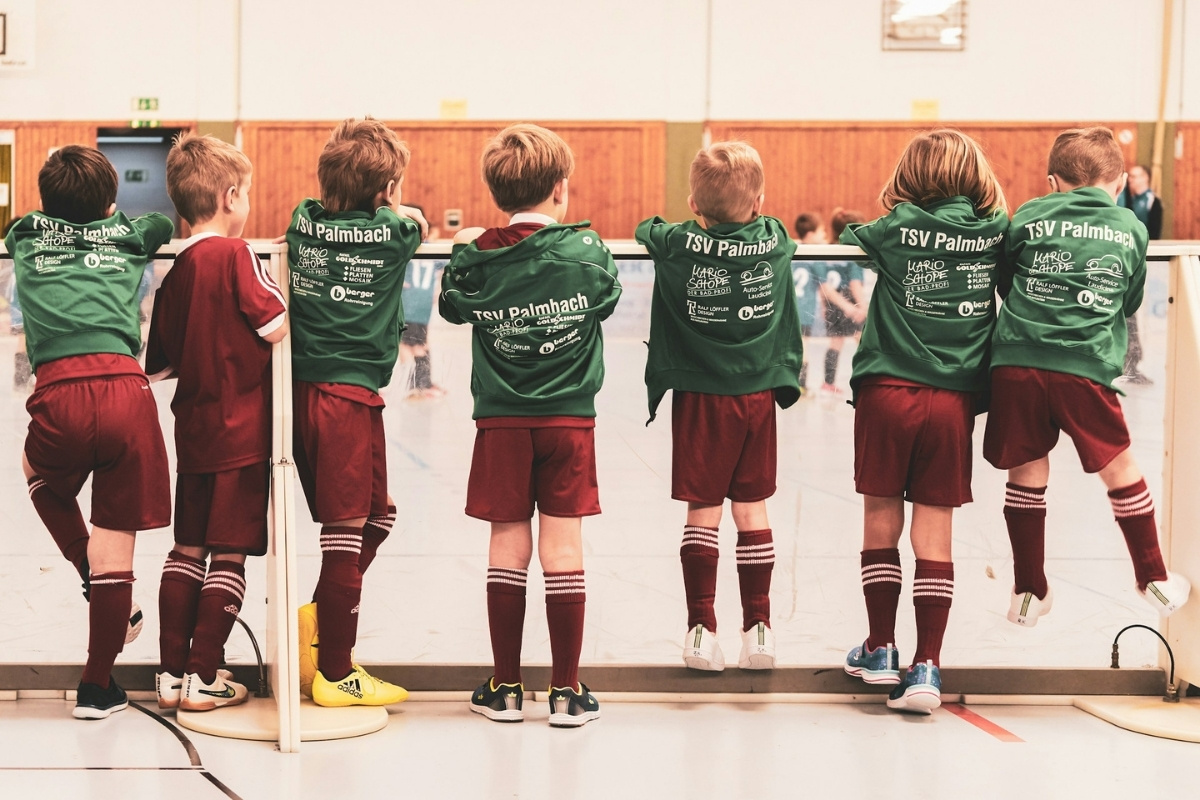
Push for at least one extracurricular. A sport, a club, band, robotics, student government, it genuinely doesn’t matter which one. What matters is that your kid is building something beyond just being a kid who goes to school and comes home. Kids who are involved in something outside the classroom tend to show up more consistently, perform better academically, and have an easier time building friendships. Leadership opportunities also tend to surface naturally in those spaces without anyone having to manufacture them.
And here’s a nudge worth taking…
If your kid has been playing the same sport or instrument since kindergarten, encourage them to try something completely different this year too.
Art, debate, a foreign language class. New rooms mean new people. That’s valuable at any age.
Widen the Friend Circle
Talk up variety when it comes to friendships. Encourage your kid to sit with someone new at lunch once in a while, or pair up with someone they don’t usually work with. Kids with diverse friend groups tend to be more adaptable and, honestly, more interesting people.
Also, retire “how was your day” as your primary question. You already know the answer. Try “who’d you sit with at lunch?” or “who’s in your group for the science project?”
Those questions get you real information and signal that you actually want to know their world, not just check a box.
If you can swing it, host something at your house. Pizza and a movie, shooting hoops in the driveway, whatever works. The families whose homes become the hangout spot are the parents who actually know what’s going on. That’s a good position to be in.
Stay in the Loop
Bookmark the parent portal and actually open it. Weekly is plenty. A quick glance at grades and missing assignments before they pile up into a crisis takes five minutes and saves a lot of stress. When you spot improvement or a good grade, say something. It builds momentum.
Learn your kid’s teachers’ names. First and last. Not just “the math teacher.” It matters when you need to reach out, and it matters to your kid that you know who their people are.
Show up to back to school night. Even if it’s awkward, even if you’d rather be doing literally anything else. Ten minutes of face time with a teacher early in the year makes every conversation easier down the road, especially if something comes up.
If your school district offers grade alerts, turn them on. An email when an assignment goes missing or a grade drops below a certain point is a lot easier to deal with than finding out at parent conferences.
Get the school calendar on your own calendar. Early release days, teacher in-service days, report card dates. Don’t rely on your partner or a crumpled flyer in your kid’s backpack.
The Bigger Picture
The extracurricular and friendship stuff is what makes school actually enjoyable for your kid. The portal-checking and teacher-names piece is what makes sure nothing blindsides you. Do both and you’re covering the full experience without hovering over every moment.
And enjoy this part. It goes fast. Oh, and don’t forget to pick them up from practice.
We’ve been fans of Laird Hamilton for a while now. So when this clip from You Choose Podcast crossed our IG feed last week, it hit us in the feels.
If you’re not familiar with Laird Hamilton…
He’s widely considered the greatest big wave surfer who has ever lived. He pioneered tow-in surfing. On August 17, 2000, he rode a wave at Teahupo’o in Tahiti that is still talked about as one of the most extraordinary athletic feats in the history of the sport.
He is married to volleyball legend Gabrielle Reece. He has three daughters. And he has spent the better part of four decades doing things on the ocean that most humans cannot comprehend.

Here’s what he said.
“Before I had children, I thought I knew something. After I had kids, I realized I don’t know anything. Being a father is like building a samurai sword. To make a samurai sword, you take steel, you heat it up until it’s red-hot, you beat it with a hammer, and then you put it in a bucket of ice. Then you take it back out, you heat it back up, you beat it with a hammer, and you stick it back in the bucket of ice.
And you just do that over and over, and eventually, it’s the strongest steel in the world. And so your children take you, they heat you up, they beat you with a hammer, and they stick you in a bucket of ice, and they do that over and over and over.
And then personally, as a man, that’s my evolution. Boy, teenage, young man, husband, father. That’s the part of the evolution. That’s your growth.
It’s called parenting, not childing. It’s for me, not them.
Because ultimately, it’s the tempering of your soul, the vulnerability, and all the things that they bring out in you. Love them, keep them safe, give them some values. They’re gonna be good. But the whole process of it, it’s for you.”
View this post on Instagram
Here’s the honest truth about this article.
You can read everything we’re about to say and still not fully understand any of it until you’re in it. That’s not a knock on you. It’s just how fatherhood works. It’s one of the only experiences in life that cannot be adequately described to someone who hasn’t lived it. The people who tried to prepare you weren’t holding anything back. The information just doesn’t land until the context arrives.
That said, here’s what we wish someone had put in front of us anyway.
Your Time Is No Longer Yours. And That’s Actually Okay.
This is the one that hits first and hits hardest.
Your mornings used to belong to you. Your weekends had a different texture. You could decide at 9pm to go somewhere and just go. That version of your life is pausing for a while.
What nobody tells you is that surrendering your time doesn’t feel like losing something. Not once you’re in it. It feels like reorienting around something that actually matters. The to-do list you were so attached to starts to look different when there’s a small person who needs you right now, not later, not after you finish the thing, right now.
A 2024 research review describing fatherhood as a developmental transition found that it moves life from the abstract to the concrete very fast. That’s exactly right.
Everything before kids has a quality of being theoretical. After, it gets real in a way nothing else does.
Give yourself permission to let the old schedule go.
A new one will form and it will fit your life better than you expect.
The Baby Season Is Hard. It Is Also a Season.
Sleep deprivation is not a joke and we’re not going to pretend it is.
The first weeks and months are genuinely exhausting in a way that’s hard to describe. You will be tired in a way you’ve never been tired. You will do things on autopilot and not remember doing them. You will have a moment, probably more than one, where you look at your partner and neither of you has words.
Here’s what keeps you going: it changes. Not all at once, not on a schedule, but it changes. The stretches between feedings get longer. The baby starts sleeping more. You start sleeping more. One morning you wake up and realize you got six consecutive hours and it feels like a miracle.
The baby season is hard and it is finite. Both of those things are true at the same time. You don’t have to enjoy every minute of it. You just have to get through it, and you will.

You Will Not Break the Baby
New dads are terrified of this and it’s worth naming directly.
The first time you hold your newborn, you will be acutely aware of how small and fragile they are. You will move slowly. You will be hypervigilant. You will probably hold your breath a little.
Babies are more durable than they look. They need to be held, touched, moved, carried, bounced. They’re not made of glass.
Your instinct to be gentle is correct but your fear of breaking them is overcorrected.
Hold the baby. Change the diaper even when you’re not sure you’re doing it right. Give the bath. Do the things. The confidence comes from doing them, not from watching and waiting until you feel ready. You won’t feel ready until after you’ve done it a few times and it went fine.
Your Partner Is Going Through Something Completely Different
You are both becoming parents. But you’re not having the same experience.
Your partner went through nine months of physical changes and then labor and delivery. Her hormones are doing things yours aren’t. Her body is recovering. The biological bond between a mother and newborn is immediate in a way that’s physiologically different from what you’re experiencing.
Your bond builds differently, through presence and doing, which is just as real and just as strong, it just takes a different path.
Be patient with her. Be patient with yourself. Be patient with the gap between where you both are emotionally right now.
Research on new fathers consistently shows that the transition to parenthood is harder on relationships than almost anything else couples face, not because the relationship is bad, but because the demands are relentless and the bandwidth to tend to each other is thin.
The move is to keep showing up for her even when you have nothing left. And to ask for what you need instead of hoping she figures it out. Communication that was adequate before becomes insufficient now. Step it up.
Join the Family


You Don’t Have to Have It All Figured Out
Fatherhood has no onboarding process. There’s no training week, no manual, no orientation. One day you’re a person and the next day you’re someone’s dad and you just have to figure it out as you go.
Everyone is doing this. Every dad you know who looks like he has it together is also figuring it out as he goes. The confidence you’ll see in more experienced dads isn’t because they had answers. It’s because they stayed in the game long enough to find them.
You don’t have to know what you’re doing. You just have to keep showing up and doing it anyway. The knowledge follows the doing, not the other way around.
Research from Berkeley’s Greater Good Science Center found that self-compassion in new fathers, the ability to be kind to yourself when you fall short, directly correlates with better outcomes for both mental health and bonding with the baby.
Give yourself the same grace you’d give a friend who was learning something completely new.
It Goes Faster Than They Say
Every parent who has been through it will tell you this. You will not believe them until it’s already true.
The phase that feels like it will never end ends. The newborn who can’t do anything becomes a baby who smiles, then a toddler who runs, then a kid who has opinions and friends and a whole personality you didn’t know was coming. Each version of them disappears when the next one arrives.
You can’t slow it down. But you can be present enough to actually be in it while it’s happening.
The parents who look back with the least regret are the ones who weren’t trying to get to the next phase. They were in this one.
Put the phone down more than you think you need to. Let the to-do list wait more than feels comfortable. The emails will be there. This specific moment with this specific version of your kid will not.
The Version of You on the Other Side Is Better
This is the thing we want to leave you with.
Fatherhood changes men. Not slowly and not gently. The research is consistent on this point.
Becoming a dad reshapes how you think, how you feel, what you value, and who you understand yourself to be. The role has a way of doing what years of therapy sometimes can’t.
You will be more patient than you thought possible. You will be more tired than you thought survivable. You will love someone more completely than you knew you were capable of. You will show up for things you would have bailed on before because there’s someone counting on you and that changes the math.
The version of you that comes out the other side of the first year of fatherhood is a better version. Not perfect. Not without struggle. But better.
You don’t know what you don’t know yet. That’s fine. You’re about to find out.
There is no objectively right answer here.
That’s the first thing worth saying. Because most conversations about this topic end up sounding like someone is defending a choice they already made. Either you live near family and you can’t imagine doing it any other way, or you live far away and you’ve built something that works and you’ll tell anyone who asks that it made you and your spouse stronger.
Both of those people are usually right. That’s what makes this one of the more genuinely complicated decisions in family life.
Here’s an honest look at both sides, with some real talk about what the research says and what dads who’ve been in both situations have learned.
The Case for Living Near Family
Built-in support is real and it matters.
The research on this isn’t subtle. Having extended family nearby, specifically grandparents, is associated with lower parental stress, higher child wellbeing, and more flexibility for both parents in terms of work and personal time. A grandparent who can take the kids for a Saturday afternoon isn’t just a convenience. That’s a mental health resource. That’s margin in a schedule that has no margin.
The babysitter angle is obvious so let’s get it out of the way fast. Free, trusted childcare is one of the most expensive things in modern family life.
The average cost of full-time daycare in the US runs between $10,000 and $20,000 a year depending on where you live.
Having family nearby doesn’t eliminate that cost entirely but it meaningfully reduces it for a lot of families. That’s real money.
Beyond the logistics, there’s something about kids growing up with grandparents, aunts, uncles, and cousins around that’s genuinely hard to replicate. Extended family gives kids a sense of where they come from. It gives them relationships with adults who love them unconditionally but aren’t their parents. Different perspectives, different personalities, a wider web of people who are invested in who they become.
There’s also the crisis variable. When something goes sideways, medically, emotionally, professionally, having people physically nearby who can show up matters in a way that no amount of FaceTime can touch. A parent who gets sick. A rough patch in the marriage. A kid who needs more than you have in the tank right now. Those situations are harder alone.
The Case Against (Or at Least the Real Complications)
Here’s where it gets more honest.
Living near family works best when the family is functional. When it isn’t, proximity amplifies every existing problem instead of solving it.
The friction is real. Differing opinions on how to raise the kids. Boundaries that get crossed. Grandparents who undermine rules you’re trying to establish. The aunt who always has a comment. The family dynamic that was fine when you were seeing everyone at holidays but becomes harder when you’re navigating it every week.
If you don’t get along well with your family, or if your family doesn’t fully respect your parenting choices, geographic distance is a legitimate form of protection.
Not just for you. For your kids. Kids absorb family tension even when adults think they’re hiding it. Fewer toxic interactions at close proximity is sometimes the better environment regardless of what proximity could theoretically offer.
There’s also the independence factor. Something happens when you move away from family and figure things out on your own. You build confidence as a parent in a way that’s harder to develop when there’s always someone to defer to nearby. You and your spouse learn each other’s strengths in ways you might not have to if help is always a 10-minute drive away.
The Thing About Your Marriage
This one deserves its own section because it’s the part that gets talked about least.
When you move away from family and it’s just the two of you, you become each other’s person in a more complete way. Not because you chose it exactly. Because there’s no other option. Your partner becomes your best friend, your support system, your co-pilot in a way that doesn’t always develop as fully when you have family infrastructure around.
It sounds like a constraint. It often turns into a strength.
That forced interdependence builds something. You learn to communicate better because you have to. You solve problems together because there’s no one else to hand them to. You build a family culture that’s genuinely yours rather than an extension of whoever’s family you’re geographically closest to.
That’s not to say couples near family don’t have strong marriages. They do.
But there’s something specific that gets built when you’re on your own that’s worth acknowledging.
The flip side is real too. The stress of doing it without a support network can strain a marriage. Burnout is more likely when there’s no backup. Two people carrying everything with no relief valve is genuinely hard. Some couples near family are closer because they have breathing room. Some couples far from family are closer because they’ve had to figure things out together. Both happen.
Join the Family
If You Don’t Live Near Family: What Actually Helps
For the dads who are doing it on their own, here’s what actually makes a difference.
- Build your chosen family. This is the single most important thing. Find other families you trust and invest in those relationships. The people you call when you need someone to grab your kid from school. The couple you process hard weeks with. The dad friends who actually show up. These relationships don’t form by accident. You have to pursue them intentionally the same way you would any other important thing in your life.
- Create your own rituals. Extended family gives kids a sense of tradition and continuity. You can build that yourself. It doesn’t have to be elaborate. Sunday dinners. Annual trips. A specific thing your family does that belongs to you. Kids anchor themselves in these rituals and they give a sense of identity that doesn’t require geography.
- Use technology for the good stuff, not just the logistics. Weekly video calls with grandparents that are actually consistent. Shared photo albums. Intentional connection rather than sporadic FaceTime when you happen to think of it. Distance doesn’t have to mean disconnection. It just requires more deliberate effort to maintain than living down the street does.
- Be honest about the hard seasons. There will be stretches where being far from family feels like a mistake. Usually when someone gets sick, or when you’re both depleted, or when you’re watching other families do things together that you can’t replicate. Name those seasons out loud with your partner. Don’t pretend they’re not hard. And build in enough margin in your schedule and budget to visit family more when those stretches hit.
- Protect your own wellbeing. Without built-in relief valves, you have to create them. Regular date nights. Time alone that isn’t negotiable. Exercise that actually happens. The dads who crash in this situation are usually the ones who tried to absorb everything without any outlet. You can’t pour from an empty tank and the tank needs to get refilled deliberately when no one is automatically offering to take the kids.
If You Do Live Near Family: What to Watch For
For the dads with family nearby, a few honest things to consider.
- Set boundaries early and hold them. The time to establish expectations about drop-in visits, parenting decisions, and who has authority over what is before friction develops, not after. A conversation that happens proactively is ten times easier than a conversation that happens after someone’s feelings are hurt or your rules have been undermined in front of your kid.
- Make sure you and your partner are still building your own thing. It’s easy when family is around to let them become the social infrastructure and never build anything independent. Make sure you have couple time that isn’t in the context of the extended family. Make sure your kids are developing their own identity as your family, not just as a branch of the larger tree.
- Don’t assume proximity equals involvement. Living an hour away from grandparents does not automatically mean they’ll be in the picture in a meaningful way. The relationship between your kids and extended family requires active cultivation regardless of geography. Proximity makes that easier but it doesn’t make it automatic.
The Honest Bottom Line
Neither situation is inherently better. Both are workable. Both have real costs and real benefits that depend enormously on who your family is, what your marriage is like, where you are in your career, and what kind of life you’re trying to build.
What we’d say to any dad facing this decision is to be honest about your specific situation rather than chasing a theoretical ideal. Living near a warm, supportive, boundaried family that respects your parenting is a genuine advantage. Living near a complicated, enmeshed, or critical family might be worse than going it alone.
And if you’re already far away, building something intentionally takes more effort but produces something that’s genuinely yours.
Either way, your kids need you present. The geography is the backdrop. Your engagement is the thing.
You walk into a room and forget why you’re there.
Your partner asks you something simple and you need a second to locate the answer. You read the same email three times and still couldn’t tell someone what it said. You’re in a conversation and you can feel yourself half somewhere else the entire time.
This isn’t getting older. This isn’t stress exactly. This is what happens when you have too many tabs open.
Not the Chrome ones. Although yes, also those.
The mental ones.
The email you haven’t responded to that you’re keeping alive by replaying it every few hours. The thing you said to your kid last Tuesday that you’re still low-key processing. The project that’s technically not due for two weeks but is sitting in the background of everything you do. The conversation with your partner you’ve been putting off. The dentist appointment you’ve been meaning to schedule since January. The weird thing your body did last week that you Googled once and then tried to un-Google.
All of it running simultaneously. All of it using some slice of your processing power. All of it making you slightly less present in whatever you’re actually doing.
That’s dad brain. And for dads it’s worse than average. Because you’re not just running your own stuff. You’re running theirs too. School schedules. Sports logistics. Who needs new shoes. Whether that thing your kid said last week means something or nothing. Whether you’re doing enough. Whether you’re present enough. Whether you’re working too much or not enough.
It adds up fast.
What Too Many Tabs Actually Does to You
The research on cognitive load is pretty clear. The human brain isn’t built for true multitasking. What we call multitasking is actually rapid context switching, and every switch costs something. Attention residue, the technical term for it, is what happens when part of your brain stays on the previous task even after you’ve moved on.
That residue is the lag. The blank moment mid-conversation. The room you walked into for a reason you can’t place. That’s not a memory problem or an aging problem. That’s a too-many-tabs problem. And it compounds.
The more tabs you have open, the harder it is to fully engage with any of them. The work gets shallower. The conversations get thinner. The attention your kids get is technically there but not fully there.
They can feel that by the way. Kids are remarkably good at detecting the difference between a dad who is present and a dad who is present but running seven things in the background.

How to Actually Close Some Tabs
The obvious answer is less stuff. But that’s not realistic for most dads. The tabs exist because the responsibilities exist. You can’t just close the tab on school pickup or the project deadline.
What you can do is get more intentional about which ones stay open and how you manage the ones that do.
- Write it down. The single most effective tab-closer there is. When something is living in your head as an open loop, it’s using memory resources to stay alive. The moment you write it down somewhere you trust, your brain lets go of it. Not completely, but enough. A running notes app, a paper list, a voice memo, whatever you’ll actually use. Get the loops out of your head and into a system.
- Do the two-minute thing. If something can be handled in two minutes, handle it now instead of letting it become a mental tab. The email that just needs a one-line reply. The dentist appointment you’ve been putting off. The text you keep meaning to send. Close the tab. Do the thing.
- Build a hard stop. Designate a time each day where work tabs close. Not just the laptop. The mental ones. 6pm, 7pm, whatever your life allows. After that time, if something surfaces, write it down and let it sit until tomorrow. Your brain needs to know there’s an endpoint, otherwise it keeps running in the background indefinitely.
- Name the ones that won’t close. Some tabs won’t close because they’re actually important and need real attention. The conversation you’ve been avoiding. The decision you keep deferring. The thing that’s quietly eating at you. These won’t go away by ignoring them. Name them, schedule time for them, and deal with them directly. An open loop you’ve addressed is infinitely lighter than one you’re just carrying.
- Use the transition. The drive home, the five minutes before you walk through the door, the gap between wherever work happens and wherever family happens. Use those as deliberate transitions. Not more podcast, not more content, not more input. A few minutes of nothing where your brain can actually process and offload before you show up to your family.
The Tab You Can’t Close
Here’s the one most dads don’t talk about.
There’s a background tab running pretty much constantly that never fully closes. It’s the one labeled “am I doing this right.” Am I present enough. Am I providing enough. Am I building something worth building. Is my kid okay. Is my marriage okay. Am I okay.
That one doesn’t close. And honestly, maybe it’s not supposed to.
But it gets lighter when everything else is managed better. When the logistics are out of your head and in a system. When the avoided conversations are actually had. When the work stops bleeding into the evening. The big existential tab becomes more manageable when the small administrative ones aren’t all running at the same time.
That’s the goal. Not a perfectly clear browser. Just enough clear space to actually show up when it counts.
Start with one tab. Close it today.
We’re all guilty of it.
The phone comes out at dinner. It’s the last thing we look at before bed and the first thing we reach for in the morning. It fills every gap, every quiet moment, every 30 seconds of waiting for anything.
Nobody sat down and decided this was the plan. It just kind of happened.
Here are 10 habits worth breaking. Some of these are about your kids. Some are about your marriage. Some are just about being a more present human. All of them are worth an honest look.
1. Checking It First Thing in the Morning
Before your feet hit the floor, before you’ve said good morning to anyone in your house, before you’ve had a single thought that belongs to you, you hand your brain to whoever filled your inbox overnight.
That email from a coworker. That news alert. That group text that blew up at midnight. All of it gets to set the tone for your day before you do.
The first 20 minutes of your morning are neurologically significant. Your brain is transitioning from sleep and is highly impressionable. What you feed it first tends to stick.
Feed it something that belongs to you. A few quiet minutes. Coffee. Your own thoughts. Your kids if they’re up. The phone can wait 20 minutes. It always could.
2. Having It Out at the Dinner Table
Dinner is one of the last holdouts of unscheduled family time. Nobody has anywhere to be. The food is a reason to sit together. Conversation happens naturally if you let it.
The phone on the table, even face down, is a presence.
Research from the University of Texas found that having a smartphone on the table, even without touching it, reduces available cognitive capacity. You are literally less present with your family because the phone exists in their field of view.
Put it in another room. Not your pocket. Another room. The difference is significant.
3. Scrolling While Your Kid Is Talking to You
They notice. Every single time.
You might think you’re multitasking. You might think you’re catching enough of what they’re saying to respond. You’re not. And more importantly, what they’re absorbing isn’t the content of your response. It’s the fact that the phone was more interesting than they were.
That message compounds over years. Put it down. Make eye contact. Let them finish the story even if it takes four times longer than it needs to.
4. Using It as a Pacifier for Your Kids
This one is uncomfortable because it’s so easy and it works so immediately.
Kid melting down at the restaurant? Phone. Long car ride getting loud? Phone. You need ten minutes to finish something? Phone.
We’re not saying never. We’re saying notice how often and what it’s replacing. Every time the phone goes in their hand, something else doesn’t happen. Boredom that would have led somewhere. A conversation. A game they’d have invented on their own. The discomfort that builds resilience.
The phone solves the immediate problem. It quietly creates a longer one.
5. Documenting Everything Instead of Experiencing It
You are at your kid’s first soccer game. They’re out there. They’re doing the thing. And you’ve got the phone up, trying to get the shot, watching the game through a 6-inch screen.
Put the phone down. Watch it with your eyes. Be there.
You will not forget this moment because you didn’t film it. You will forget it because you were behind the camera instead of in front of the moment. Take one photo. Then put it away and actually be at the thing you drove 25 minutes to be at.
Join the Family
6. Checking Work Email After 7pm
You are not that important. And even if you are, it can wait until morning.
The problem with checking work email at night isn’t just that it steals your time. It’s what it does to your nervous system. You can’t unsee what you just read. Now your brain is working on it. Now you’re half-present at bedtime. Now you wake up at 3am thinking about it.
Set a cutoff. 7pm, 8pm, whatever works for your life. And hold it. The world will not end. Your inbox will be there in the morning. Your kids’ bedtime is happening right now.
7. Sleeping With It on Your Nightstand
It’s the last thing you look at before you sleep and the first thing you reach for when you wake up. That’s an enormous amount of influence to hand to a device.
The blue light disrupts melatonin production. The content, news, social media, email, activates your stress response right before your brain is supposed to power down.
Sleep quality suffers. The next day suffers.
Charge it in the kitchen or the bathroom. Buy an $8 alarm clock if you need a backup. Your sleep is worth more than the convenience of having the phone two feet from your face.
8. Mindless Scrolling When You Could Be Present
You know the scroll. Not looking for anything specific. Not relaxing exactly. Just… scrolling. Instagram, X, Reddit, back to Instagram. Ten minutes becomes thirty. You look up and your kid was in the room the whole time.
The scroll isn’t rest. Real rest restores you. The scroll is consumption without return. It leaves you more drained than before you picked it up, not less.
If you need to decompress, decompress for real. Go outside for ten minutes. Sit with your coffee and don’t look at anything. Read something. The scroll is the laziest version of rest and the one with the highest cost.
9. Texting During Conversations
Not the half-attention glance. The full text, mid-conversation, while someone in your house is talking to you.
Your partner is telling you about their day. Your kid is explaining something they care about. And you’re composing a message to someone who isn’t there.
The person in front of you gets the message loud and clear: whoever is in that phone is more important than you right now. That message lands even when you don’t mean to send it.
Finish the conversation. Then text.
10. Using It to Avoid Being Uncomfortable
Waiting in line. Sitting in silence. Riding an elevator. Sitting with your own thoughts for two uninterrupted minutes.
All of these used to just be life. Small, unremarkable pockets of time where your brain wandered, rested, or worked through something on its own.
Now the phone fills every gap. And your brain never gets those pockets. The boredom, the stillness, the silence that used to be where good ideas and honest self-reflection lived, it’s gone.
Let yourself be bored sometimes. Let there be silence. You might be surprised what shows up when the phone isn’t there to fill the space. Your kids are watching how you handle your phone. They’re building their own relationship with it based on what they see from you.
That’s the reason all ten of these matter. Not productivity. Not sleep optimization. Not dopamine management.
Your kids are watching.
The onesie that fit last week doesn’t fit today.
You didn’t notice it happening. You were just living. Doing the feeds, the burp, the 3am shuffle to the crib and back. And then one morning you go to snap it and something’s off and you realize: he grew out of it. Sometime in the last seven days, while you were just trying to get through the week, something changed.
That’s kind of how all of it goes.
The Trap Nobody Warns You About
When you have a newborn, it’s almost impossible to imagine them walking.
They can’t hold their own head up. They need you for everything. The version of them that runs through the house and has opinions about dinner feels like science fiction.
So you don’t plan for it. You just survive the stage you’re in.
And then suddenly they’re crawling and you haven’t baby-proofed anything. Then they’re walking and you’re scrambling. Then they’re starting school and you’re realizing you never thought about what that transition was going to feel like.
Then they’re a teenager and you’re wondering how you got here and whether you built the kind of relationship that’s going to survive the next few years.
None of it sneaks up on you slowly. It all arrives faster than you expected, every single time, even after you’ve been told a hundred times that it will.
This Isn’t About Rushing It
To be clear: we’re not saying sprint through the stages. We’re not saying wish it away or skip the hard parts to get to the good parts.
The opposite.
The point is that the dads who think a little ahead, who have some loose sense of what’s coming and what they want to be building toward, tend to be more present in the current stage. Not less. Because they’re not just reacting. They’re playing a longer game.
There’s a difference between rushing and being intentional. Rushing is wishing this stage was over. Being intentional is enjoying this stage while quietly keeping one eye on who your kid is becoming and what they’re going to need from you next.
What Thinking Ahead Actually Looks Like
It doesn’t have to be complicated. It’s not a spreadsheet.
It’s more like a loose awareness. An occasional question you ask yourself: what’s coming next, and am I ready for it?
When they’re a baby, what’s coming next is mobility. At some point this child who is currently a potato is going to move. Then walk. Then run. Then open every cabinet in the kitchen while you’re in the shower. The dads who think about this a little bit ahead of time aren’t caught completely flat-footed when it happens.
When they’re a toddler, what’s coming next is language. Real, full sentences. Opinions. Questions you don’t know how to answer. The dad who’s been having one-sided conversations with his kid for two years, narrating everything and asking questions even without answers, has laid some groundwork for this.
The dad who’s been handing over the iPad every time things got quiet hasn’t.
When they’re in elementary school, what’s coming next is the formation of their identity. They’re going to start caring what their peers think. They’re going to start forming their own sense of who they are.
The dad who’s been paying attention to what lights his kid up, what they’re curious about, what kind of person they’re becoming, has something to work with. He can meet them in that.
When they’re a preteen, what’s coming next is the wall. The pulling away. The “I’m fine” when they’re clearly not fine. The dads who built the relationship in the earlier years, who logged the hours and the conversations and the side-by-side time, have something to draw on when things get harder.
The dads who figured they’d connect with their kid when they got older sometimes find that the door is a little more closed than they expected.
You don’t have to have all the answers for every stage. You just have to know it’s coming.
The Specific Thing Most Dads Miss
The physical stuff. Not emotional readiness. Physical readiness.
Your kid is going to get faster than you. Sooner than you think. The toddler you can scoop up with one arm is going to be a ten-year-old who can actually run. Then a teenager who can beat you in a sprint.
The dad who kept himself in some kind of shape, who built the habit of staying capable, can still keep up when it counts. Soccer sidelines, driveway races, hiking trails that get harder as the kids get more ambitious. The dad who let things go completely is sitting it out by the time his kid is actually old enough to really do things with.
This isn’t about vanity. It’s about availability. Being physically capable enough to show up for the stages ahead.
Join the Family
The Practical Version
Once a year, sit down and think about what stage your kid is entering in the next twelve months.
What’s going to change? What are they going to need more of from you? What conversations are coming that you haven’t had yet? What habits are you building right now that are going to carry into the next stage?
You don’t need to have it all figured out. You just need to not be completely caught off guard.
The parents who look back on their kids’ childhoods and say it went too fast are usually the ones who spent it all in reactive mode. Surviving each stage. Getting through the week. Looking up one day to find their kid is leaving for college and wondering how it happened.
It happened week by week. Day by day. The way it always does.
The Stage You’re In Right Now Is Worth Paying Attention To
That’s the other side of this.
If you’re always thinking about the next stage, you miss the one you’re standing in. The one that won’t come back.
The baby weight in your arms right now. The tiny hand that reaches for yours right now. The ridiculous three-year-old mispronunciation of a word that’s somehow the funniest thing you’ve ever heard right now.
Don’t rush through it to get to the good parts. These are the good parts.
Just don’t be so in it that you never lift your head and think about where it’s all going. Because it’s going somewhere. Faster than you think.
Stay present. Stay aware. Those two things aren’t opposites.
They’re the whole job.
You don’t need to be a contractor. You don’t need a garage full of specialty tools or a YouTube channel about home improvement.
You just need to know how to handle the stuff that breaks. Because it will break. The toilet, the bike, the doorknob, the relationship with your kid when you blow it. All of it.
Here are 15 things every dad should know how to fix. Some of these are literal. Some aren’t. All of them matter.
1. A Running Toilet
The most common household repair there is, and the one most dads still call a plumber for.
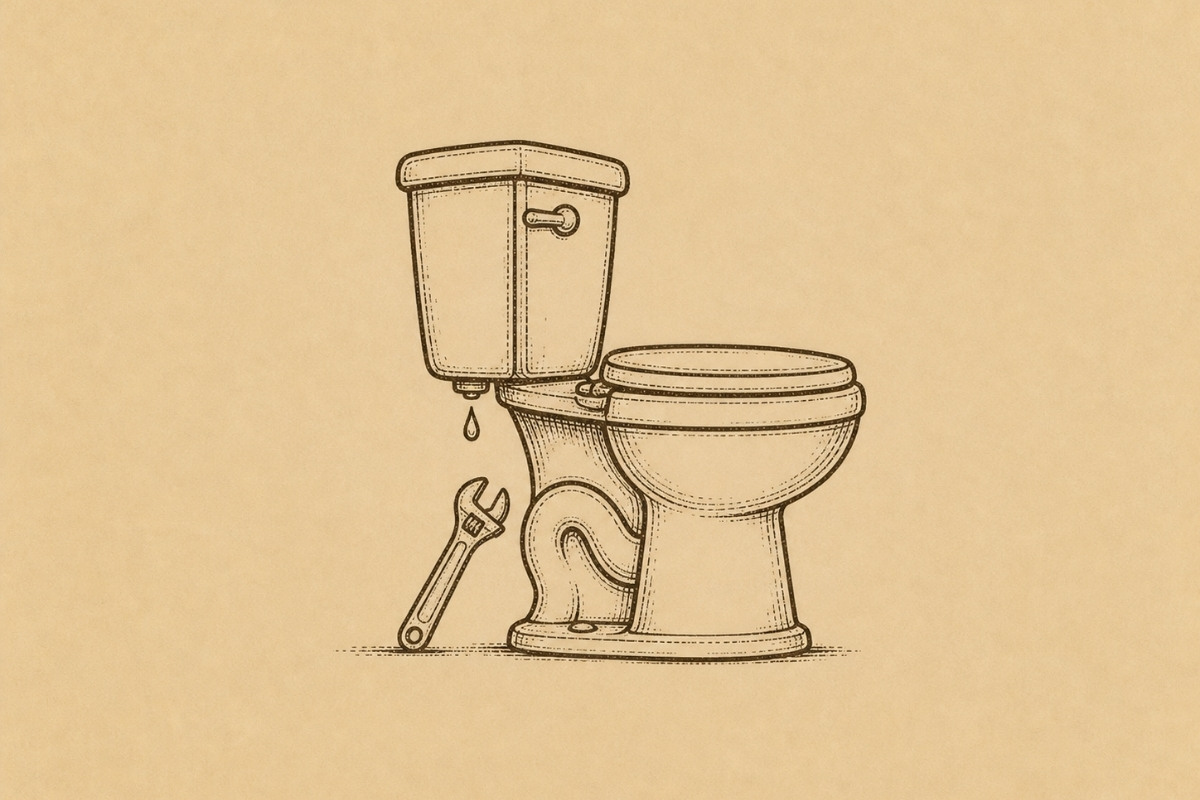
Nine times out of ten it’s the flapper. The rubber piece at the bottom of the tank that seals the water in. It degrades over time, stops sealing properly, and water keeps trickling through. A replacement flapper costs about $8 at any hardware store and takes ten minutes to swap. Turn off the water supply, drain the tank, unhook the old flapper, hook in the new one. Done.
If it’s not the flapper, check the fill valve next. Either way, this is a $10 fix that plumbers charge $150 for.
2. A Flat Bike Tire
Your kid’s bike will get a flat. Probably on a Saturday. Probably right when you were about to head out.
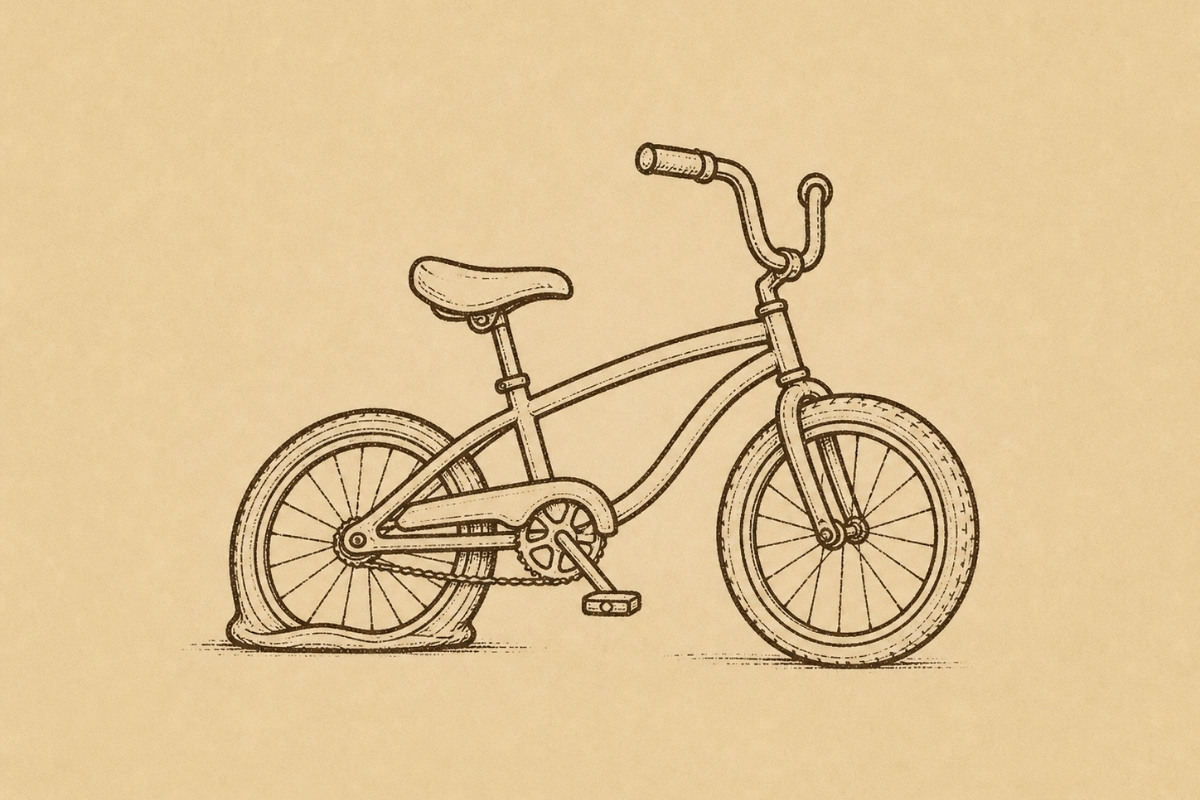
Pop the wheel off, use tire levers to get the tire bead off the rim, pull out the tube, find the puncture (a bucket of water helps, look for bubbles), patch it or swap in a new tube, reseat the tire, pump it up. Twenty minutes once you’ve done it a couple times.
Keep a basic bike repair kit and a pump in the garage. It will get used more than you think.
3. A Clogged Drain
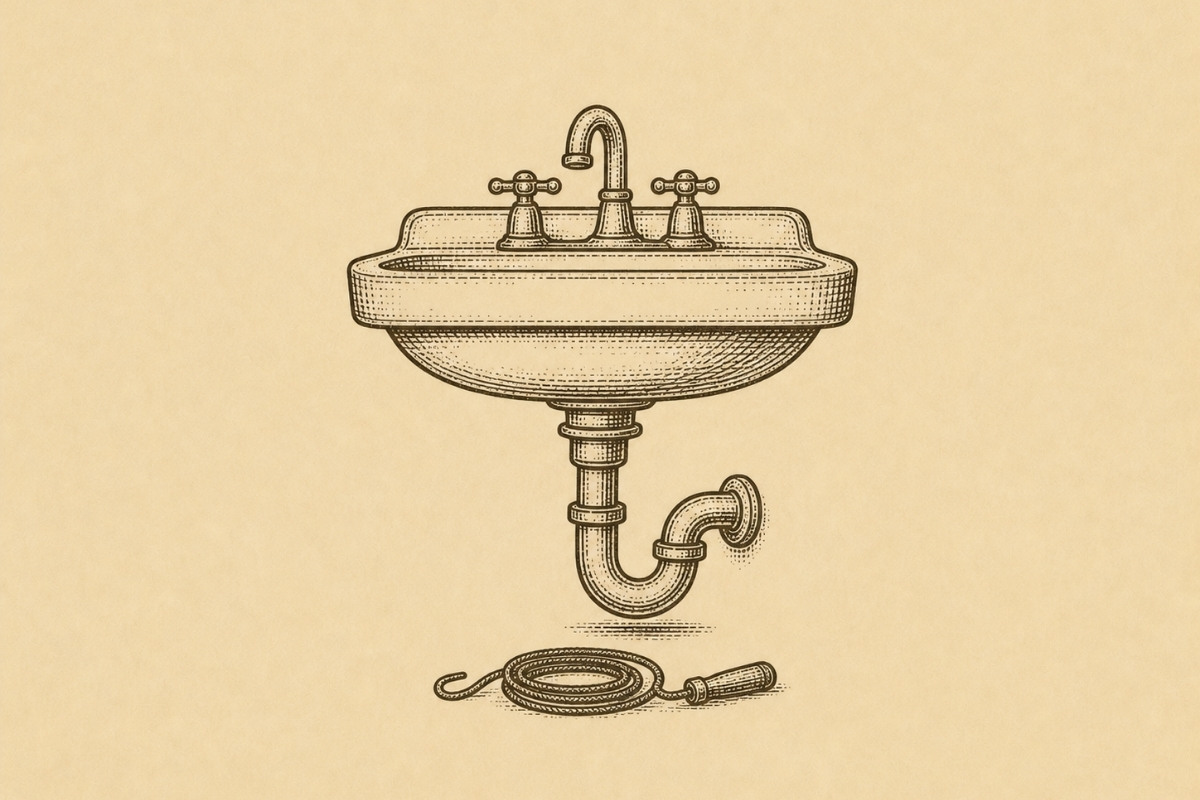
Before you reach for the chemical drain cleaner, which is bad for your pipes and honestly doesn’t work that well, try a drain snake. Cheap, reusable, and gets through 90% of clogs in a few minutes.
For sink clogs specifically, the P-trap under the sink can be unscrewed by hand or with pliers. Most clogs are sitting right there. A bucket underneath, unscrew the trap, clear it out, screw it back on. Five minutes, no chemicals.
4. A Wobbly Chair or Table
Almost always one of two problems. A loose joint where two pieces of wood meet, or legs that are uneven.
For the loose joint: take it apart if you can, add wood glue, clamp it, let it dry overnight. For uneven legs on a hard floor: a set of adjustable felt pads or a small wood shim under the short leg solves it in two minutes.
This is the kind of fix that makes you look like a genius to your kids for basically no effort.
5. A Door That Won’t Stop Squeaking
WD-40 on the hinges. That’s it. That’s the whole fix. Takes 30 seconds, lasts for months.
If the squeak comes back fast, the hinge pin might need to come out entirely, get a thin coat of grease, and go back in. Still a five-minute job.
6. A Punctured Pool Float or Inflatable
Every summer, every family. A patch kit costs about $5 and works on pool floats, inflatable mattresses, kiddie pools, and most rafts. Find the hole (soapy water and look for bubbles, same trick as the bike tube), clean the area, apply the patch, let it cure per the instructions.
Buy the kit before you need it. You will need it.
Join the Family
7. A Loose Doorknob or Handle
Nearly always a screw that’s backed out over time from people gripping and turning it thousands of times. Most doorknobs have a small set screw on the side or underneath that you tighten with an Allen wrench or screwdriver. Two minutes, problem solved.
8. A Computer or Phone That’s Running Slow
You don’t need to be tech support for your whole extended family, but the basics matter. Restart it. Clear out apps and programs you don’t use. Check how much storage is full, anything above 90% will slow a device down significantly. Clear the browser cache. Update the operating system.
These four things solve the majority of “my computer is so slow” complaints, and now you’re the guy who knows how to fix it instead of the guy who has to pay someone $80 to do the same four things.
9. A Bike Chain That’s Fallen Off
This one terrifies new parents and takes 90 seconds once you know how. Shift to the smallest gear if you can. Pull the chain back onto the smallest chainring at the front, rotate the pedal backward slowly while guiding the chain on with your other hand. Keep a rag in your bag for this one. It’s always greasy.
10. A Hole in Drywall
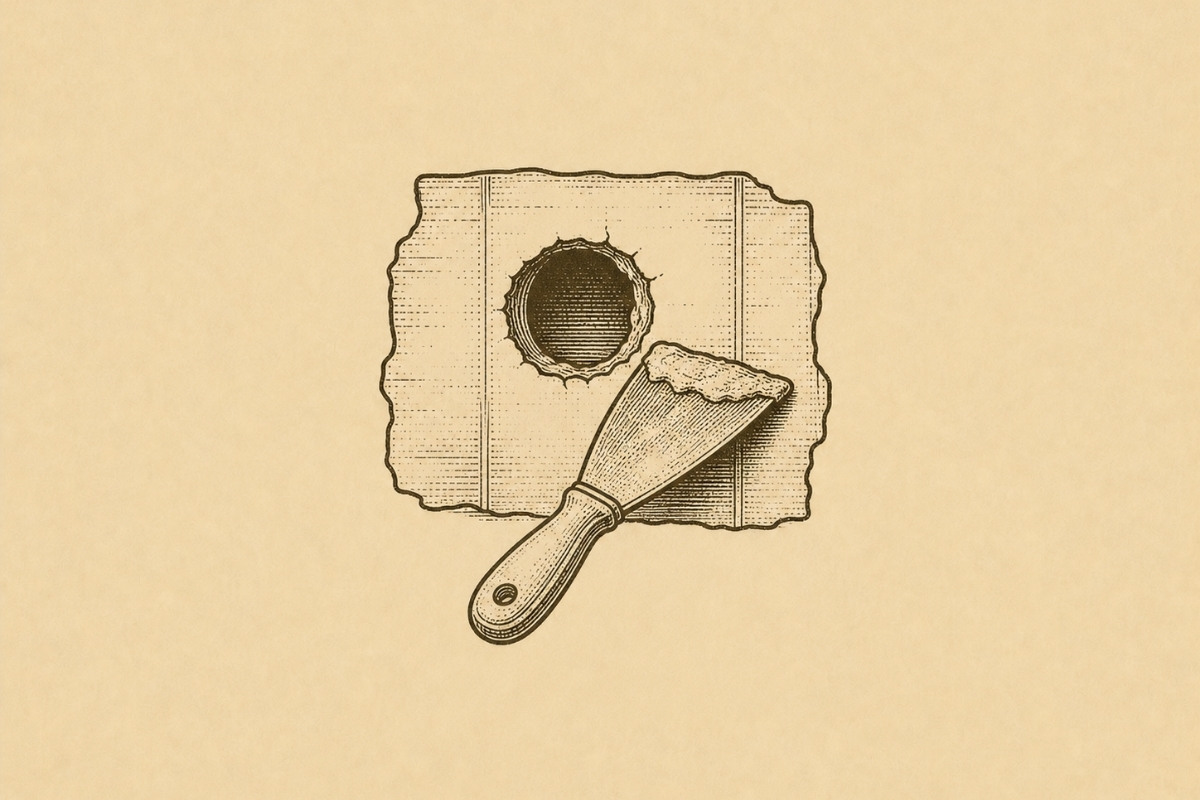
Small hole from a doorknob or a kid’s toy? Spackle, let dry, sand smooth, paint over. Total cost under $10, total time about 20 minutes plus drying.
Bigger hole? A drywall patch kit with a self-adhesive mesh patch handles most household-sized holes without needing to cut and replace a whole section. Worth having one in the garage. You’ll use it.
11. A Sticky Zipper
WD-40 or a graphite pencil rubbed along the zipper teeth, then work it back and forth a few times. Works on jackets, backpacks, tents, anything. Most people throw away perfectly good gear over a sticky zipper that takes 60 seconds to fix.
12. A Wifi Router That’s Acting Up
Unplug it. Wait 30 seconds. Plug it back in. This solves the overwhelming majority of household wifi problems and yet most people call their internet provider before trying it.
If that doesn’t work, check for a firmware update in the router’s app or admin panel. If you’re still struggling, the router placement matters more than people think, central and elevated beats stuck in a closet behind the TV.
13. A Broken Promise to Your Kid
This one isn’t a tool fix. It’s a relationship fix, and it matters more than any of the items above.
You will break a promise at some point. You’ll forget the thing you said you’d do, or something will come up and you’ll have to cancel. The fix isn’t pretending it didn’t happen. The fix is naming it directly: “I told you I’d be there and I wasn’t. That wasn’t right. I’m sorry.”
No excuses tacked on the end. No justification. Just the acknowledgment and the apology. Kids don’t need perfect dads. They need dads who own it when they get it wrong. That repair is one of the most important things you’ll ever fix.
14. A Tense Moment With Your Partner
The instinct is to let it sit, to wait for it to blow over, to avoid the conversation because it’s uncomfortable. That’s how small tension turns into real distance.
The fix is almost always simpler than it feels in the moment. A direct conversation. An honest “I think we need to talk about this” instead of letting it fester. A genuine apology when you’re wrong, without immediately defending yourself.
Your kids are watching how you handle this one closely, even when they don’t say anything about it.
15. A Kid Who’s Having a Hard Day
You can’t fix every bad day. You’re not supposed to. But you can fix the part where they feel alone in it.
Sit down. Get on their level. Ask what happened. Actually listen instead of jumping straight to solving it. Sometimes the fix isn’t solving the problem at all, it’s just making sure they know you’re in their corner while they work through it themselves.
That’s a fix too. Maybe the most important one on this list.
The Common Thread
Most of these take less than 20 minutes. Most of them cost less than $20. And almost all of them are things people pay someone else to do because nobody ever showed them how.
You don’t need to master all 15 overnight. Pick one this weekend. Learn it. Do it once and you’ll never forget it.
That’s how every dad who seems like he can fix anything actually got there. One small thing at a time.
We’ve built an impressive system for raising kids who are good at following instructions.
School teaches them to sit still, raise their hand, wait their turn, and get the right answer. Social media teaches them to perform for approval. Group chats teach them to read the room before they say anything. The entire architecture of modern childhood is quietly, constantly asking kids: what does everyone else think?
And we wonder why so many kids struggle with confidence.
Here’s what we believe: confidence isn’t a personality trait your kid either has or doesn’t have. It’s a skill. It’s built. And it’s built mostly at home, mostly by you, mostly through things you do and say in ordinary moments you don’t even realize are significant.
This is the guide we wish someone had handed us.
What Confidence Actually Is
Let’s get clear on the definition first because most people get this wrong.
Confidence is not the absence of doubt. It’s not the kid who never gets nervous, never questions themselves, never feels the sting of what other people think. That kid doesn’t exist.
Real confidence is the ability to act despite doubt. To move forward when you’re not sure.
To trust your own judgment enough to make a call and live with it. To feel the discomfort of someone’s disapproval and not let it determine your next move.
Psychology Today puts it simply: confidence is the ability to trust yourself, override anxiety, and step out with a strong stride in life into whatever you’re pursuing, whether that’s speaking up against a bully or giving a book report.
That’s the goal. Not fearlessness. Not arrogance. Self-trust.
And the research on how to build it is surprisingly consistent.
The Two Kinds of Kids (And Which One You’re Raising)
Psychologist Dr. Jim Taylor draws a line between two types of children.
Contingent children are dependent on others for how they feel about themselves. Independent children are intrinsically motivated to achieve. What you want to raise is a self-reliant child, one who is confident in their own abilities and able to do things for themselves.
The contingent kid is constantly scanning for approval. They check the room before they express an opinion. They modify themselves based on who’s watching. They’re exhausting to be because the emotional regulation is always outsourced.
The self-reliant kid has an internal compass. They know what they think. They can tolerate disagreement. They don’t need the room to agree with them to feel okay.
The difference between these two kids is not genetics. It’s not luck. It’s largely what happened at home between ages three and twelve.
Here’s how to build the second one.
Let Them Struggle. On Purpose.
This is the counterintuitive one that most parents get backwards.
Research shows that parents who are over-involved in an activity a child is doing, who take over, raise kids who don’t develop a sense of pride, adventure, and willingness to try new things.
Read that twice.
Every time you jump in to fix it, finish it, smooth it over, you are sending a signal. The signal is: I don’t think you can handle this. That signal compounds over years into a kid who genuinely doesn’t believe they can handle things.
Let them figure out the Lego before you help. Let them navigate the conflict with the friend before you call the other parent. Let them sit with the hard homework problem for fifteen minutes before you explain it. Let them feel the discomfort of not knowing and then watch them find their way through it.
The pride that comes from solving something difficult is one of the primary building blocks of confidence. You cannot give that pride to them. They have to earn it themselves. Your job is to create the conditions and then get out of the way.

Praise the Right Thing
Most parents praise results. Smart parents praise process.
Stanford psychologist Carol Dweck’s research has made this distinction famous for good reason. Kids who are praised for being smart become afraid of failing because failure threatens their identity. Kids who are praised for effort and process become willing to take on harder challenges because the challenge itself is the point.
The difference in practice is small but significant.
“You’re so smart” becomes “I love how hard you worked on that.”
“You’re such a good athlete” becomes “I noticed how you kept going even when it got hard.”
“That was easy for you” becomes “You figured that out. How did you approach it?”
Doubt is normal. It doesn’t mean your kid isn’t confident. Get specific and narrow down the area of doubt rather than seeing doubt as a sign of lack of confidence.
Think growth mindset: encourage children to ask for help and think about what they need to improve.
The goal is a kid who sees challenge as information, not as evidence of inadequacy. That shift starts with how you talk to them after every game, every test, every project, every attempt.
Answer the Why Questions
Kids start asking why around age three. Most parents get worn down by it fast.
Laurence Steinberg, a psychologist at Temple University specializing in adolescent development, says kids start to develop critical thinking skills right around when they begin asking why questions. It’s important that parents take the time, when they can, to answer those questions, because you don’t want a child to think it’s bad or wrong to ask.
The why questions are not annoying. They are your kid building the machinery they’ll use to think for themselves for the rest of their life. Every time you engage with a why question instead of shutting it down, you’re telling them their curiosity has value. Their thinking has value. Their judgment is worth developing.
Every time you say “because I said so” and close the conversation, you’re training them to stop asking and start complying. Compliant kids are easy to raise. They are also easy to bully, pressure, and manipulate because they’ve learned to defer to external authority rather than their own internal voice.
Answer the why. Even when you’re tired. Especially when you’re tired.
Teach Them to Disagree With You
This one takes some courage from the dad’s side.
When children challenge our authority, they begin to develop critical thinking skills. By questioning rules and seeking explanations, they learn to analyze situations, consider different perspectives, and evaluate the validity of rules, expectations, and instructions. This process cultivates independent thinking and helps children form personal opinions, values, and beliefs.
The kid who can look you in the eye and respectfully disagree with you is practicing one of the most important skills of their entire life. They are learning to hold a position under social pressure from the most powerful person in their world.
If they can do that with you, they can do it with the friend group telling them to do something stupid. They can do it with the internet. They can do it with the culture telling them who they’re supposed to be.
Create space for your kid to push back on your thinking. Ask them what they think about a decision you made. Tell them you might be wrong. Show them that changing your mind when you get new information is strength, not weakness. The family dinner table is a training ground for their entire future relationship with authority, pressure, and their own judgment.
Use it intentionally.
Join the Family
Talk About Bullies Differently
Most advice about bullies focuses on the bully. What to tell a teacher, what to do in the moment, how to stay safe.
That stuff matters. But the deeper work is building the internal architecture that doesn’t collapse when someone is cruel.
Here’s what that looks like in practice.
Separate their worth from the opinion. When your kid comes home and tells you someone called them something awful, your first instinct is to fix it. What they actually need is help separating the event from their identity. What that person said is data about that person. It is not data about your kid. That distinction has to be taught explicitly and repeated often because the culture is constantly telling them the opposite.
Normalize being disliked. This sounds harsh. It’s actually one of the most liberating things a parent can teach a child. Not everyone is going to like you. Not everyone is going to think you’re great. Some people are going to be actively unkind. That’s true now and it will be true at forty. The question is whether that reality has the power to determine how you feel about yourself.
One parent captured it perfectly when she told her daughter: you can’t please everyone. And not everyone is going to like you. But that’s okay. Her choice had value. Instead of worrying about what everyone else thought, her daughter needed to think about her own desires too.
Don’t rush to fix it. When your kid is upset about what someone did or said, the temptation is to solve it immediately. Call the school. Talk to the other parent. Make it stop. Sometimes those things are necessary. But before you do any of that, sit with them in it. Let them feel it fully. Ask them what they’re feeling and why. Ask them what they want to do about it. The processing is where the resilience lives.
Model how you handle your own critics. Your kid is watching how you respond when someone is unkind to you. When someone cuts you off and you lose it, when you spend dinner talking about what a coworker said about you, when you ruminate visibly about what someone thinks, you’re giving them a template. Give them a better one. Show them what it looks like to absorb a criticism, decide whether there’s anything useful in it, and move on without letting it take over the room.
Let Them Own Their Interests. All of Them.
Younger children especially are trying to assert their independence in ways that may come across as defiant or disorderly to some parents. But experts caution not to overreact or jump in to correct too quickly.
The kid who is passionate about something weird and specific and completely their own is building something important. They are learning what it feels like to care deeply about something regardless of whether anyone else cares. That internal relationship with their own interests is the seed of a self that doesn’t require external validation to exist.
Let them go deep on the thing nobody else at school is into. Don’t redirect them toward something more conventional. Don’t make them feel like their interests need to be justified or explained. The kid who knows their own mind about what they love is significantly harder to push around than the kid who is still trying to figure out what the group thinks is cool.

The Most Important Thing You Can Model
All of this circles back to one thing.
Your kid is building their model of how a person exists in the world primarily by watching you. How you handle uncertainty. How you respond to criticism. Whether you say what you actually think or perform what you think people want to hear. Whether you make decisions from your own values or from what the room will think.
Children learn by observing. Show them how to navigate social situations with empathy, clear communication, and respect. When they see you handle uncertainty with composure, they’re more likely to do the same.
Be the version of yourself you want them to become. Not the aspirational version. The real, daily, ordinary version. The one that shows up at breakfast and makes calls under pressure and handles it when someone is unkind and gets back up when something goes wrong.
That’s the curriculum. You’re the teacher.
Further Reading
If this resonates and you want to go deeper, a few resources worth your time:
- The Confidence Code for Girls by Katty Kay and Claire Shipman. Specifically for dads of daughters but the science applies broadly.
- Mindset by Carol Dweck. The foundational research on growth mindset and why how you praise your kids matters more than you think.
- How to Raise an Adult by Julie Lythcott-Haims. A former Stanford dean’s case against over-parenting and for raising kids who can actually function on their own.
- The Coddling of the American Mind by Greg Lukianoff and Jonathan Haidt. The cultural argument for why we need to raise more resilient, self-directed kids and what gets in the way.
Some stories don’t need much explaining. You meet the people, spend a little time with them, and pretty quickly realize there’s something there. Something worth slowing down for. Something worth sharing.
That’s how we felt about Mike Medved.
Mike is a dad of three in Pittsburgh. He’s a middle school history teacher, a musician, a former professional basketball player in Europe, a husband, and the kind of guy who seems to carry a lot without making a big show of it.
He’s also Simon’s dad.
Simon, Mike’s oldest son, has severe cerebral palsy. And earlier this year, Mike pushed Simon through the Pittsburgh Marathon.
Twenty-six point two miles. But this story was never really about the marathon.
It was about a dad making sure his son was part of the adventure. It was about the daily choice to show up. To keep going. To find joy inside the hard stuff. To bring your people with you, even when the road is heavier than you imagined.
That’s why we made this film.
Our Go West series exists to tell stories of dads across America who are choosing the harder, more meaningful road. Dads who are building, sacrificing, creating, leading, and loving their families in ways that deserve to be seen.
Mike’s story is one of those stories.
Over several months, we followed Mike and his family through training runs, music, fatherhood, the marathon, and the everyday rhythm of life with three kids. What we found was not a perfect story. It was better than that.
It was honest. It was joyful. It was heavy at times.
And it was a reminder that strength does not always look like powering through on your own. Sometimes strength looks like bringing your son with you. Into the crowd. Into the city. Into the noise. Into the adventure.
Thanks for watching. And thanks to Mike, Hillary, Simon, Ruth, and Aaron for letting us into their story.
Join the Family