
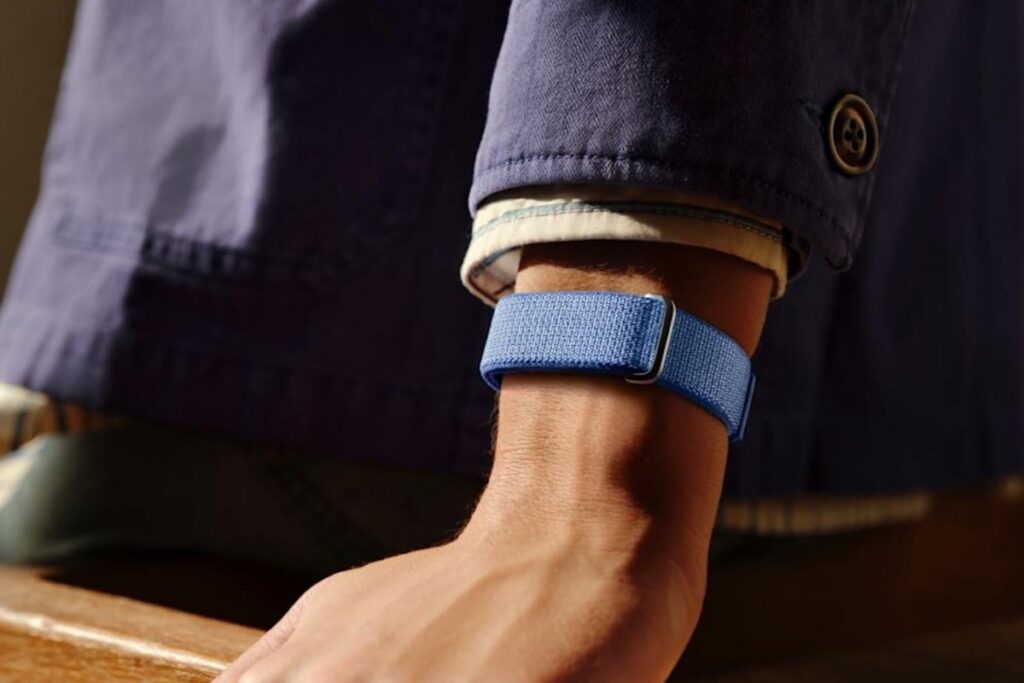
The wearable market just got a lot more interesting.
Google dropped the Fitbit Air in May 2026 at $99 and aimed it directly at WHOOP’s territory. Screenless. App-dependent. Built around recovery, sleep, and keeping tabs on how your body is actually doing.
For dads who have been watching the wearable space and wondering whether it’s worth the investment, now is a good time to pay attention. Because the conversation has changed.
Here’s the honest breakdown.
What These Things Actually Do?
Both the Fitbit Air and WHOOP are screenless fitness bands. No notifications. No steps on your wrist. No distractions.
What they do instead is track the stuff that actually tells you how you’re performing and recovering. Heart rate variability. Sleep staging. Blood oxygen. Skin temperature. Resting heart rate. Recovery scores.
The goal is simple. Show up every day knowing whether your body is ready to push or needs to rest. Make smarter decisions about training, sleep, and stress based on data instead of guessing.
For dads trying to stay healthy and actually function at a high level, that data is genuinely useful.
The question is which device delivers it better and at what cost.
The Devices
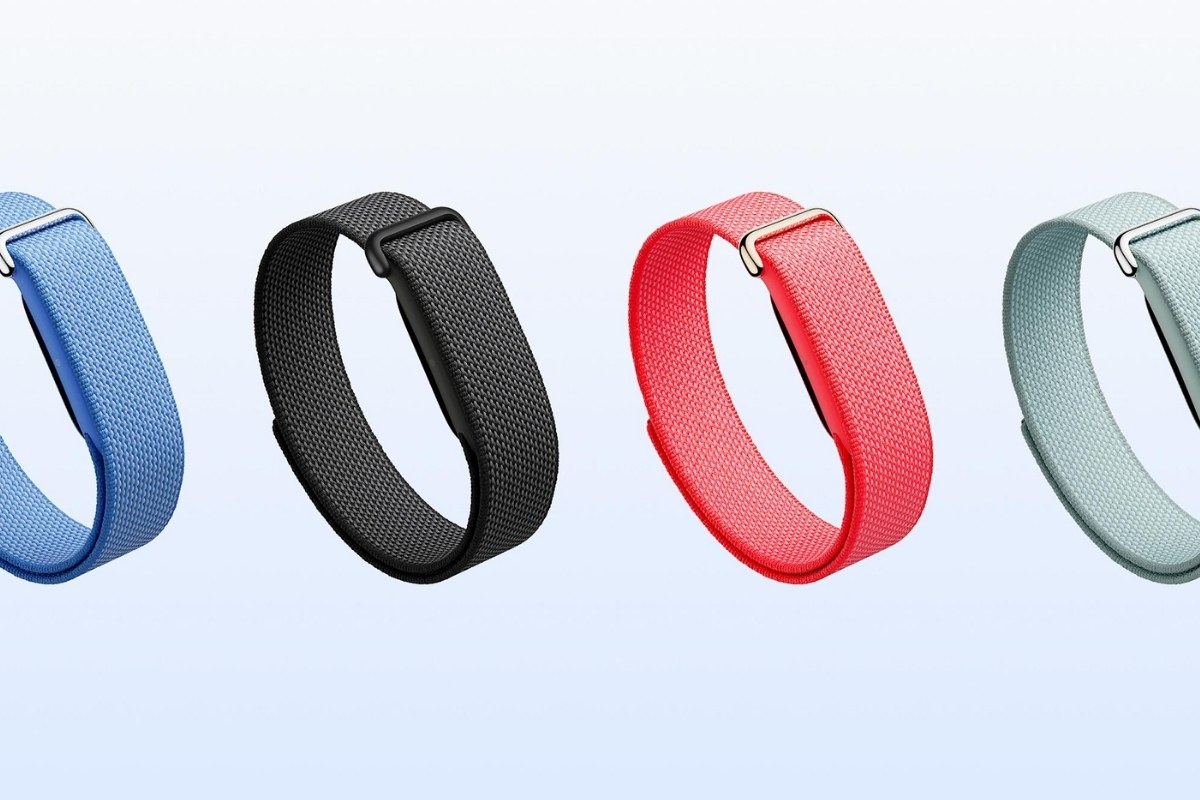
Fitbit Air is Google’s first screenless band. It launched May 2026 at $99. Small pebble-shaped module, 12 grams with the band, 1.4 inches. Google describes it as 25% smaller than the Fitbit Luxe. Ships May 26, pre-orders open now.
WHOOP 5.0 is the current generation of the device that has been in the screenless recovery tracking space for years. Released May 2025. Weighs 27 grams, 7% smaller than the WHOOP 4.0, redesigned sensor suite, and 14-plus days of battery life. There’s also a premium version called the WHOOP MG that adds medical-grade ECG and blood pressure tracking.
On paper, they’re going after the same thing. In practice, they’re built for different people.
The Specs That Actually Matter
Here’s what separates them on hardware:
Battery life:
WHOOP wins. 14-plus days versus 7 days for the Fitbit Air. Real-world WHOOP users report 16 to 18 days per charge. The Fitbit Air has a quick-charge feature that gives you a full day in 5 minutes, which helps. But WHOOP charges on your wrist via a battery pack, meaning it never actually comes off. For uninterrupted 24/7 data collection, that’s a meaningful edge.
Sensor depth:
WHOOP captures biometric data 26 times per second using 5 LEDs and 4 photodiodes. The Fitbit Air saves heart rate at 2-second intervals. Both track HRV, skin temperature, and SpO2. For most dads, the difference won’t be noticeable day-to-day. For serious athletes, it matters.
Weight:
Fitbit Air is 12 grams. WHOOP is 27 grams. The Fitbit Air is one of the lightest fitness trackers on the market. If you’ve ever been annoyed by a heavy watch, this will feel like almost nothing.
Water resistance:
Fitbit Air is rated 5 ATM (50 meters). WHOOP is IP68. Both are fine for swimming, showers, and whatever else dads get into.
AFib detection:
Both have it. Fitbit Air does passive background detection. WHOOP MG does on-demand ECG. If cardiac health is a priority, the WHOOP MG tier is the one to look at.
The Part That Changes Everything: Pricing
This is where the conversation really happens.
Fitbit Air: $99.99 for the device. Core features, including activity tracking, sleep, HRV, SpO2, AFib detection, and a readiness score, are free. No subscription required. Google Health Premium adds AI coaching, adaptive fitness plans, and deeper sleep insights for $9.99 per month or $99.99 per year. The device comes with a free 3-month trial.
WHOOP: The hardware is included in the subscription. You don’t buy the device. You pay for access.
WHOOP One starts at $149 for the first year, then $199 per year. WHOOP Peak is $239 per year. WHOOP Life (the MG tier with ECG and blood pressure) is $359 per year. No free tier. All tracking is locked behind an active subscription.
Here’s what that looks like over 5 years:
For most, that math is hard to ignore. The Fitbit Air delivers the core metrics at a fraction of the lifetime cost. WHOOP’s subscription model has taken consistent heat for exactly this reason, with some reviewers calling its value factor a 5 out of 10 now that capable competitors exist at half the price.
What Each One Does Better
Recovery and readiness. Both give you a daily score. WHOOP uses a 0 to 100 Recovery Score based on HRV, resting heart rate, respiratory rate, and sleep performance. It also has a Strain Score (0 to 21) that tracks cardiovascular load and tells you how hard you should train today based on how well you recovered. Fitbit Air uses a Daily Readiness Score (requires Health Premium) and tracks something called Cardio Load, which is their version of strain. WHOOP’s system has more maturity and more years of refinement. Fitbit’s is newer but functional. For everyday use, both work. For performance athletes who want to calibrate training load precisely, WHOOP is still ahead.
Sleep tracking. WHOOP 5.0’s sleep staging was trained on polysomnography data from clinical partners, which is the gold standard for sleep research. It tracks light, REM, and deep sleep, gives you a sleep need calculator, and scores your sleep performance as a percentage. Fitbit Air updated its sleep model with what Google claims is 15% greater accuracy, plus improved nap detection and a Smart Wake alarm that wakes you at the optimal point in your sleep cycle. Independent research on Fitbit’s sleep accuracy shows moderate agreement with clinical standards, which means it’s useful for tracking trends over weeks but less reliable night to night. WHOOP’s clinical training data gives it an edge in methodological rigor. Both are useful. Neither is perfect.
Activity tracking. WHOOP auto-detects 80-plus activities with real-time cardiovascular strain monitoring and VO2 Max tracking. Fitbit Air auto-detects common activities and supports manual logging for 40 exercise types plus 140-plus additional logged activities. It also has an AI feature that lets you photograph gym equipment or a whiteboard workout to log it automatically, which is genuinely clever. For serious athletes optimizing around strain and recovery, WHOOP is deeper. For dads doing a mix of workouts, runs, and recreational stuff, Fitbit Air handles it well.
Wearability. WHOOP can be worn on the wrist, bicep, chest, or embedded in WHOOP Body apparel like shorts and sports bras. That any-wear flexibility is a real advantage for sports where wrist placement is inconvenient or inaccurate. The Fitbit Air launches with wrist-only support. A bicep band is coming, but it’s not available at launch, which is a notable gap.
WHOOP-only features. WHOOP MG adds medical-grade ECG, blood pressure insights, and WHOOP Age, which is a longevity metric comparing your biological age to your chronological age. WHOOP also has Women’s Hormonal Insights on all tiers. If any of that is relevant to you, it factors into the decision.
The AI Coaching Angle
Google has leaned hard into AI as a differentiator. The Google Health Coach, powered by Gemini, is available through Health Premium and offers personalized fitness guidance, adaptive workout plans, and multimodal logging where you can log meals and workouts by photo, text, or voice. The Google Health app also pulls in medical records, hydration, and third-party device data.
WHOOP has its own AI coaching tools with well-designed data visualization and personalized correlation insights. It will show you things like how alcohol is affecting your HRV or how sleep duration changes your strain tolerance. That contextual depth comes from years of population-level athlete data, which Google’s newer system will need time to match.
Both are good. WHOOP’s platform has more history behind it. Google’s has more ambition built into it.
Who Should Get What
Get the Fitbit Air if:
You want solid recovery tracking without a recurring subscription. You’re focused on sleep, HRV, and general wellness rather than performance optimization. You’re in the Google ecosystem already. You want AI coaching at a reasonable price. Or you just want the most affordable entry point into this category that still gives you real data.
Get WHOOP if:
You train seriously and want recovery data driving your daily decisions. You need the deepest available HRV, strain, and sleep analytics. You want 14-plus days of battery and truly uninterrupted data. Or you’re a competitive or endurance athlete who will actually use every data point WHOOP provides.
We’ll leave you with this…
For most dads, the Fitbit Air is the smarter buy. It delivers the core metrics, HRV, sleep staging, recovery scores, AFib detection, at $99 with no ongoing cost. The subscription gap between these two products over five years runs into the hundreds of dollars. For everyday health tracking, that math is hard to argue with.
WHOOP is still the better tool for serious athletes. The sensor depth, battery life, any-wear flexibility, and platform maturity are genuinely category-leading. If you’re training for something competitive and want precision data driving your decisions, WHOOP earns its price.
But if you’ve been on the fence about a wearable because the subscription model felt like too much of a commitment, the Fitbit Air just removed that excuse.
$99. Free core features. Buy it and get moving.