
There’s a subtle mistake a lot of us make on family adventures. We become the cameraman.
The hike starts, the beach day unfolds, the birthday candles get lit, and we’re behind a screen trying to capture it all. We tell ourselves we’re preserving memories. And we are. But we’re also missing pieces of them. There’s a better move.
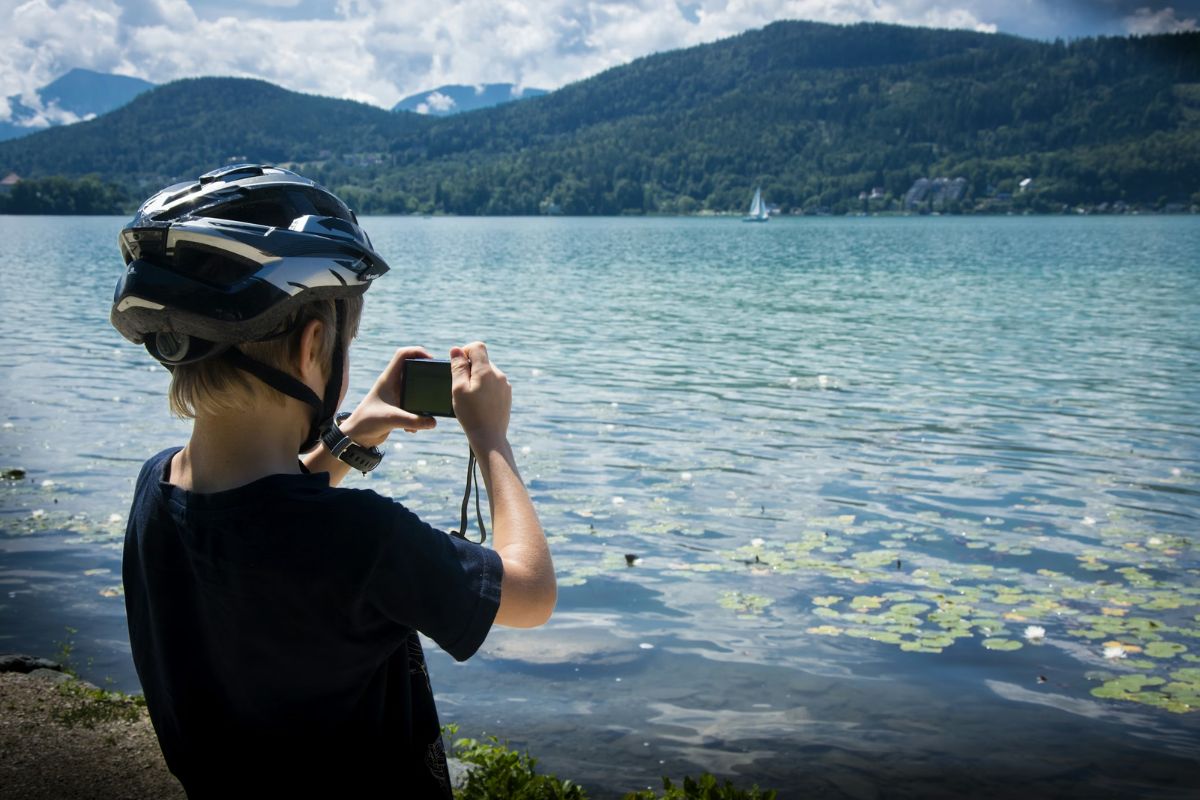
Buy your kid a camcorder. Then make them the official family documentarian. It sounds simple. It is. And it changes more than you’d think.
The Problem With Dad Holding the Camera
When Dad runs the camera, Dad disappears from the footage. You get great clips of your kids jumping off docks and chasing waves. What you don’t get is you — laughing, wrestling, cannonballing, being fully present.
And if you’re honest, when you’re filming, you’re only half in the moment anyway. You’re adjusting angles. Checking focus. Making sure you “got it.” Hand the camera over, and something shifts.
You stop managing the memory. You start living it.
A Camcorder Changes How Kids See the World
Give a kid a camera and a normal Saturday becomes a mission.
They don’t just walk through the woods, they look for shots. They notice light coming through the trees. They film the dog shaking off water in slow motion. They zoom in on things you’d never think to capture. It trains attention. It builds awareness.
Instead of passively consuming the day, they start actively observing it. That’s a skill most adults are trying to relearn through meditation apps and productivity books. Kids can build it with a camera.
You’re Not Buying a Gadget — You’re Giving Responsibility
This isn’t about tech. It’s about trust.
When you hand your kid a camcorder and say, “You’re in charge of documenting today,” you’re sending a message:
- I trust you with something valuable.
- Your perspective matters.
- You’re part of telling our story.
That’s a different level of ownership than just tagging along on a trip Dad planned. Kids rise to responsibility when we give it to them. Not perfectly. But meaningfully.
The Hidden Win: You Get to Be in the Frame
Here’s the part most dads don’t realize until later.
If you’re always filming, you’re rarely in the footage. Years from now, your kids won’t care about 4K resolution or cinematic angles. They’ll care that you were there…in the water, on the trail, at the table. When they’re the one holding the camera, you get to wrestle in the grass. You get to jump off the dock. You get to sit back at the campfire without thinking about storage space and battery life.
You get to be Dad, not the production crew.
Watching It Back Is the Real Magic
The best part happens later.
You sit down together and watch the footage. It’s shaky. The framing is off. There are 30 seconds of someone’s forehead. And it’s perfect. Because you’re seeing the day through their eyes.
What they chose to film says something about what mattered to them. What they ignored says something too. It’s a time capsule of their perspective at that exact age, something no perfectly edited highlight reel can replicate.
A Few Rules So You Don’t Ruin It
If you try this, keep it simple.
- Don’t micromanage the shots.
- Don’t critique the footage.
- Don’t turn it into a film class.
Let it be messy. Messy is honest.
If they drop it or forget to hit record, that’s part of the learning. The goal isn’t perfect documentation. The goal is participation and ownership.
The Bigger Lesson
Modern parenting often swings between control and anxiety. We try to manage every detail, optimize every experience, preserve every memory. Giving your kid the camera is a small act of letting go.
You’re handing over control of the narrative, just a little. And in doing that, you gain something better: presence. You’ll end up with a collection of imperfect videos. But more importantly, you’ll have been fully inside the moments they captured.
And one day, when you watch those clips years later, you won’t just see what your family did.
You’ll see how your child saw you.
When I first read Shoe Dog, I wasn’t looking for parenting advice. I was looking for business inspiration—grit, risk, vision, all that good stuff.
But halfway through the book, somewhere between maxed-out credit cards and Nike barely surviving another year, it hit me: This isn’t just a startup memoir. It’s a fatherhood book—just written sideways. Not about kids. About the kind of man kids grow up watching.
The Real Theme of Shoe Dog: Living With Uncertainty
Strip away the swooshes and success and Shoe Dog is really about doubt. Long stretches where nothing feels impressive. Years where the outcome is unclear.
Phil Knight didn’t have a master plan. He didn’t know Nike would work. He just kept moving forward anyway.
That’s dad life.
Most days of fatherhood don’t feel heroic. They feel uncertain. You wonder if you’re doing enough, if you’re screwing it up, if everyone else somehow knows what they’re doing better than you.
Here’s the comfort Shoe Dog offers dads: you don’t need certainty. You need commitment.
Progress Beats Confidence (A Dad Skill No One Teaches)
Knight didn’t wait until he felt ready. He shipped, adjusted, survived another year, and did it again.
Parenting works the same way. You don’t become a great dad because you read the right books or feel confident all the time. You become a great dad because you keep showing up without guarantees.
You don’t know how your kid will turn out. You don’t know which moments will matter most. You don’t know if today’s choice was the “right” one.
Neither did Phil Knight. He just didn’t quit.
The Myth of “Having It Together”
From the outside, Nike looks inevitable. From the inside, according to Shoe Dog, it was chaos held together by belief and stubbornness. That’s true for dads, too.
Your kids don’t see your inner doubts. They see whether you try. Whether you recover. Whether you keep going when things are hard.
That’s the lesson. Not perfection. Not confidence. Momentum.
Playing the Long Game Without a Scoreboard
One of the most underrated ideas in Shoe Dog is patience. Nike didn’t win quickly. It survived, then survived again, then survived some more.
Fatherhood has the same timeline. There’s no scoreboard. No quarterly results. No applause. Just quiet consistency. Bedtime stories. Car rides. Regular Tuesdays that don’t feel special until years later.
You’re building something you won’t fully see for decades. That’s not inefficiency. That’s legacy.
Identity Matters More Than Outcomes
Phil Knight wasn’t obsessed with being rich. He was obsessed with running, with craft, with building something meaningful. Good dads aren’t obsessed with outcomes either. They care about being steady, being available, being someone their kids feel safe copying.
You don’t need to be extraordinary. You need to be clear on who you are.
If Shoe Dog Had Dad Advice
If that book could talk, it would probably say this:
- Don’t wait until you feel ready. Build anyway.
- Your kids don’t need a finished product. They need a builder—someone willing to try, fail, learn, and keep going.
That’s the real win.
My Takeaway
We don’t need more parenting hacks. We need more long-term thinkers. More builders. More dads willing to live unfinished lives out loud. Because one day, your kid will look back and realize you didn’t have it all figured out, but you never stopped showing up.
That’s a hell of a legacy.