
There’s a version of this story where Tony Knapton has all the answers.
He doesn’t. And that’s what makes it worth telling.
Tony is the founder of Radry Golf, a brand he describes as a never-ending art project disguised as a golf company. He makes apparel, figurines, and products, anything he can put his creative golf spin on. He started it seven years ago when he got serious about the game and couldn’t find a single brand in the space that felt remotely interesting. So he built one.
What he didn’t anticipate was the tug of war that comes with it.
Only about 10 percent of his time is actually spent creating. The rest is the business. The logistics, the decisions, the noise that comes with trying to turn a passion into something real. He’ll be the first to tell you it would probably be easier to keep art as a hobby. But that’s not the point. The point is waking up and doing the thing he thinks about.
“I’ve got this voice in my head that demands perfection,” he says. “I overthink things to the point of not doing them.”
Painting became the antidote. You can’t Command Z your way out of a mistake on canvas. You commit to the stroke and you live with it. He’s learning to embrace the imperfections. That lesson, he says, extends well beyond the studio.
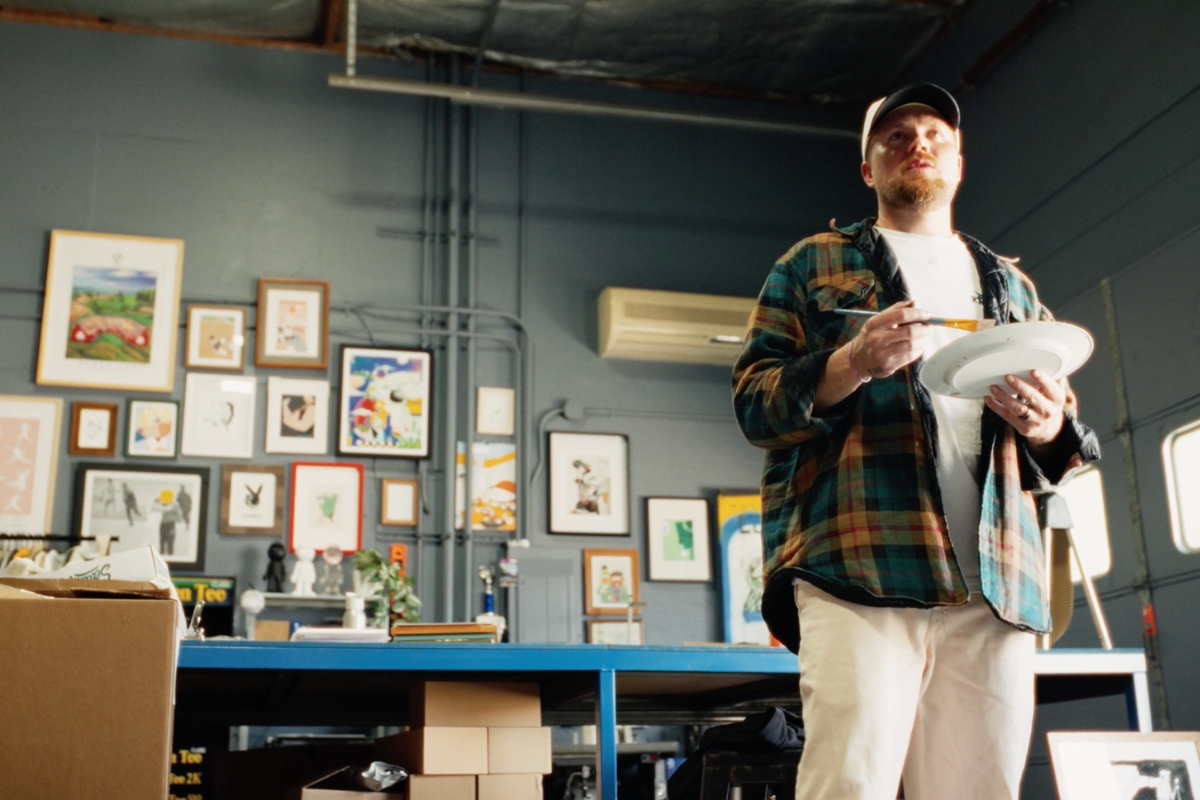
One of his most personal pieces is a painting of classic lawn chairs. Colorful. Nostalgic. A reminder to lift his head up from the work. Because time moves fast when your head is down, and one day you look up and your daughter is getting braces and you can’t figure out where your little girl went. That part makes him emotional and he doesn’t try to hide it.
In January of 2023, Tony’s father-in-law was diagnosed with ALS. He and his family were living in Austin at the time. They moved back to Wisconsin immediately. Watching someone disappear from that disease does something to you. It makes mortality concrete. It reorders priorities. It makes you want to do the things you keep saying you’ll do someday, now, while you can.
“I try to honor him as best I can in the decisions I make and how I live my life,” Tony says. “My art reflects all of that.”
He’s now building a space in his hometown. A run club, golf simulators, co-working, a gallery for his work, a place for people to gather and build real relationships. Austin had a creative energy he misses. If that energy doesn’t exist where he is, he’ll create it himself. That’s the mentality.
He’s still in the middle of it. Trying to be the best dad while also showing his kids that passion can become a life if you’re willing to do the hard work. Trying to figure out what success actually means. Is it financial freedom? Is it making it to his kid’s kindergarten graduation at one in the afternoon? He’s not sure. Maybe both. Maybe neither. Maybe the beauty is in not having the answer yet.
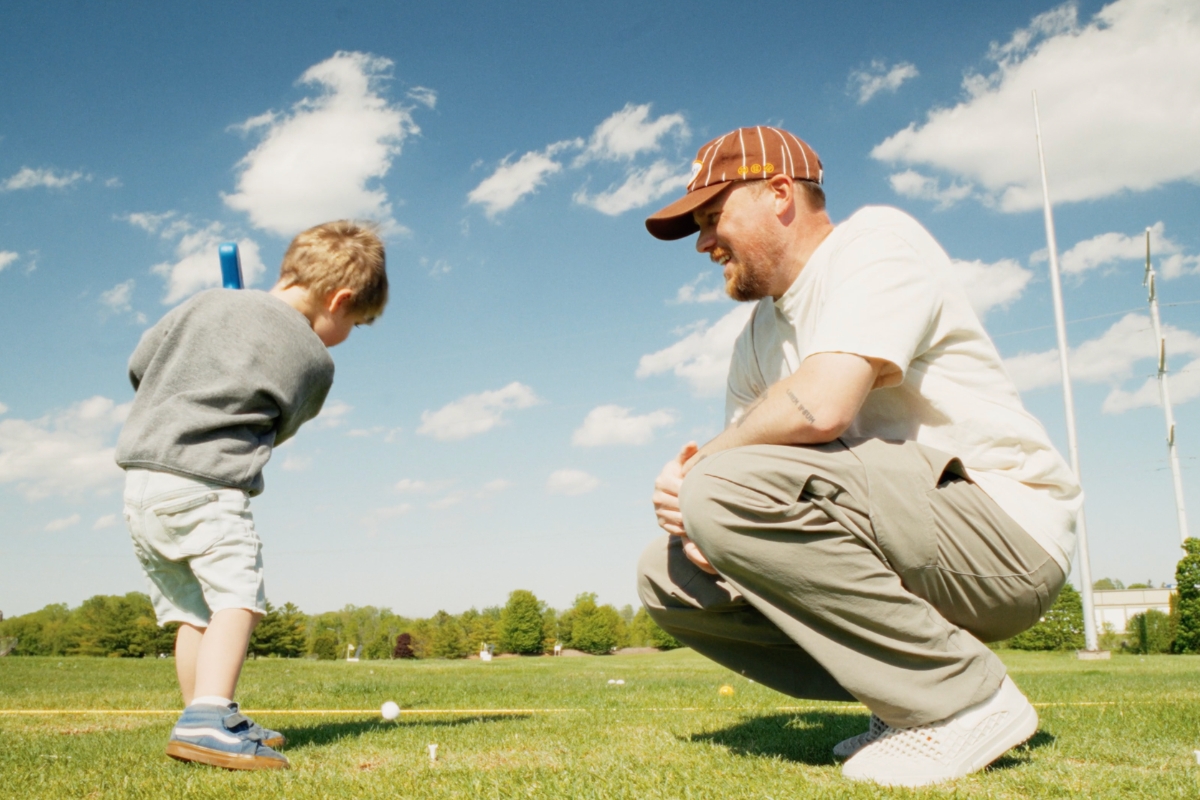
“Some days are better than others,” he says. “And it’s all reflected in my art. I’m just trying to figure it out.”
So is the rest of us.
Watch Tony’s full story in our latest Go West film. Tell your friends.
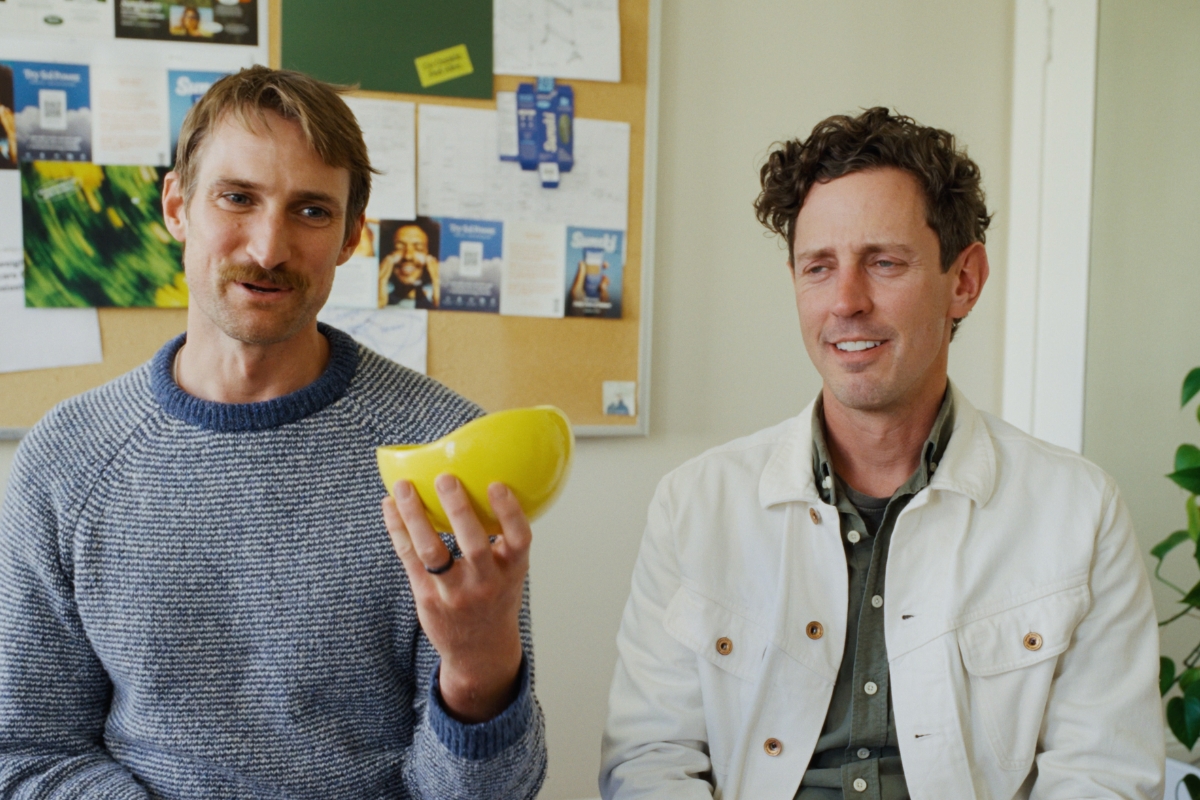
The story of Sunski didn’t start with a business plan. It started with a salsa bowl.
Tom Stewart and Michael Charley graduated in 2009, right into the teeth of a recession. No dream jobs waiting. No clear path. Just two guys with big ambitions and a product idea Tom had sketched on a napkin in high school: a ceramic bowl with a curved lip designed to keep salsa on your chip.
They went all in. Ordered 3,000 units from a manufacturer in China. Two-thirds arrived defective. They moved back home to South Philadelphia and started cold-calling retailers from the basement.
It didn’t work. By spring 2012, they had $273 left in the business account and were ready to quit.
But a few years earlier, on a surf trip to Australia, Tom had wandered into a beach shack selling off the last remaining stock of a defunct 1980s sunglass brand called Sunski. He bought a few pairs. Wore them constantly. Got compliments everywhere he went.
Then one afternoon on a beach in San Francisco, a stranger walked up and said: “Those are rad sunglasses.”
The stranger was a retail buyer. That was it.
The Book That Reframed Everything
When we sat down with Tom and Michael to film the third episode of Go West, one thing that came up early was The 4-Hour Work Week.
Not the hustle hacks. Not the outsourcing tricks. The bigger idea underneath it: that you get to design your life. That work and freedom don’t have to be in opposition. That the whole point of building something is to build it on your terms.
That landed with us. We read the same book. A lot of dads in this community did. And it shaped how Tom and Michael went about everything after Sunski took off.
They launched a Kickstarter in July 2012 with a $9,800 goal. They hit it in two days. The campaign closed at $157,000. They were suddenly, as Michael put it, “accidentally running a sunglasses company.”
The $273 Moment
There’s something about that number that sticks with us.
Not because it’s inspirational in a poster-quote kind of way. But because it’s real. Most people would have looked at $273 in the bank and called it a lesson learned. Tom and Michael looked at it and decided to try one more thing.
That’s the Go West spirit. Not recklessness. Not blind optimism. Just the refusal to quit before the last card is played.
They designed the frames themselves. Tom’s architecture background meant he could do 3D modeling. Their years of scrapping through the Salsabol failures meant they already knew how to deal with manufacturers, handle freight logistics, and move fast.
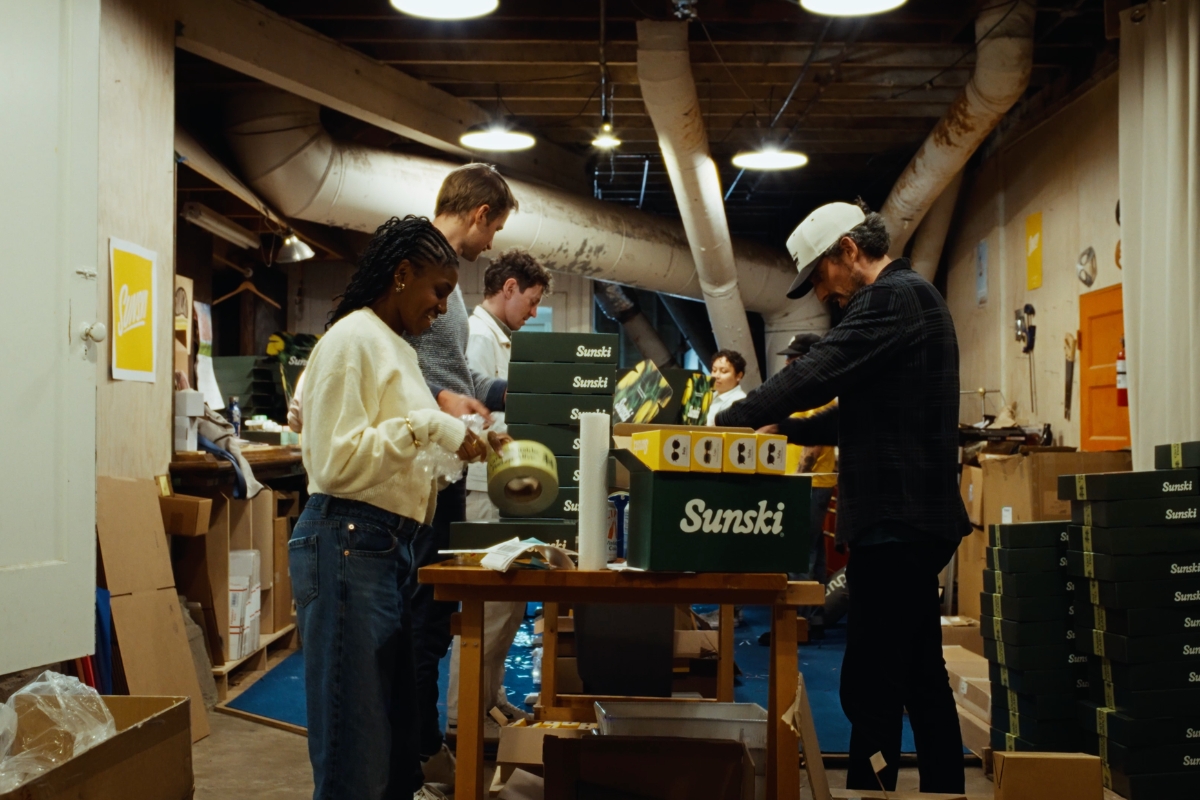
They launched. It worked. And then they had to pack 6,000 pairs of sunglasses in a rented artist’s studio in four days.
When the studio manager asked what their medium was, Tom said: “Cardboard.”
What They’re Actually Building
Here’s what makes Sunski interesting in 2026: Tom and Michael could probably exit. They’ve built a real brand, a loyal customer base, a proprietary recycled frame material they spent three and a half years developing. The outcome is there if they want it.
They’re not taking it.
Instead, they’re doubling down. Elevating the brand. Building something they believe can have long-term impact. Not just as a product, but as a statement about how a company can operate.
Part of that is sustainability. Sunski has donated 1% of revenue (not profit, revenue) to environmental non-profits since day one. Their SuperLight frames are made from post-industrial plastic scraps. This wasn’t a pivot to values. It was baked in from the start.
But the bigger thing we captured in this episode is the why behind all of it.
Screens, Nature, and the 16-Year Problem
We’re on track to spend an average of 16 years of our lives on our phones. Let that sink in for a second.
Tom and Michael brought this up on camera, and it hit hard. Because it’s not just a stat about adults. It’s a stat about what we’re modeling for our kids. About what we’re teaching them to value. About the world we’re handing them.
Both of them are fathers now. And the tension between a world pulling kids toward screens and their own instinct to push them toward nature, toward the outdoors, toward something real shapes how they think about Sunski’s purpose.
Sunglasses are a product. But what they represent is a reason to go outside. To be somewhere that matters. To be present in a way that a phone can’t give you.
Getting back to our ancestral roots, moving, being outside, paying attention to the physical world, is something both of them talk about with real conviction. Not in a preachy way. In the way dads talk when they’re actually worried about something.
The Team Is Family. They Mean It.
One more thing we captured that doesn’t always make it into founder stories:
Tom and Michael don’t take their team lightly.
Sunski has stayed small and independent. They know the people who work there. They feel the weight of that responsibility. When we asked about it, you could tell it wasn’t a talking point. It was something they carry.
That’s rare. And it’s the kind of thing that makes a brand worth rooting for.
Go West, Episode 3
The film is live now. Watch it above.
Tom and Michael’s story isn’t really about sunglasses. It’s about what happens when you read a book that reframes how you think about life, fail at a salsa bowl, find a pair of vintage shades on a beach in Australia, and decide, with $273 in the bank, to try one more thing.
We think you’ll love it.
Go West is a Dad Day original series about dads carving their own path. If you know someone whose story belongs in this series, reach out at dadday.com.
What happens when you walk away from a safe job to build something you actually love?
Most people think about it. Few actually do it.
In Episode 2 of Go West, we follow Richie, founder of Daylight Burrito, as he makes that leap. The kind that keeps you up at night. The kind that makes you question your sanity. Leaving a stable path to open a burrito shop might sound simple. It’s not. It’s long hours. Financial risk. Sacrifice.
And a voice in the back of your head asking one question on repeat:
“Is this actually going to work?”
For Richie, the answer was clear. Yes. But clear doesn’t mean easy.
Watch Episode 2
The Story Behind Daylight Burrito
Opening a restaurant is one of the hardest businesses in America. Margins are thin. Hours are brutal. And the work never really stops.
But for Richie, it wasn’t about chasing the “safe” option anymore. It was about building something his kids could watch him build. Something real. A place where early mornings smell like fresh tortillas and green chile.
Where regulars become friends. Where a dad can say, “Yeah, I made this.”
That’s what Daylight Burrito is becoming, one burrito at a time.
What Go West Is About
Go West is a Dad Day film series about fathers carving their own paths.
Not the highlight reels. The real stuff.
The builders. The entrepreneurs. The dads trying to create something meaningful while raising a family.
Because the truth is, kids are always watching. They see whether we play it safe. Or whether we try.
And sometimes the most important thing a dad can do is show them what it looks like to bet on yourself.
Follow Richie + Daylight Burrito
If you want to see what Richie’s building:
Website:
https://www.daylightburrito.com/
Instagram:
https://www.instagram.com/daylightburrito/
Want More Stories Like This?
If you like stories about dads building things, chasing ideas, and figuring it out in real time, that’s exactly what we cover at Dad Day.
Join the newsletter here:
https://www.dadday.co/subscribe
Over the last year, Dad Day has evolved from a simple email newsletter into something bigger. A community. A place to highlight dads who are building, creating, and showing up a little differently.
That evolution led to Go West.
Go West is a short film series from Dad Day that spotlights modern dads carving their own path. Founders, makers, and builders who chose the long road instead of the safe one.
These aren’t ads or highlight reels. They’re real stories about why someone started something, how fatherhood fits into it, and what they’re trying to build long-term.
Episode One features Robert Huffman, founder of Camino Caffeino.
Meet Robert Huffman
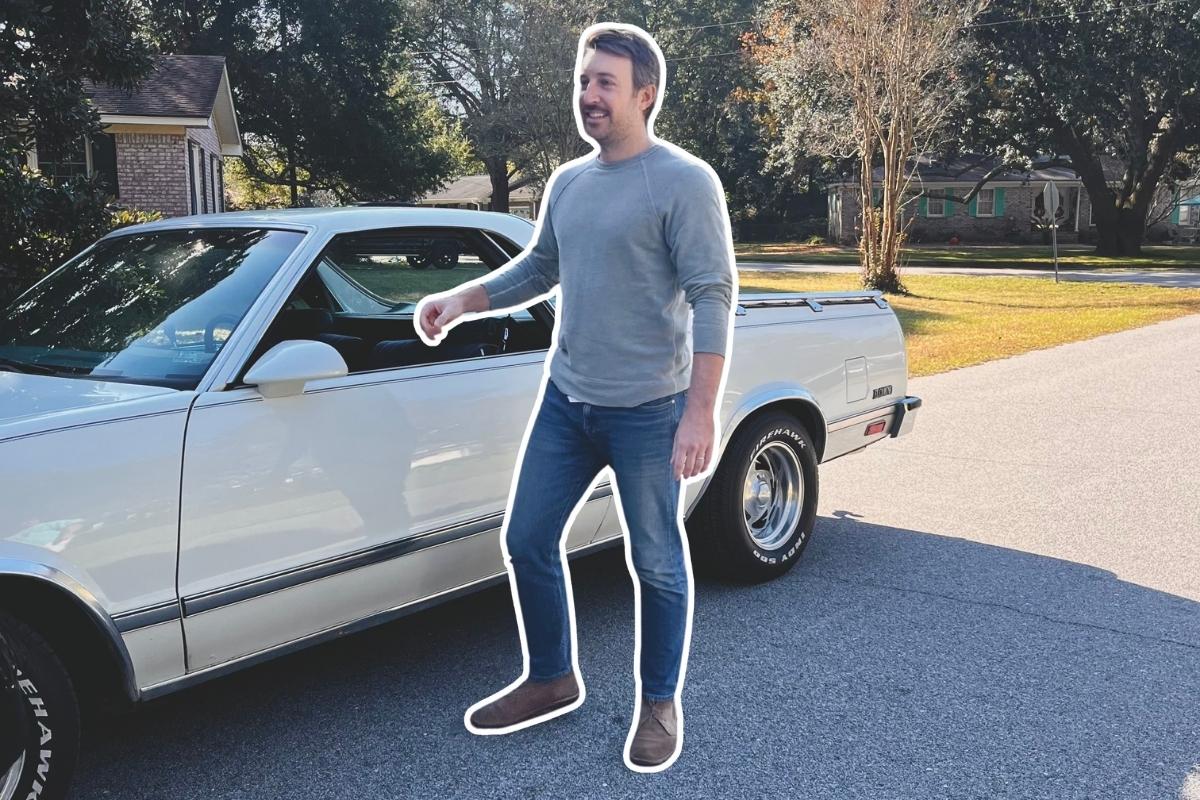
Robert Huffman sells coffee out of an old El Camino in Charleston, South Carolina. But Camino Caffeino isn’t really about coffee.
It’s about community.
In a world of polished brands and carefully engineered launches, Robert took a different route. He built something simple, human, and intentionally analog. A mobile coffee setup that invites conversation, connection, and presence.
Robert is also a dad, and that reality shapes how he thinks about work, time, and legacy. Camino Caffeino isn’t about scaling as fast as possible or chasing the next big thing. It’s about creating something meaningful, showing up consistently, and building relationships that last.
Why This Story Matters
Go West exists to tell stories like Robert’s.
Stories that don’t always fit neatly into a pitch deck. Stories about dads who are building businesses, communities, and lives that reflect their values. Stories rooted in purpose instead of polish.
Robert’s journey with Camino Caffeino captures the heart of what Go West is about. Choosing an unconventional path. Betting on connection. And building something with intention, even when there’s no clear roadmap.
Shot in Charleston, South Carolina
This episode was filmed in Charleston, a city that values craft, conversation, and community. The setting mirrors Robert’s approach and reinforces the tone of the series: grounded, human, and unforced.
Go West isn’t about geography. It’s about mindset. Charleston just happened to be the right place to tell this particular story.
Watch Episode One
Below is Episode One of Go West, featuring Robert Huffman of Camino Caffeino.
If this story resonates, we encourage you to watch it all the way through, share it with someone who’d appreciate it, and subscribe to our YouTube channel. This is just the beginning.
What’s Next for Go West
Episode One sets the tone.
We’re continuing to film and share stories of dads who are carving their own path. Some of these stories will be about business. Some about community. Some about family. All of them are about choosing a different way forward.
Because ordinary’s been done.
Most dad content feels stale. Same cliche jokes. Same advice. Same version of what a “good dad” is supposed to look like.
Over the last year of building Dad Day, one thing became obvious: there are a lot of dads out there doing things differently. Building businesses from scratch. Creating community in unexpected ways. Taking the long road instead of the safe one. Not because it’s trendy, but because it feels right.
That’s where Go West came from.
Why Go West?
We’ve always been drawn to the people who went west before there was a clear path or a paved road. Not because it was easy, but because it was open. Uncertain. Full of possibility. Going west meant betting on yourself. Trusting your gut. Building something where there wasn’t much to build from yet.
That same mindset still exists today. It just shows up differently.
Go West isn’t about geography. It’s about choosing the harder, less obvious route. The one that doesn’t come with a script. The one where you figure things out as you go and build something meaningful along the way.
That’s the kind of dad we’re drawn to. And those are the stories we want to tell.
What Is Go West?
Go West is a short film series from Dad Day that spotlights modern dads carving their own path.
These aren’t highlight reels or polished success stories. They’re real looks at dads who build, dream, and act on ideas that don’t always fit the mold. Founders. Creators. Makers. Doers. Guys who decided not to follow the script and see where it led.
Some of these stories will be about business. Some about community. Some about family. All of them are about choosing a different way forward.
Because ordinary’s been done.
Why We’re Doing This
Dad Day has always been about more than tips, gear, or surface-level inspiration. It’s about showing what modern fatherhood actually looks like when you care deeply about how you spend your time, what you build, and the example you’re setting.
We wanted to create something that reflects that.
Go West is our way of telling deeper stories. Slower stories. Stories that don’t try to wrap everything up neatly in 60 seconds.
Episode One
The first episode features Robert Huffman, who sells coffee out of an old El Camino with one simple goal: foster connection and community.
It’s not about scale. It’s not about optimization. It’s about showing up, pouring into people, and building something meaningful in a way that feels human.
That episode drops soon.
What to Expect Going Forward
Each Go West film will focus on one dad and one story. No formulas. No templates. Just honest looks at people doing things their own way and sticking with it. This is just the beginning.
Watch the trailer below, and if it resonates, you’ll feel right at home with what’s coming next. Do us a solid and subscribe if it lands.