
Tucker Piner just became a dad of two.
Baby boy arrived. Liam, his toddler, is already logging miles in the stroller. Tucker’s got a full-time job, a nonprofit to run, a marathon in November, and a run club he’s trying to grow to a hundred dads.
He’s not stressed about any of it. Fired up, actually.
We teamed up with Mack Weldon to follow Tucker on his road to the NYC Marathon. Here’s what he’s building and why it matters.

The Run Club Started With a Simple Problem
When Liam was born, Tucker had three things he wanted to do: run, spend time with his son, and give his wife a break. Doing them separately wasn’t going to happen. So he stacked them.
He started Dumbo Dads Run Club. Strollers welcome. Saturday and Sunday mornings. The pitch: get dad out the door, let mom sleep in.
“I thought, if I start a run club where I run with my son, my wife can have some time to herself, and I can spend quality time with my son.”
Since then he’s logged over 250 miles with Liam in the stroller. He doesn’t separate it into training time versus dad time. It’s just his morning.
Let Mom Sleep In
That’s the actual slogan. Tucker means it.
“The hardest marathon is watching your wife go through pregnancy, go through labor, go through recovery, tackle postpartum. Women are just absolutely incredible.”
Dumbo Dads meets on the two days when there’s no daycare, no nanny, no coverage. Just parents figuring it out. Tucker’s take is simple: whatever mom needs to do with that window is the right answer. Sleep, scroll, get her nails done. The run club makes the window happen.
“Families can only go as far as the moms can take them. It’s our job as dads to make sure our wives feel strong and feel like they can be themselves.”

What Actually Goes Down on a Dad Run
Most run clubs are about pace. Dumbo Dads is about something different.
“When you’re running with somebody, it’s such a vulnerable time to just say what’s on your mind.”
Tucker has watched dads swap sleep advice, feeding tips, apartment leads, and phone numbers after conversations that got real in a way that doesn’t happen at a bar or a work event. Something about moving side by side with a stroller, not making eye contact, just going forward together loosens people up.
That part doesn’t fit in the slogan but it might be the whole point.
Why This Marathon Means More
Tucker ran Paris and Chicago in his twenties. He’ll be the first to say he didn’t take it seriously either time.
This is different. He put in the work for 2024, crossed the finish line, and felt proud in a way he hadn’t before. Now he’s back for 2026, second kid just born, knowing his body better and clearer on what he’s actually running for.
“It’s still not about a time for me. It’s really much about crossing the finish line, and showing my son and daughter that I can do hard things.”

How He Holds It All Together
He doesn’t have a clean system. What works is stacking things so they’re not competing for the same window.
The run club handles community, training, and time with Liam all at once. That’s three things that used to feel like three separate asks on a calendar, collapsed into one Saturday morning.
“I’ve had to learn to be kind to myself. It’s okay to take a nap if my kids are taking a nap. There are more important things than looking at my phone.”
Two kids. Twenty-six miles in November. A run club he’s trying to take to a hundred dads. Most people would be white-knuckling through one of those things.
Tucker’s just getting started. Follow his NYC Marathon journey on our Instagram. If you’re a Brooklyn dad who needs a reason to get out the door on a Saturday morning, Dumbo Dads is the move.
Tucker’s gear throughout the series is from Mack Weldon. Check out the collection here.
*This feature was produced in partnership with Mack Weldon. Tucker is wearing the ACE Full-Zip, Stratus Active Shorts, Quilted Rib Popover, and ACE Cargo Sweatshorts throughout the series.*
You’re at a cookout. Your buddy’s kid is on his third juice box, his screen-time limit seems to be “whenever he puts it down himself,” and dinner tonight is nuggets because that’s what he asked for.
Meanwhile, you’re the dad who cuts the sugar, enforces the no-phones rule, and has strong opinions about processed food.
Nobody’s saying anything. But you’re both noticing.
This is one of the more quietly stressful parts of parenting that nobody warns you about: navigating the social friction that comes when your values around raising kids don’t match the people around you. And it comes up everywhere. Playgrounds, holiday dinners, family road trips, school pickups. The more intentional you are as a parent, the more you’ll bump into it.
Here are some ways to think about it.
First, Understand What’s Happening Underneath
The discomfort you feel when another parent does things completely differently isn’t really about them. It’s about you.
Research consistently shows that parenting decisions are deeply tied to identity. How we raise our kids reflects our values, our fears, our sense of what’s right. So when someone else’s approach looks nothing like yours, it can feel like a quiet judgment in both directions, even when nobody’s saying a word.
Psychologist Dr. Becky Kennedy, who has written extensively on parent behavior and self-regulation, makes this point clearly: most of the time, parents aren’t judging each other. They’re both just anxious.
They’re both just trying to do right by their kids with the information and capacity they have.
Keeping that in mind before you react changes the whole energy of these situations.
You Don’t Have to Say Anything
Unless a child is in danger, you don’t have to weigh in. The other family’s screen time, sugar intake, sleep schedule, and discipline approach are not your business, and offering an opinion nobody asked for is one of the fastest ways to damage a friendship or create family drama that lasts for years.
Research from the Child Mind Institute is clear: unsolicited parenting advice, even when well-intentioned, is almost always received as criticism. The message the other parent hears isn’t “here’s something useful.” It’s “you’re doing this wrong.”
Hold the line on what happens in your house. Let them hold the line on what happens in theirs.
Join the Family


Get Clear on Your Non-Negotiables
Not every difference is worth the same energy.
The Gottman Institute’s research on family values suggests that couples and co-parents who identify a small number of true non-negotiables and give each other flexibility on everything else have healthier family dynamics and less conflict overall. The same principle applies to navigating other families.
Know what you actually can’t compromise on.
If your kid has a real allergy, that gets communicated clearly every time, no apology necessary. If your family has a firm no-screens-before-bed rule, you enforce it when you’re at your house. These aren’t preferences. These are your limits.
Everything else – the differences in how strict someone is about sugar, whether they let their kid negotiate at bedtime, how much independence they give at the playground- those are preferences. And preferences are worth letting go of when they aren’t yours to enforce.
When You’re at Their House
This is where it gets practically complicated.
Your kid is going to encounter different rules in different homes. That’s not a problem. That’s actually good for them. Research on child adaptability consistently shows that kids who learn to navigate different environments and expectations grow up with better social skills and more flexible thinking.
What you can do: prep your kid before you get there. “At their house, things might be a little different than at ours. That’s okay. Our rules still apply to you.” You’re not criticizing the other family. You’re just being clear that your expectations of your kid don’t change based on where you are.
And when something comes up at their house that you wouldn’t allow at yours, unless it’s genuinely harmful, let it go for the visit. One afternoon of extra screen time or a meal you wouldn’t cook isn’t going to undo your parenting.

When They’re at Your House
Easier. This is your space.
You run things the way you run things. You don’t need to apologize for it and you don’t need to explain every choice. If dinner is what it is, that’s what it is. If devices go away at a certain time, they go away. Most reasonable people respect clear, calm house rules even when they differ from their own.
What creates friction isn’t having standards. It’s having standards with a side of judgment.
Set your limits without commentary on how they do things at home and it almost never becomes a problem.
When It’s Family
This is the hardest version and the one that usually turns into a real heater.
Grandparents who give your kids everything you said no to. A sibling whose kids have zero structure and yours are used to a lot of it. A family gathering where the parenting philosophies in the room cover the entire spectrum and everyone has opinions.
A few things that actually help here.
- Pick your battles with real specificity. If grandma wants to give them an extra cookie, that’s probably not the hill. If grandpa is consistently undermining your discipline in the moment, that’s a conversation worth having privately, calmly, and directly.
- Frame it around your kid, not around what they’re doing wrong. “When Jonah sees the rule get overridden, it makes our job harder at home” lands better than “you keep letting him do things we said no to.”
- And accept that you cannot fully control what happens in other people’s houses. What you can do is be consistent at home so your kids have a strong enough baseline that a weekend at grandma’s doesn’t throw everything off.
The Bigger Picture
The research on what actually produces well-adjusted kids isn’t about finding the objectively correct parenting approach and executing it perfectly. It’s about consistency, warmth, and a secure relationship between parent and child.
Your kids are going to encounter different values, different rules, and different environments for the rest of their lives. The fact that their buddy’s house runs differently than yours is practice for that. It’s not a threat to what you’re building.
Stay grounded in your own approach. Don’t spend energy policing others. And extend the same grace to other parents that you’d want extended to you on the days when you’re not at your best either.
Nobody’s got this fully figured out. Most of us are just doing our honest best with what we’ve got.
If you’ve ever felt like you’re living in a house run by a tiny, irrational dictator, you’re not alone. And more importantly, it’s fixable.
The Raising Good Humans podcast had Claire Lerner on to walk through her book, Why Is My Child in Charge? She’s a child development specialist who has spent 35 years working with families in the thick of exactly this. Not a theory person. A in-your-living-room-watching-it-happen person. The episode is worth your full time, but here are the takeaways that landed hardest.
Listen to the full episode here.
The Root of Almost Every Power Struggle
Lerner’s core argument is that parents get into power struggles not because their kids are bad or manipulative, but because of eight specific mindset traps that cause them to misread what’s actually happening. Once you see the situation differently, you respond differently. And when you respond differently, the whole dynamic shifts.
Here are the ones worth keeping.
1. Your Kid Is Not Doing This on Purpose
The single most important reframe in the book.
When a kid hits, throws something, or says something awful, it looks intentional. It isn’t. No child wakes up and decides to make your morning miserable. What you’re actually seeing is a kid who hasn’t yet developed the tools to manage what they’re feeling, so the feeling comes out sideways.
When you interpret the behavior as purposeful, you go punitive. You go harsh. You go down a road that escalates the situation instead of resolving it.
When you see it as a kid who’s struggling and doesn’t know what else to do, you respond completely differently. Same behavior, completely different outcome depending on the lens.
2. Your Kid Is Not Manipulating You
The bedtime snack scenario Lerner describes is one most parents will recognize immediately. Kid barely eats dinner. Bedtime routine happens. Lights go out. Five minutes later: screaming hunger. Parents feel completely played.
Lerner’s reframe: the kid isn’t manipulating. She’s being strategic in the way every three-year-old is wired to be strategic. She figured out that screaming about hunger gets her more time with her parents. That’s not sociopathic. That’s actually pretty clever.
The job isn’t to get angry at the cleverness. The job is to change the system so that strategy stops working. Once those parents saw it that way, they stopped being angry at their daughter and started being able to set a clear, loving limit. Last-chance food before lights out. Done.
3. You Cannot Control Your Child
This one is humbling and also genuinely freeing. You cannot make a kid fall asleep. You cannot make them eat. You cannot make them stop having a tantrum. You cannot make them pee and poop on the potty. You can create conditions, you can set up expectations, but you don’t control their bodies or their emotions.
What you control is how you respond.
That shift in focus, from trying to control the kid to controlling your own response, is where things start to turn around. The families Lerner works with who make this shift see the biggest changes, and the fastest.
The car seat is her example. No parent says, “You know what, today we’ll just skip the car seat.” That limit happens, no matter what. You use it as a proof point: you can set a limit, hold it, and your kid will be uncomfortable but fine. That same capacity exists everywhere else.
Join the Family
4. Your Kid’s Difficult Feelings Are Not Harmful
When a kid is scared about school, the instinct is to reassure. “You’re going to love it! Your teacher is so great! They have those magnetiles you love!”
The kid hears: you’re wrong to feel what you’re feeling.
Lerner is clear that trying to cheerlead a kid out of their feelings doesn’t make the feelings go away. It makes them fester. The kid stops feeling heard and starts acting out instead.
What actually works: acknowledge the feeling first, fully, before you do anything else. “I get it. Starting something new feels scary. Of course you feel that way.” Once the feeling is acknowledged, the kid is actually open to hearing what comes next. Until it’s acknowledged, they’re just trying to convince you the feeling is real.
5. Limits Don’t Need Your Kid’s Agreement to Be Appropriate
This is the one that’s quietly wrecking a lot of bedtime routines. Parents explain, negotiate, and try to convince their kids to agree with limits. “You need to sleep because otherwise you’ll be tired.” “We’re only doing three books because it’s late.” What they’re doing is waiting for the kid to agree before they enforce the limit.
And no kid is going to say, “You know what, you make a great point. Let me cooperate.”
The limit is the limit regardless of whether the kid likes it. “I know it’s never enough. I totally get it. But it’s time for bed.” That’s it. You don’t need their buy-in. You need their compliance, and compliance comes from a clear limit calmly held, not from a negotiation they keep winning.
6. Failure Is Not Harmful
When a kid gets frustrated with a puzzle and you swoop in and help, you’re not showing love. You’re inadvertently communicating that you don’t think they can handle it. Lerner’s recommendation: pause before you rescue. Acknowledge the frustration first. “Puzzles are really hard. I totally get it.” Then: “Would you like some ideas?”
Asking permission before you give advice changes everything. It shows respect. And most of the time, once you ask, they’re actually open to hearing it.
The “Two Great Choices” Framework
This is the practical tool that runs through the whole book. Whatever limit you’re setting, give the kid two options. One is cooperating with the plan. The other is something you can actually control and enforce.
“You can get in the car seat on your own, or I can help you get in. What would you like?”
The key: option B has to be something you will actually follow through on. If you can’t enforce it, don’t offer it. The gray zone, the place where you’re pleading and negotiating and threatening without follow-through, is where kids end up in charge in a way that isn’t good for anyone.
The tone matters as much as the words. Two great choices said with genuine calm lands completely differently than a threat with the same information. Practice the calm. It’s most of the job.
The Bigger Point
This isn’t permissive parenting. It’s not giving kids everything they want or letting them run the house.
It’s recognizing that when a kid feels out of control on the inside, they try to control everything on the outside. They’re not being bad. They’re coping. And the way to help them cope better is to give them clear, consistent, lovingly-held limits from a parent who isn’t getting swept into the power struggle with them.
Lerner puts it simply: it’s not love or limits. Limits are love.
Go listen to the full episode. And if any of this rings a bell, the book is worth it.
Childhood doesn’t become a feeling because of the big trips or the perfect holidays. It becomes a feeling because of the small things that happened the same way, every time, for years. The stuff so ordinary you almost didn’t notice you were building something.
Here are eight things to consider doing on purpose.
1. The Birthday Breakfast
Their favorite meal on the table and a handwritten note waiting by their plate, before anyone mentions school or errands or anything else about the day ahead. For a few minutes, the morning belongs entirely to them. No agenda. No rush. Just the message that on their day, the whole house noticed.
It takes twenty minutes to make. They’ll remember it for the rest of their life.
2. The Growth Wall
One wall in the house that keeps every height mark exactly where it was made, protected through every repaint and renovation. The marks are the measurement, but what they’re actually recording is time. One day your kid will stand next to a line they made when they were four and barely reach it with their hand.
3. The Same Spot, Every Year
The same pose, in the same spot, once a year, regardless of whether anyone’s in the mood for a photo that day. Years later the only thing that’s changed is how much everyone’s grown. That’s the whole point and also the part that gets you when you least expect it.
4. The Friday Reset
Pizza on the couch, whatever movie someone feels like picking, zero plans beyond that. Same night, every week, until your kids stop asking if it’s happening and just start clearing space on the couch. What you’re actually building isn’t a tradition. It’s the knowledge that no matter how the week went, Friday night is ours. That’s a feeling kids carry into adulthood and look for in homes of their own.
5. The Bedtime Ten
One story, a couple of books, one honest question about their day, then lights off. Ten minutes rarely feels like enough time. Showing up for it every single night is what actually sticks years later. The consistency is the thing, not the length.
Join the Family
6. The Do-Over
When you lose your patience and snap at them, you get one chance to stop, go back, and redo the moment out loud in front of them. Showing them what it actually looks like to catch yourself.
This is one of the most important things a dad can model. Not that he never loses it. That he comes back, owns it, and tries again.
7. Celebrate the Effort
The effort behind a loss gets celebrated exactly as loudly as a win would, right in the moment it happens. So trying hard never quietly becomes something only worth mentioning when it works out.
Most kids quit things not because they failed but because nobody treated the effort like it mattered. Fix that early and it changes everything about how they approach hard things.
8. Hear It Out
Whoever’s upset gets to say the whole thing, start to finish, with nobody jumping in to defend themselves or explain their side until that person is actually finished talking. This one’s hard. It requires sitting with something uncomfortable without immediately trying to fix or counter it. Practice it enough and your kids will carry it into every relationship they ever have.
None of these are complicated. None of them require money or a special occasion or perfect timing.
They just require doing them again. And again. And again, until one day your kid is grown and they realize that home always felt like something, and they can’t quite put their finger on why, but they know they want to build it for their own family someday.
That’s what you’re actually building here.
Inspired by a post from @xeniakoval
Kirk Martin has a simple premise that most parenting advice ignores. Your words can light a situation on fire. The same mouth can put it out. And you get to choose, every single time, which one happens.
Martin is the founder of Celebrate Calm and host of the Calm Parenting Podcast, and he specializes in exactly this: practical language for the moments when everything is about to go sideways. We pulled the ten phrases from his most recent episode and stripped out everything except the stuff worth saving.
Listen to the full episode here.
1. “I think I misunderstood your intentions.”
Most kids who lash out or shut down feel misunderstood before anything else. This phrase cuts through the behavior and speaks to the feeling underneath it.
Martin puts it personally: you can call him names and he won’t flinch. But if you assign bad motives to what he’s doing, that cuts deep. Same is true for your kid. Try it as a question too: “Did I just misjudge what you were trying to do?” Works on kids, works on spouses.
2. “I’m curious.”
Replace “What were you thinking?” with this. Those interrogating questions put a kid on the defensive with no good answer. “I’m curious” does the opposite. It signals that you’re alongside them, not coming at them. It’s an invitation to share without fear of a lecture. Martin says he uses this phrase almost every day with someone.
3. “That doesn’t sound like you.”
When a child is acting out, remind them who they actually are. It separates the behavior from their identity and gives them something to live up to. Most kids respond to being seen as better than their worst moment.
4. “You don’t have to talk right now.”
Forcing a conversation during a meltdown doesn’t work. The brain isn’t available for it. This phrase gives them space without abandoning the issue. Come back to it when everyone is calm. The conversation will actually go somewhere then.
5. “I’m not trying to win. I’m trying to help.”
Power struggles usually happen because both sides are fighting to be right. This phrase steps out of the fight entirely. It reframes your role from opponent to ally. Hard to keep arguing with someone who just told you they’re on your team.
6. “I could be wrong about this.”
Humility as a parenting tool. Martin’s point is that it’s almost impossible for a child or spouse to keep attacking when you exercise it. It’s not weakness. It signals enough confidence to drop the ego. And it models the exact thing you’re hoping to see from them.
7. “I trust you to figure this out. I’m here if you want me.”
Kids need to own their problems. If you solve everything for them, you take away the sense of ownership and the growth that comes with it. This phrase gives them space while making clear you’re available. Martin notes that if they do come to you for advice after you’ve said this, they’re far more likely to actually listen because it was their choice to ask.
8. “I can imagine that doesn’t feel great.”
When a kid is saying awful things, the instinct is to react to the behavior. Martin suggests looking past it to what’s driving it. This phrase does that. It acknowledges that something hard is going on inside them without rewarding the behavior or ignoring it. You’re not telling them it’s okay. You’re telling them you see them.
9. “I was wrong.”
Three words. Martin says humility is one of the most powerful calming tools available. It models accountability, it stops an argument cold, and it builds the kind of relationship where your kid can come to you when they mess up because they’ve seen you do it first.
10. “You’re not being defiant. You’re just overwhelmed.”
This one reframes everything. A kid who comes home bossing everyone around isn’t a problem kid. They’ve spent all day being controlled and now they’re trying to get it back in the only way they know. Give them something specific to own, a task they can actually complete, and the bossiness usually disappears. A kid who feels in control of themselves doesn’t need to control everyone else.
None of these are magic. Martin is clear about that. But practiced and used consistently, they change the temperature of most situations before they escalate into something nobody wanted.
Go listen to the full episode at the link above. If you have a strong-willed kid, his show is worth a regular spot in your rotation.
Words stick.
Not the planned ones. Not the speech you prepared for the right moment with the right intention. The throwaway ones. The ones said tired, frustrated, on autopilot, without thinking about how they landed. Kids build their understanding of themselves around what the most important people in their lives say to them. Especially their dad.
Here are ten worth considering to cut from the rotation.
1. “Because I Said So”
This one shuts down the conversation every time and teaches kids one lesson: authority doesn’t have to explain itself.
Research from the University of New Hampshire found that kids raised with authoritative communication, where parents set clear boundaries but actually dialogue with their kids, are more likely to trust their parents and less likely to rebel. Studies also show a 30-million-word gap between kids whose parents focus on real communication versus those who don’t. That gap doesn’t just affect vocabulary. It affects math ability, spatial reasoning, self-regulation, and empathy.
Psychologist Laurence Steinberg puts it plainly:
“When parents say things like ‘Do it because I said so,’ that discourages kids from asking questions and challenging things that don’t make sense to them.”
You don’t have to justify every decision. But “because I’m the dad” costs more than it saves.
2. “You’re Fine”
They called it out loud. You said they were fine. They learned to stop calling it out.
Sometimes kids are genuinely fine and just need a second. But as a reflex dismissal, before you’ve actually checked, “you’re fine” tells them their experience isn’t worth a real response. Over time they stop bringing things to you. You wonder later why they don’t open up.
Take three seconds. Make sure they actually are fine before you say it.
3. “Stop Crying”
Crying is how kids process. Research published in a 2022 clinical review found that crying releases oxytocin and endorphins, which reduce stress and regulate emotion. Telling a kid to stop crying is telling them to seal the valve shut, and whatever was building still has nowhere to go.
A meta-analysis in Frontiers in Psychiatry found that kids who are consistently told to suppress their emotions don’t become tougher adults. They become adults who can only identify their emotional needs when they’re in crisis, because the suppression mechanism finally fails. By then they’re not dealing with one feeling. They’re dealing with years of them arriving at once.
Let them cry. Sit with them in it. It stops on its own.
4. “You Always Do This” or “You Never Listen”
Always and never are almost never accurate. And when you say them to a kid, you’re not describing a behavior. You’re describing a person. A kid who hears “you never listen” often enough starts to believe that’s who they are, not what they did this morning. Once it’s an identity, it’s much harder to change. Stay specific. Talk about what happened today. Leave always and never out of it.
Join the Family
5. “Why Can’t You Be More Like Your Brother/Sister?”
This one damages both kids.
The one being compared feels like they’re losing a competition they didn’t sign up for. The one held up as the example feels the weight of being the permanent standard. And the relationship between them gets more complicated every time you say it.
Your kids are different people. Work with who they actually are.
6. “I’m Not Angry, I’m Disappointed”
You think it hits harder than anger. You’re right. That’s the problem.
Disappointment from a parent cuts deep in a way that anger doesn’t. Used too often it becomes a tool that makes kids feel fundamentally inadequate rather than just responsible for a specific thing that went wrong. Be straight about what happened and what you need from them. Leave the weaponized disappointment out of it.
7. “Man Up” or “Toughen Up”
The instinct isn’t wrong. You want your kid to be resilient. That’s worth wanting.
But “man up” doesn’t build resilience. It suppresses emotion long enough to look like it did. Real toughness comes from going through hard things with support, not from being told your reaction to hard things is weak.
Parents who respond to kids with empathy raise children who are more socially well-adjusted than parents who tell kids they’re overreacting.
Show them how to push through something difficult. Don’t tell them the feeling is the obstacle.
8. “You’re So Smart”
This one surprises people because it sounds like a compliment.
Carol Dweck’s research at Stanford is clear on this. Kids praised for being smart become afraid of failure because failure threatens the identity. Kids praised for working hard and trying stay willing to take on harder challenges because the effort is what gets recognized, not the innate ability.
Tell them you noticed how hard they worked. Tell them you saw them keep going when it got difficult. Praise the specific thing they did, not the fixed trait they were born with.
9. “Do You Want a Spanking?”
Even if you never follow through, the question puts physical punishment on the table as a negotiating tool. The relationship becomes one where your kid weighs whether the behavior is worth the consequence, rather than understanding why something matters.
And the kids who’ve heard it enough times to know you won’t follow through have already stopped taking it seriously.
10. “I’ll Do It Myself”
This one comes from frustration and impatience, which is understandable. They’re doing it too slow, too messy, not quite right. You could finish it in a third of the time. But every time you take over, you send a message: you can’t do this well enough, so step aside. That compounds. You end up with a kid who stops trying because they expect to be replaced.
Let them do it badly. Let them do it slowly. That’s how they eventually do it right.
Nobody gets this perfect. Every dad says things he wishes he hadn’t. The goal isn’t to never mess up. It’s to notice the patterns, catch yourself a little sooner each time, and repair it when you don’t. Your kids aren’t keeping score. They’re just paying attention.
Darren Litt ordered a bottle of kids’ vitamins from Amazon. When it arrived, the gummies were stuck together in a plastic tub with a layer of sugar on the bottom. He checked the label. Sugar, artificial dyes, fillers.
He thought: this isn’t healthy. It’s candy in disguise.
That moment, annoying and forgettable on the surface, was the start of Hiya. Darren co-founded the company in 2019 with Adam Gillman, another dad who had the same problem and the same instinct that there had to be a better way. They built it from their own savings, never raised outside capital, and launched in March 2020, the same week the WHO declared COVID-19 a global pandemic. Five years later, Hiya sold for $260 million.
It’s a business story, yes. But it started the way most good things do: a dad paying attention to something that didn’t sit right.

Darren lives in Los Angeles with his two daughters, now 14 and 15. The little-kid years are behind him, and by his own account, he’s glad about that.
Not because fatherhood was hard, but because the version of it he’s in now is genuinely interesting. His daughters are funny, opinionated, and increasingly themselves. He likes spending time with them. The relationship, he says, gets more interesting every year.
What’s changed is the job description. When they were small, the work was more obvious: keep them safe, keep them fed, keep them from hurting themselves. Now it’s something harder to define. Knowing when to step in versus when to let them figure something out. Helping them build resilience and judgment instead of preventing every mistake.
He doesn’t always get that balance right. But he’s clear on the direction.
Darren runs on flexibility. He’s built his schedule around being available, not just present on paper. Mornings in the kitchen, dinner together as a family, driving someone somewhere, hearing about the drama or funny thing that happened.
The no-phones-at-dinner rule is non-negotiable, not because he’s precious about it, but because it’s the one reliable moment in the day when everyone is actually there.
Outside, he resets. Not necessarily with defined exercise. Sometimes it’s a coffee walk. Sometimes it’s taking a call outside instead of sitting at a desk. Just being in the air rather than under a roof.
When he travels alone, he goes somewhere new. Small music venues. Long rabbit holes into whatever topic has his attention that month. Jogging. The kind of solo time that refills something without requiring a reason.
The piece of parenting wisdom that stuck with him isn’t a quote from a mentor or a book he’d recommend. He’s learned more from watching what works, noticing what doesn’t, and adjusting. That honest feedback loop, applied consistently over fourteen years, is the closest thing he has to a philosophy.
What he wishes he’d known earlier: how little of parenting is about having the right answer. It’s mostly about being available. Speaking openly. Building the kind of relationship where your kid actually tells you what’s going on, not the version she thinks you want to hear.
Transparent communication is the one thing he won’t negotiate on. He wants his daughters to feel like most topics are open for discussion. He’d rather have an uncomfortable conversation than pretend something complicated doesn’t exist.
Hiya is still growing. What started as a sugar-free chewable multivitamin has expanded into a full kids’ wellness line, built with pediatricians, tested by third parties, and designed without the junk that fills most of what’s on pharmacy shelves. The company Darren co-founded because he was a dad paying attention became one of the fastest-growing brands in children’s health.
He’ll be the first to tell you he didn’t have it all figured out when he started. He still doesn’t. But he asks good questions, adjusts when something isn’t working, and shows up consistently for the people who matter.
That’s pretty much the whole job, whether you’re running a company or raising a teenager.
Follow Darren and Hiya at @hiyahealth
The meltdowns are coming.
Not maybe. Not if things go sideways. They’re coming. The first week of school brings a level of emotional output from kids that would humble most adults, and most dads walk into it without a plan.
Kirk Martin, founder of Celebrate Calm and host of the Calm Parenting Podcast, put together five practical ways to handle exactly this. We pulled out the parts that landed.
1. Expect It and Stop Being Surprised by It
This is the one that changes everything.
Kirk’s argument is simple: if you wake up already braced for the fact that today will include at least one big emotional moment from your kid, you stop getting triggered when it arrives. You planned for it. It’s not an ambush, it’s Tuesday.
He walks through a hypothetical of a dad mentally pre-loading his day: the kid who will vent about school on the ride home, the grocery store tantrum over a cookie, the inevitable sibling fight while he’s trying to make dinner, the tears at bedtime.
When you’ve already accounted for those moments, your nervous system doesn’t spike when they happen. You just respond.
The fire drill mentality is what he calls it. A firefighter doesn’t show up to a fire and start panicking. He assesses, problem-solves, and acts. Same idea. You’re not going to eliminate the fires. You just get better at working them.
2. Stop Doing Everything for Your Kids
This one lands harder than it sounds.
Kirk points out that a lot of parents who find themselves resenting their kids’ behavior actually set that cycle up themselves. You do everything, you expect gratitude, the gratitude doesn’t come, and now you’re frustrated at a kid for not responding the way you hoped to something they didn’t ask for.
His point isn’t to stop showing up for your kids. It’s to stop doing so much that you run yourself empty and then get resentful when they don’t fill you back up. Make your own needs an actual priority. If you don’t treat yourself like someone worth taking care of, nobody else will either. He says it plainly: if you don’t care enough about your own physical, emotional, and spiritual needs to make them a priority, why would anyone else?
3. Get Yourself Calm First
This is the one dads most often skip.
The instinct when a kid comes at you with a tone or a meltdown is to match the energy. To lay down the law. To remind them who runs the house.
Kirk’s point is that in that moment, you have one job: don’t add more heat to the fire.
He tells a story about his son coming at him with that tone around age twelve. His first impulse was the same as most dads. Go to your room. Instead he paused, pulled his own emotion out of his voice, and said something like: “Hey, when I hear that tone, it usually means you’re anxious, frustrated, or hungry. Those are your triggers. You’ve got two options here. You can keep going this direction and you know how that ends. Or grab the salsa from the fridge and meet me on the deck. I’ve got chips.”
The son went and got the salsa.
No lecture. No power struggle. No sending his kid away right at the moment the kid actually needed him. Just chips, salsa, and a chance to decompress side by side.
4. Motion Changes Emotion
Telling a kid to calm down has probably never worked once in the history of parenting.
Kirk’s approach is to redirect physically instead. Get them moving. Change the setting. The mom and teenage daughter story he tells is a good one: screaming match, mom sits down and starts coloring. That’s it. No big speech. Just sits down and starts coloring. The daughter watches, sits down, starts coloring. Confrontation gone.
The activity itself almost doesn’t matter. Catch in the backyard, a drive, building with Legos, going to get a smoothie. The point is that you change the physical environment before you try to have the conversation. A kid in a calm body is a kid you can actually talk to. A kid mid-meltdown is not.
5. Give Them a Simple Next Step, Not a Lecture
This is the practical one.
When everything is spinning, kids can’t process a speech. They need one concrete thing to do right now. Go get the salsa. Come sit out here with me. Let’s go throw a ball around.
The action gives them something to focus on, gets them moving, and transitions both of you out of the hot zone without anyone having to announce it. By the time you’re both sitting somewhere different, with something to do with your hands, the intensity has already dropped. Then you can actually talk.
Kirk’s whole framework boils down to this:
You’re not trying to win the moment. You’re trying to get to a place where the moment can actually resolve. That’s a different goal and it leads to different decisions.
Go listen to the full episode of the Calm Parenting Podcast with Kirk Martin at Celebrate Calm. This one is worth the full run time, especially if back to school season has already started showing you its teeth.
Jon-Mark Craddock runs a leather goods company out of Texas called La Matera, co-owns a place called Ramp Ranch, and hosts The Dadrepreneurs Podcast. He lives in Spicewood with his wife and two daughters, ages four and one. He drives a 1974 MG Midget that has followed him from Charleston to Atlanta to San Francisco to Austin over the past twenty years.
He does not have it all figured out. He’ll tell you that himself.
The thing Jon-Mark keeps coming back to is attention. Not time, exactly. Attention.
His life runs on three pillars: his wife, his kids, and the business. The problem is they never need the same amount from him at the same time. Some days the business can coast at 60% because one of the girls needs more of him. Some days his wife is having a rough one and she needs him to show up fully before anyone else gets a turn.
The hard part isn’t managing the calendar. It’s recognizing which pillar needs him most in a given moment, shifting without guilt, and trusting that the others can handle a little less for a while.
He’s gotten better at it. He’s still working on it.
Most mornings start the same way. His wife gets a workout in while Jon-Mark handles wake-up and breakfast. They eat together, and he has his coffee while the girls eat, watching the sun come up from the dining room table.
“It’s nothing elaborate,” he says, “but it’s easily the best part of my day. Every day. I’d give up just about anything else in my life to protect that time.”
He picks them up from school most afternoons too. The schedule is built around access to them, not the other way around.

The business is called La Matera. They make leather goods, the kind worth keeping. His wife works in the company with him. The girls come to the warehouse and, in his words, sling belts. Business conversations happen at dinner, in bed, and just about everywhere in between.
“It’s one big bowl of chaotic spaghetti,” he says, “but somehow it all seems to work out.”
He’s not interested in the idea of clean work-life balance anymore. The longer he’s in it, the less he believes that’s a real thing. Everything is mixed together and he’s made peace with that. When it all hits at once, they figure out what needs them most and let the rest wait.
His non-negotiable is letting his girls into the world he’s building.
He wants them to see how things actually work, the business, the good days, the hard ones, how something gets built from scratch. Not as a lesson. Just as exposure. If he’s heading to a meeting and it makes sense to bring one of them, she’s probably coming.
“I don’t want them to just hear about what their parents built someday,” he says. “I want them to grow up inside the story.”
The advice that stuck with him is three words: mind like water.
The idea is simple. When a rock hits water, the water responds exactly as much as it needs to and then returns to calm. No overreaction. No carrying it longer than necessary.
He thinks about it most when he’s running on four hours of sleep, the house is in an uproar, and his youngest has just dropped her second full glass of milk on the floor. The goal isn’t to never react. It’s to respond appropriately, clean up the milk, and find your way back to even keel.
His reset is the workshop behind the house.
There’s no shortage of projects in there that are either 75% complete or working about 75% of the time. The MG Midget is his favorite. He bought it in college and it has been with him through every city, every chapter, every version of himself. Working with his hands gets him out of his head, and that car has a way of reminding him who he was before life got quite so full.
When he’s on the road alone, the bar is low and that’s the point. Diet Coke on the plane, an action movie in the hotel room, a quiet dinner at a nice bar by himself. “The older I get,” he says, “the more luxurious a quiet meal with nowhere else to be feels.”
At home, though, he doesn’t really enjoy the solo thing. If the girls leave town with mom, he’d rather just go. He prefers the chaos to a quiet house.
That probably tells you everything you need to know about him.
Follow Jon-Mark and La Matera at @lamatera and find The Dadrepreneurs Podcast wherever you listen.
Back to school season sneaks up fast. One minute it’s summer and the next you’re Googling what supplies are on the list and wondering how another year passed this quickly. We got some advice from a friend of ours who happens to be a school principal. Not the generic kind. The kind that actually makes you think. Here’s what he had to say.
Get Them Out There
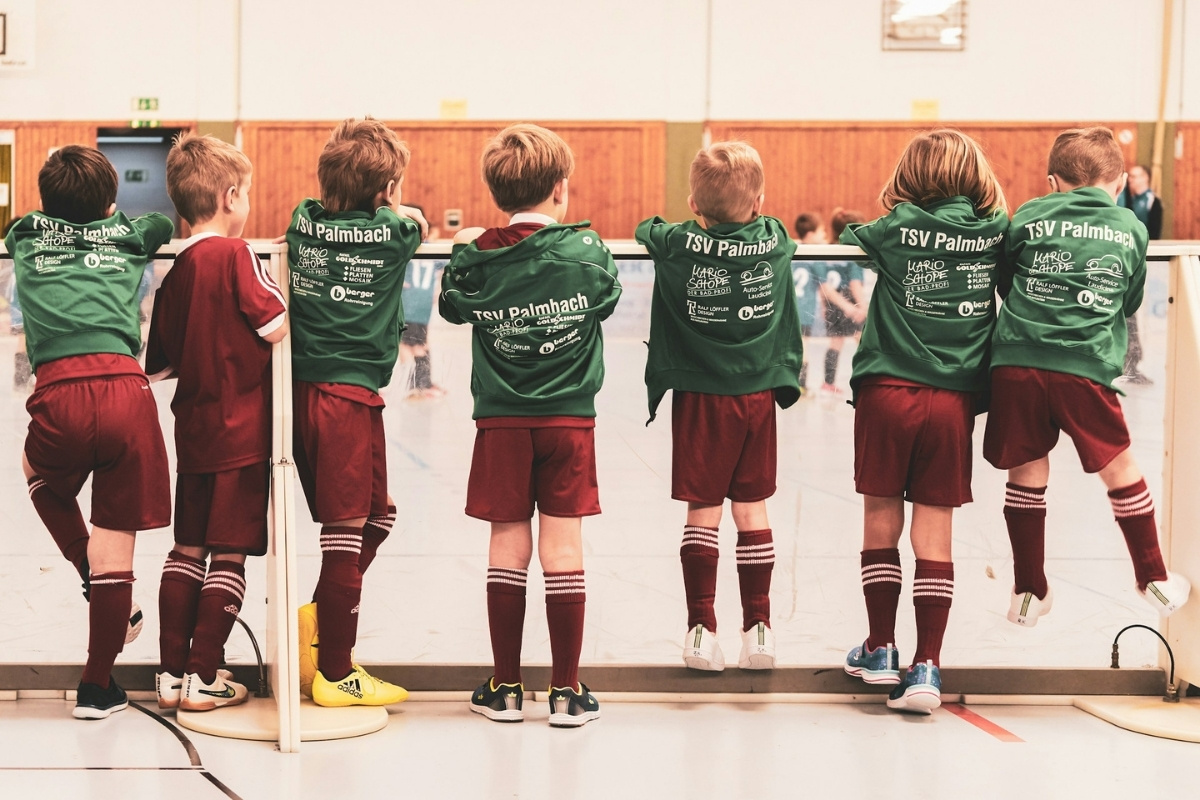
Push for at least one extracurricular. A sport, a club, band, robotics, student government, it genuinely doesn’t matter which one. What matters is that your kid is building something beyond just being a kid who goes to school and comes home. Kids who are involved in something outside the classroom tend to show up more consistently, perform better academically, and have an easier time building friendships. Leadership opportunities also tend to surface naturally in those spaces without anyone having to manufacture them.
And here’s a nudge worth taking…
If your kid has been playing the same sport or instrument since kindergarten, encourage them to try something completely different this year too.
Art, debate, a foreign language class. New rooms mean new people. That’s valuable at any age.
Widen the Friend Circle
Talk up variety when it comes to friendships. Encourage your kid to sit with someone new at lunch once in a while, or pair up with someone they don’t usually work with. Kids with diverse friend groups tend to be more adaptable and, honestly, more interesting people.
Also, retire “how was your day” as your primary question. You already know the answer. Try “who’d you sit with at lunch?” or “who’s in your group for the science project?”
Those questions get you real information and signal that you actually want to know their world, not just check a box.
If you can swing it, host something at your house. Pizza and a movie, shooting hoops in the driveway, whatever works. The families whose homes become the hangout spot are the parents who actually know what’s going on. That’s a good position to be in.
Stay in the Loop
Bookmark the parent portal and actually open it. Weekly is plenty. A quick glance at grades and missing assignments before they pile up into a crisis takes five minutes and saves a lot of stress. When you spot improvement or a good grade, say something. It builds momentum.
Learn your kid’s teachers’ names. First and last. Not just “the math teacher.” It matters when you need to reach out, and it matters to your kid that you know who their people are.
Show up to back to school night. Even if it’s awkward, even if you’d rather be doing literally anything else. Ten minutes of face time with a teacher early in the year makes every conversation easier down the road, especially if something comes up.
If your school district offers grade alerts, turn them on. An email when an assignment goes missing or a grade drops below a certain point is a lot easier to deal with than finding out at parent conferences.
Get the school calendar on your own calendar. Early release days, teacher in-service days, report card dates. Don’t rely on your partner or a crumpled flyer in your kid’s backpack.
The Bigger Picture
The extracurricular and friendship stuff is what makes school actually enjoyable for your kid. The portal-checking and teacher-names piece is what makes sure nothing blindsides you. Do both and you’re covering the full experience without hovering over every moment.
And enjoy this part. It goes fast. Oh, and don’t forget to pick them up from practice.