
Summer is almost over. The kids are starting school. You got five months left in the year. That’s it. January is a long time ago and December is closer than you think.
This isn’t a guilt trip. It’s a reminder that there’s still enough runway to actually do something with the time you have left. Not next year. This year. Starting now.
Here’s the list. Pick one today (or two if you’re feeling crazy).
1. Get a Full Blood Panel
Not the basic one your doctor orders at your annual physical. A comprehensive panel that actually tells you something. Testosterone levels, thyroid, vitamin D, inflammatory markers, metabolic health. You can’t fix what you don’t know about. Book it this month.
2. Pick One Hard Physical Goal and Chase It
Not a vague intention to get in better shape. A specific thing with a deadline.
A race. A weight on the bar. A distance. Something that requires you to show up consistently whether you feel like it or not. The goal matters less than the discipline it forces.
3. Get a DEXA Scan
The scale tells you almost nothing useful. A DEXA scan tells you your body fat percentage, muscle mass, bone density, and visceral fat score. It takes 15 minutes and costs around $75. Book one. Then use the data.
4. Read One Book That Has Nothing to Do With Work or Parenting
Just for you. Fiction, history, biography, something you’ve been meaning to get to for two years. Reading for pleasure is something most dads quietly give up. Take it back.
5. Have the Conversation With Your Partner You’ve Been Avoiding
You know which one. The thing that’s been sitting between you. The longer it sits, the heavier it gets. This year, say the thing.
6. Find Your People
Men without close friendships carry real health consequences. The research on this is not subtle. If you don’t have a group of guys you’re actually close with, that’s worth treating like the problem it is. A run club, a golf group, a standing dinner, whatever the format, make it happen and protect the time.
7. Take One Solo Trip
Even a night. Even two. Somewhere that’s just yours, with an agenda that belongs entirely to you. Distance from the routine has a way of clarifying what the routine is actually for. Don’t sleep on our Built for More experience this fall 😉.
8. Get Your Sleep in Order
Seven to nine hours is not a luxury. It’s when your body repairs, your testosterone resets, and your brain consolidates everything from the day before. If you’re consistently running on six or less, everything downstream suffers. Address it seriously.
9. Build Something With Your Hands
A piece of furniture. A garden bed. A deck. An accent wall. Something physical that didn’t exist before and now does because you made it. That kind of work has a specific satisfaction that nothing on a screen can replicate. Make time for it.
10. Learn One New Skill That Has No Practical Application
Not a certification. Not something that helps your career. Something you learn because it interests you. A language, an instrument, a craft, a card trick. Curiosity for its own sake is worth protecting.
11. Do Something That Scares You a Little
Not reckless. Just outside your comfort zone enough to remind you that you’re still capable of doing hard new things. A cold plunge, a public speaking event, a race distance you’ve never tried, a conversation you’ve been too afraid to start.
12. Get Your Finances in a Place You’re Not Embarrassed By
Doesn’t have to be perfect. Know your numbers. Have a will. Have life insurance your family could actually live on. Have a rough plan for what the next decade looks like. Most dads avoid this because it’s uncomfortable. Do it anyway.
13. Say No to Something You Don’t Want to Do
One thing this year that you say yes to out of obligation and no to out of self-respect. Practice the word. It gets easier.
14. Go to the Doctor for the Thing You’ve Been Putting Off
You know what it is. Make the appointment this week. Not next month. This week.
15. Decide What You Actually Want This Year and Write It Down
Not goals for your kids. Not goals for the business. Goals for you. Who you want to be, what you want to build, what you want to feel like at the end of this year. Write it down somewhere. Look at it more than once.
The list isn’t about being selfish. It’s about being sustainable. A dad who takes care of himself shows up differently than one who doesn’t. His kids see it. His partner feels it. His work reflects it.
Start with one. Pick the one that stings a little when you read it. That’s probably the right place to start.
We’ve been fans of Laird Hamilton for a while now. So when this clip from You Choose Podcast crossed our IG feed last week, it hit us in the feels.
If you’re not familiar with Laird Hamilton…
He’s widely considered the greatest big wave surfer who has ever lived. He pioneered tow-in surfing. On August 17, 2000, he rode a wave at Teahupo’o in Tahiti that is still talked about as one of the most extraordinary athletic feats in the history of the sport.
He is married to volleyball legend Gabrielle Reece. He has three daughters. And he has spent the better part of four decades doing things on the ocean that most humans cannot comprehend.

Here’s what he said.
“Before I had children, I thought I knew something. After I had kids, I realized I don’t know anything. Being a father is like building a samurai sword. To make a samurai sword, you take steel, you heat it up until it’s red-hot, you beat it with a hammer, and then you put it in a bucket of ice. Then you take it back out, you heat it back up, you beat it with a hammer, and you stick it back in the bucket of ice.
And you just do that over and over, and eventually, it’s the strongest steel in the world. And so your children take you, they heat you up, they beat you with a hammer, and they stick you in a bucket of ice, and they do that over and over and over.
And then personally, as a man, that’s my evolution. Boy, teenage, young man, husband, father. That’s the part of the evolution. That’s your growth.
It’s called parenting, not childing. It’s for me, not them.
Because ultimately, it’s the tempering of your soul, the vulnerability, and all the things that they bring out in you. Love them, keep them safe, give them some values. They’re gonna be good. But the whole process of it, it’s for you.”
View this post on Instagram
Steve Soderholm makes perfume for a living.
He’s also a dad of three, an early riser, a deep house music producer, and someone who has quietly figured out that the secret to doing everything well is accepting that you can’t do everything perfectly.
He lives in Nashville. He grills on the Blackstone. He lifts and saunas before dinner so he comes home energized instead of depleted. His wife rolls her eyes at his fitness phases.
We like him a lot.
The tension Steve lives with every day isn’t unique to him, but the way he talks about it is.
“I want to do everything to the absolute best of my ability,” he says, “which ends up meaning I want to give all my time to all three things. But the reality is I can’t.”
The three things are self, family, and work. The math never fully adds up and Steve has stopped pretending it does. What he’s landed on instead is something more honest: as long as nothing gets completely left out, the whole thing holds together. Some weeks family gets 90% of him. Some weeks it’s work. The key is that nothing ever goes to zero.
He’s also figured out that the categories feed each other. He’s a better dad because he gives time to work and himself. He’s better at work because he gives time to his family. The balance isn’t a destination. It’s the point.
Steve’s days start early and deliberately.
Up between 5:30 and 6, coffee first, then prayer time. That window before the kids wake up is his and he protects it. If he’s lifting that morning, he goes. If not, he gets creative work done while the house is still quiet.
Then the kids are up and, as he puts it, the madness starts.
By afternoon he’s at the office. If he’s lifting after work he stops at the gym on the way home, sauna included. “It’s so great coming home energized from a workout instead of exhausted from a long day.” Then it’s Blackstone time, family hang, kids to bed, and a quiet evening with his wife catching up before they both read and call it a night.
It’s a full day. He seems to like it that way.
Steve is a perfumer by trade, the founder of Ranger Station, a fragrance brand built around the outdoors and the kind of memories that stick. It took real belief to build it, and real doubt to get through the early days.
The advice that carried him through came from a mentor who asked him the simplest possible question: what’s the worst thing that could happen?
Steve gave the answer most people give. It fails. I waste years. I look like an idiot.
His mentor pushed back. That wouldn’t be a waste. It would just lead you to what’s next. The actual worst thing is that you don’t try and regret it forever.
Steve has applied that logic to fatherhood ever since. “The worst case scenario is that you don’t try and wish you always had.” It’s the kind of reframe that sounds simple until you actually sit with it.

Before he became a dad, Steve heard mostly warnings.
It’s going to be so hard. Your life is going to change. You won’t have time for anything. The kind of well-meaning caution that doesn’t actually prepare you for anything because it leaves out the most important part.
“I honestly wish I knew how awesome it was.”
He was traveling solo for work recently, no kids, no noise, the kind of trip that’s supposed to feel like a break. He was bored within days. He just wanted to be home.
The most rewarding part, he says, is watching personalities emerge. Seeing his kids go through something hard and come out the other side. Watching them love on other people in that completely uninhibited way small children do. He describes it as childlike faith made visible. For Steve, who takes his own faith seriously, that means something specific.
Faith is how Steve stays grounded when things get loud.
He’s clear that he doesn’t mean it casually. “I wouldn’t even say that it’s a part of my life, but that I am a part of it.” When he zooms out and looks at Ranger Station, his family, his friendships, it’s obvious to him that he’s not the one running the show. His job is to steward what he’s been given and work as hard as he can with it.
That perspective has a practical effect. When something goes wrong or the pressure builds, remembering he’s not actually in control takes some of the weight off. Not as an excuse to coast. As a reminder of what his role actually is.
One thing Steve won’t let go of, no matter how busy things get, is his friends.
He’s heard the research that says men without close friendships carry a health risk comparable to heavy smoking. He believes it. Family and work will consume every hour you give them. Friends require you to actively protect the time. He does.
When he’s flying solo, he usually goes back to music. He found his way into producing deep house a while back and it’s become a genuine creative outlet, something that’s entirely his own. Between that, the gym, and whatever new fitness thing his wife is currently skeptical of, he seems to have found a version of himself that exists outside of dad and founder.
That version, he’d probably tell you, makes the other versions better.
Follow Steve and Ranger Station at @rangerstation.co
It shows up at random times.
In the middle of a work call. Right before you fall asleep. On the drive home when the day ran long and you know they’ll already be in the bath by the time you walk in.
Am I doing enough?
Not in a dramatic, crisis-of-faith kind of way. More like a low hum in the background that never fully turns off. A quiet audit that runs without you asking it to.
You were present at dinner but were you actually there or were you half somewhere else? You made it to the game but did you cheer loud enough, pay close enough attention, talk to them enough about it afterward? You put them to bed but did you rush through it because you had things to do?
The question isn’t dramatic. That’s what makes it hard to shake.
The fact that you’re asking it is almost certainly the answer.
The dads who aren’t doing enough aren’t usually sitting around wondering if they’re doing enough. They’ve made peace with the distance, or they’re not paying enough attention to notice it, or both. The wondering is itself a form of showing up. The audit means you care. The discomfort means your standards are higher than your baseline.
That doesn’t make the feeling go away. But it’s worth sitting with.
The math of modern fatherhood is genuinely hard.
There are more hours in a workday than there used to be, or at least it feels that way. The line between work and home has blurred for a lot of us. The mental load doesn’t clock out. You can be home and still be working, still be worried, still be somewhere else in your head while your kid is trying to show you something.
And then there’s the comparison layer. Other dads who seem to have cracked the code. The ones who coach the team and close the deal and still somehow have time to be the fun dad and the present dad and the patient dad all at once. You know the version you’re seeing isn’t the full picture and you still can’t help measuring yourself against it.
The gap between who you want to be and who you actually are on a random Tuesday at 6pm is real. Pretending it isn’t doesn’t help.
What actually helps, at least a little, is getting specific.
“Am I doing enough” is too big a question to answer. It’s abstract. It loops. It doesn’t resolve because it was never designed to.
Break it down. Enough for what? Enough compared to when? Enough by whose standard?
Your kid doesn’t need a perfect version of you. They need the real one, consistently. They need to know you show up. That when you’re there you’re actually there. That when you blow it you come back and acknowledge it. That they’re on your mind even when you’re not in the same room.
That’s a more manageable bar than enough. And it’s probably the right one.

There are seasons of this thing.
There are stretches where work demands more and the family gets less and you feel the gap every day. There are stretches where you’re fully in it, present and energized, and the whole thing hums. Neither one lasts forever.
The goal isn’t to eliminate the hard seasons. It’s to not let them become the default. To notice when you’ve been running on fumes for too long and the people at home are getting whatever’s left. To course-correct before the drift becomes a distance.
The asking itself is the compass. When the question gets louder, it’s telling you something.
We’ll say this plainly.
You are probably doing better than you think. Not perfectly, not always, but better than the voice in your head gives you credit for.
Your kids don’t need you to be everywhere all the time. They need you to be somewhere, regularly, actually present. To put the phone down when it counts. To show up for the ordinary Tuesday the same way you show up for the big moments. To let them see you try.
That’s it. That’s the whole thing.
The question isn’t going away. That’s fine. Let it remind you to lift your head up every now and then. Let it push you toward the room where they are instead of the one where the work is.
You’re asking the question. That means you’re in it. That’s enough.
There’s a version of this story where Tony Knapton has all the answers.
He doesn’t. And that’s what makes it worth telling.
Tony is the founder of Radry Golf, a brand he describes as a never-ending art project disguised as a golf company. He makes apparel, figurines, and products, anything he can put his creative golf spin on. He started it seven years ago when he got serious about the game and couldn’t find a single brand in the space that felt remotely interesting. So he built one.
What he didn’t anticipate was the tug of war that comes with it.
Only about 10 percent of his time is actually spent creating. The rest is the business. The logistics, the decisions, the noise that comes with trying to turn a passion into something real. He’ll be the first to tell you it would probably be easier to keep art as a hobby. But that’s not the point. The point is waking up and doing the thing he thinks about.
“I’ve got this voice in my head that demands perfection,” he says. “I overthink things to the point of not doing them.”
Painting became the antidote. You can’t Command Z your way out of a mistake on canvas. You commit to the stroke and you live with it. He’s learning to embrace the imperfections. That lesson, he says, extends well beyond the studio.
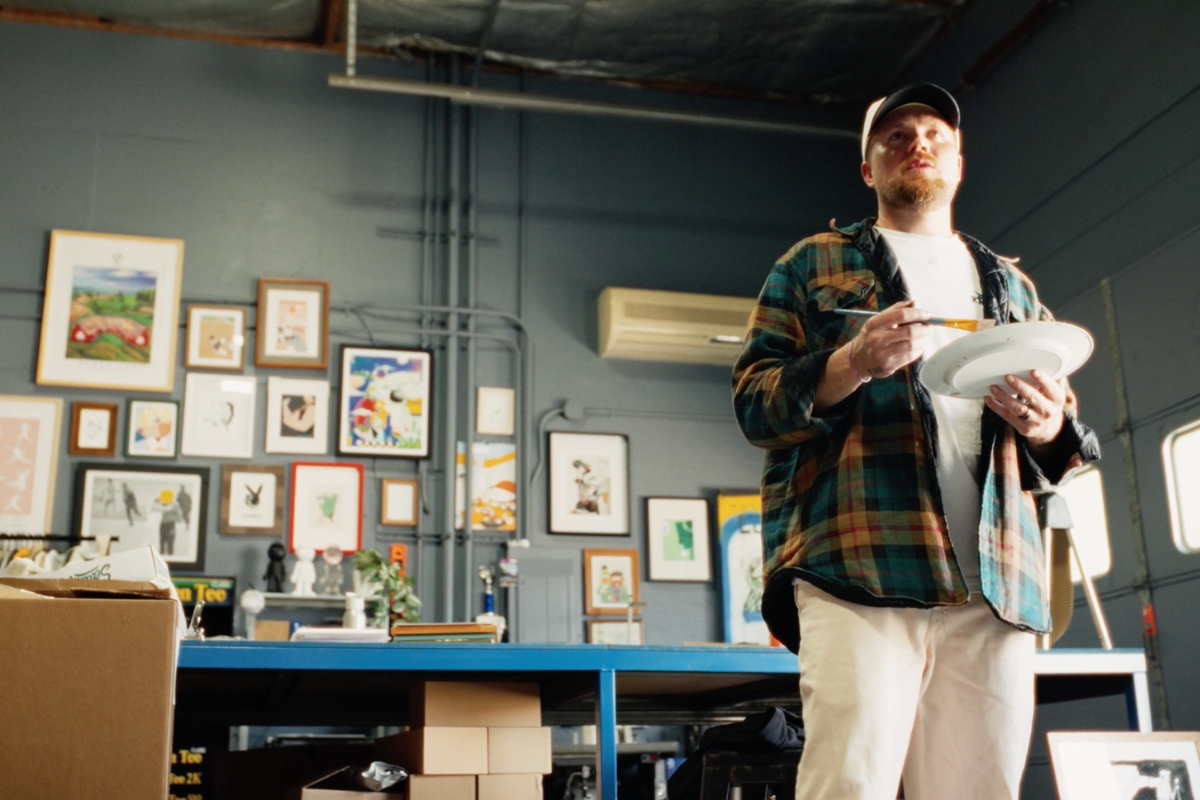
One of his most personal pieces is a painting of classic lawn chairs. Colorful. Nostalgic. A reminder to lift his head up from the work. Because time moves fast when your head is down, and one day you look up and your daughter is getting braces and you can’t figure out where your little girl went. That part makes him emotional and he doesn’t try to hide it.
In January of 2023, Tony’s father-in-law was diagnosed with ALS. He and his family were living in Austin at the time. They moved back to Wisconsin immediately. Watching someone disappear from that disease does something to you. It makes mortality concrete. It reorders priorities. It makes you want to do the things you keep saying you’ll do someday, now, while you can.
“I try to honor him as best I can in the decisions I make and how I live my life,” Tony says. “My art reflects all of that.”
He’s now building a space in his hometown. A run club, golf simulators, co-working, a gallery for his work, a place for people to gather and build real relationships. Austin had a creative energy he misses. If that energy doesn’t exist where he is, he’ll create it himself. That’s the mentality.
He’s still in the middle of it. Trying to be the best dad while also showing his kids that passion can become a life if you’re willing to do the hard work. Trying to figure out what success actually means. Is it financial freedom? Is it making it to his kid’s kindergarten graduation at one in the afternoon? He’s not sure. Maybe both. Maybe neither. Maybe the beauty is in not having the answer yet.
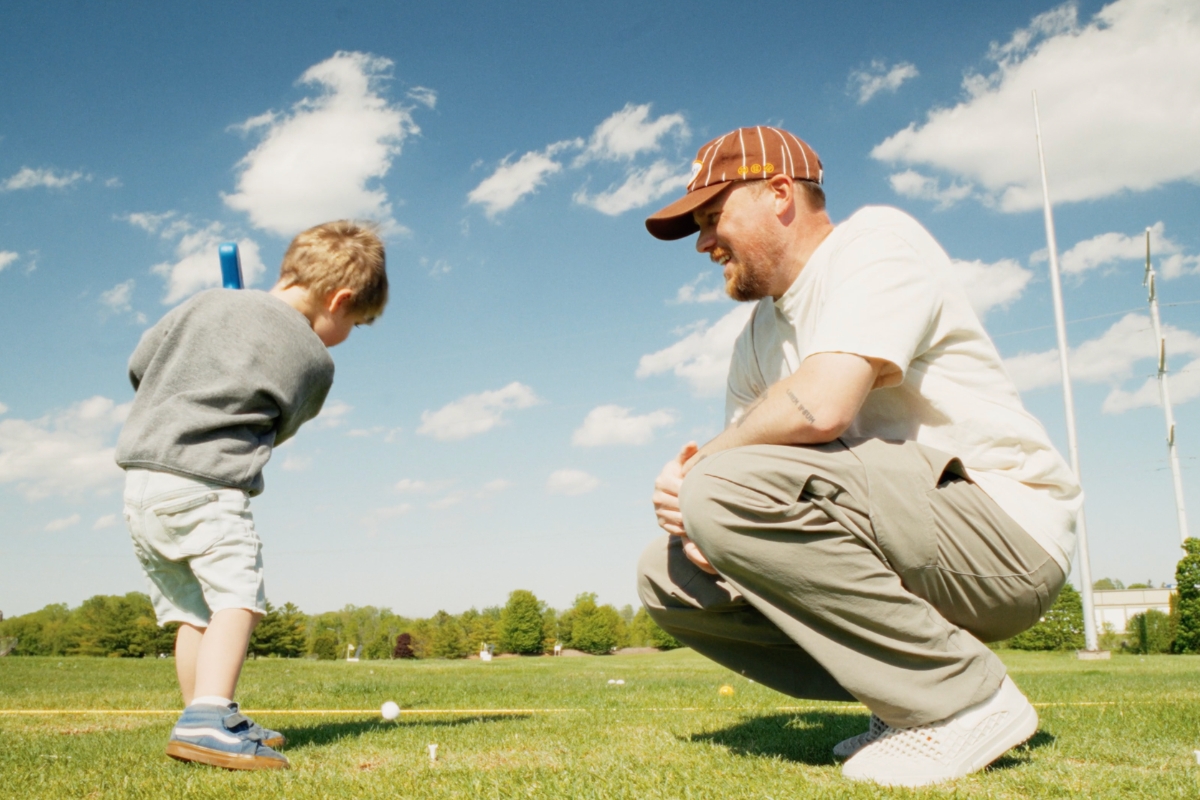
“Some days are better than others,” he says. “And it’s all reflected in my art. I’m just trying to figure it out.”
So is the rest of us.
Watch Tony’s full story in our latest Go West film. Tell your friends.
There’s something about a dad who can cook that communicates more than just competence. It says I take care of this family. I show up for the things that matter. I can handle myself.
This isn’t about becoming a chef. It’s about knowing ten things well enough that the kitchen feels like home instead of foreign territory.
Here’s the list.
1. A Proper Scrambled Egg
Start here because it’s the most humbling dish in cooking.
Scrambled eggs are simple and almost universally done wrong. Too hot, too fast, rubbery, dry. The fix is embarrassingly straightforward. Low heat. Butter. Constant movement with a spatula. Pull the pan off before they look done and let carry-over cooking finish them. Salt at the end.
A dad who makes perfect scrambled eggs on a Saturday morning is operating at a different level than he realizes. Master this and everything else gets easier because you understand heat and patience.

2. A Roast Chicken
This is the most important dish on the list.
One chicken feeds a family. It costs almost nothing per serving. The leftovers become soup, tacos, sandwiches. And a properly roasted chicken, golden skin, juicy meat, the whole house smelling like something good is happening, is one of the most satisfying things a dad can put on the table.
The technique is not complicated. Dry the bird the night before. Season aggressively with salt, pepper, and whatever herbs you like. High heat, around 425 degrees, for about an hour depending on size. Let it rest before you cut it. That’s the whole recipe.
Learn this one. Cook it on repeat. It will become the thing your kids ask for by name.
3. Pasta From Scratch (Or at Least a Proper Sauce)
Not every dad needs to make pasta dough from scratch. But every dad should be able to make a sauce that isn’t from a jar.
A proper tomato sauce takes 25 minutes. Olive oil, garlic, crushed tomatoes, salt, time, and a handful of fresh basil at the end. That’s it. The difference between that and jarred sauce is significant. Your kids will taste it. You will taste it.
If you want to go further, pasta dough is four ingredients and the technique is learnable in an afternoon. Fresh pasta changes what dinner feels like entirely. But start with the sauce.

4. A Great Burger
Every dad thinks he can make a burger. Half of them are wrong.
The difference between a great burger and a mediocre one is simple. Don’t overwork the meat. Season the outside, not the inside. Press a small dimple in the center before cooking so it stays flat. High heat, minimal flipping, and don’t press down on it. You’re squeezing out the juice every time you do that.
An 80/20 ground beef blend is the standard. Season with salt and pepper right before it hits the pan or grill. Two to three minutes per side for medium. Let it rest for two minutes.
This is the dish your kids will brag about at school. Get it right.

5. A Sheet Pan Dinner
This is the weeknight move every dad needs in his back pocket.
One pan. Protein, vegetables, olive oil, seasoning. Into the oven at 400 degrees. Done in 30 to 40 minutes. One thing to clean.
Chicken thighs with potatoes and broccoli. Salmon with asparagus and cherry tomatoes. Sausage with peppers and onions. The combinations are nearly endless and the technique is identical every time. Toss everything in olive oil, season well, spread it on the pan without crowding it, roast until done.
This is the recipe that makes a dad look like he has his life together on a Tuesday night when everyone is tired and nobody wants to cook.
6. A Steak
A properly cooked steak is one of the great acts of dad cooking. A dry, overcooked steak is one of the great disappointments.
The technique that works every time for home cooking: pat the steak dry, season generously with salt and pepper, bring it to room temperature for 30 minutes before cooking. Cast iron pan, high heat, a tablespoon of butter and some garlic in the last minute of cooking. Baste while it finishes. Rest for five minutes before cutting.
Internal temperature matters. 130 to 135 degrees for medium rare. Get an instant-read thermometer and use it. It costs $15 and removes all the guesswork.
The rest is just watching the steak and not walking away from it.

7. A Soup or Chili From Scratch
This is cold weather cooking. This is Sunday cooking. This is the thing simmering on the stove when your kid walks in the door from school and the whole house smells like something is being taken care of.
Every dad needs a chili. Not from a packet. One that’s actually his. Brown the beef, season aggressively, build layers with onion, garlic, peppers, tomato, beans, spices. Let it go for an hour minimum. Taste and adjust.
The same logic applies to a basic chicken soup or a beef stew. These dishes reward patience and punish rushing. They also get better the next day. Make more than you need.
8. Pancakes That Are Actually Good
Not from a box. From scratch.
The box pancake is one of those things that seems easier than it is. From-scratch pancakes take ten minutes to mix and are genuinely better. Flour, baking powder, salt, sugar, egg, milk, melted butter. Whisk until just combined, lumps are fine, don’t overwork it. Medium heat, wait for bubbles before you flip, one flip only.
This is Saturday morning. This is the thing your kid asks for on their birthday. This is the cooking moment that becomes a memory. Make it from scratch.
9. Something on the Grill
The grill is historically dad territory. A lot of dads who claim it don’t actually know what they’re doing on it.
Learn the two-zone setup. Direct heat for searing, indirect heat for finishing. Learn when to leave things alone because most grill mistakes come from moving things too early. Chicken needs to cook through without burning the outside, so start on indirect heat, finish direct. Burgers are direct. Vegetables are direct but watch them.
Also learn to clean the grill and maintain it. A filthy grill is a fire hazard and it affects the flavor of everything you cook on it.
Join the Family


10. A Dish That Is Completely Yours
This is the most important one on the list.
Every dad needs a signature dish. Not a restaurant recipe you followed once. Something you’ve made enough times that you don’t need to look it up anymore. Something your kids can name without hesitation. Something you bring to the cookout and people ask about.
It could be anything. Brisket. A specific pasta. Your version of fried rice. The best guacamole anyone in your circle has ever had. A breakfast sandwich that people request by name.
The what doesn’t matter. What matters is that you’ve put in enough reps that it’s yours. That you could make it at midnight in an unfamiliar kitchen without a recipe.
That dish becomes part of how your family remembers you. No pressure. But also, all the pressure.
Here’s the deal…
Cooking for your family is one of the most direct expressions of taking care of them. It doesn’t require culinary school. It requires showing up consistently, learning a few things well, and not being afraid to try something that might not work the first time.
Start with one. Pick the scrambled eggs tonight. Work your way down the list.
Your kids are watching. Get ’em involved, too. Ok, this made us hungry. Time to eat.
Think about the skills you picked up as a kid that still show up in your life today.
Not the ones that aged out. The ones that traveled with you. The sport you can still do. The instrument you can still play. The activity that keeps opening doors in rooms you didn’t expect.
Now think about the skills you wish someone had put in front of you earlier.
That gap, between what we got and what we wish we’d had, is exactly what we’re thinking about as dads.
Because we have a window right now to give our kids something that compounds. Not just a hobby. A set of skills that travel through life, open social doors, create networking opportunities, and stay relevant at 15, at 35, and at 60.
There’s a Category of Skill Most People Don’t Talk About
Not all activities are created equal.
Some sports peak in your twenties and quietly age out. You stop playing competitive basketball. The pickup flag football games thin out. The intramural stuff disappears with college. And that’s fine, those sports gave you something real. But they tend not to compound.
Then there’s another category. Activities you can pick up at five and still be doing at seventy-five. Activities that travel well, that cross social contexts, that show up at business events and charity weekends and family vacations and retirement parties. Activities that quietly build a life around them.
These are what we’d call lifetime activities. And the earlier your kid learns them, the more runway they have to let them work.
Golf
This one leads the list because no other activity comes close for professional networking.
A four-hour round of golf is one of the longest uninterrupted social encounters modern business produces. There’s no agenda to rush through. No meeting to end. No phone to stare at during a pause. Just you, three other people, and eighteen holes of shared experience. Conversations happen naturally. Trust builds. Deals get done.
We didn’t learn until 22 and still feel the gap. The guys who grew up playing have a fluency with the game that changes how they carry themselves on the course. They’re not thinking about their swing when someone brings up a business idea. They’re just playing golf and having a conversation. That ease is worth something.
For kids, golf builds things that transfer directly into life: patience, honesty, personal accountability, comfort in unfamiliar social settings, and an understanding of etiquette that actually matters in the real world. The rules of golf are essentially the rules of professional behavior dressed up in cleats.
The investment to get a kid into golf is real. Lessons, equipment, range time. But the return compounds for decades.
A 10-year-old who plays golf becomes a 30-year-old who can say yes when a client asks if they play. That yes opens a door. The no closes it.
Start them young. Even basic competency at the game is more valuable than most parents realize.

Skiing and Snowboarding
These are the activities that unlock an entirely different social world.
Ski trips are one of the primary ways that a certain tier of professional and social relationships get formed and maintained. Companies take teams on ski trips. Friend groups organize mountain weekends. Families who ski together build something around it. If your kid can ride confidently, they can participate fully in all of it. If they can’t, they’re on the bunny hill while everyone else is on the mountain together.
Learning to ski or snowboard young is dramatically easier than learning as an adult. The fearlessness of childhood, the low center of gravity, the willingness to fall without catastrophizing, all of it makes early learners pick it up in a fraction of the time. An adult learning to ski is a week of frustration and sore everything. A six-year-old learning to ski is three days and they’re linking turns.
There’s also just the life quality dimension. If your kid grows up comfortable on a mountain, they have access to one of the genuinely great experiences available in this world. Powder days, backcountry trips, ski towns with their own culture and community. That’s not nothing.
We’re glad we learned young. It’s one of the things we’d put near the top of the list for our own kids.
Tennis
Tennis deserves more attention than it gets in this conversation.
It’s one of the few sports you can play meaningfully at 8 and 80. It’s social in a direct, one-on-one way that golf isn’t. You can play it in almost any city in the world with almost no equipment. And it shows up in the same professional and social contexts as golf with surprising frequency.
Tennis clubs, like golf clubs, are networking environments. Charity tournaments exist. Company events get organized around it. And unlike golf, you can get a solid tennis workout in 90 minutes, which makes it more compatible with a busy adult schedule.
For kids, tennis builds hand-eye coordination, lateral movement, spatial awareness, and the ability to handle one-on-one competition with composure. Those transfer broadly.

Running
Running might be the most underrated activity on this list from a social standpoint.
The fitness benefits are obvious. The social ones are not, and they’re significant.
Run clubs have exploded in the last decade. In cities across the country, groups of people are meeting at 5:30am on a Tuesday and logging miles together before the rest of the world wakes up. Something specific happens when you do something hard alongside someone at an hour when you both would rather be asleep. Conversations go somewhere real. Friendships form fast. People who run together tend to actually know each other.
Races add another layer. The half marathon circuit, local 5Ks, charity runs, Spartan races, all of it creates a community with its own language, its own events, its own recurring social calendar. Sign up for the same race as someone in your network and you have six months of shared training conversations before you even cross the start line.
Running also travels. Every city has routes. Every trip has a morning window. Some of the best conversations we’ve had happened on a run with someone we were trying to get to know. The side-by-side nature of it, no eye contact required, nothing to stare at, just moving forward together, creates an environment where people open up more than they would sitting across a table.
For kids, the entry point is simple. School track, cross country, weekend 5Ks with a parent.
Running requires zero equipment beyond shoes and builds the habit of physical discomfort as something manageable, which is one of the most useful things a kid can internalize.
A kid who runs becomes an adult who runs. And an adult who runs has an instant community wherever they go.
Swimming
Swimming is technically a survival skill. But it’s also a lifetime activity in the truest sense.
The 70-year-old who still swims laps every morning didn’t start at 60. They built that habit young and it followed them. Swimming is low-impact, comprehensive, and available everywhere. It scales from recreational to competitive to purely functional across an entire life.
For younger kids, learning to swim confidently also unlocks a whole category of summer experiences, boats, lakes, beaches, pool parties, that are otherwise limited or anxiety-inducing. The social dividend of being a competent swimmer starts in childhood and continues indefinitely.

A Musical Instrument
This one doesn’t open the same professional doors as golf, but it opens something else.
Music gives people a relationship with creativity and discipline that’s genuinely hard to replicate any other way. A kid who learns an instrument and sticks with it learns to practice something imperfectly for a long time before it gets good. That lesson is one of the most useful things a person can internalize.
There’s also the social dimension.
Play an instrument well enough and you become the person who can sit down at a piano at a party and make the room stop.
You can play in a band with friends, compose things, teach your own kids someday. It’s a skill that deepens with age in a way that most physical activities can’t.
The guitar specifically earns a mention. It’s portable, it’s social, it plays well around campfires and beach trips and all the places that matter. Learning basic chords at eight means being the person who can actually play something meaningful at forty.
Martial Arts
Less obvious but worth including.
Martial arts teaches discipline, physical confidence, and the ability to be uncomfortable without panicking. Those qualities show up everywhere in life. A kid who spends years in a martial art understands what consistent practice produces. They understand hierarchy and respect in a way that’s genuinely useful. They’re also, practically speaking, more confident in their body and their ability to handle physical situations.
Many adults who trained as kids return to it in their thirties and forties as a fitness practice and community. The skill doesn’t expire.
Surfing and Water Sports
This one is regional but worth mentioning for the families near water.
Surfing in particular has its own culture and community that runs deep. People who surf share something specific. It shows up in how they travel, where they vacation, who they spend time with. Learning young means having a relationship with the ocean that lasts a lifetime.
Same goes for sailing, paddleboarding, kitesurfing. Any water skill learned young becomes a passport to experiences and communities that are genuinely difficult to access later.

We’ll Leave You With This…
Every activity on this list shares a few things.
They can be done across a full lifetime without significant physical limitation. They exist in social contexts that matter beyond just recreation. They teach transferable qualities including patience, discipline, comfort with discomfort, and how to be gracious in competition. And they compound. The earlier you start, the more you get.
Here’s the dad angle that matters most.
We can’t give our kids everything. But we can give them a set of skills that travel well through life. A kid who plays golf, skis, runs, swims, and plays an instrument has access to social worlds, professional environments, and personal experiences that a kid without those skills simply doesn’t.
That’s not about pressure or achievement. It’s about equipping them with tools that work at 15, at 30, at 60.
Think about the things you wish you’d learned earlier. Then give your kid the head start you didn’t have.
Join the Family
We have almost 500 dads in our Slack group. And this question comes up more than almost anything else.
When should we have another one? Larger age gap or smaller? Anyone have pros and cons for a big or small gap?
It’s one of those questions that feels like it should have a clean answer. A formula. A right move. It doesn’t. But there’s a lot of useful thinking out there from dads who’ve lived both sides of it. And there’s one bigger truth that tends to override all the planning anyway.
More on that in a minute.
What the Research Actually Says
If you go looking for scientific guidance on ideal sibling spacing, you’ll find a lot of hedging.
The most commonly cited sweet spot in parenting research is somewhere between two and three years. The reasoning makes practical sense. Mom’s body has had meaningful recovery time. The older child is out of diapers and old enough to understand what’s happening. The logistics are manageable.
But the research also consistently shows that the effects of age spacing on sibling closeness and child development are heavily influenced by other factors: personality, parenting style, family dynamics, and frankly, how the parents handle the chaos.
There’s no gap that guarantees close siblings. There’s no gap that guarantees difficult ones.
What the data is clearer on is the stress curve. Very close gaps, under 18 months, are significantly harder on the parents in the short term. The physical and emotional demands of two babies essentially at the same time are real. On the other end, very large gaps, five years or more, tend to produce more of a separate-childhoods dynamic where the kids have less overlap in life stages and sometimes less natural closeness.
Everything in between exists on a spectrum. And the people living it are the best source of actual data.
What Our Guys Said
The Dad Day community had thoughts.
- Jon, who has a 2.5-year gap, put the logistics case well: “Larger gaps are hard because when you finish a milestone the other is entering it. Diapers, daycare, etc. Two years is nice because they can still be in a similar friend group.”
That overlap point is real. With a closer gap, you’re buying diapers for two kids at once, yes. But you’re also finishing that phase faster as a household. With a larger gap you get a breather, then you restart from scratch. Depending on your tolerance for restart, that’s either a relief or a grind.
- Eric also in the 2.5-year camp, described something that’s hard to put a number on: “They’re so bonded and literally follow one another’s lead in both directions all the time. It’s pretty special to see their closeness continue to grow.” He also noted a practical win he didn’t expect: “Our second was way faster to get out of diapers because he was following the leader.”
- Richard O. offered the longer-gap perspective from lived experience: “With my 4.5-year gap to my middle brother and another 4.5 to the older, we didn’t bond much as kids. We get along fine, but we couldn’t share a lot of interests at the same time and definitely couldn’t share friend groups.”
- Daniel had the line of the whole conversation. With 2.5-year-apart kids himself, he described his own family of origin, where brothers 13 months apart grew up extremely close, and then there’s Daniel, arriving 6 years after the last sibling. “I was kind of on my own. But it took my parents 5 tries to finally get it right.” 😏

The Thing You Can’t Plan For
Here’s where we want to be honest about something.
All of this assumes the universe cooperates with your timeline.
Our boys are three years apart. We now have a five-month-old girl. And part of us wishes we would have just gone for all three a lot sooner. But number three didn’t come easy. There were things we couldn’t control and didn’t plan for. And so we feel genuinely, deeply blessed to have three healthy kids. Full stop.
That’s the part of this conversation that doesn’t get said enough.
You can read every article, poll every parent in your life, make a spreadsheet if that’s your thing. And then biology, or timing, or circumstance, or something completely outside your control enters the picture and changes the plan.
The couples who planned an 18-month gap sometimes end up with four years. The couples who wanted to wait ended up surprised sooner. The ones who thought they were done ended up with a beautiful third who came when they least expected it.
The gap between your kids is something you can have intentions about. It’s not something you can always control.
So What Do You Actually Do With All of This?
A few things that seem genuinely useful.
Think about the phase overlap honestly. Closer gaps mean more concurrent chaos. Double strollers, double diapers, two kids who both need you physically at the same time. It’s hard and then it eases. Wider gaps mean less concurrent chaos but a longer total runway of the intensive early years. Neither is objectively better. One might fit your life better than the other.
Think about sibling closeness differently. Closeness between siblings isn’t primarily a product of age gap. It’s a product of how the family operates. Kids who are encouraged to play together, who spend time together, who are raised in an environment that values the sibling relationship, tend to be close regardless of the gap. You have more influence here than the birth spacing does.
Don’t optimize too hard. The families who seem to navigate this best are the ones who made a reasonable decision, went for it, and then adapted to whatever actually happened. Over-optimizing the gap is a way of trying to control something that is, at best, partially controllable.
Give yourself some grace. Whatever gap your kids end up with, whether it was planned or not, there are people living that exact situation and doing great. The gap doesn’t determine the outcome. You do.
We’ll Leave You With This
There isn’t one right answer.
Two to three years seems to be the most commonly recommended range and there are real practical reasons for that. But people with 18-month gaps have beautiful sibling relationships. People with five-year gaps have beautiful sibling relationships. And some people with two-year gaps still have kids who aren’t particularly close.
Have the conversation with your partner. Think about your bandwidth honestly. Make a plan if it helps you feel grounded.
And then hold that plan loosely, because the universe tends to have opinions.
Join the Family
There is no objectively right answer here.
That’s the first thing worth saying. Because most conversations about this topic end up sounding like someone is defending a choice they already made. Either you live near family and you can’t imagine doing it any other way, or you live far away and you’ve built something that works and you’ll tell anyone who asks that it made you and your spouse stronger.
Both of those people are usually right. That’s what makes this one of the more genuinely complicated decisions in family life.
Here’s an honest look at both sides, with some real talk about what the research says and what dads who’ve been in both situations have learned.
The Case for Living Near Family
Built-in support is real and it matters.
The research on this isn’t subtle. Having extended family nearby, specifically grandparents, is associated with lower parental stress, higher child wellbeing, and more flexibility for both parents in terms of work and personal time. A grandparent who can take the kids for a Saturday afternoon isn’t just a convenience. That’s a mental health resource. That’s margin in a schedule that has no margin.
The babysitter angle is obvious so let’s get it out of the way fast. Free, trusted childcare is one of the most expensive things in modern family life.
The average cost of full-time daycare in the US runs between $10,000 and $20,000 a year depending on where you live.
Having family nearby doesn’t eliminate that cost entirely but it meaningfully reduces it for a lot of families. That’s real money.
Beyond the logistics, there’s something about kids growing up with grandparents, aunts, uncles, and cousins around that’s genuinely hard to replicate. Extended family gives kids a sense of where they come from. It gives them relationships with adults who love them unconditionally but aren’t their parents. Different perspectives, different personalities, a wider web of people who are invested in who they become.
There’s also the crisis variable. When something goes sideways, medically, emotionally, professionally, having people physically nearby who can show up matters in a way that no amount of FaceTime can touch. A parent who gets sick. A rough patch in the marriage. A kid who needs more than you have in the tank right now. Those situations are harder alone.
The Case Against (Or at Least the Real Complications)
Here’s where it gets more honest.
Living near family works best when the family is functional. When it isn’t, proximity amplifies every existing problem instead of solving it.
The friction is real. Differing opinions on how to raise the kids. Boundaries that get crossed. Grandparents who undermine rules you’re trying to establish. The aunt who always has a comment. The family dynamic that was fine when you were seeing everyone at holidays but becomes harder when you’re navigating it every week.
If you don’t get along well with your family, or if your family doesn’t fully respect your parenting choices, geographic distance is a legitimate form of protection.
Not just for you. For your kids. Kids absorb family tension even when adults think they’re hiding it. Fewer toxic interactions at close proximity is sometimes the better environment regardless of what proximity could theoretically offer.
There’s also the independence factor. Something happens when you move away from family and figure things out on your own. You build confidence as a parent in a way that’s harder to develop when there’s always someone to defer to nearby. You and your spouse learn each other’s strengths in ways you might not have to if help is always a 10-minute drive away.
The Thing About Your Marriage
This one deserves its own section because it’s the part that gets talked about least.
When you move away from family and it’s just the two of you, you become each other’s person in a more complete way. Not because you chose it exactly. Because there’s no other option. Your partner becomes your best friend, your support system, your co-pilot in a way that doesn’t always develop as fully when you have family infrastructure around.
It sounds like a constraint. It often turns into a strength.
That forced interdependence builds something. You learn to communicate better because you have to. You solve problems together because there’s no one else to hand them to. You build a family culture that’s genuinely yours rather than an extension of whoever’s family you’re geographically closest to.
That’s not to say couples near family don’t have strong marriages. They do.
But there’s something specific that gets built when you’re on your own that’s worth acknowledging.
The flip side is real too. The stress of doing it without a support network can strain a marriage. Burnout is more likely when there’s no backup. Two people carrying everything with no relief valve is genuinely hard. Some couples near family are closer because they have breathing room. Some couples far from family are closer because they’ve had to figure things out together. Both happen.
Join the Family
If You Don’t Live Near Family: What Actually Helps
For the dads who are doing it on their own, here’s what actually makes a difference.
- Build your chosen family. This is the single most important thing. Find other families you trust and invest in those relationships. The people you call when you need someone to grab your kid from school. The couple you process hard weeks with. The dad friends who actually show up. These relationships don’t form by accident. You have to pursue them intentionally the same way you would any other important thing in your life.
- Create your own rituals. Extended family gives kids a sense of tradition and continuity. You can build that yourself. It doesn’t have to be elaborate. Sunday dinners. Annual trips. A specific thing your family does that belongs to you. Kids anchor themselves in these rituals and they give a sense of identity that doesn’t require geography.
- Use technology for the good stuff, not just the logistics. Weekly video calls with grandparents that are actually consistent. Shared photo albums. Intentional connection rather than sporadic FaceTime when you happen to think of it. Distance doesn’t have to mean disconnection. It just requires more deliberate effort to maintain than living down the street does.
- Be honest about the hard seasons. There will be stretches where being far from family feels like a mistake. Usually when someone gets sick, or when you’re both depleted, or when you’re watching other families do things together that you can’t replicate. Name those seasons out loud with your partner. Don’t pretend they’re not hard. And build in enough margin in your schedule and budget to visit family more when those stretches hit.
- Protect your own wellbeing. Without built-in relief valves, you have to create them. Regular date nights. Time alone that isn’t negotiable. Exercise that actually happens. The dads who crash in this situation are usually the ones who tried to absorb everything without any outlet. You can’t pour from an empty tank and the tank needs to get refilled deliberately when no one is automatically offering to take the kids.
If You Do Live Near Family: What to Watch For
For the dads with family nearby, a few honest things to consider.
- Set boundaries early and hold them. The time to establish expectations about drop-in visits, parenting decisions, and who has authority over what is before friction develops, not after. A conversation that happens proactively is ten times easier than a conversation that happens after someone’s feelings are hurt or your rules have been undermined in front of your kid.
- Make sure you and your partner are still building your own thing. It’s easy when family is around to let them become the social infrastructure and never build anything independent. Make sure you have couple time that isn’t in the context of the extended family. Make sure your kids are developing their own identity as your family, not just as a branch of the larger tree.
- Don’t assume proximity equals involvement. Living an hour away from grandparents does not automatically mean they’ll be in the picture in a meaningful way. The relationship between your kids and extended family requires active cultivation regardless of geography. Proximity makes that easier but it doesn’t make it automatic.
The Honest Bottom Line
Neither situation is inherently better. Both are workable. Both have real costs and real benefits that depend enormously on who your family is, what your marriage is like, where you are in your career, and what kind of life you’re trying to build.
What we’d say to any dad facing this decision is to be honest about your specific situation rather than chasing a theoretical ideal. Living near a warm, supportive, boundaried family that respects your parenting is a genuine advantage. Living near a complicated, enmeshed, or critical family might be worse than going it alone.
And if you’re already far away, building something intentionally takes more effort but produces something that’s genuinely yours.
Either way, your kids need you present. The geography is the backdrop. Your engagement is the thing.
We’re all guilty of it.
The phone comes out at dinner. It’s the last thing we look at before bed and the first thing we reach for in the morning. It fills every gap, every quiet moment, every 30 seconds of waiting for anything.
Nobody sat down and decided this was the plan. It just kind of happened.
Here are 10 habits worth breaking. Some of these are about your kids. Some are about your marriage. Some are just about being a more present human. All of them are worth an honest look.
1. Checking It First Thing in the Morning
Before your feet hit the floor, before you’ve said good morning to anyone in your house, before you’ve had a single thought that belongs to you, you hand your brain to whoever filled your inbox overnight.
That email from a coworker. That news alert. That group text that blew up at midnight. All of it gets to set the tone for your day before you do.
The first 20 minutes of your morning are neurologically significant. Your brain is transitioning from sleep and is highly impressionable. What you feed it first tends to stick.
Feed it something that belongs to you. A few quiet minutes. Coffee. Your own thoughts. Your kids if they’re up. The phone can wait 20 minutes. It always could.
2. Having It Out at the Dinner Table
Dinner is one of the last holdouts of unscheduled family time. Nobody has anywhere to be. The food is a reason to sit together. Conversation happens naturally if you let it.
The phone on the table, even face down, is a presence.
Research from the University of Texas found that having a smartphone on the table, even without touching it, reduces available cognitive capacity. You are literally less present with your family because the phone exists in their field of view.
Put it in another room. Not your pocket. Another room. The difference is significant.
3. Scrolling While Your Kid Is Talking to You
They notice. Every single time.
You might think you’re multitasking. You might think you’re catching enough of what they’re saying to respond. You’re not. And more importantly, what they’re absorbing isn’t the content of your response. It’s the fact that the phone was more interesting than they were.
That message compounds over years. Put it down. Make eye contact. Let them finish the story even if it takes four times longer than it needs to.
4. Using It as a Pacifier for Your Kids
This one is uncomfortable because it’s so easy and it works so immediately.
Kid melting down at the restaurant? Phone. Long car ride getting loud? Phone. You need ten minutes to finish something? Phone.
We’re not saying never. We’re saying notice how often and what it’s replacing. Every time the phone goes in their hand, something else doesn’t happen. Boredom that would have led somewhere. A conversation. A game they’d have invented on their own. The discomfort that builds resilience.
The phone solves the immediate problem. It quietly creates a longer one.
5. Documenting Everything Instead of Experiencing It
You are at your kid’s first soccer game. They’re out there. They’re doing the thing. And you’ve got the phone up, trying to get the shot, watching the game through a 6-inch screen.
Put the phone down. Watch it with your eyes. Be there.
You will not forget this moment because you didn’t film it. You will forget it because you were behind the camera instead of in front of the moment. Take one photo. Then put it away and actually be at the thing you drove 25 minutes to be at.
Join the Family
6. Checking Work Email After 7pm
You are not that important. And even if you are, it can wait until morning.
The problem with checking work email at night isn’t just that it steals your time. It’s what it does to your nervous system. You can’t unsee what you just read. Now your brain is working on it. Now you’re half-present at bedtime. Now you wake up at 3am thinking about it.
Set a cutoff. 7pm, 8pm, whatever works for your life. And hold it. The world will not end. Your inbox will be there in the morning. Your kids’ bedtime is happening right now.
7. Sleeping With It on Your Nightstand
It’s the last thing you look at before you sleep and the first thing you reach for when you wake up. That’s an enormous amount of influence to hand to a device.
The blue light disrupts melatonin production. The content, news, social media, email, activates your stress response right before your brain is supposed to power down.
Sleep quality suffers. The next day suffers.
Charge it in the kitchen or the bathroom. Buy an $8 alarm clock if you need a backup. Your sleep is worth more than the convenience of having the phone two feet from your face.
8. Mindless Scrolling When You Could Be Present
You know the scroll. Not looking for anything specific. Not relaxing exactly. Just… scrolling. Instagram, X, Reddit, back to Instagram. Ten minutes becomes thirty. You look up and your kid was in the room the whole time.
The scroll isn’t rest. Real rest restores you. The scroll is consumption without return. It leaves you more drained than before you picked it up, not less.
If you need to decompress, decompress for real. Go outside for ten minutes. Sit with your coffee and don’t look at anything. Read something. The scroll is the laziest version of rest and the one with the highest cost.
9. Texting During Conversations
Not the half-attention glance. The full text, mid-conversation, while someone in your house is talking to you.
Your partner is telling you about their day. Your kid is explaining something they care about. And you’re composing a message to someone who isn’t there.
The person in front of you gets the message loud and clear: whoever is in that phone is more important than you right now. That message lands even when you don’t mean to send it.
Finish the conversation. Then text.
10. Using It to Avoid Being Uncomfortable
Waiting in line. Sitting in silence. Riding an elevator. Sitting with your own thoughts for two uninterrupted minutes.
All of these used to just be life. Small, unremarkable pockets of time where your brain wandered, rested, or worked through something on its own.
Now the phone fills every gap. And your brain never gets those pockets. The boredom, the stillness, the silence that used to be where good ideas and honest self-reflection lived, it’s gone.
Let yourself be bored sometimes. Let there be silence. You might be surprised what shows up when the phone isn’t there to fill the space. Your kids are watching how you handle your phone. They’re building their own relationship with it based on what they see from you.
That’s the reason all ten of these matter. Not productivity. Not sleep optimization. Not dopamine management.
Your kids are watching.