
You’re at a cookout. Your buddy’s kid is on his third juice box, his screen-time limit seems to be “whenever he puts it down himself,” and dinner tonight is nuggets because that’s what he asked for.
Meanwhile, you’re the dad who cuts the sugar, enforces the no-phones rule, and has strong opinions about processed food.
Nobody’s saying anything. But you’re both noticing.
This is one of the more quietly stressful parts of parenting that nobody warns you about: navigating the social friction that comes when your values around raising kids don’t match the people around you. And it comes up everywhere. Playgrounds, holiday dinners, family road trips, school pickups. The more intentional you are as a parent, the more you’ll bump into it.
Here are some ways to think about it.
First, Understand What’s Happening Underneath
The discomfort you feel when another parent does things completely differently isn’t really about them. It’s about you.
Research consistently shows that parenting decisions are deeply tied to identity. How we raise our kids reflects our values, our fears, our sense of what’s right. So when someone else’s approach looks nothing like yours, it can feel like a quiet judgment in both directions, even when nobody’s saying a word.
Psychologist Dr. Becky Kennedy, who has written extensively on parent behavior and self-regulation, makes this point clearly: most of the time, parents aren’t judging each other. They’re both just anxious.
They’re both just trying to do right by their kids with the information and capacity they have.
Keeping that in mind before you react changes the whole energy of these situations.
You Don’t Have to Say Anything
Unless a child is in danger, you don’t have to weigh in. The other family’s screen time, sugar intake, sleep schedule, and discipline approach are not your business, and offering an opinion nobody asked for is one of the fastest ways to damage a friendship or create family drama that lasts for years.
Research from the Child Mind Institute is clear: unsolicited parenting advice, even when well-intentioned, is almost always received as criticism. The message the other parent hears isn’t “here’s something useful.” It’s “you’re doing this wrong.”
Hold the line on what happens in your house. Let them hold the line on what happens in theirs.
Join the Family


Get Clear on Your Non-Negotiables
Not every difference is worth the same energy.
The Gottman Institute’s research on family values suggests that couples and co-parents who identify a small number of true non-negotiables and give each other flexibility on everything else have healthier family dynamics and less conflict overall. The same principle applies to navigating other families.
Know what you actually can’t compromise on.
If your kid has a real allergy, that gets communicated clearly every time, no apology necessary. If your family has a firm no-screens-before-bed rule, you enforce it when you’re at your house. These aren’t preferences. These are your limits.
Everything else – the differences in how strict someone is about sugar, whether they let their kid negotiate at bedtime, how much independence they give at the playground- those are preferences. And preferences are worth letting go of when they aren’t yours to enforce.
When You’re at Their House
This is where it gets practically complicated.
Your kid is going to encounter different rules in different homes. That’s not a problem. That’s actually good for them. Research on child adaptability consistently shows that kids who learn to navigate different environments and expectations grow up with better social skills and more flexible thinking.
What you can do: prep your kid before you get there. “At their house, things might be a little different than at ours. That’s okay. Our rules still apply to you.” You’re not criticizing the other family. You’re just being clear that your expectations of your kid don’t change based on where you are.
And when something comes up at their house that you wouldn’t allow at yours, unless it’s genuinely harmful, let it go for the visit. One afternoon of extra screen time or a meal you wouldn’t cook isn’t going to undo your parenting.
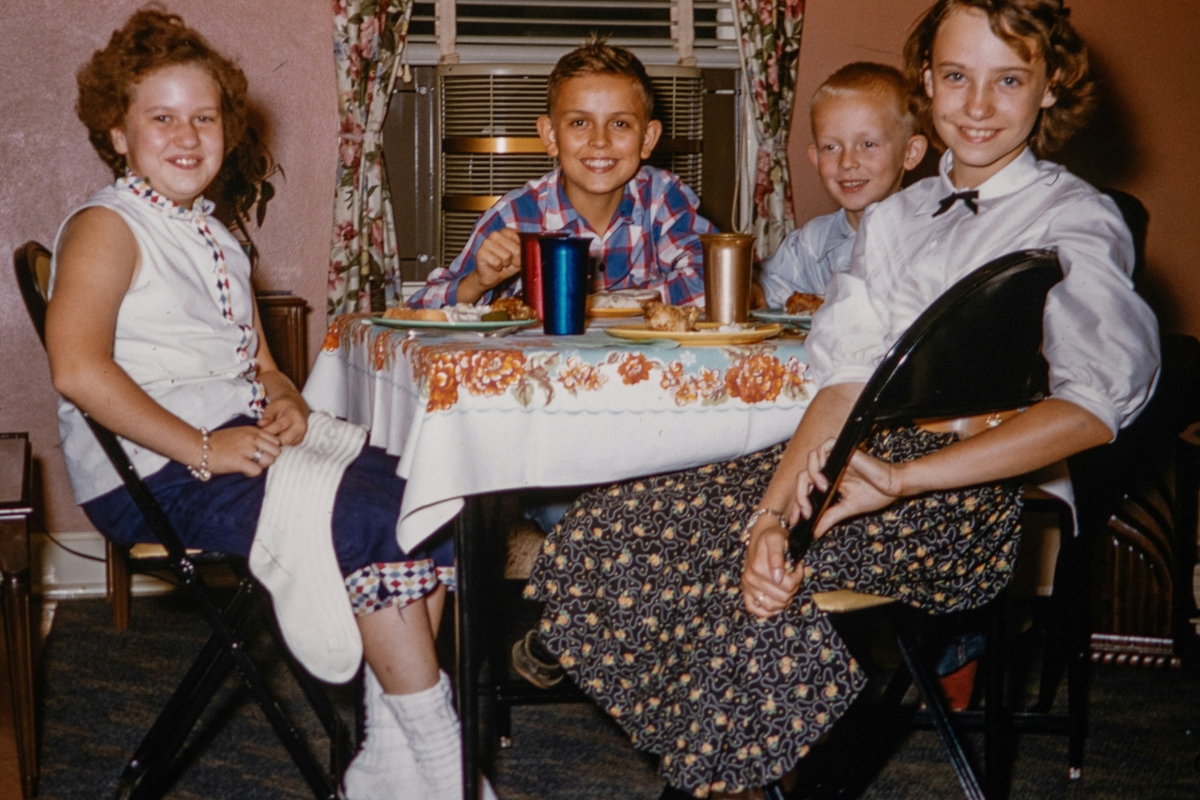
When They’re at Your House
Easier. This is your space.
You run things the way you run things. You don’t need to apologize for it and you don’t need to explain every choice. If dinner is what it is, that’s what it is. If devices go away at a certain time, they go away. Most reasonable people respect clear, calm house rules even when they differ from their own.
What creates friction isn’t having standards. It’s having standards with a side of judgment.
Set your limits without commentary on how they do things at home and it almost never becomes a problem.
When It’s Family
This is the hardest version and the one that usually turns into a real heater.
Grandparents who give your kids everything you said no to. A sibling whose kids have zero structure and yours are used to a lot of it. A family gathering where the parenting philosophies in the room cover the entire spectrum and everyone has opinions.
A few things that actually help here.
- Pick your battles with real specificity. If grandma wants to give them an extra cookie, that’s probably not the hill. If grandpa is consistently undermining your discipline in the moment, that’s a conversation worth having privately, calmly, and directly.
- Frame it around your kid, not around what they’re doing wrong. “When Jonah sees the rule get overridden, it makes our job harder at home” lands better than “you keep letting him do things we said no to.”
- And accept that you cannot fully control what happens in other people’s houses. What you can do is be consistent at home so your kids have a strong enough baseline that a weekend at grandma’s doesn’t throw everything off.
The Bigger Picture
The research on what actually produces well-adjusted kids isn’t about finding the objectively correct parenting approach and executing it perfectly. It’s about consistency, warmth, and a secure relationship between parent and child.
Your kids are going to encounter different values, different rules, and different environments for the rest of their lives. The fact that their buddy’s house runs differently than yours is practice for that. It’s not a threat to what you’re building.
Stay grounded in your own approach. Don’t spend energy policing others. And extend the same grace to other parents that you’d want extended to you on the days when you’re not at your best either.
Nobody’s got this fully figured out. Most of us are just doing our honest best with what we’ve got.
Fourteen episodes in, still no editor, still no script. Just Adam and Ben catching up on a few weeks apart and diving into the topic every dad eventually has to figure out: how to navigate family and in-laws once you’ve got kids of your own.
What This Episode’s About
Adam and Ben trade Fourth of July stories (lake life vs. HOA fireworks fines), run through the Ethos Life Insurance read, and shout out the DG Mindset podcast before getting into the real topic: in-laws, generational parenting differences, and the moment every new parent hits where family visits stop being simple.
The Big Takeaways
- You get to choose what you keep. Ben’s framing on family patterns: once you have kids, “you have two options. You can teach what you were taught, or you can do what you want to do.” Nobody’s obligated to repeat the playbook they grew up with.
- Give your family grace, not judgment. Adam’s take on why in-law friction happens: “Everyone was raised differently… this all stemmed from a generational thing. They were raised a certain way, and then they raised their kids that way.” Understanding the “why” makes the friction easier to sit with.
- Communication beats silent frustration. Adam’s bottom line on keeping the peace: “Being vocal and sharing how you feel is numero uno for a healthy relationship with the in-laws.”
- Nothing prepares you, and that’s okay. Dad Day’s own newsletter poll backed this up — the top answer to “what would you tell a new dad” was some version of “nothing will prepare you.” Adam: “In your mind you feel like you have it all figured out. And then everything changes, man.”
- Support systems matter more than people realize. Ben’s honest admission after his first family trip without backup: “That’s the game changer for us, just having someone to hand off to. If you don’t have that, you’re kind of toast.”
Best Quote of the Episode
“Everybody wants everybody to win. It’s just some people have a different way of getting to the win. Everybody loves each other. That’s the foundation, that’s all that matters.” — Ben, on in-laws
“Love is the glue, man.” — Adam
Listen to Episode 14
Related Reading
- Why Consistency Beats Motivation — Guys Being Dads Ep. 15
- Why Every Dad Needs Life Insurance (Yes, Even You)
- What Dad Day Readers Told Us New Dads Need to Hear
Join the Conversation
Got a story about navigating in-laws, or a family tradition you’re passing down to your own kids? Drop it in the Dad Day Slack or call it in to 833-DAD-SHOW. We might play it on the next episode.
There is a special kind of courage required to do the holidays with your in-laws. Whether you’re packing up the kids and staying in their guest room or you’re hosting them in your house where the thermostat mysteriously moves on its own.
Not the “charge into battle” kind. More like the “stay steady while everyone has deeply held opinions about your turkey carving technique” kind.
But here’s the thing: every dad who has spent more than 72 hours in shared holiday space with in-laws knows a secret.
The in-laws aren’t necessarily the challenge. It’s the holiday machinery surrounding them.
It’s the perfect storm of expectations, personalities, traditions, and casseroles that should have been retired long ago.
So here’s your survival kit.
Step 1: Know the Mission Before You Deploy
Holiday gatherings are not just family time. They’re also diplomatic operations.
Your job is not to win the day. Your job is to get home intact without starting a generational feud.
Pick one mission:
-
Keep your partner happy.
-
Keep the kids from swinging ornaments like medieval weapons.
-
Stay away from political conversations.
-
Avoid being tricked into “a quick project.”
That is your priority. Everything else is noise.
Step 2: Become a Ghost When Necessary
Every dad deserves a strategic disappearance.
Bathroom break. Checking on the kids. Taking out the trash. Retrieving something from the car (which may or may not exist).
You are not hiding. You are resetting. A dad who resets is a dad who keeps the peace.
Step 3: Find Your Role and Lean Into It
Every family has roles. You do not choose them; they choose you.
You might be:
-
The Grill Guy
-
The Tech Fixer
-
The Kid Wrangler
-
The Heavy-Lifting Specialist
-
The Person Who Understands Wi-Fi
-
The Tupperware Organizer
Own the role. A man with a clear job gets left alone. A man without one gets recruited for every chore imaginable.
Step 4: Master Emotional Judo
Your in-laws will make comments. Not malicious. Just… comments.
-
“He looks tired.”
-
“She’s very energetic.”
-
“We never did that with our kids.”
-
“Are you sure that’s how you do it?”
Old you tightens up. New you redirects the energy.
Smile. Nod. Say “Interesting.” Move on.
Peace preserved. No emotional bruising.
Step 5: Use the Kids as Shields, Assets, or Distractions
Kids are your all-purpose social tools.
Need to exit a conversation?
“She wants to show you something!”
Need a moment alone?
“We’re going to check on the toys.”
Need to leave early?
“We’re approaching meltdown o’clock.”
Use the chaos wisely.
Step 6: Build Allies in the House
There is always someone running the same internal monologue as you.
The brother-in-law who’s also trying to survive. The cousin with a dry sense of humor. The aunt who hands out snacks and honesty. The dog.
Find them early. Form a silent alliance. You’re stronger together.
Step 7: Remember Why You’re There
This is the grounding moment.
Holidays are messy. Families are complicated. Someone will absolutely comment on your parenting.
But your kids are watching how you handle it.
They’re learning how to be part of a family. How to show up with grace. How to be steady when things get weird. You’re not just surviving the holidays. You’re modeling adulthood.
That’s the whole point. Godspeed.